





 Portuguese
  English
  Spanish
  4 min of reading
  0 comments



Recent Studies Point to a Source of Pollution from Cars That Is Even More Harmful Than the Exhaust Pipe; Understand What It Is
When we talk about pollution generated by vehicles, many of us immediately think of the gases that come from the exhaust. However, there is a form of pollution that is even more invisible and, perhaps, more dangerous: the particles released from tire wear.
These microscopic particles, which are released every time a car moves, go beyond the carbon footprint, threatening our health and nature in ways we may not have imagined.
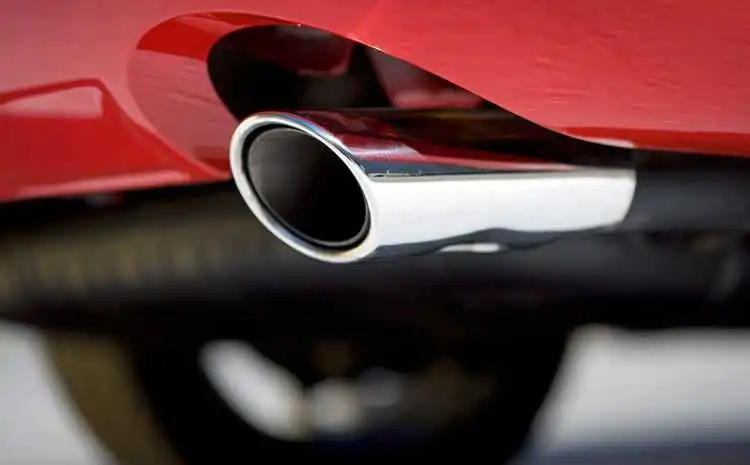
Exhaust? Watch Out for Small Pollutants, Big Problems
To give you an idea, every kilometer a car travels generates about 151 mg of rubber particles that come off the tires. It may seem like a small amount, but think about the number of cars and the number of kilometers traveled daily around the world.
-
Mysterious object on Mars divides NASA and Harvard after Curiosity image reignites suspicions about what was really found on the planet.
-
Giant structures 14 meters beneath Egypt are revealed by satellites and expose a millennia-old secret buried in Buto.

-
Children have been making clay pieces for 15,000 years in Southwest Asia, and fingerprints preserved on 142 ornaments helped archaeologists prove this.

-
New semi-autonomous legged robot technology challenges the limitations of space exploration by operating almost without human intervention on the Moon.

The impact is huge. These particles are so small that they can escape traditional air quality monitoring systems, meaning they are loose, inhaled by us, and making their way into our waters.
The tires are made up of a complex mixture of chemicals, including polycyclic aromatic hydrocarbons (PAHs), known for their carcinogenic potential. In addition, tires have a high amount of additives and chemicals that represent up to 50% of their total mass.
All of this raises real concerns among public health experts, who demand more transparency in the manufacturing processes and composition of tires.
Electric Vehicles: A Solution With Reservations
For many, electric vehicles (EVs) are a great hope for reducing environmental pollution, as they eliminate exhaust emissions. However, what few people know is that EVs, being heavier due to their batteries, end up wearing tires more quickly, releasing more particles into the air.
Thus, although they represent an important advance in reducing greenhouse gas emissions, electric vehicles still need to address the problem of tire wear.
This issue is not limited to EVs but applies to all heavy and powerful vehicles. The increased weight of cars, caused by innovations in safety and comfort, contributes to exacerbating the problem of tire particle pollution. Therefore, if we want a truly sustainable solution, we need to address all aspects of automotive pollution, going beyond exhaust emissions.
The Effects of Particle Pollution on Health and the Environment
These rubber particles not only affect air quality but also our health. Depending on their size, the particles can cause different types of problems:
| Particle Size | Potential Health Effects |
|---|---|
| PM10 (≤10 µm) | Respiratory irritation, worsening of asthma |
| PM2.5 (≤2.5 µm) | Cardiovascular problems, lung diseases |
| Ultrafine (≤0.1 µm) | Can enter the bloodstream, organ damage |
Due to their small size, tire wear particles can be inhaled and reach the lungs, potentially entering the bloodstream, where they can cause organ damage. Imagine the impact this has on people living in densely populated urban areas where traffic is intense and constant. Children, the elderly, and people with respiratory issues are the most vulnerable to these effects.
In addition to the problems for human health, these particles also contaminate water. When it rains, the tire particles present on the roads end up in rivers and oceans, accumulating in aquatic ecosystems. This affects marine life and can even enter the food chain, as microplastics derived from tires are ingested by fish and other marine organisms.
Ongoing Solutions and Futuristic Challenges
To tackle the pollution caused by tire wear, various measures are being discussed and tested. Among them:
- Regulatory Measures: Creating stringent standards for tire composition that limit the use of toxic substances and increase material durability.
- Technological Innovation: Investing in the development of eco-friendly tires made from materials that generate fewer particles.
- Public Awareness: Informing people about the importance of choosing quality tires and adopting driving habits that preserve wear.
- Urban Planning: Designing cities that reduce the dependence on private vehicles, promoting public transportation and alternatives such as bicycles and walking.
These strategies, when applied together, have the potential to reduce the number of tire particles in the air and water, protecting our health and the environment.
Demanding More Transparency from the Tire Industries
For these solutions to really work, it is necessary for the tire industry to be more transparent about the composition of its products. Currently, there is a lot of secrecy surrounding the ingredients used in tire manufacturing, making it difficult to assess the risks involved.
Environmental organizations and health authorities are calling for companies to disclose the components of tires to ensure they do not contain harmful substances.
As we continue to explore innovative solutions to protect our planet, such as the experimental use of diamond dust in the atmosphere for climate cooling, it is essential that each source of pollution is addressed. This includes the invisible particles generated by tire wear, which until recently were a neglected problem.
Protecting the environment and public health is not just about reducing carbon emissions. It is about understanding all forms of pollution generated by our society and taking action to minimize them.
The transition to a cleaner future depends on comprehensive solutions that consider every aspect of automotive pollution. After all, a world with less tire pollution means a healthier and more sustainable future for all of us and for future generations.









Seja o primeiro a reagir!