Portuguese
 Spanish



Oil industry professionals mentor initiatives in marine wildlife conservation, education, small-scale fishing and income generation in Brazilian communities
The second edition of Impulso PRIO, the oil company’s social project accelerator and corporate volunteering program, wrapped up its activities in 2026. The company said the 11 participating organizations raised more than R$10 million, surpassing the R$1.5 million target set in April.
Organized in partnership with AGO, the initiative engaged 48 company employees as volunteers. The mentoring program supported organizations in Rio de Janeiro and Pará states, as well as in the Parnaíba Delta, between the states of Piauí and Maranhão.
The results topped those of the first edition, held in 2025, when 10 organizations reported about R$600,000 in deals.
-
Power grids across five continents exhibit mysterious oscillations every 60 seconds, explained by automated battery tests
-
Original Batmobile from ‘Batman Returns’ featuring Chevrolet V8 engine and flame exhaust to be auctioned for up to R$37 million with street usage restrictions
-
Thousands of Fish Found Dead in Amapá’s Araguari River; Environment Agency Notifies Hydropower Plant

-
Construction of R$27 billion pulp megafactory in Rio Grande do Sul could create 18,000 jobs, with capacity to produce 3 million metric tons a year

Instituto Bicho D’Água lands multimillion-dollar partnership for marine wildlife conservation
The largest share of funding went to Instituto Bicho D’Água, a nonprofit based in Pará state that raised R$12.04 million. Of that total, R$11.75 million came through a partnership with Shearwater, a global marine geophysical services company.
Taking part in the program helped the institute improve its governance and take on technical coordination of major environmental projects. The work also included professionalizing its management and training people from local communities.
The institute’s plan calls for rescuing, rehabilitating and releasing marine animals through the end of 2027, said Renata Emin, a biologist and the organization’s president. Projects include manatee conservation and satellite tracking of sea turtles, in partnership with Centro Tamar/ICMBio.
Rio de Janeiro nonprofits secure new funders
Stronger strategic planning and communications helped the nonprofit Parceiros da Educação raise R$770,000. Instituto Vida Livre, meanwhile, secured R$700,000 after introducing financial and commercial management systems, ending its reliance on a single funder.
Associação Squashinhos formed a partnership with an oil and gas company and set up a recurring donation system. The strategy helped increase the number of people served at its center by 30%.
Marine farm and Arraial do Cabo fishers develop new sources of income
In the Lagos Region, the Lagos em Ação organization generated R$100,700 in revenue from selling shellfish and nature-inspired jewelry, as well as offering guided tours of its marine farm.
The Association of True Open-Boat Fishers and the Native Women’s Cooperative, both based in Arraial do Cabo, began selling fish directly to consumers. The two organizations will also receive additional support to develop sponsorship fundraising strategies.
Cultural and environmental projects expand their commercial activities
CDD Skate Arte developed workshops and sales at ArtRio, while Spectaculu expanded its services for companies such as L’Oréal and Maquinaria Produção.
In the Parnaíba Delta, the Instituto Tartarugas do Delta developed a model for charging an administrative fee on craft orders. Associação Rede Cruzada also made progress in raising funds.
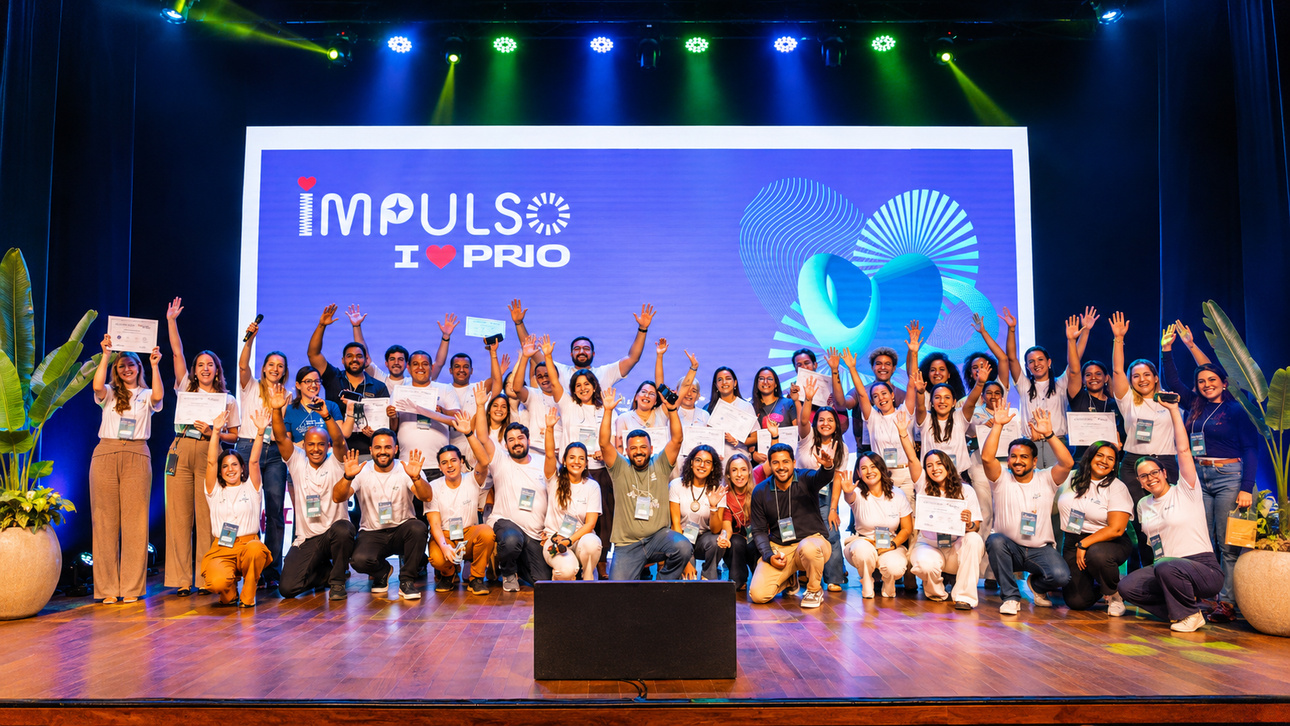
PRIO’s corporate volunteering program aims to increase organizations’ financial independence
The program aims to share business expertise to strengthen organizational management, said Camilla Daher, PRIO’s social responsibility and sponsored projects coordinator.
Founded in 2015, PRIO has six assets in the Campos Basin and works to restore producing oil fields. The company also supports sports, cultural and educational initiatives through its I Love PRIO platform.
The expectation is that new partnerships, revenue sources and management tools will enable the organizations to expand their activities after the mentoring sessions end.