Portuguese
 Spanish


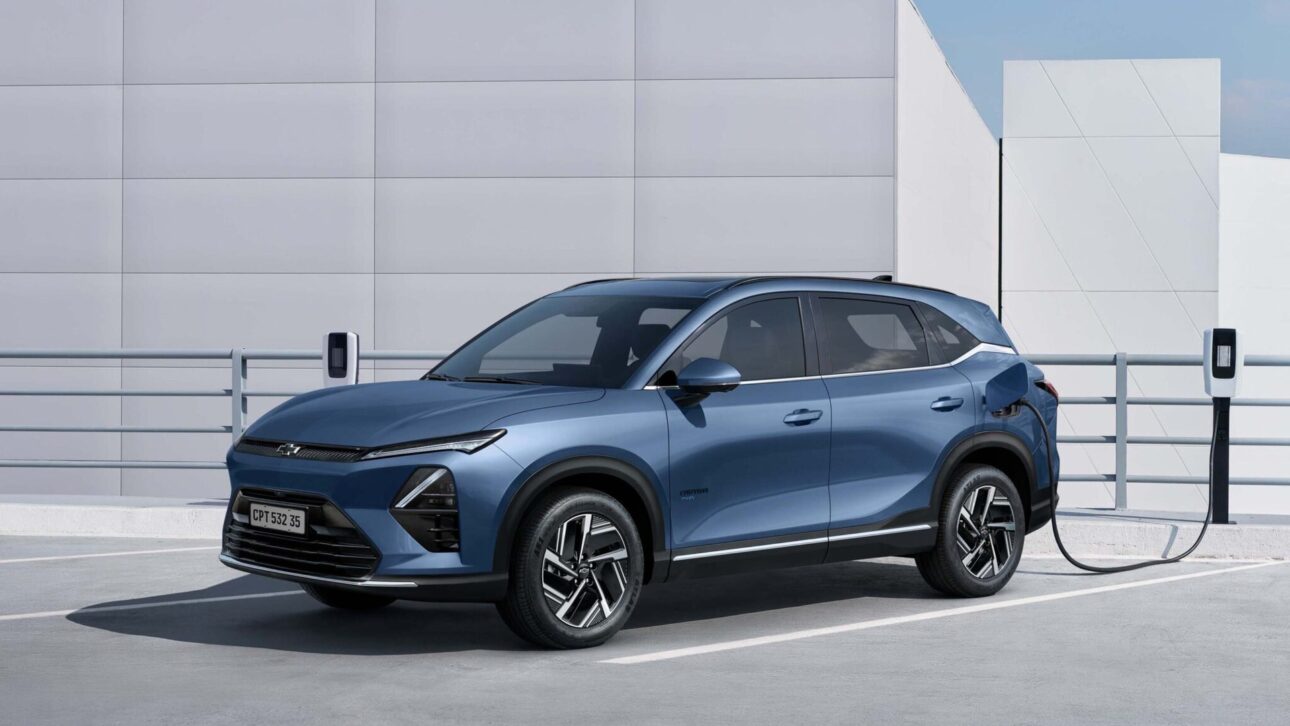

The Chevrolet Captiva PHEV arrived at dealerships Monday (23) with a starting price of R$199,990 for a single trim. The brand’s first plug-in hybrid in Brazil is assembled in Horizonte, in Ceará state, and delivers 227 hp, 60 km on battery power alone and a combined range of 1,069 km under Inmetro testing.
Drivers who have been waiting for GM to enter the plug-in hybrid SUV market can now order the vehicle. The launch price is R$199,990, with no other trims available for now.
The automaker confirmed the information, which was published by AutoData, a publication covering the automotive industry. The hybrid Captiva will share showroom space with the all-electric Captiva EV.
How far the Captiva PHEV goes on battery power and gasoline
The figure that stands out most is the range. Under Brazil’s Vehicle Labeling Program (PBEV), run by Inmetro, the country’s metrology agency, the SUV can travel 1,069 km with a fully charged battery and a full tank.
-
Renault Halves New-Car Development Time with Chinese Engineering and Boosts Hybrid Production in Brazil with R$5.8 Billion Investment

-
Mercedes-Benz launches seven-seat GLB 250+ electric SUV in Brazil with 427 km range, 272 hp, and ultra-fast charging up to 320 kW

-
Chevrolet launches 227-hp hybrid SUV in Brazil with 1,069-km range, 0-to-100 km/h acceleration in 8.3 seconds and a price of R$199,990

-
For Fiat Strada owners and buyers, the Betim-built pickup tops 150,000 sales in Brazil before December 1, as Fiat cuts the Freedom double-cab price to R$108,690 during Black Month



In all-electric mode, the range is up to 60 km. For drivers who cover short distances in the city each day, that can handle much of the commute without burning gasoline.
The fuel tank holds 53 liters. When the battery runs out, the combustion engine takes over and the vehicle continues as a conventional hybrid, with no need to plug in for longer trips.
One consideration for Brazilian drivers: the engine runs on gasoline only. Unlike some rivals assembled in Brazil, the Captiva PHEV cannot run on ethanol.
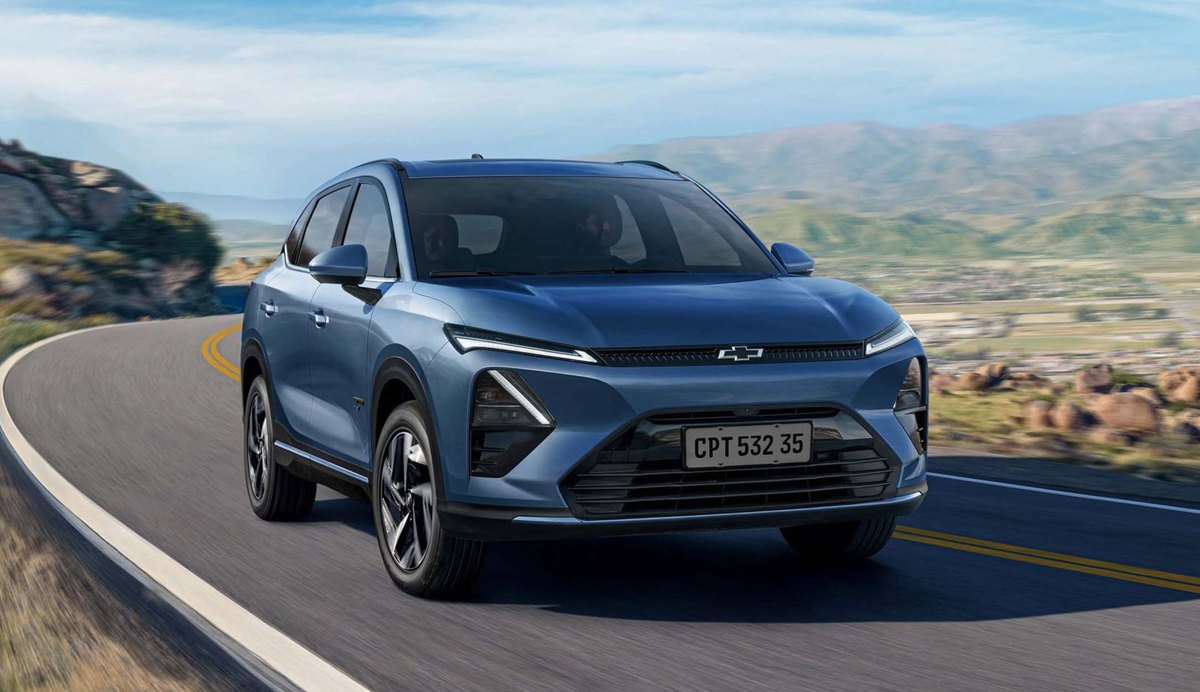
1.5-liter engine, electric motor and 227 hp
The powertrain pairs a 1.5-liter four-cylinder gasoline engine using the Atkinson cycle with an electric motor on the front axle. GM has not disclosed each motor’s output separately.
Together, they deliver 227 hp and 31.6 kgfm of torque. The SUV accelerates from 0 to 100 km/h in 8.3 seconds, the automaker says.
The vehicle uses a DHT, a dedicated hybrid transmission with one physical gear. It automatically determines when the vehicle runs on electric power alone, when it uses both motors and when it recovers energy during braking.
Drivers do not need to select a mode: the system switches automatically based on speed, battery charge and driving style.
20.5-kWh battery and charging time
The lithium iron phosphate (LFP) battery has a capacity of 20.5 kWh. It supports charging at up to 3.3 kW on alternating current, the type used by household outlets and wall chargers, and up to 24.6 kW on direct current.
By the blog’s simple calculation, excluding charging losses, a 3.3-kW charger would take a little over six hours to fill the battery from empty. In practice, that is about the length of an overnight charge in a garage.
GM provides a three-year vehicle warranty and an eight-year battery warranty, Autoesporte reports.
Built in Ceará, with design and parts from China
The Captiva PHEV is assembled at the Ceará Automotive Plant (Pace) in Horizonte, through a partnership between GM and Comexport. It is the third electrified vehicle from the brand built there in less than a year, following the Spark EUV and Captiva EV.
The design, however, is Chinese. The same vehicle is called the Wuling Starlight S in China, and its parts also come from there. Assembly in Ceará follows the CKD model, in which the vehicle arrives disassembled.
In October, the SUV had already been spotted undisguised in Brazil, before its price was confirmed.
Space: 532-liter cargo area and reclining rear seat
The Captiva PHEV measures 4.74 meters long, 1.89 meters wide and 1.68 meters tall, with a 2.80-meter wheelbase. These are midsize SUV dimensions, larger than those of many competitors in the same price range.
The cargo area holds 532 liters, expanding to 1,690 liters with the rear seats folded down. The liftgate opens and closes electrically.
Rear passengers get a backrest that reclines from 30° to 90°, a feature that can make a difference on long family trips.
To tell it apart from the electric model on the road, look for the body-color roof and two side doors: one for the gas tank and the other for the battery charging port.
What comes standard for R$199,990
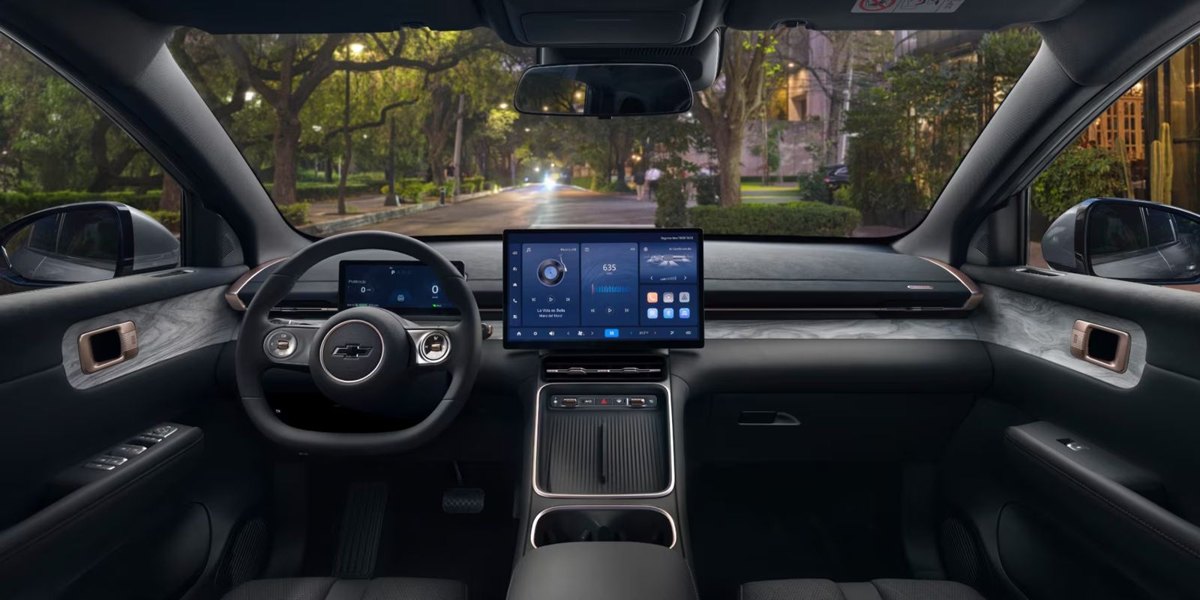
The infotainment system has a 15.6-inch screen with Android Auto and Apple CarPlay, while the instrument cluster is an 8.8-inch digital display. The SUV also has a panoramic roof and a 360-degree camera.
The equipment list includes automatic climate control, a power-adjustable driver’s seat, full-LED headlights, six airbags and Isofix child-seat anchors.
The driver-assistance package includes adaptive cruise control, a forward collision warning system and automatic emergency braking.
What it lacks
Not everything impressed those who reviewed the vehicle. The Encontracarros website points to the lack of dual-zone climate control, power adjustment for the front passenger seat and ventilated seats.
The sound system has six speakers, which is considered modest for a R$200,000 vehicle. Available colors are Búzios Blue, Lençóis White, Diamantina Gray and Rio Negro Black.
Who the Captiva PHEV will compete against
The SUV enters a crowded segment of Chinese plug-in hybrids. Encontracarros lists the BYD Song Pro, GWM Haval H6, Geely EX5 EM-i and Jaecoo 7 Elite as rivals.
The website’s survey puts the BYD Song Pro GS at R$189,990, R$10,000 less than the Chevrolet. The Song Pro, which now runs on ethanol, also has the advantage of a flex-fuel engine.
Within Chevrolet’s own lineup, the hybrid costs R$20,000 less than the all-electric Captiva EV, which is priced at R$219,990.
Who is it for?
The Captiva PHEV makes the most sense for people who can charge at home and drive up to about 60 km a day. In that use case, gasoline is reserved for longer trips.
Without a charging outlet in the garage, the vehicle will run on its 1.5-liter gas engine much of the time. In that case, I think it’s worth comparing it with flex-fuel hybrids before making a purchase.
For buyers thinking about resale value, the eight-year battery warranty is a point in the Captiva’s favor because it covers the component that most concerns first-time plug-in vehicle buyers.
Would trading an internal-combustion SUV for a plug-in hybrid make sense, or is it better to wait for prices to fall?