Portuguese
 Spanish


A nine-flight cargo operation involving more than 45 tractor-trailers moved about 800 metric tons of Formula 1 cars and equipment from Mexico to Interlagos in 2026, before transporting the setup to Las Vegas.
Before Formula 1 cars raced at Interlagos on Nov. 8, an operation that began thousands of miles from São Paulo moved about 800 metric tons of equipment. Nine cargo flights from Mexico and more than 45 tractor-trailers were deployed to bring the series’ setup to the José Carlos Pace Autodrome.
The operation began on Oct. 28, when the first Boeing 777 landed at Viracopos International Airport in Campinas, in São Paulo state. The race in Mexico had not yet taken place. The initial shipment contained sound, video and lighting equipment, which could be sent ahead of the cars used in the competition.
The arrival marked the airport’s 25th consecutive operation for the Brazilian Grand Prix, according to a tally released by Viracopos airport management and published by Exame on Oct. 29.
-
Nineteen railcars break free during grain transfer, travel nearly 8 kilometers uncontrolled, and hit two locomotives near Romania-Ukraine border

-
France’s new high-speed train gains a passenger car and 17% more space without increasing its 200-meter length; modular interiors allow class conversion in one day

-
Imported goods reach São Paulo in as little as seven days: Amazon cuts international delivery times by about 40% since 2024 and now offers 55 million products in Brazil

-
Dinner Comes Down on a Cable: Uber Eats Launches U.S. Drone Deliveries That Fly at Up to 113 km/h and Hover About 100 Meters Above the Ground While Lowering Meals to Customers



While the cars raced in Mexico, some of the equipment was already in Brazil
The championship had a run of three races in the Americas: Austin on Oct. 25, Mexico City on Nov. 1 and São Paulo a week later. That schedule left only a few days to dismantle one setup, transport it and prepare for the next race.
Sending broadcast and lighting equipment ahead made it possible to begin work at Interlagos while the cars were still in Mexico. The other flights carried the remaining materials and the teams’ equipment. On Nov. 3, ge reported that the last of the nine flights was scheduled to arrive that night, with the final deliveries to the circuit planned for the following morning.
Beyond the cars seen on television, the shipment includes spare parts, mechanics’ tools and the structures needed to build the garages. Equipment used to broadcast the event also has to arrive on time: without it, the race would not receive the same international coverage.
A cargo Boeing can carry more than 100 metric tons at a time
The first aircraft in the operation was a Qatar Airways Cargo Boeing 777F. According to VEJA, the aircraft is 63.7 meters long and has a wingspan of 64.8 meters. Its maximum payload is about 107 metric tons.
Dividing the estimated 800 metric tons by the nine flights gives an average of nearly 89 metric tons per arrival. The actual distribution varies with the aircraft model, the volume of the equipment and the mix of cargo. Each crate must be placed in a position that meets the aircraft’s weight and balance limits.
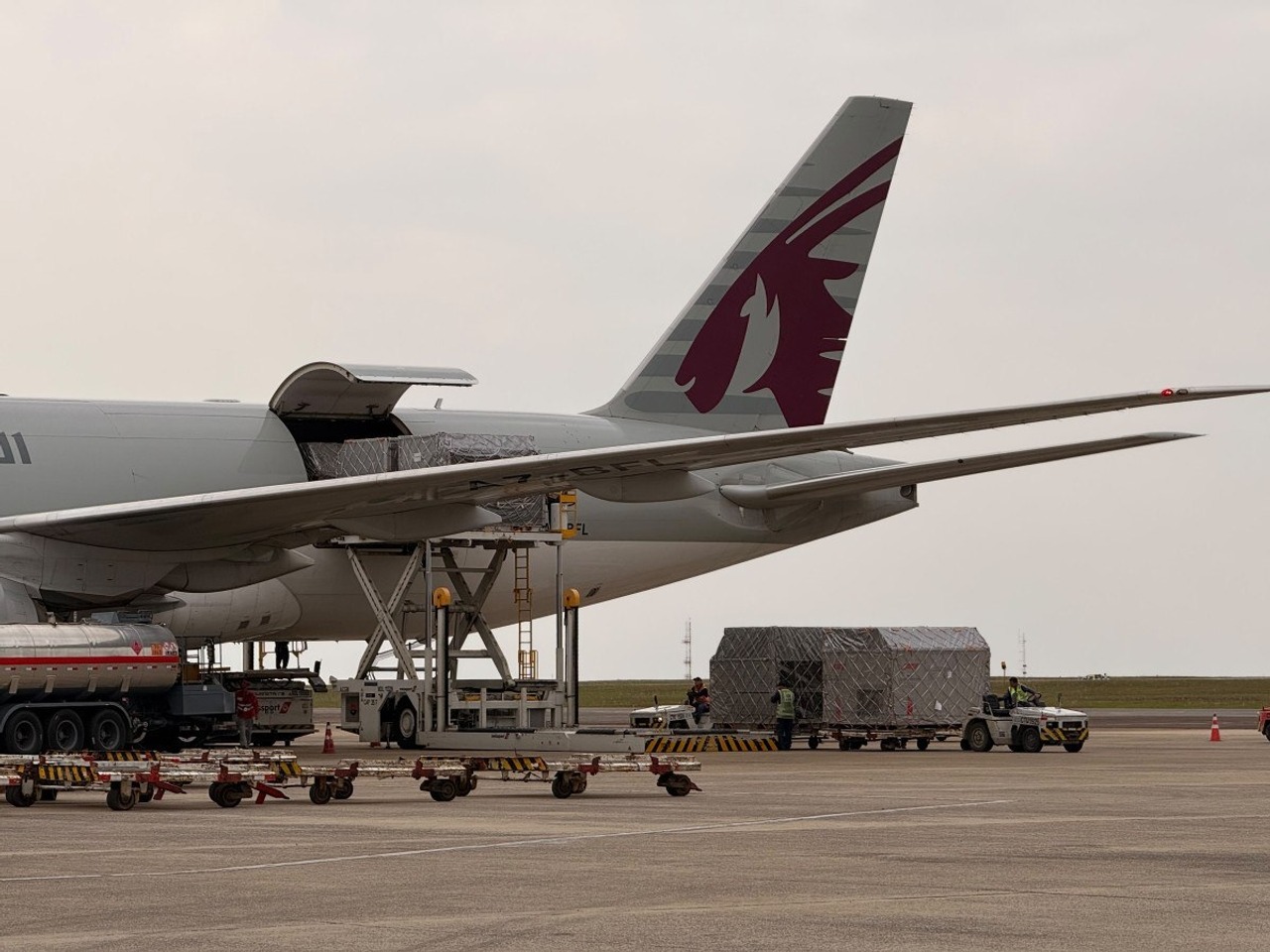
Air containers and pallets make it possible to move oversized loads using lifting and transfer equipment. When the aircraft reaches the terminal, the work changes hands: ground staff receive the materials, organize their movement and prepare them for the next leg of the journey.
More than 45 tractor-trailers connected Campinas with São Paulo’s south side
The equipment’s journey does not end when the cargo plane lands. At Viracopos, the operation brought together at least 100 airport workers, including employees of various companies and public agencies. After the cargo was cleared and prepared, the tractor-trailers headed to Interlagos.
Band detailed Célere Intralogística’s role on November 7, including responsibility for ground and internal transport. In addition to more than 45 transport vehicles, the company deployed approximately 105 pieces of support equipment and more than 50 workers.
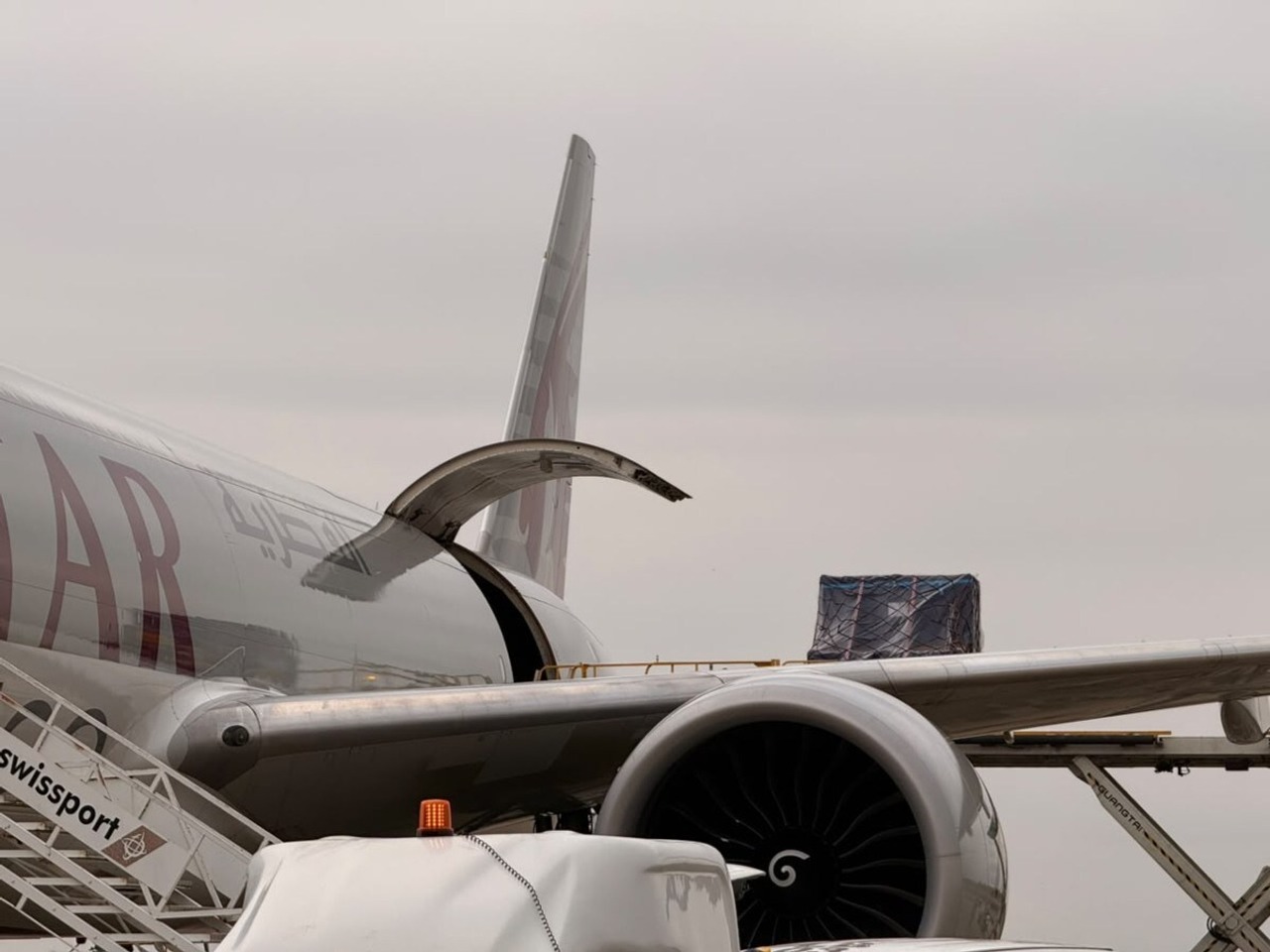
The materials arrive at the circuit at different times and must be positioned according to the assembly schedule. A forklift removing a crate from a tractor-trailer, for example, is part of a chain that ends only when the component is available to the team responsible for using it.
Formula 1 keeps duplicate equipment traveling around the world by ship
Not everything used by the teams needs to travel by air with the cars. DHL, Formula 1’s logistics partner, says teams keep five or six similar sets of materials in containers, shipping them by sea well in advance. Garage structures and hospitality facilities can take different routes from those used by the cars.
One set may be on its way to a race while another has already been delivered to a circuit that will host the series weeks later. Components essential to the cars’ performance, by contrast, need to move quickly between race weekends.
In May 2026, the company added a new mode of transport to the system. In its May 20 announcement, it said it had completed the first rail shipment for Formula 1 logistics, moving about 50 containers from Miami to Montreal on a journey of nearly 2,000 kilometers. Rail carried about 68% of the freight managed by the company on that leg, which would normally travel by truck.
The containers were fitted with tracking devices and impact sensors to monitor their route and the condition of the equipment. The trial took place in North America, outside the operation in Brazil, and will be considered in planning for the 2027 season.
As soon as the race ended, cargo planes returned to collect the equipment
Work at Interlagos continued after Lando Norris won on November 8, as shown in Formula 1’s official results. Teams began dismantling their garages and preparing the materials to be sent back to Viracopos.
The next day, AEROIN reported that a Cargolux Boeing 747-400F had arrived in Campinas to begin collecting the freight. Other Cargolux and Atlas Air 747s, as well as Qatar Airways Cargo 777Fs, were scheduled for the outbound operation.
The next stop was Las Vegas, where Max Verstappen won the November 21 race, according to the official results. The season still has races in Qatar and Abu Dhabi on consecutive weekends, according to the series’ calendar. Every checkered flag starts another race against the clock for the transport teams.
Was it surprising that staging a Formula 1 race required so many planes, trucks and workers? Share in the comments which part of the operation surprised you most.