





 Portuguese
  English
  Spanish
  4 min of reading
  0 comments


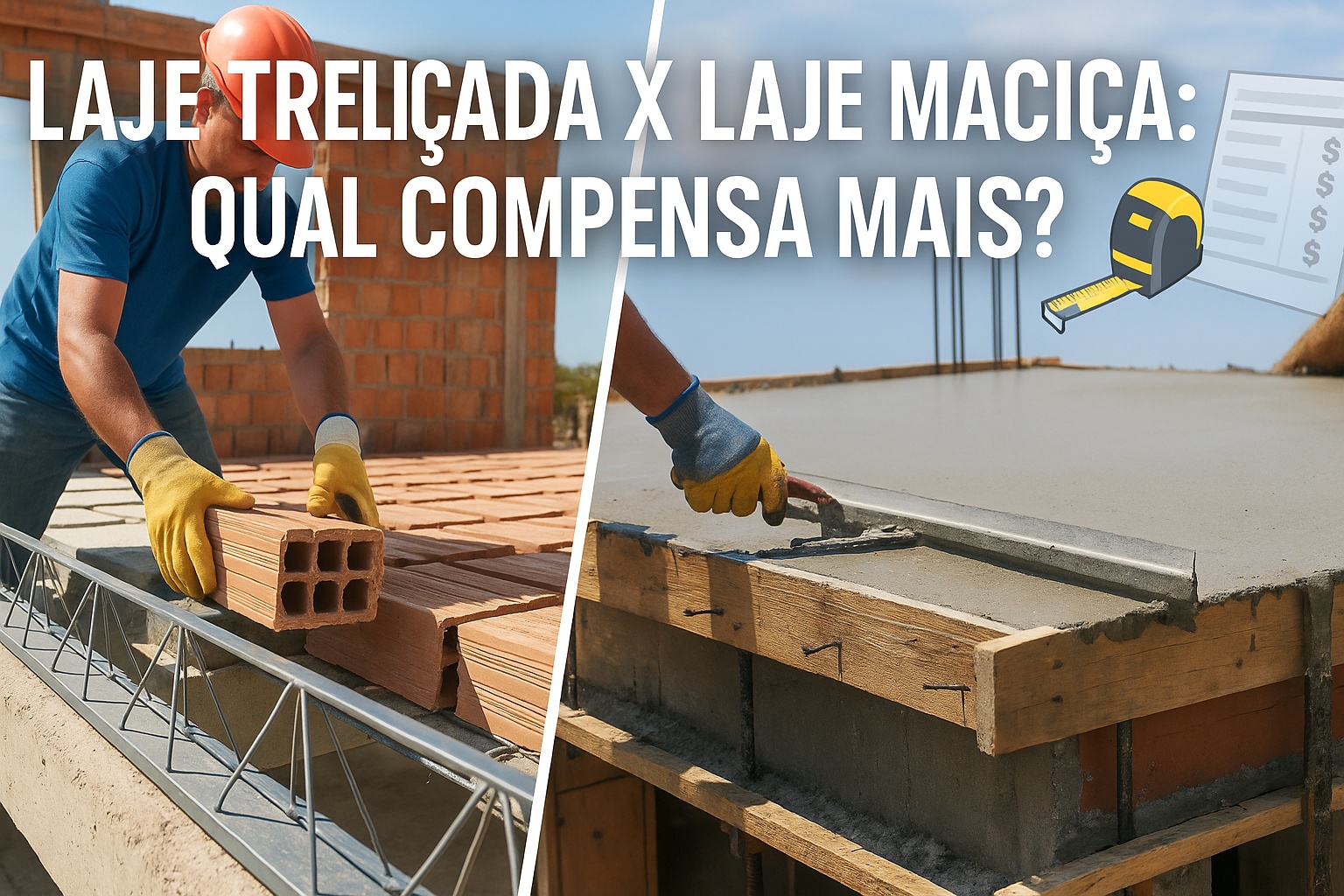
Real Comparison Between Hollow Core Slab and Solid Concrete Slab, with Updated Costs, Labor, Performance, and Structural Differences in 2025.
The choice of slab type is one of the most important structural steps in a residential construction project in Brazil. In 2025, with the rising prices of cement, steel, and labor, the comparison between hollow core slab and solid concrete slab has returned to the forefront of discussions among engineers, construction companies, and owners who seek to reduce costs without compromising the safety of the building. Market data extracted from real budgets, regional tables, and national suppliers show that the cost difference between the two systems can vary from 15% to 40%, depending on the span to be covered, slab thickness, type of infill, and expected load in the structural design.
At the same time, factors such as execution speed, material waste, and structural performance have increasingly influenced the choice of systems, especially in small and medium projects where every workday directly impacts the final budget.
How Much Does a Hollow Core Slab Cost? Prices and Composition in 2025
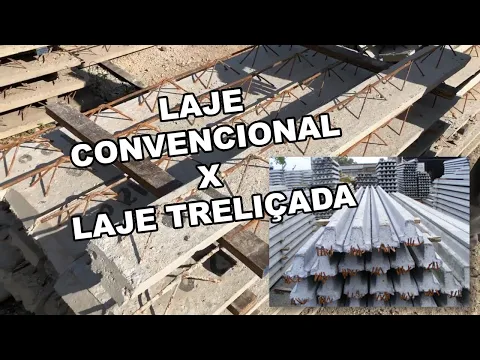

The hollow core slab is composed of precast concrete joists with truss-type reinforcements, completed with infill elements (EPS or ceramic) and a layer of ready-mixed or site-mixed concrete.
-
This star-shaped fortified construction, hidden near the border of Spain, may be the largest fortress on the planet.

-
Congonhas receives the monorail promised for the 2014 World Cup after more than a decade of delays and becomes the first airport in Brazil with integrated subway.
-
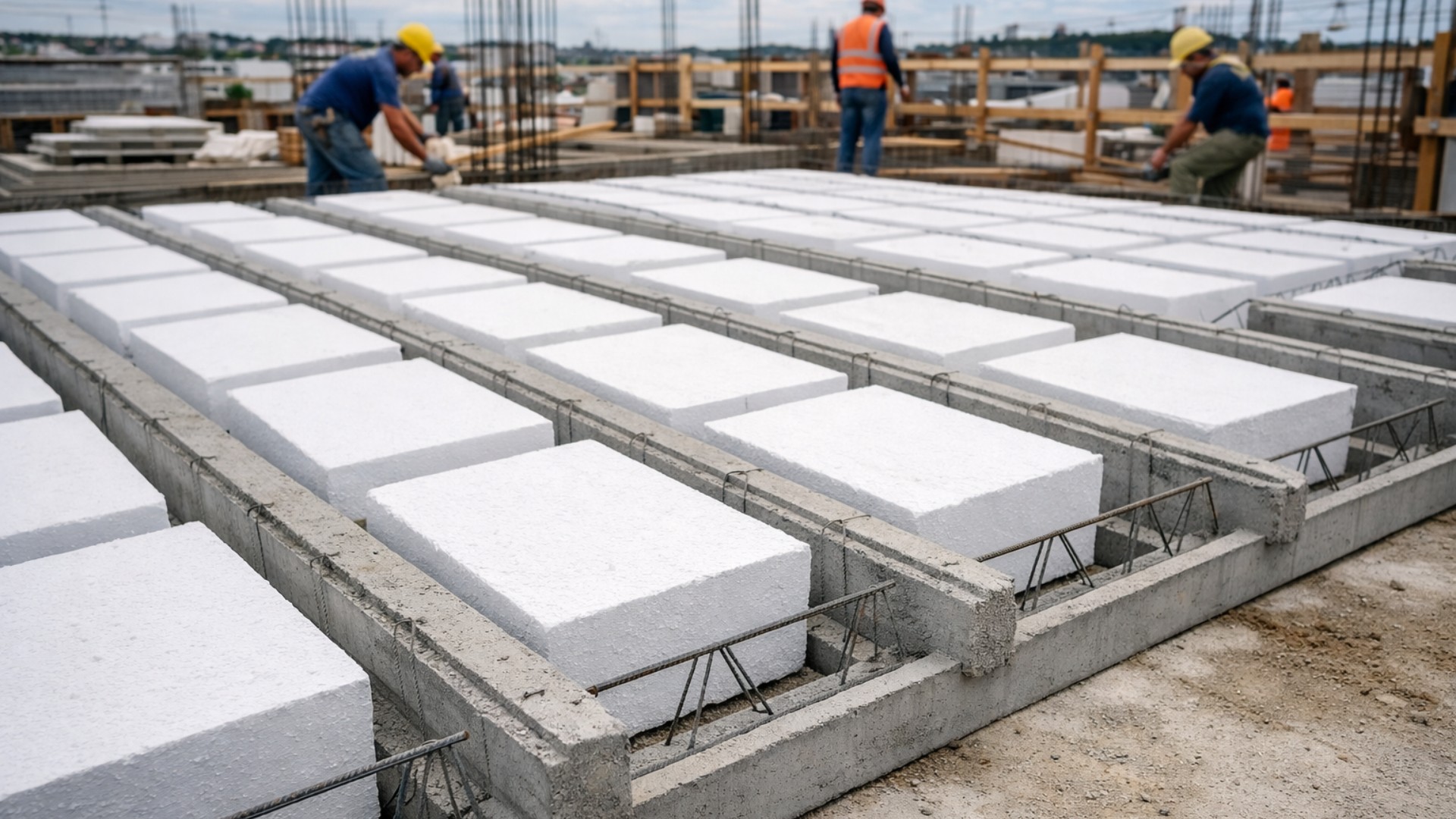
Goodbye, concrete: a new trend in civil construction reduces the weight of the structure by up to 30%, accelerates projects by up to 40%, cuts costs on steel and labor, and improves thermal insulation with EPS.
-
Russian engineers create an innovative propeller blade for aircraft that could completely change the way airplanes and helicopters operate.


The average national cost for hollow core slab in 2025 varies from:
- R$ 120 to R$ 180 per m² with ceramic blocks
- R$ 140 to R$ 200 per m² with EPS
Prices depend on:
- thickness of the concrete layer (3 to 5 cm);
- height of the joist (8 to 16 cm);
- use of lightweight (EPS) or traditional (ceramic) infill;
- need for shoring;
- region of the country — large variation between Southeast, Northeast, and South.
Labor is usually cheaper because the assembly of the hollow core slab is quick and requires less time on-site. The shoring is temporary, and the thin layer of concrete reduces the consumption of concrete and the use of forms.
For common residential projects, the hollow core slab stands out precisely for its execution speed, being installed in just a few hours in areas of 20 to 50 m².
How Much Does a Solid Concrete Slab Cost?
The solid slab, or slab cast in place, is made with forms, complete reinforcement, and a large volume of concrete. It is a robust structural system, suitable for larger spans, high loads, and situations where superior rigidity is sought.
The average cost for a solid slab in 2025 is:
- R$ 210 to R$ 340 per m², depending on thickness (10 to 18 cm)
The majority of the cost is associated with:
- large volume of concrete per m²;
- higher labor costs;
- heavier reinforcement;
- need for complete wooden or metal forms;
- extensive shoring, removed only after complete curing.
In buildings and multi-storey structures, the solid slab is still widely used for its excellent and predictable performance.
Direct Cost Comparison
Initial Cost per m² (Brazil – National Average)
- Hollow Core Slab: R$ 120 to R$ 200
- Solid Slab: R$ 210 to R$ 340
The total cost difference usually falls between 30% and 45% in favor of the hollow core slab, especially in small projects.
Labor
- Hollow Core: faster, smaller team, shorter shoring time.
- Solid: slower, requires carpentry, reinforcement, and a larger team.
Waste
- Hollow Core: minimal, especially when using EPS.
- Solid: high — wood, forms, cutting waste, concrete leftovers.
Concrete Volume
- Hollow Core: low (only the layer).
- Solid: high, may require concrete trucks and boom pumps.
Structural Load and Performance
- Hollow Core: ideal for houses, duplexes, and small businesses.
- Solid: better for buildings, large spans, and high vibration environments.
Structural Performance: Which Delivers More?

Hollow Core Slab
- Good resistance for standard residences.
- Lower weight, reducing loads on the foundation.
- Flexibility in cuts and adaptations.
- May present vibrations in larger spans if the design is not well sized.
- Not recommended for industrial loads or large halls.
Solid Slab
- Superior resistance and high performance.
- Less vibration and greater rigidity.
- Supports large spans without the need for beams.
- Ideal for multi-storey buildings.
- Excellent for environments with machines, equipment, and high permanent loads.
Execution Time
- Hollow Core: quick installation, simple concreting, accelerating the work.
- Solid: requires extensive preparation, heavy concreting, longer curing time.
In tight schedules, the hollow core slab saves weeks of work.
Durability and Maintenance
Both can last over 50 years, provided they are executed correctly.
The differences lie in the execution:
- hollow core slab depends on the quality of the joists and the concreting of the layer;
- solid slab depends on the well-positioned reinforcement and adequate curing.
Issues such as cracks, infiltration, and deformation are often linked to execution failures rather than the system itself.
Which is Better for Each Type of Work?
Recommended for Hollow Core Slab
- single-storey houses
- small duplexes
- attached houses
- fast construction
- projects with limited budgets
- small and medium areas
- renovations requiring lightness
Recommended for Solid Slab
- multi-storey buildings
- spans greater than 5 meters
- industries and warehouses
- construction needing high rigidity
- areas with high permanent loads
- facades with structural overhangs
Conclusion: Which Compensates More in 2025?
The hollow core slab is, in most residential projects, the most economical option, the fastest, and with less waste, providing sufficient performance for houses and small businesses.
On the other hand, the solid slab is unbeatable when the goal is structural rigidity, long spans, high resistance, or tall buildings.
In practice, the choice should consider:
- total budget,
- size of spans,
- structure weight,
- type of use,
- execution deadline,
- and the calculations of the responsible engineer.
The cost difference can reach R$ 100 to R$ 150 per m², which, in a 90 m² house, represents savings of R$ 9 thousand to R$ 13 thousand just on the slab.








-

-

-

-

-

-

45 pessoas reagiram a isso.