Portuguese
  Spanish


Multibillion Project of R$ 6.8 Billion on the São Paulo Coast Generates Dispute Between Union and State — And the Big Question Is: Who Will Own the Santos–Guarujá Tunnel?
After decades of promises, the Santos–Guarujá tunnel finally has a date, defined cost, and concession format. With an investment of R$ 6.8 billion, the unprecedented connection between the two cities is set to be the largest urban mobility project ever undertaken on the São Paulo coast, crossing the canal of the busiest port in Latin America. With 1.5 km in length, 870 meters submerged, the structure will allow the passage of 60,000 vehicles per day, easing ferry traffic and reducing travel time, which can currently exceed an hour during peak days. But the big question is not just when the tunnel will be ready — but who will own the Santos–Guarujá tunnel, after the concession.
The Auction of R$ 6.8 Billion, Concession Model, and the Discovery of Who Will Own the Santos–Guarujá Tunnel
The auction is scheduled for September 5, 2025, with proposal submissions on the 1st. The winning consortium will have to build, operate, and maintain the tunnel for 30 years, charging a toll under a “free flow” model (without toll booths): R$ 6.15 for cars and motorcycles, R$ 18.35 for trucks with up to 3 axles.


The project stipulates that costs will be shared between the Union and the State of São Paulo, highlighting the strategic importance of the work not only for regional mobility but also for the Santos Port, responsible for nearly 30% of Brazil’s trade balance.
-
Facing high rent, couple transforms parents’ garage into a fully functional apartment, creating a complete home at a fraction of the market cost.

-
MIT Scientists Develop Method to Transform CO₂ into a Construction Ally, Boosting Cement Strength by 13% in 24 Hours for More Sustainable Infrastructure

-
Canadian City Builds 8 Tiny Homes in 72 Hours for Homeless Youth, Plans 40 Affordable Houses for Female-Led Families Amid Housing Crisis

-
45-year-old Brazilian mother of 9 and grandmother of 12 receives 27 m² house made from recycled plastic, built in 15 hours with interlocking blocks and a recycled roof.


The Deadlock: Who Will Keep the Tunnel After the Concession?
The main point of contention arose at the Federal Court of Accounts (TCU): who will own the work once the concession expires?
The debate centered around whether São Paulo or the Union would claim control over the asset. The solution negotiated in August was clear: the tunnel will be owned by the Union after the concession ends, but with a significant role for the State throughout its operation.
Union Ownership, Shared Oversight
The arrangement provides that the Union will be the definitive owner of the tunnel, but the oversight will be shared. The ARTESP, São Paulo’s regulatory agency, will monitor contracts and execution at the state level, while the ANTAQ will have federal oversight authority.
This dual supervision model aims to ensure transparency, legal security, and operational efficiency, reducing risks for investors and ensuring that the R$ 6.8 billion invested results in a functional and lasting project.
The Political Dispute and Adjustments to the Notice
The definition regarding ownership only came after intense pressure from the TCU, which threatened the schedule. Only after meetings between the federal government and the governor of São Paulo was an agreement reached that left the notice protected against legal challenges.
This agreement was deemed essential to maintain the auction schedule, as national and international consortiums await regulatory certainty before submitting proposals.
What’s at Stake: Mobility and Port Competitiveness
More than just relieving traffic between the two cities, the tunnel is seen as a strategic investment for the Port of Santos, responsible for handling more than 160 million tons per year.
The direct connection will reduce bottlenecks, increase logistical efficiency, and is expected to directly impact the cost of doing business in Brazil, making exports more competitive. Experts believe the tunnel is as critical for infrastructure as the duplication of the Anchieta Highway or the construction of the Ring Road.
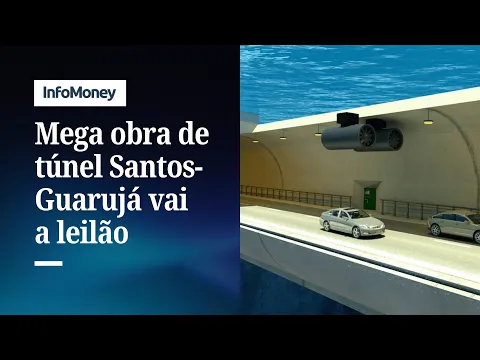
After decades of discussion, the Santos–Guarujá tunnel will finally be realized. The investment of R$ 6.8 billion, shared between the Union and the State, will be made possible through a 30-year concession.
At the end of the contract, there will be no doubt: the Union will own the tunnel, with São Paulo acting as overseer and partner in the operation. This decision resolves a deadlock that threatened the project’s future and paves the way for the São Paulo coast to receive one of the most impactful mobility projects in history.