Portuguese
 Spanish


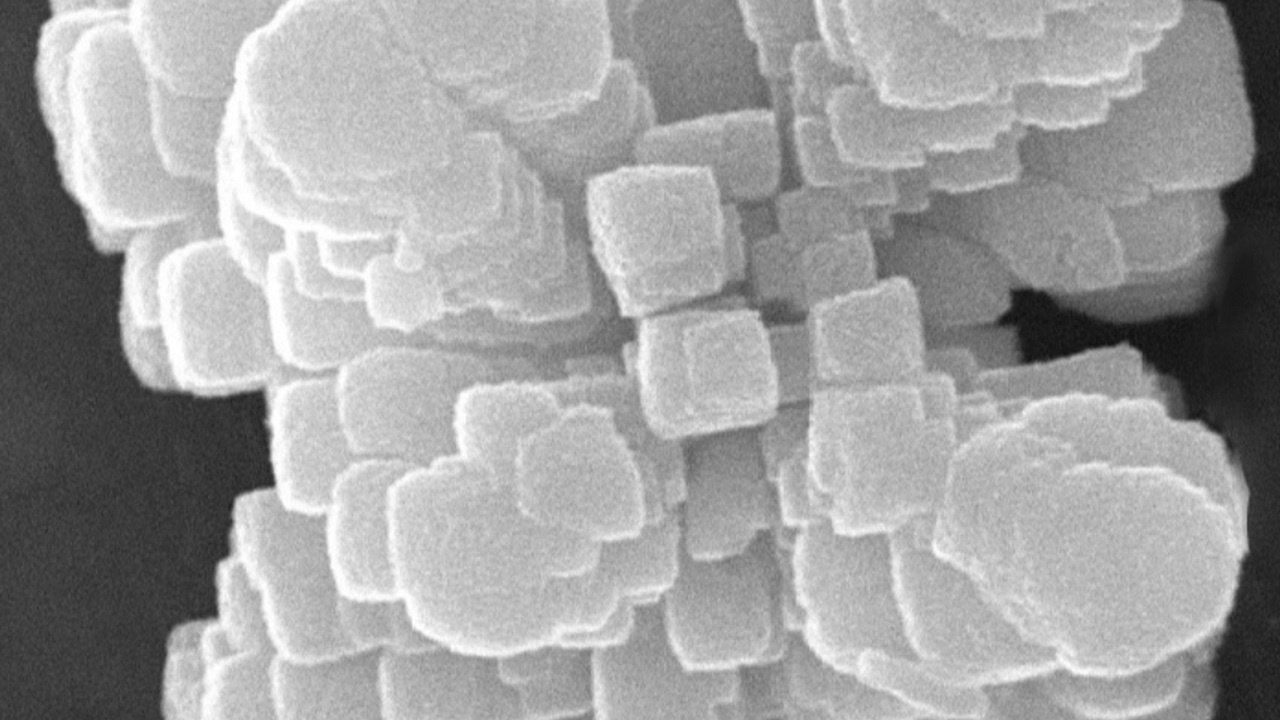

A comparison of two ceramics found that the neodymium version has grains about 19% smaller. Calculations indicate a 9% increase in the minimum energy needed to excite electrons, which influences light absorption.
Replacing lanthanum with neodymium raised the calculated minimum energy needed to excite electrons in a ceramic studied with the participation of the University of São Paulo (USP) from 1.21 to 1.32 electron volts (eV). The change, about 9%, helps explain why two similar compositions can respond differently to light.
The study was published in July 2026 in the journal ACS Applied Engineering Materials. On November 19, the São Carlos Institute of Physics at the University of São Paulo (IFSC/USP) announced the findings and highlighted the contribution of researcher Valmor Roberto Mastelaro. IFSC/USP announcement.

What changes when the minimum energy increases
Light reaches the material in packets of energy called photons. To move an electron between the ceramic’s energy bands, a photon must provide enough energy to overcome the gap between them. This gap is called the band gap. When it increases, the transition requires higher-energy photons, changing the threshold associated with absorption.
-
Taguatinga hosts space mission simulators, virtual reality experiences and free workshops at Serejão through Sunday

-
Ministry allocates R$46 million to AI platform designed to connect small data centers across Brazil’s interior
-
Residential electricity use rose 18.6% in Southeast and Central-West Brazil in November 2023, as EPE studies effects of new El Niño on the power grid
-
Four Brazilian companies learn requirements for building the Giant Magellan Telescope’s 4,200-ton rotating dome as the project takes shape in Chile’s Atacama Desert



The researchers compared two ceramics that contain nickel, manganese and oxygen. One combines these elements with lanthanum (La₂NiMnO₆), and the other with neodymium (Nd₂NiMnO₆). Calculations of the electronic structure showed an increase from 1.21 to 1.32 eV. This percentage refers to the threshold energy. The study also analyzed the emitted light after excitation and observed shifts in two ranges, from 470 to 466 nanometers and from 530 to 514 nanometers. Scientific abstract in the University of Richmond repository.
The grains became smaller while the crystal structure was preserved
The average grain size fell from 1.29 to 1.04 micrometers, a reduction of about 19%. Grains are small crystalline regions that make up the ceramic. The neodymium version showed changes in the angles between manganese, oxygen and nickel atoms while preserving the basic crystal structure.
The authors combined experiments and simulations to link the chemical substitution to differences in structure and optical behavior. This comparison makes it possible to investigate how changes in composition shift the response to light before selecting a material to test in a device. Research article in ACS Applied Engineering Materials.
What remains to be tested for solar energy applications
The study points to potential research directions in solar cells, light-activated chemical reactions, and components that use light signals. For a photovoltaic application, for example, a device would need to be fabricated and the amount of electrical energy it delivers under illumination measured. The work compared the materials’ properties in the laboratory and through simulation. The efficiency of a panel using the new composition remains to be demonstrated.