Portuguese
  Spanish


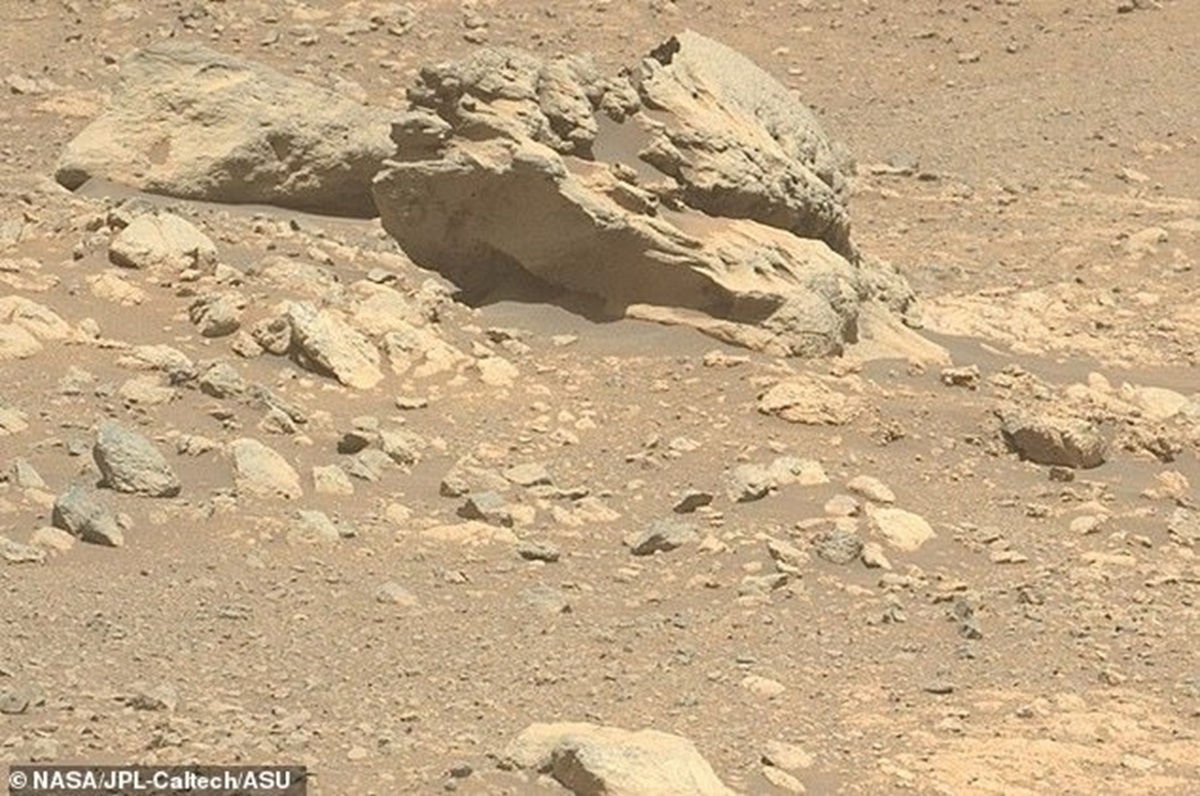

A Metallic Rock Found By Perseverance At The Edge Of Jezero Crater Surprises NASA Scientists Because It Displays Unusual Levels Of Iron And Nickel, Suggesting It May Have Formed Away From Mars
NASA scientists are intrigued after Perseverance identified a mysterious rock at the edge of Jezero Crater on Mars. The object caught attention because, according to experts, “it shouldn’t be there.”
The crater, which is 45 kilometers in diameter, is studied precisely because it is considered a possible ancient environment for life. The found rock measures 80 centimeters and initially sparked curiosity due to its “sculpted” appearance.
The early analyses indicate that it may have come from another point in the solar system. The team observed characteristics that do not fit the collection of rocks already mapped in the region examined since the landing of the mission in February 2021.
-
Brazilian Students Develop Process to Turn Styrofoam Waste into Water-Purifying Charcoal

-
Study Warns: Wi-Fi Routers Can Act as Invisible Radars, Identifying People with 99.5% Accuracy Without Cameras or Wearable Devices

-
Brazilian Researchers Develop Cost-Effective Method for Key Component of Green Hydrogen Electrolyzers, Enhancing Energy Efficiency and Equipment Longevity

-
1,700-Year-Old Roman Mosaic Discovered by Farmer Planting Cherry Trees in Turkey





What The Composition Reveals
To investigate the origin of the object, named Phippsaksla, Perseverance used the SuperCam instrument. The equipment heated a small part of the surface with a laser, allowing for precise measurement of the composition. The results revealed exceptionally high levels of iron and nickel.
This combination was surprising because no other rock in Jezero Crater exhibited a similar metallic content. Geologist Candice Bedford from Purdue University wrote in a NASA blog that this ratio of elements is typically found in meteorites formed in the cores of large asteroids, reinforcing the possibility of external origin.
Investigation At The Edge Of The Crater
Perseverance found Phippsaksla after climbing to Vernodden, an area at the top of the crater’s edge. The region is seen as strategic for understanding the local geology because it may have been filled with water in the past. This history makes Jezero one of the most promising places to search for signs of life.
Finding meteorites on Mars is not uncommon, but the elevated metallic content makes this case rare. Experts claim that the planet is constantly struck by meteorites, which have shaped its surface.
Professor Gareth Collins from Imperial College London explained that impacts occur daily, although the exact amount is still unknown.
After All, Metallic Meteorites Are Rare
The majority of meteorites hitting Mars are rocky. Only about one in every 20 has high levels of iron and nickel. These more metallic types form in large asteroids when dense minerals move to the cores of these rocks during the formation of the solar system.
Due to these characteristics, researchers believe that Phippsaksla has a similar origin. Dr. Gareth Dorrian from the University of Birmingham stated that it is likely the object comes from the asteroid belt. According to him, such meteorites withstand chemical erosion and the intense heat generated during atmospheric entry better.
Comparisons With Other Missions
Despite their rarity, ancient exploratory robots had previously identified other metallic meteorites on Mars. The Curiosity rover located several in Gale Crater, including one specimen nicknamed Lebanon, which is approximately one meter in diameter. The Spirit and Opportunity rovers also recorded similar findings during their operations.
Even so, the absence of this type of meteorite in Jezero Crater until now surprised researchers. Bedford explains that the age of the region and the presence of several smaller craters suggested that impacts should have occurred over time, depositing iron-nickel meteorites at the bottom, in the delta, and at the edge of the crater.
The Next Step Of The Investigation
The unusual nature of Phippsaksla makes NASA’s team adopt caution. More analyses will be necessary to confirm whether the object is indeed a meteorite. If this origin is confirmed, Perseverance will finally join the robots that have already studied metallic visitors on the Martian surface.
The discovery also underscores the importance of the Vernodden area, which may hold additional clues about ancient events that shaped the Martian landscape, including impacts from extraterrestrial bodies.
Other Curious Discoveries
This is not the only intriguing observation made by Perseverance in Jezero Crater. In August, the robot recorded a formation nicknamed “helmet.”
The object was covered by small bubbles known as spherules. On Earth, these structures form when droplets of molten rock cool rapidly during volcanic eruptions or when rock vaporized by an impact re-condenses.
The observed pattern indicates that the formation may have originated in an ancient period of Mars. The record adds another piece to the puzzle of evidence that helps reconstruct the geological history of the red planet.