





 Portuguese
  English
  Spanish
  4 min of reading
  1 comment


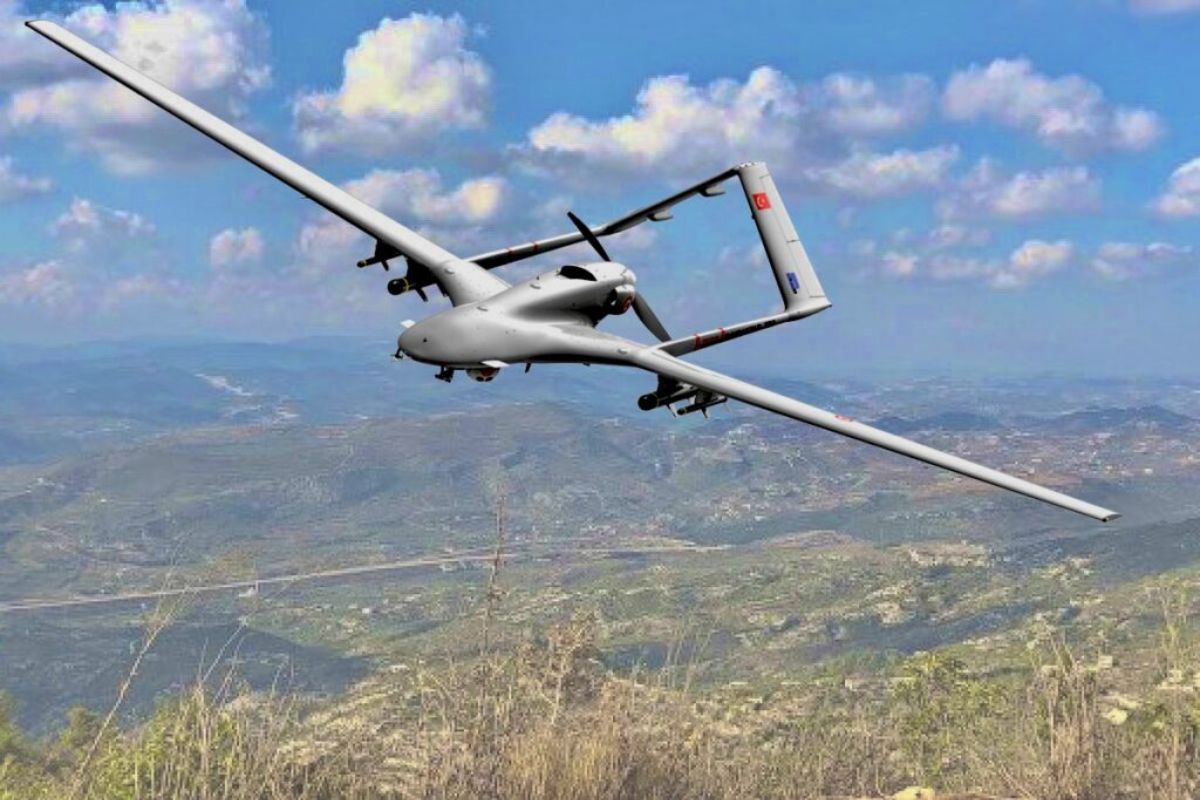


At The World Defense Show 2026, Russia Showcased a 30 mm Cartridge with Fragmentation Projectile and Remote Fuse, Adjusted by Optical Line, to Increase the Chance of Intercepting Drones and Loitering Munitions on 2A42 Gun Platforms from Ground to Close Air Support in Air Defense Operations.
The Russia presented a new 30 mm ammunition designed for combating light drones, with programmed detonation in the air and fragmentation dispersal at the most advantageous point of the target’s trajectory. The announcement was made by experts from Rostec State Corporation, with a declared focus on increasing the probability of hitting in short-range air defense scenarios.
According to the official explanation, the system calculates the best moment for explosion and automatically adjusts the detonation time via optical line, which alters the traditional direct fire logic. Instead of only relying on direct impact, the proposal broadens the neutralization window in the immediate airspace, especially against small and mobile targets such as drones and loitering munitions.
How Programmed Detonation via Optical Line Works
In the presented concept, the 30 mm cartridge combines a fragmentation projectile with a remote-controlled fuse. The operational sequence starts with reading the target’s trajectory and determining the explosion point in the air, so that the cloud of fragments is projected in the drone’s flight path. This design prioritizes the probability of hitting, not just the millimetric precision of direct impact.
-
New semi-autonomous legged robot technology challenges the limitations of space exploration by operating almost without human intervention on the Moon.
-
Super toxic red mineral found in the double burial of two women aged 1,900 years near the banks of the Dnieper River in Ukraine.

-
No one expected this under a common street: archaeologists find 3 intact oak barrels, buried about 400 years ago, with traces of lime and pieces related to 17th-century construction.
-
After decades of failed attempts, Brazil is once again looking to space with an orbital rocket measuring 12 meters, weighing 12 tons, costing R$ 189 million, and scheduled for launch in 2026, in a new race to finally achieve autonomous access to orbit.

The optical line serves as a channel for adjusting the detonation time, automating a critical stage of engagement. Practically, this tends to reduce the interval between detection, calculation, and effective fire, a decisive factor when the target has a small profile and irregular movement.
The objective described by Rostec is clear: to improve the efficiency of 30 mm guns against light air threats without altering the core logic of the platform that is already in service.
Which Platforms with 2A42 Gun Fit Into This Scenario
The ammunition was developed for small-caliber artillery systems equipped with the 2A42 automatic gun. Among the mentioned platforms are air-droppable combat vehicles, BMP-2, BMPT, and helicopters like Mi-28NM and Ka-52M. This indicates a cross-cutting application, covering both ground and air vectors within the same family of armaments.
This point is relevant because it broadens the operational effect of the innovation: instead of creating an isolated system, Russia signals the intention to reinforce means already distributed across different operational environments. In practice, integration into known platforms can shorten the tactical adoption curve, provided the set of sensors, fire calculation, and training align with the new logic of programmed detonation.
What Changes in Defense Against Drones and Loitering Munitions
The sought gain is linked to the type of threat. Light drones and loitering munitions pose challenges due to their small size, variable signatures, and maneuverability at low altitudes.
By programming the explosion to occur at the most favorable point in the target’s route, the ammunition attempts to turn a single shot into an interception area, increasing the chance of neutralization on the first engagement.
There is also a strategic message in this move: short-range defense needs to respond to more frequent, cheaper, and more dispersed attacks.
In this context, the solution presented by Russia aims to take advantage of already established guns and enhance their effectiveness with detonation intelligence. The focus is not to replace the entire defensive architecture, but to increase the resilience of layers that are already on the front line.
Where the Announcement Was Made and Why This Stage Matters
The presentation took place at the World Defense Show 2026 in Riyadh, Saudi Arabia, from February 8 to 12, 2026, as part of the joint Russian exhibition organized by Rosoboronexport, part of Rostec. The location and date are not a mere protocol detail: they are part of the industrial and geopolitical message of the launch.
Bringing this ammunition to an international event of this scale places Russia before military, technical, and commercial audiences simultaneously.
This includes those seeking updates for air defense based on already operational 30 mm guns. By presenting the product in this environment, the country turns an ammunition innovation into a showcase of technological capability applied to a problem that is central to modern conflicts today.
The new 30 mm ammunition presented by Russia combines fragmentation, remote fuse, and optical adjustment of detonation to tackle an objective challenge: intercepting small aerial targets with a higher probability of hitting.
The project directly aims at evolving the threat posed by drones and proposes increasing the effectiveness of platforms with the well-known 2A42 gun in the operational field.
In your view, solutions for programmed detonation like this tend to durably change short-range defense, or does the real impact depend more on integrating with sensors and training for teams? In a scenario of increasingly accessible drones, what factor do you consider decisive to avoid overwhelming defenses?







Thanks for the article. I think that cheap drones force the defending side to increase the effectiveness of protection by spending a minimum of money. The obvious way, in this case, is to increase the effectiveness of existing military systems not through new technical solutions, but through a new approach to the use of these tools. Currently, there is a lot of ammunition that will turn the drone into garbage, but there are problems with aiming and hitting this drone. Algorithms that allow you to detonate ammunition at the right moment and in the right place are the key to success. Moreover, I assume that in the future it will be necessary to deal with swarms of UAVs, and there will also be a need to choose the optimal detonation points in order not only to destroy the swarm, but also to save ammunition.