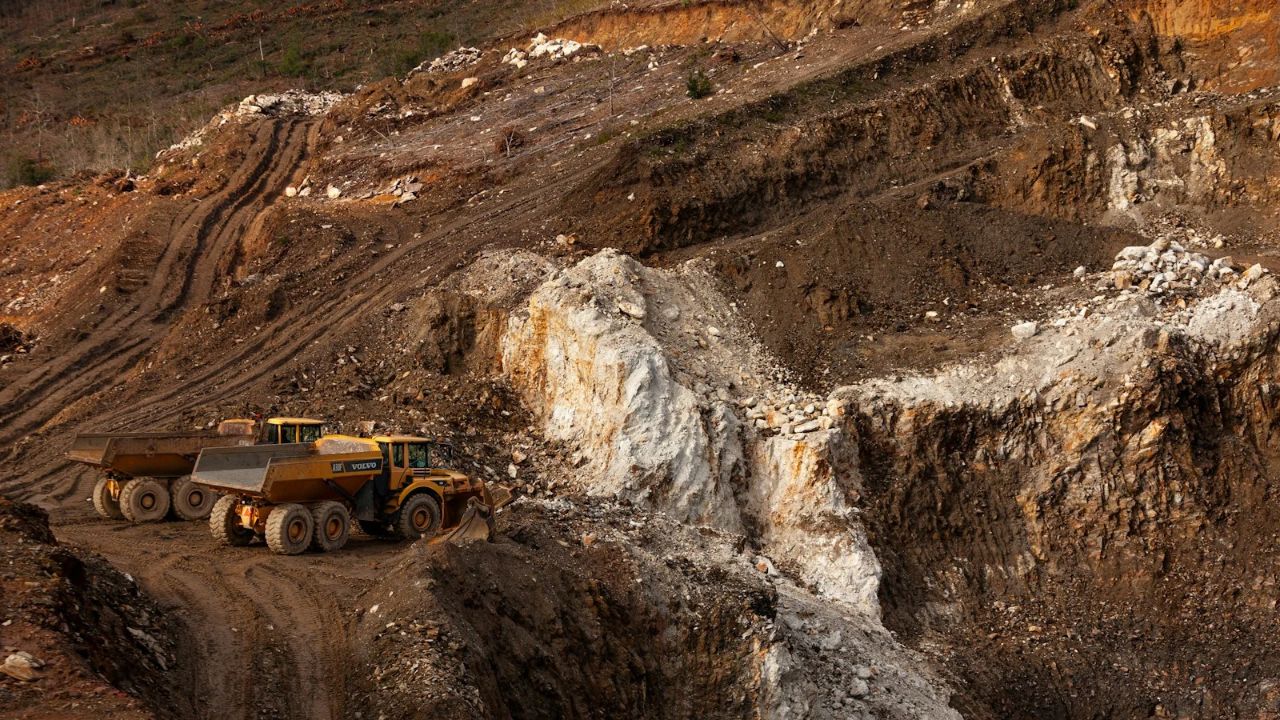
Project launched in 2022 reuses material from the ornamental stone industry in Anchieta, Espírito Santo, as the mining company seeks to cut emissions by 2032.
Samarco has used approximately 588,000 metric tons of marble waste from Espírito Santo to make iron ore pellets, turning material discarded by the ornamental stone industry into an input for mining. The company presented the technology at COP31, held Nov. 9-20, 2026, in Antalya, Turkey. The material now accounts for 70% of the fluxes used in its pelletizing process.
According to information published by Brasil Mineral on Nov. 20, the initiative is part of the mining company’s decarbonization plan, which aims to reduce the intensity of its direct and indirect energy-related emissions by 30% by 2032, using 2015 as the baseline. The project uses waste from marble processing to replace some of the limestone used in industrial pellet production.
Samarco has reused 588,000 metric tons of marble waste in pelletizing
The conversion of the waste into raw material was studied before it was adopted commercially. Samarco began researching the use of material from marble mining in 2019 and conducted tests to assess its chemical compatibility with the pelletizing process.
-
Mining companies in Pará invest R$1.7 billion in social programs, revealing eightfold difference

-
Aperam Launches Minas Gerais Project to Explore New Uses for Stainless Steel and Cut Industrial Costs
-
Belém Startup Tests Bauxite Tracking at MRN Stockpiles to Preserve Ore’s Origin
-
Irecê Phosphate Project Clears Public Hearing and Awaits R$160 Million Calciner Due in December


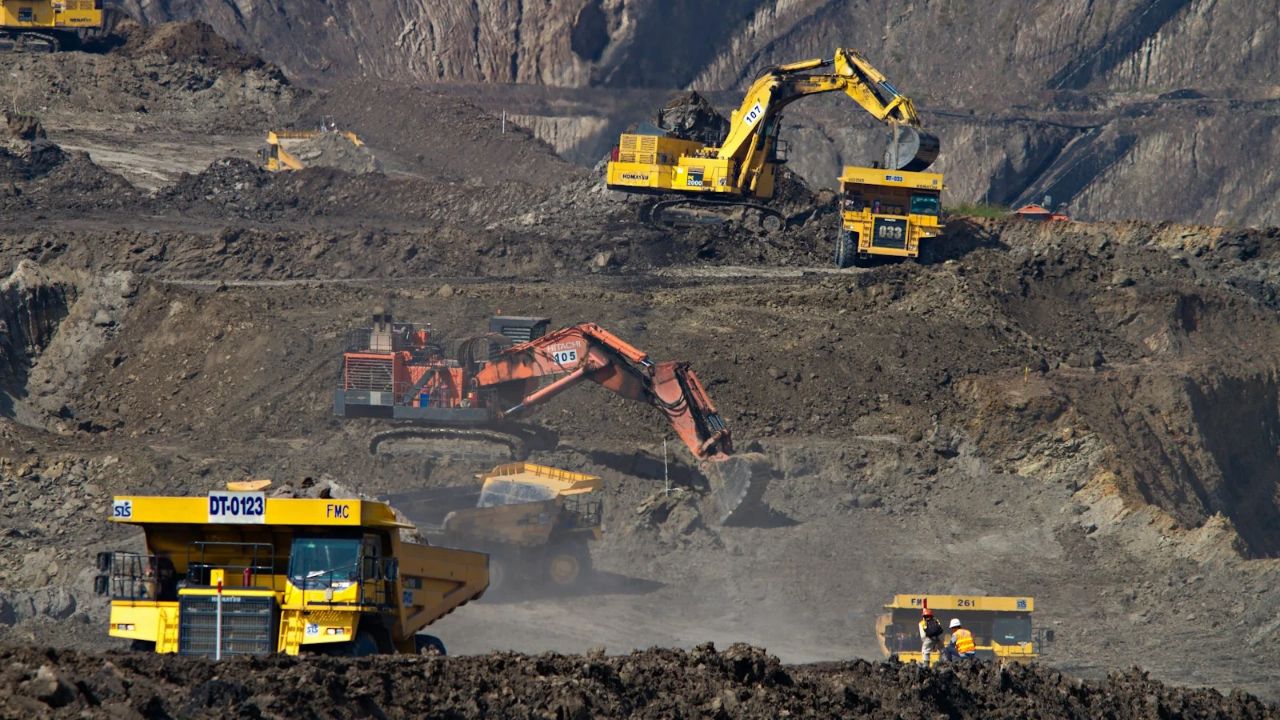

In October 2022, the co-product was approved for industrial use. According to a Samarco statement published in June 2023, the company had already purchased more than 21,000 metric tons of the material, and approximately 30% of the pellets produced at that stage used the new input.
The project expanded in the following years. By November 2026, the cumulative volume of marble co-product used had reached about 588,000 metric tons, according to figures presented by the company at the climate conference.
The material came to account for 70% of the fluxes used in pelletizing. That share refers to the co-product’s proportion of the inputs used to adjust pellet properties, not its share of the mineral product’s total composition.
The initiative connects two major industrial activities in Espírito Santo: the extraction and processing of ornamental stone and the production of pellets for the steel market.
Marble waste replaces some of the limestone used to make iron ore pellets
Pelletizing is an industrial process that turns fine iron ore particles into small, durable spheres later used to produce iron and steel.
In production, concentrated ore is mixed with other materials, receives a controlled amount of moisture and passes through equipment that forms unhardened pellets. The spheres are then heat-treated to achieve the strength required for transport and use in steelmaking.
Inputs used in the process include fluxes, which adjust the material’s chemical properties. Limestone has traditionally been used at this stage, but a marble co-product can perform some of the same functions if it has a suitable composition.
Waste from ornamental stone contains carbonate minerals that can perform functions similar to those of conventional limestone. However, substitution depends on chemical analyses and industrial tests to ensure the pellets continue to meet customer specifications.
In a statement published in 2023, Samarco said tests conducted with the material met the quality indicators it monitors. The company also reported benefits related to fuel consumption and carbon dioxide emissions.
Using marble reduces the need to buy some conventional limestone and creates an industrial use for waste from another economic activity. Samarco, however, did not provide an updated estimate in its COP31 announcement of the financial savings or tons of CO₂ avoided exclusively through this project.
Espírito Santo combines marble production with plants that supply the global steel industry
Espírito Santo plays an important role in Brazil’s ornamental stone supply chain. Marble and granite extraction and processing produce blocks, slabs and other products for construction, the finishing materials market and export.
These operations also generate leftover stone and fine materials that require proper disposal. Industrial use depends on the characteristics of each type of waste, since materials from stone processing do not all have the same chemical composition.
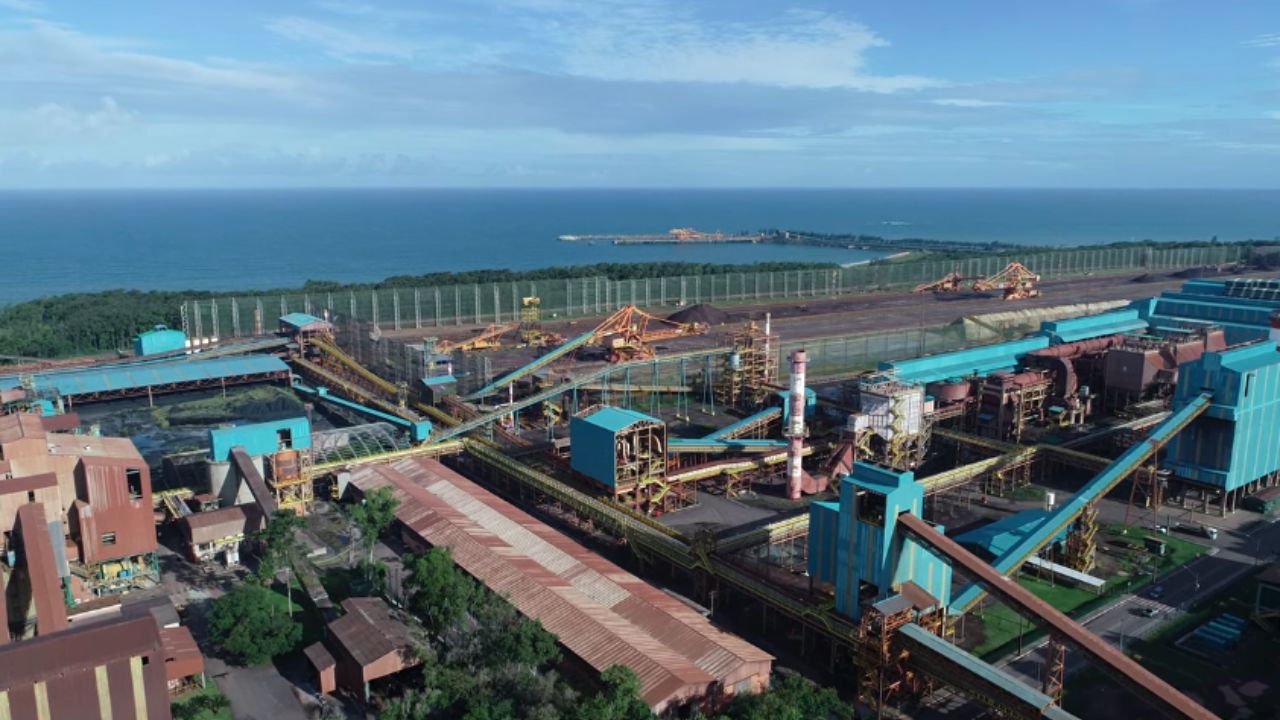
At Samarco, the material is used at the Ubu Complex, in Anchieta on the coast of Espírito Santo, where the mining company operates its pelletizing plants and export facilities.
The ore arrives in Espírito Santo after being extracted and processed in Minas Gerais. According to Samarco’s 2025 Sustainability Report, the concentrate travels about 400 kilometers through slurry pipelines before being turned into pellets.
The links between mining, processing and steelmaking also drive the search for lower-emissions technologies. CPG has reported that Brazilian steel and cement companies will be eligible for a funding call of up to R$81 million to develop and test decarbonization solutions in industrial facilities.
Samarco also replaces fossil fuels and sets a target to cut emissions by 30%

Reusing marble was one of the initiatives Samarco presented at COP31. The company also said it uses charcoal fines, a co-product associated with the eucalyptus biomass supply chain, to partially replace coke and coal in its pelletizing furnaces.
The company announced that this application received a Green Patent from Brazil’s National Institute of Industrial Property (INPI) in 2026. The recognition is tied to the technology developed to use the material in industrial processes.
Another area of focus is electricity consumption. In its official communication about COP31, Samarco said it has used electricity sourced entirely from certified renewable sources since 2022.
The company holds stakes in hydropower projects and announced a partnership with Casa dos Ventos to expand its supply of wind power.
The climate plan sets a target to cut Scope 1 and 2 emissions by 30% per ton produced by 2032, compared with 2015. Scope 1 covers direct emissions from operations, while Scope 2 accounts for emissions associated with purchased energy.
The target is expressed in emissions intensity, not absolute volume. Its progress therefore needs to be assessed by considering both the amount of greenhouse gases emitted and production growth.
The search for alternatives also involves treating materials left over from mining. Another CPG report covered a technology for filtering ultrafine tailings, presented by Diemme at Exposibram 2026, to improve the separation of water and solids during mineral processing.
Miner operates at 60% of capacity and expects full resumption in 2028
The decarbonization strategy is unfolding as Samarco expands its operations. The company said at COP31 that it is currently using 60% of its installed production capacity, with plans to reach 100% starting in 2028.
The restart follows the shutdown caused by the collapse of the Fundão dam in Mariana, Minas Gerais, in November 2015. The disaster killed 19 people and caused environmental and social damage along the Rio Doce basin, creating remediation obligations that remain relevant to the company’s operations.
Since restarting operations in December 2020, the mining company has been restoring facilities and gradually increasing production of iron ore pellets.
Production growth requires monitoring environmental performance under different operating conditions. Assessing the announced results will require examining emissions inventories and the actual volumes of alternative fuels and inputs used.
At the conference in Turkey, Samarco President Rodrigo Vilela took part in three panels on the energy transition and decarbonization. Mariana Lisbôa, the company’s director of sustainability, government relations and communications, also presented the miner’s initiatives.
The company called for increased investment and infrastructure to enable the steel supply chain to adopt technologies with lower carbon intensity.
With the marble co-product now incorporated into pelletizing, Samarco’s next documented challenge is to maintain its use as production capacity increases, a ramp-up planned through 2028. Emissions per ton produced will need to be tracked against the target set for 2032.