Portuguese
 Spanish


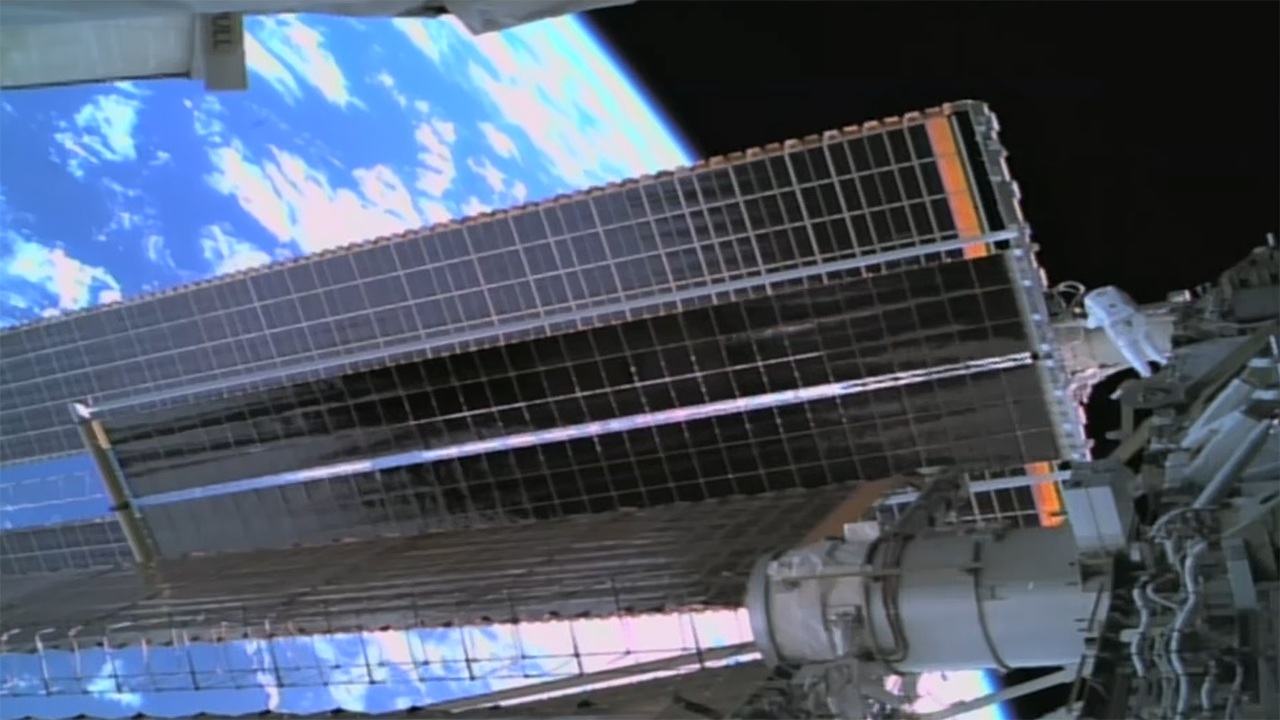

Astronauts installed and deployed the eighth iROSA array on November 5 after nearly seven hours of work outside the International Space Station. See how the equipment travels rolled up and unfurls in orbit.
The last of the International Space Station’s (ISS) eight roll-out solar arrays was installed and deployed on November 5, 2026. The spacewalk by Anil Menon of NASA and Joshua Kutryk of the Canadian Space Agency lasted 6 hours and 59 minutes. NASA’s tally puts the upgrade’s increase in the station’s power-generation capacity at from 160 to about 215 kilowatts (kW). NASA’s report on the installation.
The final installation completed work that began in 2021
Menon and Kutryk secured and deployed the eighth array on the right side of the station’s external structure, at power channel 3B. On October 29, the pair had installed the seventh array on channel 2A, on the opposite side. During that spacewalk, the Canadarm2 robotic arm carried Menon to the area where the array was to be installed. Report on the seventh array’s installation.
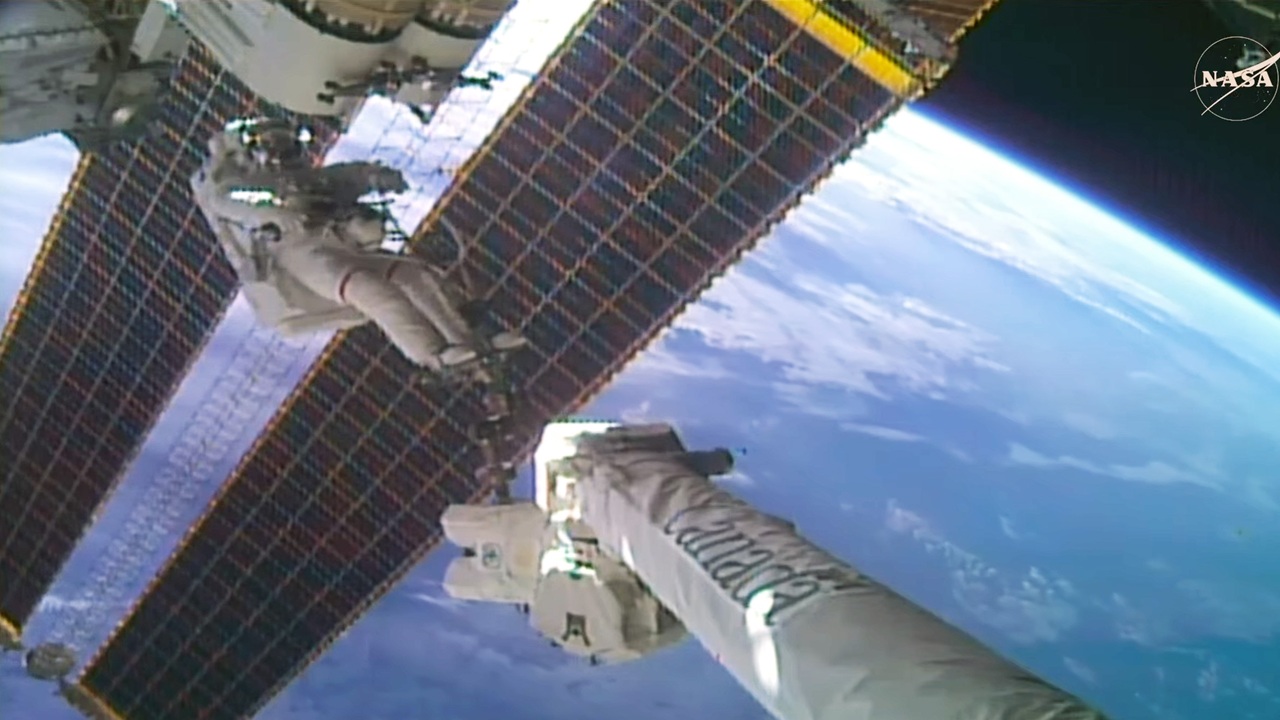
The upgrade program began in February 2021. A total of 18 spacewalks were needed to prepare the power-channel equipment and install all eight arrays. The cover photo, released by NASA+, shows the final array beginning to unfurl after installation.
-
Replacing lanthanum with neodymium makes ceramic grains 19% smaller and changes light absorption, USP-backed study finds

-
Taguatinga hosts space mission simulators, virtual reality experiences and free workshops at Serejão through Sunday
-
Ministry allocates R$46 million to AI platform designed to connect small data centers across Brazil’s interior
-
Residential electricity use rose 18.6% in Southeast and Central-West Brazil in November 2023, as EPE studies effects of new El Niño on the power grid

How a solar array travels rolled up and unfurls in orbit
At launch, the flexible blanket of photovoltaic cells is packed into a cylinder. This shape lets a large collection surface fit inside a smaller cargo compartment. The first two iROSA arrays traveled in the external cargo bay of a Dragon cargo capsule in 2021. The final pair was also carried in a Dragon’s external cargo bay on another mission. NASA’s explanation of transportation and installation.
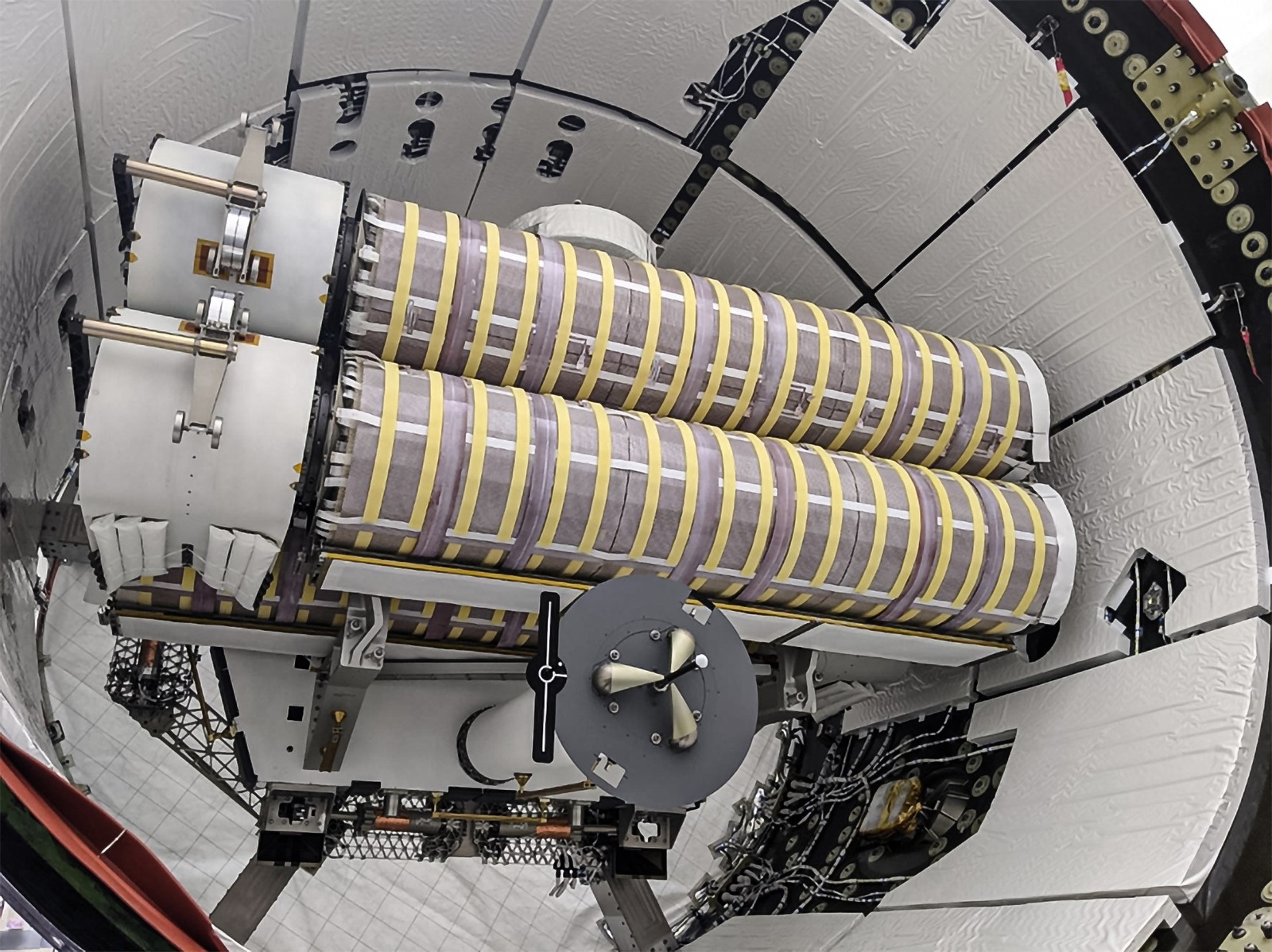
The composite-material side struts are deformed while the assembly is rolled up, storing elastic energy. When the assembly is released, the struts return to their original shape and pull the blanket outward, much like an unrolling carpet. Once extended, they also support the blanket. The same component that moves the array as it deploys gives the assembly rigidity during operation. How the deployment technology works.
What 215 kW means for the station
The new roll-out solar arrays were installed in front of the old ones. The sections of the original arrays that remain exposed to the Sun continue to generate electricity. The approximately 215 kW capacity reported at the program’s completion refers to the station with all eight iROSA arrays added. That is about 55 kW more than its previous 160 kW capacity.
A kilowatt measures power, or how much energy a system can deliver per unit of time. On the ISS, the additional capacity provides more headroom to keep laboratory equipment, experiments and operating systems running. The upgrade’s results come from combining the new arrays with the sections of the old arrays that continue to generate power.