





 Portuguese
  English
  Spanish
  6 min of reading
  0 comments


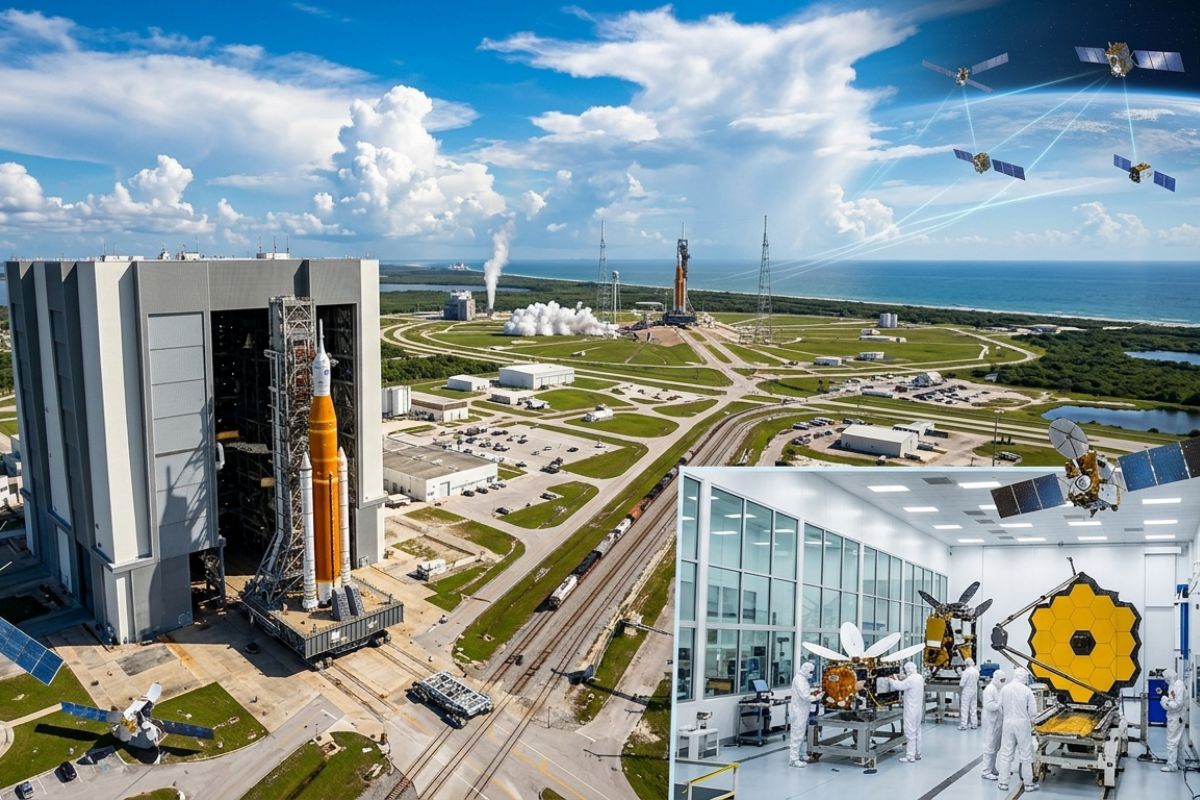
Understand how NASA designs, tests, launches, activates, and retires satellites in Earth orbit, with an eye on Earth, deep space, and even possible signs of life.
When we think of NASA, it’s common to remember rockets, astronauts, and spectacular images of the universe. However, the agency’s greatest scientific strength lies elsewhere: a fleet of satellites that act as eyes and ears in orbit, collecting data, transmitting signals, and opening new windows for science.
In this text, you will see how NASA uses satellites to monitor climate and atmosphere, maintain mission communications, and explore deep space. And, step by step, how these machines are conceived, built, tested, launched, activated, and eventually retired.
The real “scientific weapon” of NASA is in orbit
NASA relies on satellites because they can stay “on watch” for years, repeatedly passing over areas of interest and observing patterns that do not appear in isolated measurements.
-
Credit card on the inside: acetone reveals antenna, Soviets create energy-free listening devices, and fraud evolves from easily cloneable magnetic strips to encrypted chips and still vulnerable contactless payments today.

-
Scientists have recorded 12 sunken vessels on the seabed around the port of Santos: seven have already been studied, with highlights including the Casador from 1828, the Questrel that appears at low tide, and the Professor Besnard, which capsized after a recent heavy rain.

-
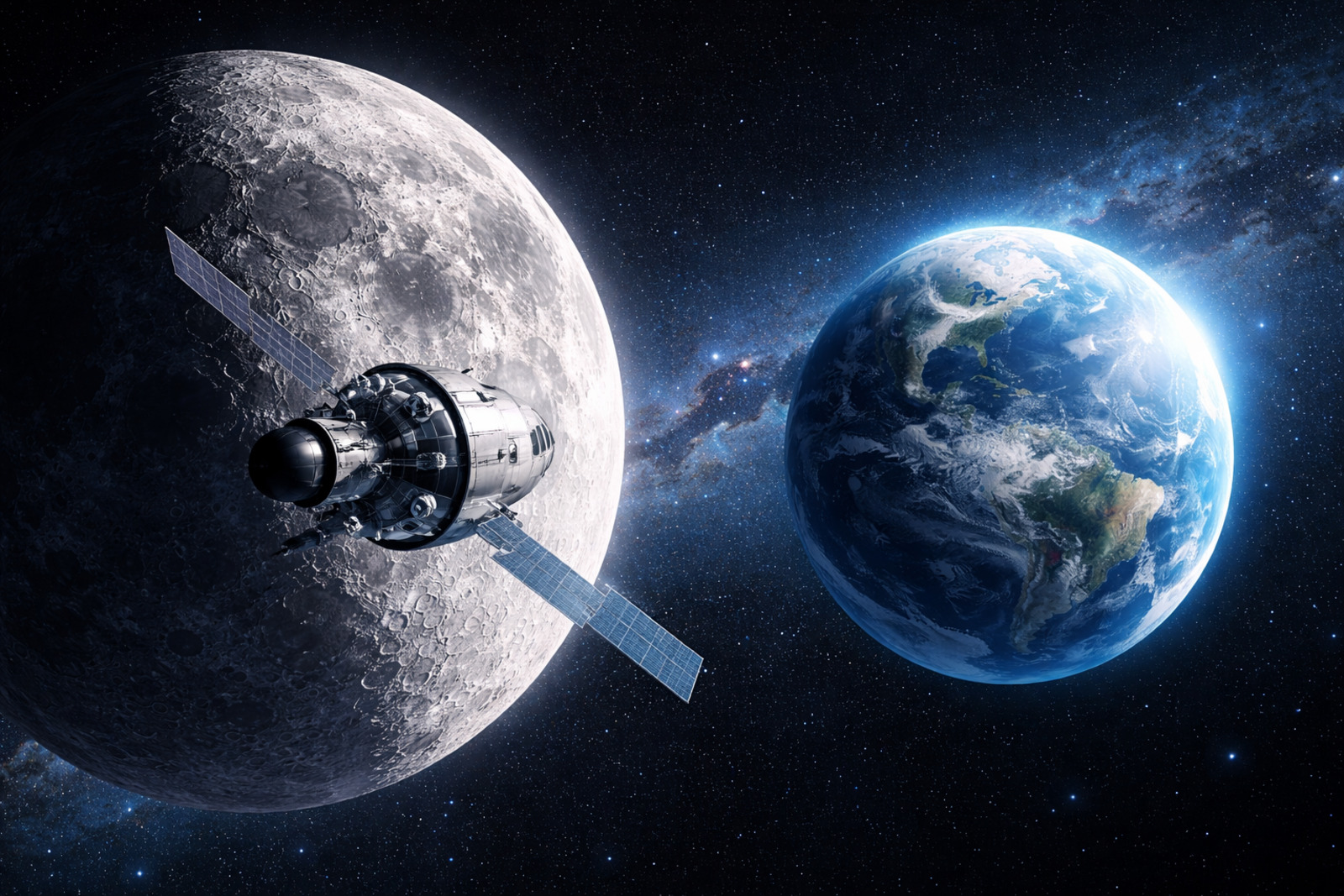
The time when astronauts traveled the farthest in space happened now: Artemis II took Orion to 406,771 kilometers from Earth, surpassing the Apollo 13 milestone by 6,600 kilometers.
-
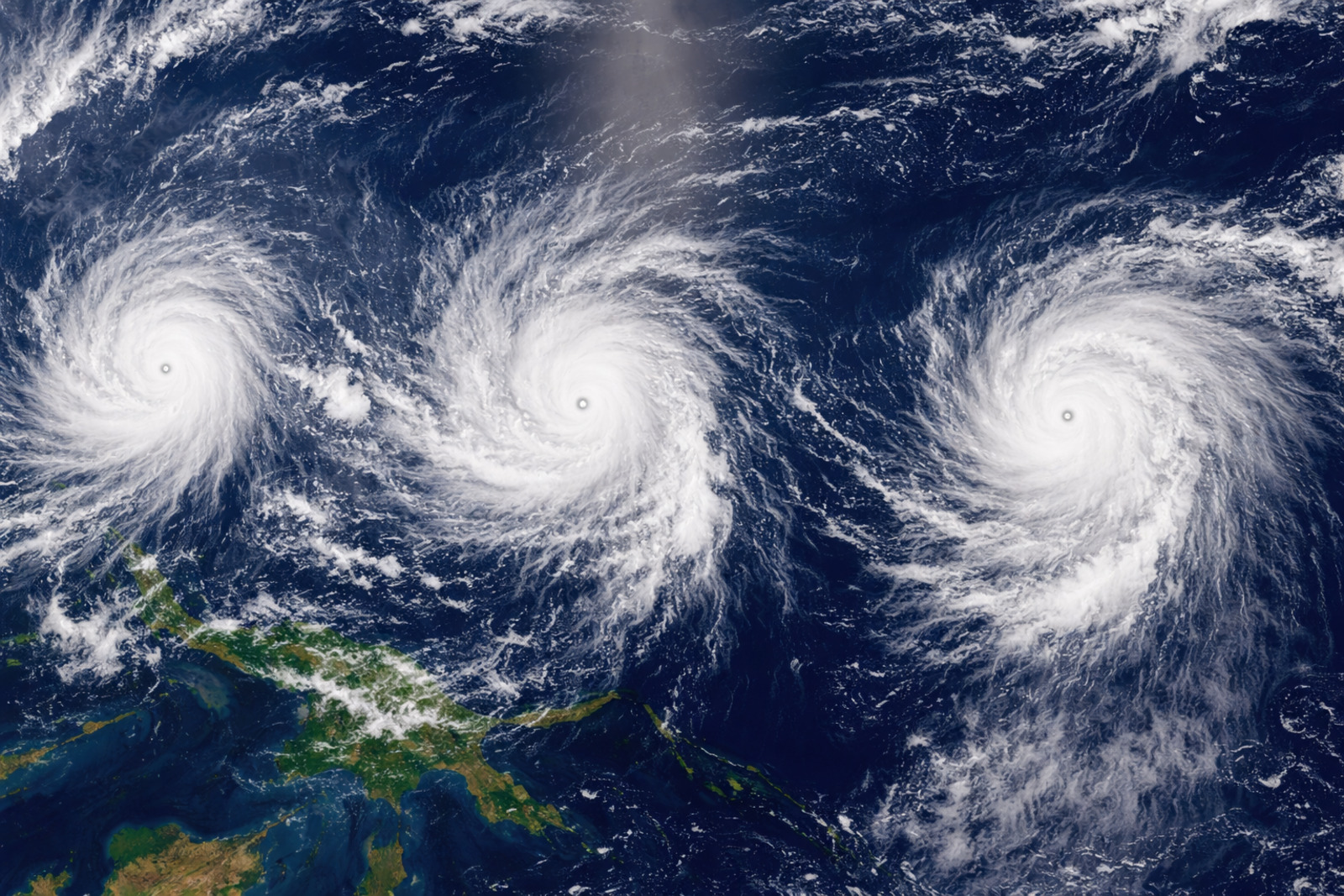
The rare emergence of triple cyclones in the Pacific can unleash extreme rainfall on islands, form twin storms, and even strengthen a stronger El Niño on the planet.
It is a silent, continuous, and extremely valuable job, because it transforms space into a permanent laboratory.
In practice, NASA uses satellites to study Earth’s atmosphere, monitor weather conditions, observe other planets, and investigate deep space.
And there is one goal that draws curiosity and research at the same time: to try to discover if there are signs of life beyond Earth, directly or indirectly, based on clues like water and favorable environments.
What is a satellite and why is it important to NASA

Satellites are objects launched into space to orbit Earth or other bodies, with well-defined tasks: collecting data, observing specific regions, or communicating with other missions. For NASA, this means transforming orbits into strategic points for observation and connection.
Each NASA satellite is born with a purpose, and this purpose determines everything: orbit, instruments, power, antennas, communication system, and operational routine.
A satellite can be “eyes” pointed at the planet, a “bridge” of data for distant spacecraft, or a “telescope” aimed at deep space.
Types of NASA satellites: from Earth to Mars
In terms of mission, NASA works with different classes of satellites, each with clear functions:
Earth observation satellites
Examples like Landsat are cited as references for monitoring the planet over time. The logic is to track changes on the surface and produce consistent data over long periods.
Communication satellites
The TDRS constellation appears as a central piece, distributed in strategic positions to ensure communication and data retransmission. In other words, NASA needs these satellites to keep missions connected, even when the target is far away and moving.
Scientific satellites and space telescopes
The Hubble is remembered as a telescope capable of observing the universe at great distances and capturing information and images that would not be possible with the same quality from the ground. Here, NASA uses satellites as complete scientific instruments, not just as “cameras in orbit.”
Planetary exploration satellites
The Mars Reconnaissance Orbiter is cited as an example on Mars, focusing on searching for signs of water and possible signs related to life. It is NASA using satellites as environment investigators, not just as observers.
And there is a historical milestone that helps to understand the beginning of it all: the first satellite launched by NASA was Explorer 1, in 1958, associated with the discovery of the Van Allen radiation belt. This discovery reinforced the importance of satellites for understanding the environment around Earth.
How a satellite is born: objectives, requirements, and engineering
Before there is metal, screws, or solar panels, NASA starts with a definition that seems simple but determines the entire project: what exactly does the satellite need to do? Monitor global temperature, observe a planet’s atmosphere, map deep space, search for indirect signs of life?
With the objective defined, NASA and its teams of scientists and engineers transform the idea into technical specifications.
This is where the satellite stops being a “concept” and becomes a project, with choices about instruments, power, communication, and the most suitable orbit to fulfill the mission.
Rigorous testing: the example of Hubble and the cost of error
One of the most critical phases for NASA is ensuring that the satellite functions in the space environment, where there is radiation, temperature variations, vibration, and vacuum. Therefore, tests and simulations in extreme conditions come into play.
The text highlights an emblematic case: Hubble was launched in 1990 and had a failure in its main mirror, impairing image quality.
The correction came with a repair mission in 1993, when NASA astronauts adjusted the satellite. The lesson is straightforward: testing well is expensive, but making a mistake is even more costly, and fixing things in space is almost always difficult.
Assembly: structure, energy, instruments, and communication

In construction, NASA needs to balance strength and lightness. The text mentions materials like aluminum and carbon fiber composites to form a base capable of withstanding launch and operating in orbit.
Next comes energy. Most NASA satellites rely on solar panels, as there is no electrical grid in space. Without stable energy, there is no science or communication, so this stage is treated as a pillar of the project.
Then come the scientific instruments: cameras, radiation sensors, spectrometers, and other equipment aimed at data collection.
And, to complete the cycle, communication: NASA integrates antennas and systems that ensure transmission to ground stations, because data collected without sending it to Earth does not yield scientific results.
The moment of tension: launch and insertion into the correct orbit
With the satellite ready, NASA needs to place it in the desired orbit. The text mentions rockets like Atlas 5 and Falcon 9 as launch options. The satellite follows in the payload, and during this process, any failure can end the mission.
Besides the rocket, there is another decisive factor: the calculations that define position and trajectory. NASA relies on orbital precision, because the mission only makes sense if the satellite is in the “right place” in space to fulfill its function.
Activation and commissioning: turning on a satellite with total control


After launch, the satellite separates from the rocket and does not “wake up” all at once. Activation occurs in a controlled manner. First, basic systems come online, such as solar panels. Then comes commissioning, a testing phase already in space, which can last days or even months.
During this period, NASA tests antennas, cameras, and sensors until confirming that the satellite is ready to operate.
From then on, observation satellites capture images and data, communication satellites retransmit signals, and scientific satellites begin analyses. Each new operating satellite means a new volume of possible discoveries.
Satellites have a shelf life and NASA needs to plan the end
Nothing lasts forever. The text emphasizes that repairing or refurbishing a satellite in orbit is not simple, and maintenance missions, like in the case of Hubble, are exceptions.
Therefore, NASA designs satellites to operate autonomously for many years, but always with the understanding that there will be an end of useful life.
This final phase may involve deactivation, reduction of operations, and mission termination strategies, depending on the type of satellite and the orbit it is in.
The future: minisatellites, new missions, and the search for life
The text points to a clear trend: NASA is tracking the evolution of smaller, lighter, and more powerful satellites, which are entering orbit as a new technological generation. At the same time, the agency is developing increasingly sophisticated satellites and telescopes.
An example cited is the James Webb Space Telescope, launched in 2021, focused on studying the first galaxies. And, looking ahead, NASA continues with plans for satellites for planetary exploration, including studies of Jupiter’s moons like Europa, where there is suspicion of subsurface oceans, a type of environment that could be a relevant clue in the search for life beyond Earth.
The question that remains is simple, but says a lot about the curiosity of those who follow NASA: did you have any idea how satellites are made and why they are so important for science?








Seja o primeiro a reagir!