





 Portuguese
  English
  Spanish
  3 min of reading
  0 comments



The Famous Lean of the Leaning Tower of Pisa Is Supported by an Equilibrium Between Gravitational Force, The Clay Soil of The Region and Engineering Interventions, Challenging The Laws of Physics for Centuries.
The Leaning Tower of Pisa, an unmistakable symbol of Italy, has maintained its unstable position for over 650 years. But its lean hasn’t always been the same. In the 1990s, for example, the tower reached its peak in drama, leaning at 5.5 degrees.


At that time, it was closed to the public due to the risk of collapse. This fear was heightened by the collapse of the Civic Tower of Pavia in 1989.
The disaster raised an unavoidable question: was it possible to save the Leaning Tower of Pisa from a similar fate?
-
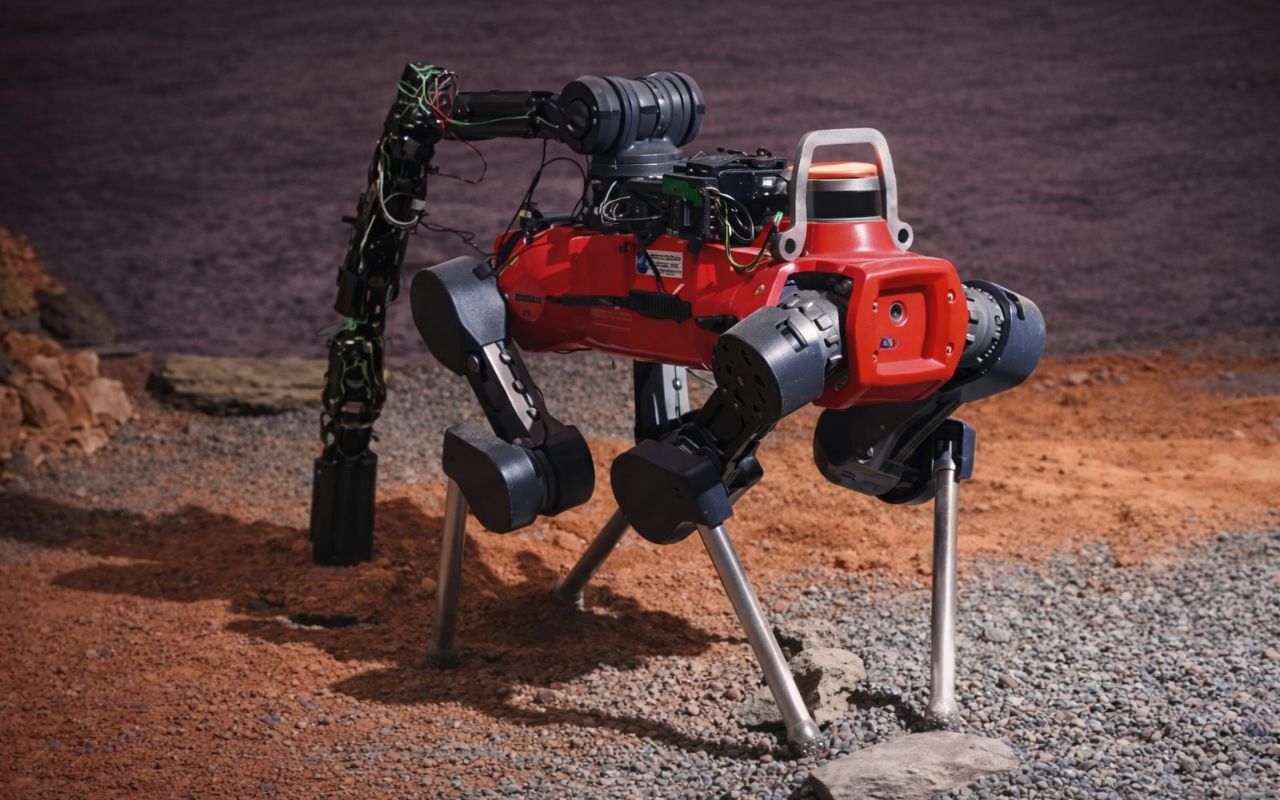
New semi-autonomous legged robot technology challenges the limitations of space exploration by operating almost without human intervention on the Moon.
-
Super toxic red mineral found in the double burial of two women aged 1,900 years near the banks of the Dnieper River in Ukraine.

-
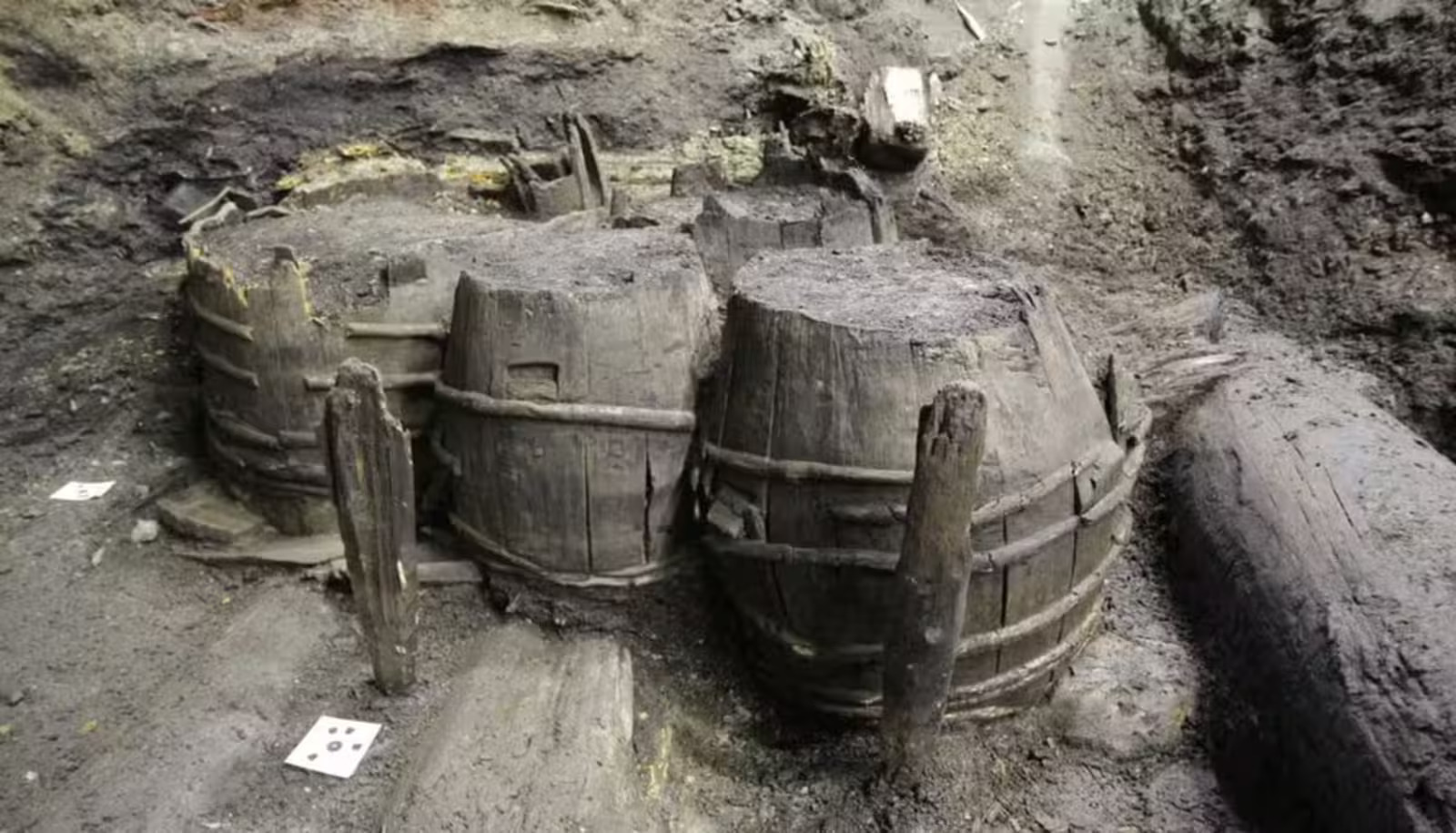
No one expected this under a common street: archaeologists find 3 intact oak barrels, buried about 400 years ago, with traces of lime and pieces related to 17th-century construction.
-
After decades of failed attempts, Brazil is once again looking to space with an orbital rocket measuring 12 meters, weighing 12 tons, costing R$ 189 million, and scheduled for launch in 2026, in a new race to finally achieve autonomous access to orbit.


The Beginning of The Lean: A Soil Mistake
The construction of the tower began in the 12th century, but soon encountered problems due to the soft soil. The structure began to lean even before it was completed.
It took nearly 200 years to finalize the project, which faced a long pause during a tumultuous period in the Republic of Pisa. Ironically, this pause allowed the soil to settle, preventing the tower from completely collapsing.
By the end of the 13th century, the solution found for the problem was ingenious and peculiar: to build the upper floors with a curved shape to compensate for the lean. This adjustment gave the tower its unique appearance, which today delights millions of tourists annually.
Frustrated Correction Attempts
Over the centuries, engineers have tried everything to straighten the tower, but the results were disastrous. In 1934, Benito Mussolini ordered the injection of concrete into the foundation, believing this would solve the problem.
The effect was the opposite: the lean increased even further. Only in the second half of the 20th century, with advances in technology, was it possible to study the soil and the structure precisely.
Finally, an effective solution was implemented in the 1990s. Part of the soil under the higher side of the tower was removed with an inclined drill, which reduced the lean to about four degrees — an angle similar to what was recorded two centuries earlier.
After the stabilization process, experts assured that the tower would remain safe for at least another 200 years.
A Structural Enigma
The question that intrigues many is: how has the Leaning Tower of Pisa never been toppled by an earthquake? The answer lies precisely in the soil that caused its lean.
Studies show that the soft ground acts as a cushion against seismic vibrations. In short, the same element that threatens the stability of the tower protects it from earthquakes, an irony that reinforces its worldwide fame.
What started as an apparent engineering disaster has turned into one of Italy’s greatest prides. The Leaning Tower of Pisa, with its history of challenges and triumphs, is now a living example of how human ingenuity and natural peculiarities can create something truly unique.
Technical Data of The Leaning Tower of Pisa
| Feature | Detail |
|---|---|
| Official Name | Leaning Tower of Pisa (Torre Pendente di Pisa) |
| Location | Pisa, Italy |
| Start Date of Construction | August 9, 1173 |
| Completion Date | 1372 |
| Current Age | 851 years since the start of construction; 652 years since completion |
| Height | 55.86 meters on the highest side; 56.67 meters on the lowest side |
| Current Lean | Approximately 4 degrees (after stabilization corrections) |
| Base Diameter | 15.484 meters |
| Total Weight | Approximately 14,500 tons |
| Main Material | White Marble |
| Number of Stories | 8 (including the base) |
| Original Function | Bell Tower of the Cathedral of Pisa (Duomo di Pisa) |
| Architect | Bonanno Pisano (attributed, though not historically confirmed) |
| Architectural Style | Romanesque |
| Correction of Lean | Stabilization projects carried out between 1990 and 2001 |
| World Heritage | Declared by UNESCO in 1987 |








-

-

2 pessoas reagiram a isso.