





 Portuguese
  English
  Spanish
  4 min of reading
  0 comments


New Generation of the Pickup Maintains Traditional Versions, Includes Electric Option and Bets on Basic Configuration Focused on Cost and Resistance. Toyota Expands Global Range of the Hilux Without Abandoning the Classic Structure That Established the Model.
Toyota introduced the new generation of the Hilux in its entry-level version, aimed at professional use and focused on reduced maintenance costs.
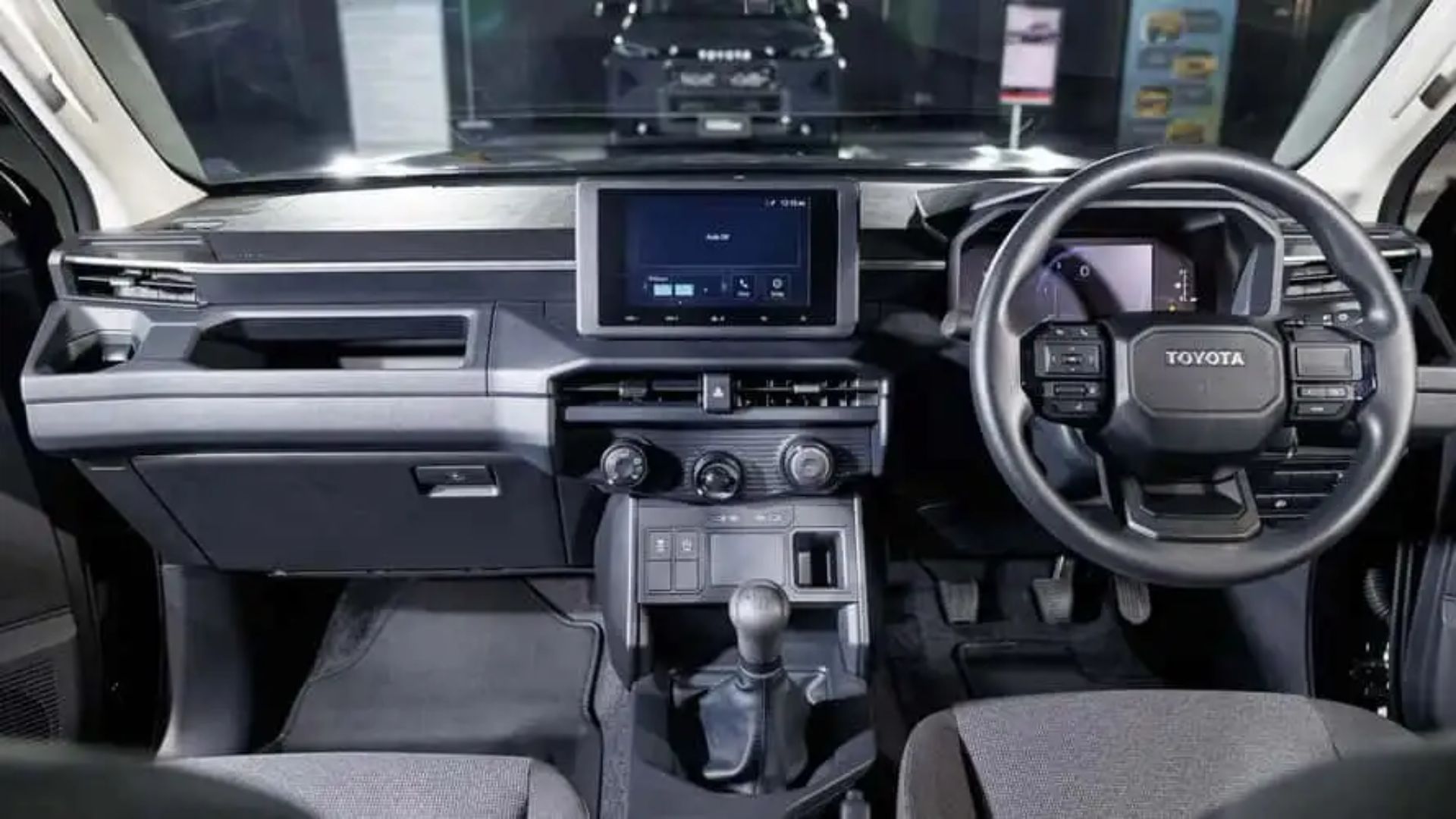
The configuration retains halogen headlights, steel wheels, manual air conditioning, hand brake by lever, and six-speed manual transmission.
The model preserves traditional elements of the pickup, such as unpainted door handles and mirror caps, and features a simplified interior to serve fleets and commercial applications.
-
The car stored for 38 years: when opening the barn door, what appears is breathtaking and looks like a scene from a movie!

-
Fiat works miracles in the Brazilian market, lowers the price of its 0 km hatch to R$ 69,990, reestablishes the model as the cheapest car in the country, and reignites the battle against Kwid and C3.
-
Chevette with cooking gas: How the gas cylinder ends up being used in cars clandestinely and why this makeshift solution can result in leaks, explosions, damaged engines, and seized vehicles.

-
Fiat launches the new 2027 Toro hybrid with 48V, 176 hp, an electric motor of 15.5 hp, a 0.85 kWh battery, up to 7% fuel savings, 8% fewer emissions, and possible exemption from IPVA.

The manufacturer confirmed that the pickup reaches its ninth generation, with different engine options.
In addition to the gasoline and diesel versions, the brand will expand the line with a battery electric variant and is preparing a hydrogen fuel cell version, scheduled to debut in 2028.
According to Toyota, the strategy aims to provide suitable alternatives for different markets and infrastructure conditions.
Single Cab Is Maintained for Commercial Use

While the Hilux sold in Europe focuses on double cab versions, markets like Thailand continue to receive single cab and extended cab configurations aimed at agricultural and business activities.
Toyota reported that the target audience for the basic version prioritizes cargo space and durability, factors that guided the choice of internal materials and the equipment package.
In Thailand, where the model was unveiled, the pickup uses fabric seats and dashboard with hard plastics, with physical controls and few electronic features.
According to the brand, the goal is to serve consumers who demand practicality and ease of cleaning, especially in work environments.
Mechanics Prioritizes Durability and Simplified Maintenance
The entry-level version maintains rear-wheel drive and four-cylinder combustion engines, available in gasoline and diesel, combined with a six-speed manual transmission.
Industry sources claim that this configuration remains one of the favorites for companies and public agencies due to its lower mechanical complexity and maintenance costs.
The manual air conditioning system and the mechanical parking brake also remain, reinforcing the functional profile of the vehicle.
Industry experts evaluate that the retention of these components indicates the continuation of the strategy to offer versions suitable for both emerging markets and specialized applications.
Electric Version and Electrification Plan
Toyota has officially confirmed the production of the electric Hilux (BEV), equipped with a 59.2 kWh battery and electric front and rear axles.
The declared goal of the automaker is to achieve range over 300 kilometers on the NEDC cycle.
The rollout will be gradual starting in 2026 in Asian countries.
According to information released by the brand, the electric set was designed to maintain load capacity and off-road performance.
The battery is installed in the chassis floor, a solution that contributes to the vehicle’s stability and center of gravity.
The company emphasizes that the electric Hilux is part of the global energy transition of Toyota, but it will not completely replace combustion versions, which will remain available according to local demand.
Hydrogen Expected for 2028

During the same announcement, Toyota presented details about the Hilux powered by hydrogen fuel cell (FCEV).
The start of sales is scheduled for 2028, initially focusing on markets such as Europe and Oceania.
According to the automaker, the project utilizes technologies derived from tests with prototypes conducted in recent years and integrates into the global low-emission solutions portfolio.
Functional Design and Simplified Finish
In design, the entry-level Hilux adopts simple surfaces and easy-to-replace materials.
Unpainted components such as door handles and mirrors reduce repair costs.
Inside, fabric upholstery replaces leather found in higher-end versions.
According to Toyota, the use of hard materials aims to facilitate cleaning and enhance the durability of the set in high-demand environments.
Large physical controls remain prominent on the dashboard, which, according to engineers from the brand, improves operation during work in adverse conditions.
In more equipped versions, the model will feature new screens and multimedia systems, but the manufacturer emphasizes that each configuration will be aimed at a distinct audience, without interfering with the product’s reputation for durability.
Global Reach and Continuity Strategy
Since the launch of the first generation in 1968, the Hilux has surpassed 21 million units sold worldwide.
Toyota opted for a gradual update in this ninth generation, maintaining the chassis architecture and introducing new propulsion technologies progressively.
According to automotive industry analysts, this approach allows the company to simultaneously cater to markets with different levels of infrastructure and income.
In emerging countries, the single cab is expected to remain relevant due to the high demand for cargo pickups.
In developed regions, the double cab is likely to remain the main option, aimed at family and recreational audiences.
Experts note that this flexibility of offering is one of the factors supporting the global presence of the Hilux.
With the expansion of the line and the advancement of electrification, the pickup’s portfolio now encompasses everything from basic configurations to electrified versions, maintaining Toyota’s historical positioning in the utility segment.
The question that arises for the market is whether the demand for simpler models will continue to be relevant in light of the expansion of technological options.






-

-

-

-

8 pessoas reagiram a isso.