





 Portuguese
 Spanish


Since Wednesday (18), only 1 of the 4 free ferries has been crossing the Tocantins River between Pedro Afonso and Tupirama, and truckers report waits of up to 20 hours. The BR-235 bridge remains closed to heavy vehicles, and the regional cooperative is concerned about the corn and soybean crops.
Truckers arriving at the banks of the Tocantins River in the north-central part of the Brazilian state of Tocantins are finding a line that barely moves. The crossing between Pedro Afonso and Tupirama depends on ferries, and nearly all of them have stopped operating.
Truckers reported waits of up to 20 hours in accounts published by Gazeta do Cerrado on Thursday (19). One trucker said he spent 20 hours and 45 minutes in line.
Three of the four ferries stopped operating at the same time
Capacity fell all at once. Of the 4 ferries assigned to the free crossing, only one was operating as of Wednesday (18), according to Gazeta do Cerrado and Jornal Primeira Página.
-
BNDES releases R$2.74 billion to upgrade the BR-262 in Minas Gerais, including 44 km of expansion and nearly 169 km of new lanes for trucks and other vehicles

-
Brazil set for 733-kilometer Minas Gerais–Rio de Janeiro railway auction, with CSN, MRS, and other groups eager to restore tracks and revive freight services

-
Brazilian railways complete 600 projects backed by R$12 billion and plan 1,300 more worth R$30 billion by 2032
-
Macaé to resume direct flights to Guarulhos for Campos Basin oil workers on Feb. 17, 2027, with Latam operating three weekly services from its new 1,410-meter runway



Two vessels were reportedly grounded by Brazil’s Navy over documentation problems. The third was undergoing maintenance after mechanical failures. As of Thursday night, no official notice had provided a timeline for the ferries to resume service.
As a result, lines formed on both riverbanks. One driver said he reached the boarding point in Tupirama one day and was unable to cross until the next.
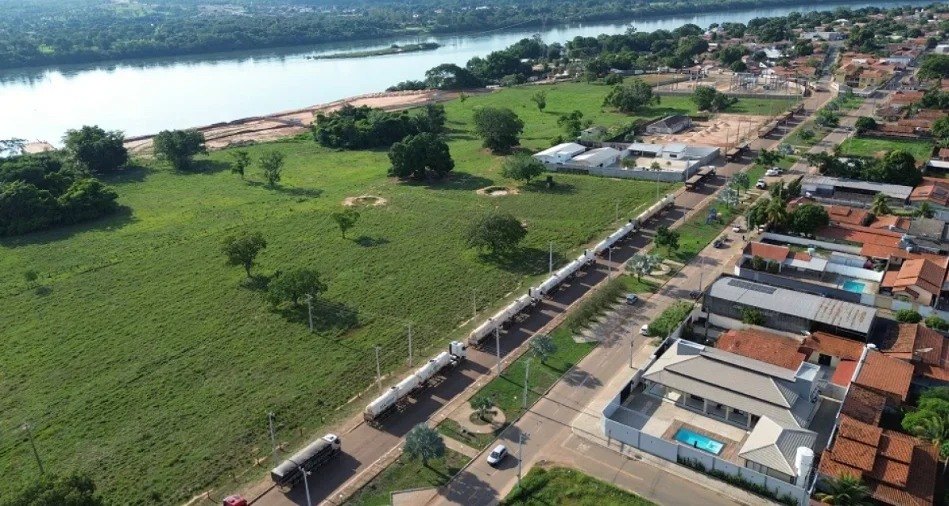
Why trucks depend on the ferries
The ferries have become the only option for heavy cargo because the BR-235 bridge over the river has been deemed unsafe. The structure, at mile marker 163, was closed on May 21, 2026, after inspections found structural problems, g1 Tocantins reported.
Later, in August, a study by Brazil’s National Department of Transport Infrastructure (Dnit) identified serious defects, and the bridge was condemned. Passenger cars and motorcycles were later allowed to cross again, but trucks and other heavy vehicles remain banned.
Named the Prefeito Leôncio Miranda Bridge, the crossing is 1,060 meters long, has 24 piers and opened in December 2007. It cost R$92.7 million under a partnership between Brazil’s federal government and the Tocantins state government.
This is not the first time the crossing has been disrupted
In October, this outlet covered the case of a driver who spent 18 hours in his truck in the middle of the Tocantins River after a ferry ran aground when water levels were low during the dry season.
The cause is different this time. The river is not the problem: too few vessels are operating, with two sidelined over documentation and one because of a mechanical failure.
Cooperative ships 30 truckloads of corn a day
The delays are hitting at the worst time for the region’s agriculture. Farmers are shipping their second-crop corn and need to receive fertilizer, seeds and other supplies for planting.
The Tocantins Agroindustrial Cooperative (Coapa) alone ships an average of 30 truckloads of corn a day at this time of year, said its president, Ricardo Khouri.
He estimates that the region moves about 600,000 metric tons of grain, combining soybeans and the second corn crop. All of it has to cross the river by truck.
The greater risk will come with soybeans in late January
For Khouri, the strain is expected to worsen with the 2026/27 soybean harvest, which is set to begin in late January 2027, when grain volumes rise and storage facilities need room.
“Without shipping the crop, storage facilities run out of space and machinery sits idle in the fields. Since February and March are usually rainy months, grain quality begins to deteriorate,” he told Gazeta do Cerrado.
The Coapa president also warned of a loss of competitiveness. Even with one or two ferries operating, he said, the pace falls short of what is needed to meet contracts and ship cargo to buyers.
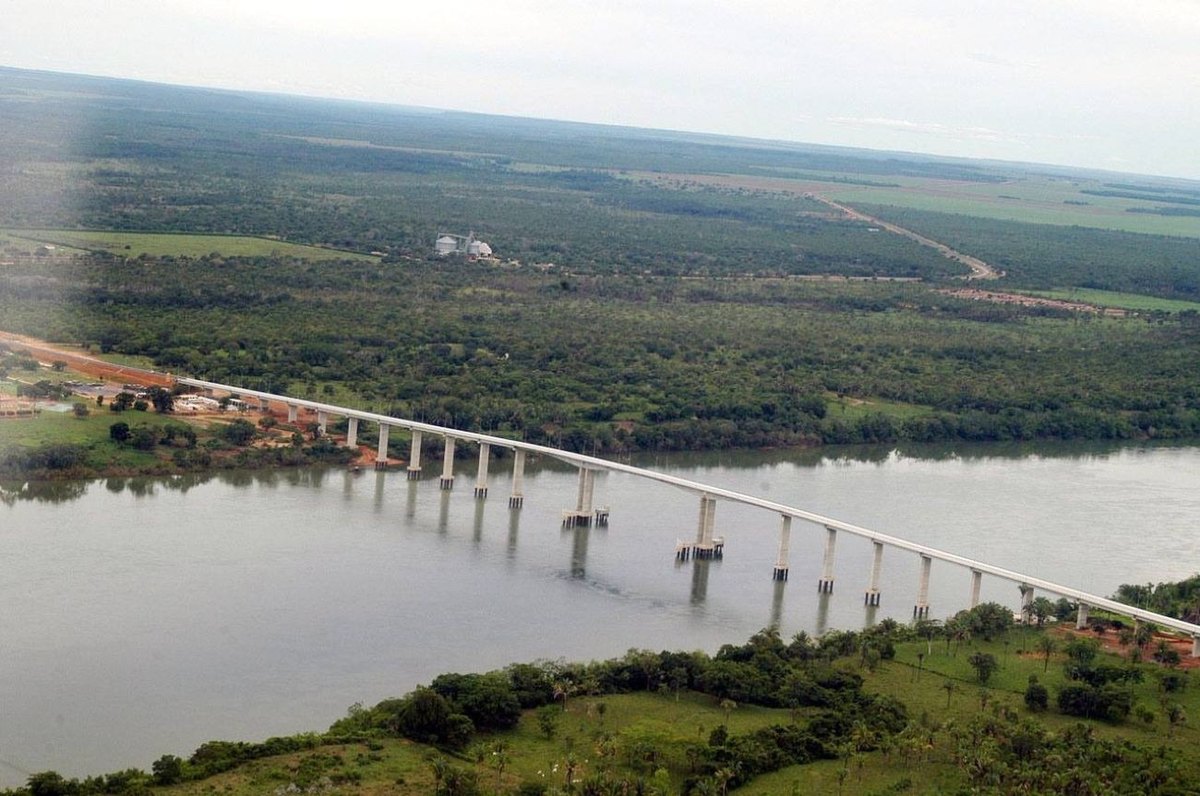
New bridge to cost R$430 million, with no construction start date
Brazil’s National Department of Transportation Infrastructure (DNIT) published a tender on October 23 to demolish the existing bridge and build a replacement. The project is estimated to cost R$430 million, nearly five times the original R$92.7 million, based on the blog’s comparison in nominal values, without adjusting for inflation.
The company awarded the contract will handle the studies, preliminary and detailed designs, demolition, reconstruction and structural monitoring. The contract will be awarded to the lowest bidder.
Bids are scheduled to be opened on January 22, 2027, around the same time the soybean harvest is expected to begin. As of the tender’s publication, there was no start date for construction.
Six months with the bridge closed to heavy cargo
The disruption has now lasted six months. The bridge was closed on May 21 after inspections. The restriction initially applied only to loads over four metric tons, then expanded to a full closure as a precaution.
In August, a DNIT study deemed the structure unsafe. Cars and motorcycles were later allowed back on the bridge, while trucks were left relying on ferries.
In October, when the river was low, a ferry ran aground with trucks aboard. The tender for a new bridge was published on the 23rd of that month. In November, the ferry fleet shrank to just one vessel.
Emergency declared as state authorizes ferry operations
Because of the losses, the Pedro Afonso city government declared a state of emergency for 180 days. The corridor is part of the shipping route for Matopiba, Brazil’s agricultural frontier region.
Meanwhile, to reduce the impact, the Tocantins state government authorized emergency operations for the free ferries. Service began while DNIT was completing technical studies of the bridge.
The sources consulted do not say who operates each ferry, how much cargo each can carry, or when the two vessels held by the Brazilian Navy will return to service.
What truckers need to know before setting out
Truckers crossing the river should expect long waits on both banks while only one ferry is operating. Reports describe a lack of facilities at the site, including restrooms.
Light vehicles, such as passenger cars and motorcycles, can use the bridge. The restriction applies to trucks and other heavy vehicles, including those carrying grain, livestock and supplies between the two banks. Anyone with a scheduled freight pickup should notify the shipper about the delay before reaching the queue.
Khouri summed up the industry’s request: “What we really need is the bridge. Until the new bridge is ready, we need a ferry system with enough capacity to ship our production.”
Experiences of being stuck in a ferry queue because of a closed bridge, including how many hours the crossing took, can be shared in the comments.


