





 Portuguese
  English
  Spanish
  5 min of reading
  6 comments


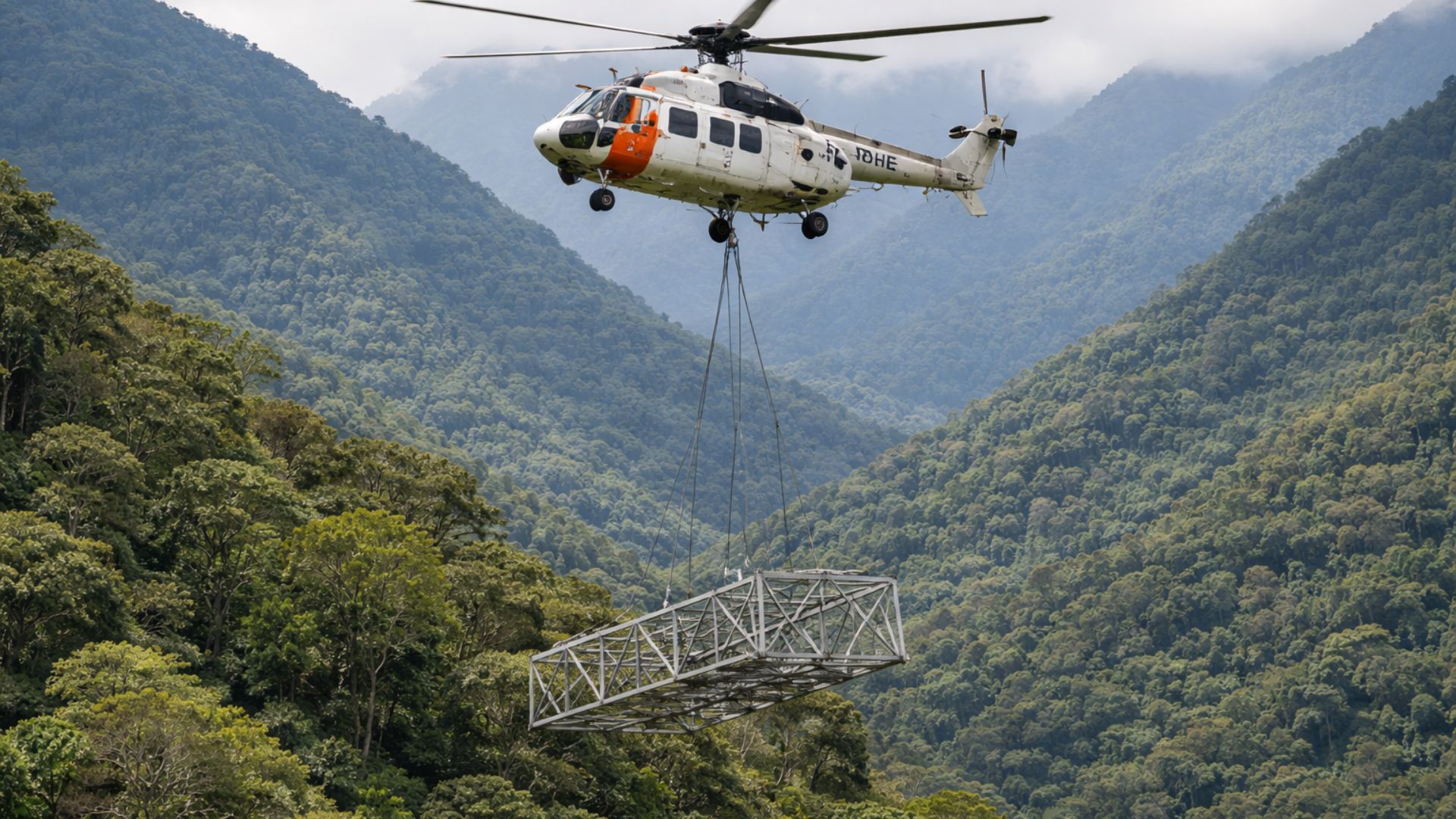


Large Helicopter Takes On Crane Role On Slopes Of Serra do Mar To Transport Modules And Transmission Line Materials, Replacing Complex Land Access And Reducing Ground Movement In A Protected Area With Coordinated Flights And Precise Aerial Logistics To Support An Infrastructure Project.
Maintenance and modernization operations of transmission lines often rely on roads, cranes, and continuous land access.
In a mountainous stretch of the Serra do Mar, in São Paulo, the logic was reversed: a large helicopter became the crane and heavy transport to facilitate the removal of old structures and the installation of new electrical network components within an environmentally protected area, where clearing paths can mean months of work, additional risks, and direct impact on vegetation.
The mission had a clear objective: remove an old line and enable the construction of a new one, including the replacement of towers and cables in a transmission corridor located on steep terrain, with difficult access stretches between Baixada Santista and the Planalto Paulista.
-
Goodbye iron: new technology from Xiaomi promises to revolutionize the way we iron clothes with 500 kPa steam, continuous flow of 120 g/min, heating in 65 seconds, and six smart modes for different fabrics.

-
Rio Pardo, the most mysterious city in Rio Grande do Sul: untouched Pampas castle, the missing treasure of the Devil Boy, bride’s saint, invisible tunnels, and a 200-year curse today.

-
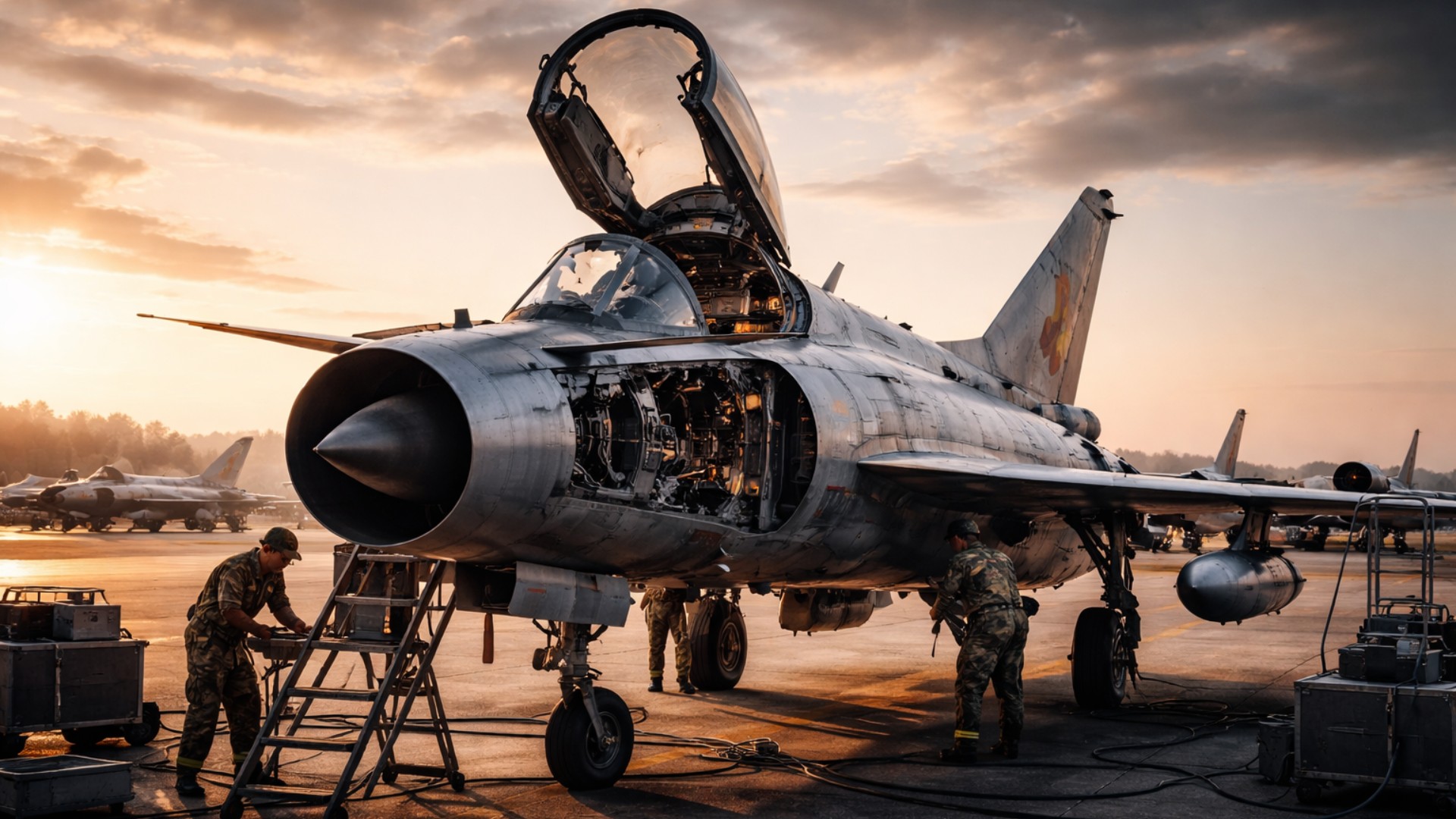
China retires the J-7 fighter after years of military protection and can now transform military items into drones, following more than 60 years of operation of the J-7, derived from the MiG-21, with thousands of units produced and strategic use in the PLAAF and PLANAF.
-
Volunteers are sought to live in the mountains for a month: a study pays people to stay at 2,500 meters, with 24-hour monitoring of sleep, metabolism, and blood pressure.

The work involved the removal of 25 old power towers and the assembly of new structures, with aerial support to transport materials, equipment, and modules that, under traditional conditions, would require complex land logistics and more significant intervention in the environment.
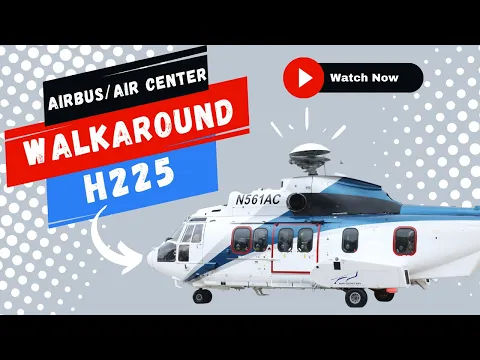
The helicopter used was the Airbus H225, a model known for high-capacity cargo transport and demanding missions.

In the project, the aircraft operated with an external cargo hook to deliver components directly to installation points, replacing the need for truck routes in places where the topography and environmental restrictions make land access limited or undesirable.
The central proposal was to execute an electrical network engineering project with less road opening and less soil movement, reducing the “footprint” of works in an ancient and sensitive forest area.
Omni Air Taxi and TAC Power Lines in Aerial Logistics Engineering
The operation was conducted by a partnership between Omni Air Taxi, responsible for the aerial activity, and the engineering company TAC Power Lines, which worked on the construction and assembly solution.
The choice of the helicopter was not an aesthetic detail or a convenience option; it stemmed from the need to deliver parts and materials precisely to a mountainous corridor, within a protected environmental park, with real limitations for ground circulation.
In such cases, every kilometer of road opened can mean vegetation suppression, drainage, containment, and maintenance of slopes, as well as narrower work windows due to weather and terrain instability.
What stands out in this type of intervention is the technical choreography and the level of planning required to move suspended cargo safely.
A helicopter with an external cargo hook does not just “carry weight”; it needs to maintain stability, altitude, and exact positioning while a load hangs on cables, reacting to wind and directional changes.
In practice, this requires coordination between the pilot, ground crew, and assembly supervisors, with routes designed to reduce risks, maintain distance from sensitive areas, and respect operational limits.
External Load, Tower Modules, And Material Transport In The Air

The transported load is not limited to a single part.
In publications about the operation, the activity is described as the transport of construction materials, towers, cables, cement, and different types of equipment, as well as the movement of people involved in the work.
The helicopter becomes a continuous aerial bridge to keep the site progressing in locations where the arrival of a truck may be impractical, slow, or environmentally costly.
In one of the project’s disclosed milestones, the H225 transported a transmission tower module in the country, in a movement associated with the local renewal of the energy system in a protected area.
Airbus H225 Capacity And Operation As A “Flying Crane”
The H225, in turn, is a helicopter designed for heavy tasks and operations in challenging environments.
Technical information released by operators and manufacturers points to its use in utility and transport missions, with different cabin configurations and performance geared toward robustness and range.
In the context of transmission line work, the data that gains prominence is the external hook load capacity: reports about the operation mention a transport capacity of up to 3,500 kilograms in this type of configuration, an element that helps explain why the model was chosen for the “flying crane” role in a mountainous corridor.
Hundreds Of Flights, Flight Hours, And Scale Of Transmission Modernization
Beyond the visual impact of a helicopter carrying suspended modules above the forest, the work draws attention to the volume of activity and the execution time.
In an institutional account about the mission, the operation is described as a months-long contract, with hundreds of flights and hundreds of flight hours accumulated during the work period, transporting thousands of tons of cargo throughout the project.
These numbers are not just statistics; they indicate the real scale of a site that, instead of concentrating movement on roads and work yards, distributes logistics in the air, using precision and controlled repetition to supply assembly fronts.
Electrical Infrastructure, Environmental Restrictions, And Supply Continuity
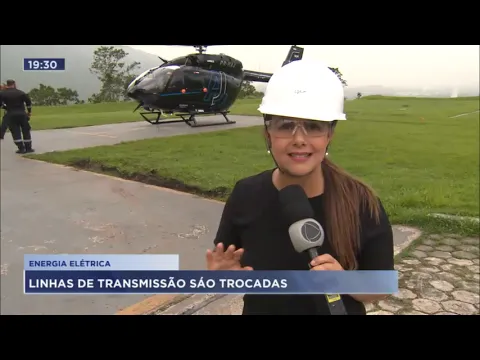
This type of aerial solution fits into a logic already known in remote environments: when the terrain prevents the machine from reaching, the machine becomes an aircraft.
The difference in the case of the Serra do Mar is the environmental and social context.
It is a region marked by steep slopes, rains, and dense vegetation, in addition to housing conservation units and protected areas where opening access can be an additional pressure factor.
By moving part of the effort to the air, the project seeks to reduce the need for continuous ground interventions, without ignoring that operating large aircraft also involves planning, operational safety, and strict protocols to avoid incidents.
The use of helicopters for electrical infrastructure works also responds to a practical demand: keeping the population connected while aging components are removed and replaced.
Transmission networks are critical systems, and the replacement of towers and cables is often planned to balance schedule, safety, and supply continuity.
When the work occurs on difficult terrain, the equation can become even tighter, and solutions that shorten time and reduce the need for land access are increasingly being considered.
At the same time, the case reinforces how “invisible” works to most people depend on sophisticated logistics.
Transmission lines cross mountains and valleys without drawing attention in everyday life, but they require periodic maintenance and, in certain stretches, complete replacement of structures.
When this work takes place within a protected area, execution needs to reconcile engineering, safety, and measurable environmental impact, with decisions ranging from the type of equipment used to how each piece is transported.
In a scenario where large projects must coexist with environmental restrictions and extreme terrains, to what extent can operations with “flying cranes” become part of the standard for modernizing infrastructure without opening new scars on the ground?







Fora Lula ! STF ! Justiça para os adolescentes marginais do cao ORELHA
Parabéns a cada um que partipou desse progeto, isso e o que se chama de engajamento ao meio ambiente
Cruz credo…P R O J E T O !!!!!!!!!
Pensando como que fizeram antes, como não havia naquele tempo essas aeronaves gigantes
Os indígenas fizeram, liderados pelo Tarzãn…
NÃO DEVE SER BARATO ISSO.