





 Portuguese
  English
  Spanish
  5 min of reading
  0 comments


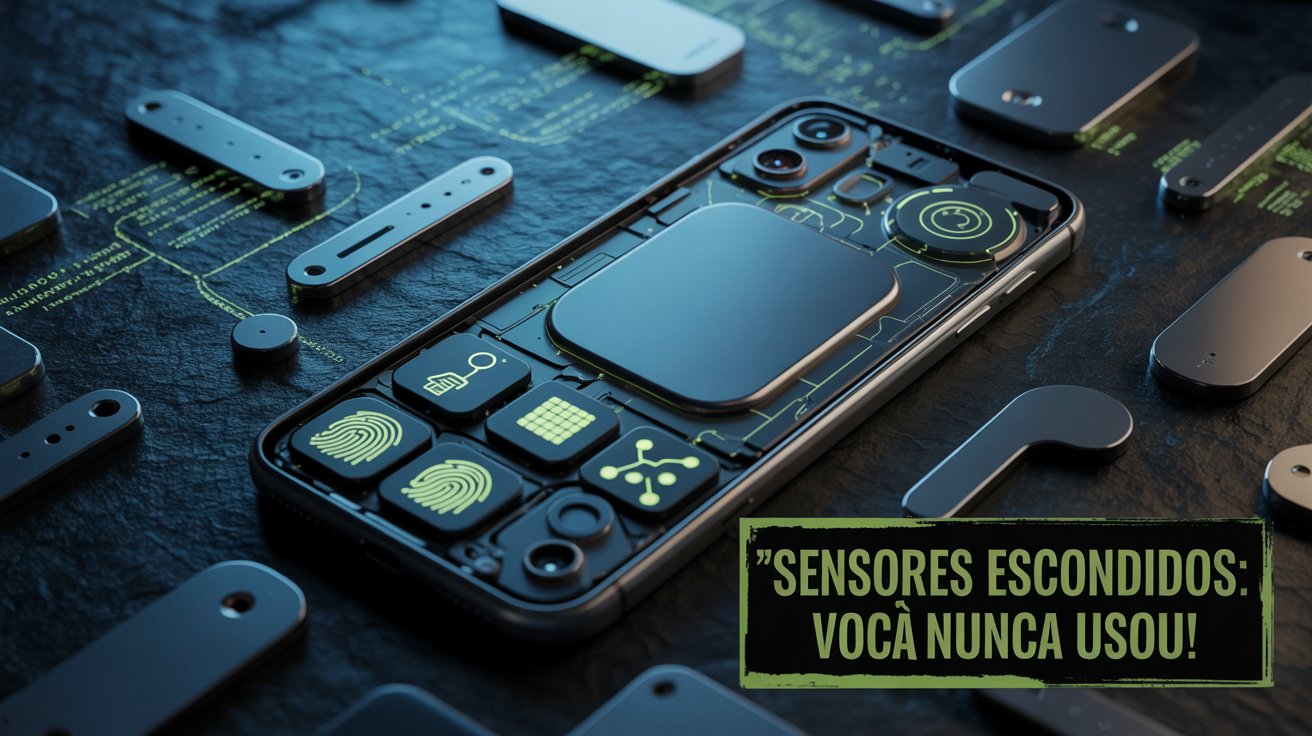
The Majority of Modern Smartphones Hide Little-Known Sensors That Extend Device Functions, Ensure Security, and Personalize Use, Even If the User Is Unaware of Their Functioning. Discover What Technologies Are Present and How They Work.
The majority of smartphone users are unaware that, in addition to GPS and cameras, their devices carry various silent and almost invisible sensors, essential for daily functioning and for the innovation of devices released until 2025.
These technological components operate discreetly; however, they ensure accuracy, security, and an increasingly personalized experience, even without direct user intervention.
Little visible but essential, the internal sensors of modern smartphones not only measure movements or detect light.
-
New semi-autonomous legged robot technology challenges the limitations of space exploration by operating almost without human intervention on the Moon.
-
Super toxic red mineral found in the double burial of two women aged 1,900 years near the banks of the Dnieper River in Ukraine.

-
No one expected this under a common street: archaeologists find 3 intact oak barrels, buried about 400 years ago, with traces of lime and pieces related to 17th-century construction.

-
After decades of failed attempts, Brazil is once again looking to space with an orbital rocket measuring 12 meters, weighing 12 tons, costing R$ 189 million, and scheduled for launch in 2026, in a new race to finally achieve autonomous access to orbit.


They support advancements such as augmented reality, facial recognition, biometric security, and even the adaptation of the operating system according to the environment.
With the rapid evolution of the sector, manufacturers are continuously investing in increasingly specialized modules capable of automating functions, expanding resources, and protecting sensitive data.
According to industry experts, smartphone sensors have become essential allies for health, navigation, and even for app personalization.
Little-Known Sensors in Modern Smartphones
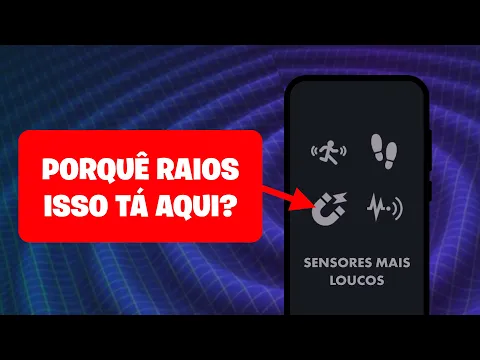
Many consumers are surprised to discover little-publicized sensors, such as the barometer, magnetometer, and infrared proximity sensor, already present in mid-range and advanced models.
The barometer, for example, measures atmospheric pressure and contributes to more accurate GPS location and the improvement of meteorological apps.
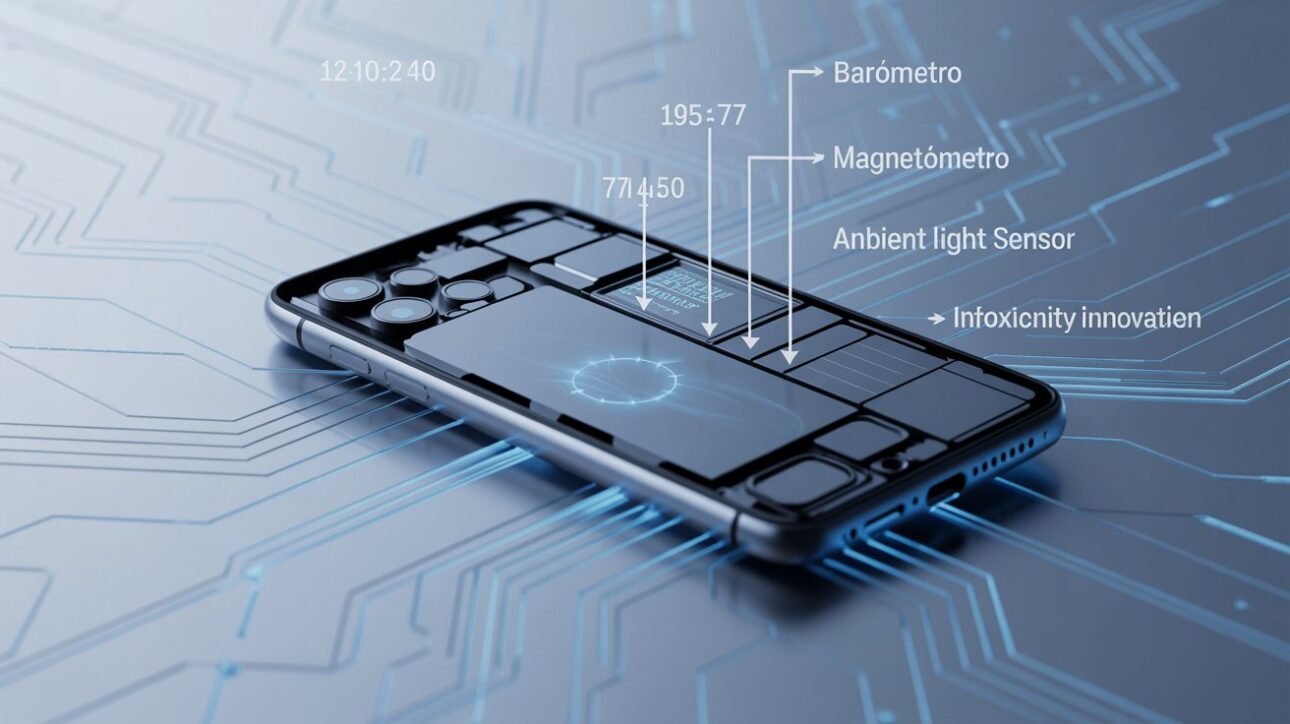
The magnetometer, often referred to as a digital compass, identifies the direction the device is pointing, important for maps and augmented reality games.
The infrared proximity sensor, installed near the speaker, detects nearby objects and automatically disables the screen during calls to prevent unwanted touches.
Among other discreet sensors, the light spectrum sensor stands out, responsible for adjusting the white balance and screen intensity according to the environment, improving visual comfort.
Biometric sensors, such as the ultrasonic fingerprint reader—a technology incorporated starting in 2024 in many models—offer quick and secure unlocking without the need for physical buttons.
Environmental sensors, capable of monitoring humidity, temperature, and even air quality, have been included in high-end devices to alert users about environmental variations, contributing to health and wellness solutions.
Why Do Modern Smartphones Have So Many Sensors?
The advancement of smartphones is directly related to the integration of innovative sensors that expand the range of functionalities and allow automatic responses to different everyday situations.
The industry bets on these components to adapt the user experience, optimize navigation, ensure data security, and provide exclusive features.
According to information from the Brazilian Association of Electrical and Electronics Industry (Abinee), investment in research and development of sensors has grown rapidly since 2020, driven by the demand for smarter, safer, and multifunctional devices.
Sensors such as the accelerometer and gyroscope, already known to the public, remain essential for the functioning of games, health apps, and movement monitoring.
However, the recent trend points to the multiplication of less evident sensors, fundamental for home automation, voice control, health monitoring, and app personalization.
These modules work together, continuously processing data to adjust brightness, volume, detect falls, and even adapt the operating system to user behavior.
How to Identify and Use Hidden Sensors on Your Phone
Identifying all the sensors on a smartphone is not always a simple task.
Many are not visible in traditional settings, requiring specific tools for detailed mapping.
Users can turn to diagnostic apps available in app stores, which detail internal components, show the model, the manufacturer, and allow real-time testing.
Among the most popular options until July 2025 are apps like “Sensor Box,” “CPU-Z,” and “Device Info HW,” which list sensors for humidity, temperature, brightness, pressure, and others.
In the settings menu, sections like “About Phone” or “Hardware Information” provide basic details about some sensors.
For those seeking advanced functions, using dedicated apps is essential to access real-time data and explore hidden features, such as personalized weather information, physical activity monitoring, home automation control, and tracking environmental parameters.
Practical Applications of Sensors in Daily Life
Sensors integrated into smartphones perform strategic functions, from automatic screen adjustments to secure unlocking via facial or fingerprint biometrics.
The proximity sensor prevents accidental touches during calls, while the ambient light sensor regulates brightness to save battery and protect vision.
The barometer, present in recent devices, allows weather and health apps to estimate pressure variations, benefiting even those sensitive to climate changes.
In terms of security, the ultrasonic fingerprint reader and facial recognition sensors enhance data protection, making access to the device quicker and more restricted.
Meanwhile, the magnetometer and gyroscope support navigation functions, augmented reality, exercise tracking, and interaction with games, expanding the phone’s potential in multiple scenarios.

How to Take Advantage of the Potential of Your Device Sensors
Leveraging the full potential of sensors requires curiosity and some familiarity with diagnostic apps.
A simple search for “sensors” in the app store, both for Android and iOS, offers options to explore data from motion, brightness, humidity, temperature, and even advanced environmental sensors.
Such tools can be especially useful for outdoor enthusiasts, individuals with specific health needs, or users interested in home automation.
It’s important to highlight that, despite the variety, not all sensors can be accessed or customized through the phone’s standard menu.
In many cases, only specialized apps or diagnostic commands can reveal detailed information about the operation and parameters of internal modules.
It is advisable to consult the manufacturer’s manual and seek guidance from reliable sources to better understand the usage possibilities.
Innovations Driven by Little-Known Sensors
The future of smartphones lies in the expansion and integration of increasingly sophisticated sensors.
The use of technologies such as machine learning allows data captured by sensors to be used to automatically adjust brightness, adapt the operating system to context, enhance photos, and create automated responses, all without direct user action.
Companies in the sector continue to invest in sensors focused on health, well-being, and automation, transforming the smartphone into a personal monitoring and control center.
In this context, attention to privacy also stands out.
Various manufacturers already include features to inform which sensors are active and how data is used, responding to a growing demand for transparency and security.
Mastering these technologies promises not only more convenience but also new opportunities for those who explore their device’s features in depth.
Have you consciously used any of these sensors on your phone or discovered an unexpected function in the device’s settings? Share your experience in the comments!







-

-

-

-

-

22 pessoas reagiram a isso.