Portuguese
 Spanish


With substantial investments already made in two natural gas-fired power plants, Porto do Açu is negotiating another thermal power project and talking with more than 10 companies interested in establishing data centers in Rio de Janeiro state.
Those who have followed Porto do Açu’s development since its early construction years probably never imagined the complex would be negotiating projects of this kind.
Oil, iron ore and port operations have always been the best-known businesses here. But the region appears to have far greater potential.
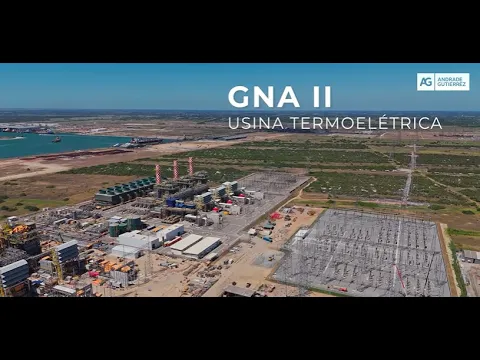
For those unfamiliar with the project, an institutional video provides an overview.
-
OPEC says oil was not to blame and accuses the EU of derailing COP31 as Turkish summit ends without agreement and two days late
-
Coal in Brazil takes center stage in debate as 71 scientific studies examine cancer risks, billion-dollar environmental liabilities, and workers’ future amid the energy transition
-
Intermoor and Navvik form alliance to compete for offshore contracts in Brazil, combining subsea engineering with anchor-handling vessels capable of up to 259 metric tons of bollard pull
-
São Paulo public school run by nonprofit earns 9.8 score for teaching quality; 96% of families support model expansion, but court suspends project

Speaking to the press on November 25, executives from Porto do Açu and Prumo Logística discussed several potential deals, as reported by MegaWhat.
One involves building another natural gas-fired power plant. The other, which I find particularly promising for the regional economy, involves establishing data centers.
These initiatives are part of Porto do Açu’s expansion strategy, which aims to attract R$22 billion in investment over the next 10 years.
A third power plant at Porto do Açu
Prumo Logística CEO Rogério Zampronha said the company is negotiating with one of the winners of the Capacity Reserve Auction held in March this year.
If the deal moves forward, São João da Barra could be home to GNA III.
This would not mean starting from scratch. Porto do Açu CEO Eugenio Figueiredo said the complex already holds preliminary environmental licenses for an additional 3.4 GW of thermal power generation.
To put the scale of this infrastructure in perspective, about R$12 billion has been invested in the two existing power plants.
The first began operating in 2021, and the second in May 2025. Together, they have 3 GW of installed capacity at a single industrial complex.
The GNA II power plant received billions of reais in financing from BNDES during its construction.
GNA says the two plants have a combined capacity equivalent to the demand of about 14 million homes.
What are technology companies looking for in northern Rio de Janeiro state?
This raises an issue worth watching. As artificial intelligence expands, demand is growing for the physical infrastructure needed to process information.
Someone needs to build these facilities, supply power, cool equipment and keep the entire operation running. That costs a lot of money.
More than 10 companies in the sector have already approached the Port of Açu. Two or three are in more advanced talks and are now waiting on contracts with major technology companies.
In 2024, the port had already announced a partnership with Consag Engenharia and Vertin to study the development of data centers with up to 1 GW of capacity.
This market is already gaining momentum in other parts of Brazil. In Ceará, for example, a massive data center with an estimated R$200 billion in investment is under development.
In my view, it would be interesting to see northern Rio de Janeiro state capitalize on this market while it is still expanding, especially given the opportunity to diversify an economy so dependent on oil.
Power does not appear to be the main problem
Zampronha says the port could access about 4 GW of power from Brazil’s National Interconnected System without expanding its connection infrastructure.
There are, of course, regulatory issues that need to be resolved with Brazil’s National Electric System Operator.
It is also important to understand that power generated by existing thermal plants is already committed under contracts. Building a data center next to a plant and connecting it directly to the facility is not enough.
Even so, having this infrastructure nearby represents a considerable competitive advantage.
GNA itself has announced plans for R$20 billion in new energy and natural gas projects at the Port of Açu.
What about jobs?
For people who work in industry and live in Campos dos Goytacazes, São João da Barra, Macaé or nearby towns, this may be the most interesting part of the news.
Construction of the two existing thermal power plants generated more than 22,000 jobs, according to GNA.
Now consider the possibility of adding technology infrastructure projects, electrical installations, industrial cooling systems and equipment maintenance to that market.
After all, artificial intelligence also depends on electricians, cooling technicians and construction workers.
Beyond the arrival of this investment, I would like to see the regional workforce prepare to meet these new needs.
The region has professionals with decades of experience in the oil and gas industry. It would be worthwhile to put some of that expertise to use in other industrial and technology sectors.
For now, it is worth remembering that these are negotiations. No definitive contracts have been announced, and there are no start dates for construction or official hiring estimates.
Still, this is a move by the Port of Açu worth watching closely.