Portuguese
 Spanish


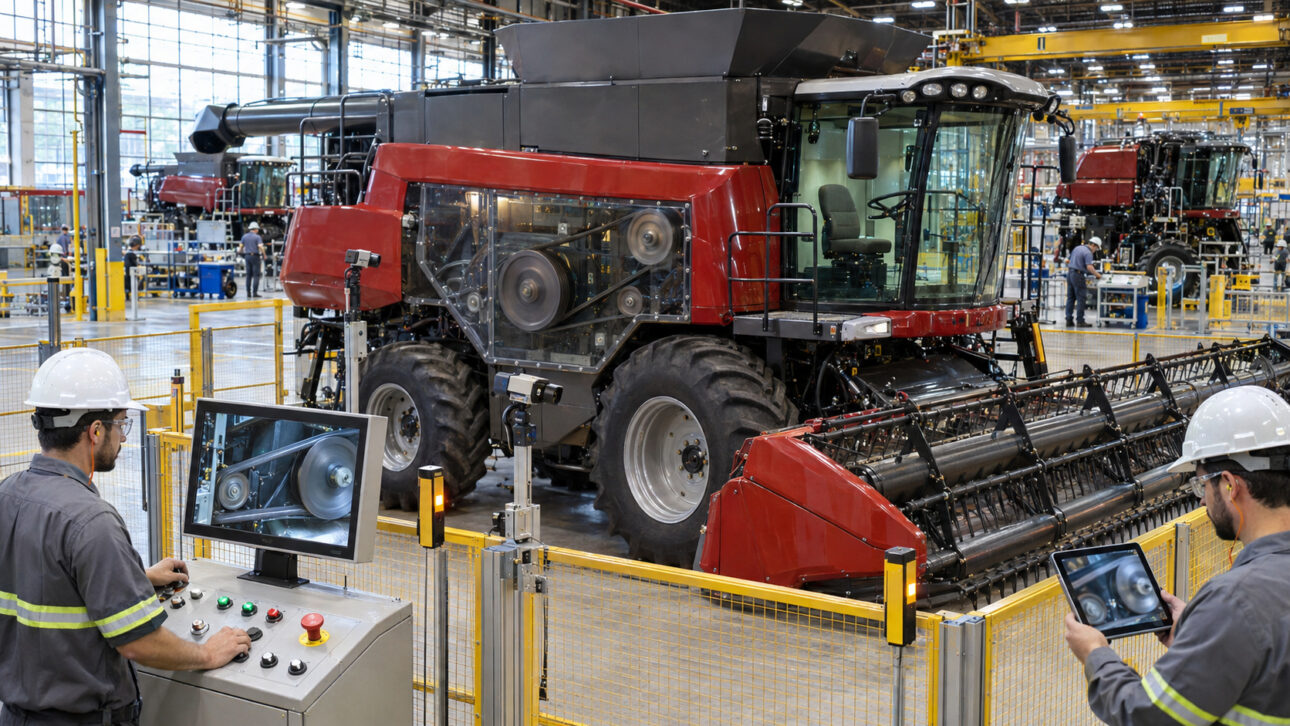

System developed by AGCO in Rio Grande do Sul uses cameras, a tablet and an external station to run industrial tests. The technology has been in operation since early 2024 and is already serving as a reference for other factories operated by the multinational
A technology developed by Brazilian engineers allows combine harvesters to be started and tested without an operator staying inside the cab during final inspection. Developed by AGCO in Santa Rosa, in the southern Brazilian state of Rio Grande do Sul, the system uses cameras, an external station and safety sensors that automatically stop the tests when they detect people in hazardous areas. The system has been in operation at the factory since early 2024, according to a report published by Revista Cultivar on November 25, 2026.
In addition to reducing workers’ exposure to moving parts, the innovation eliminates some of the walking required during mechanical checks.
The project has also gained international visibility and become a reference for other company facilities.
-
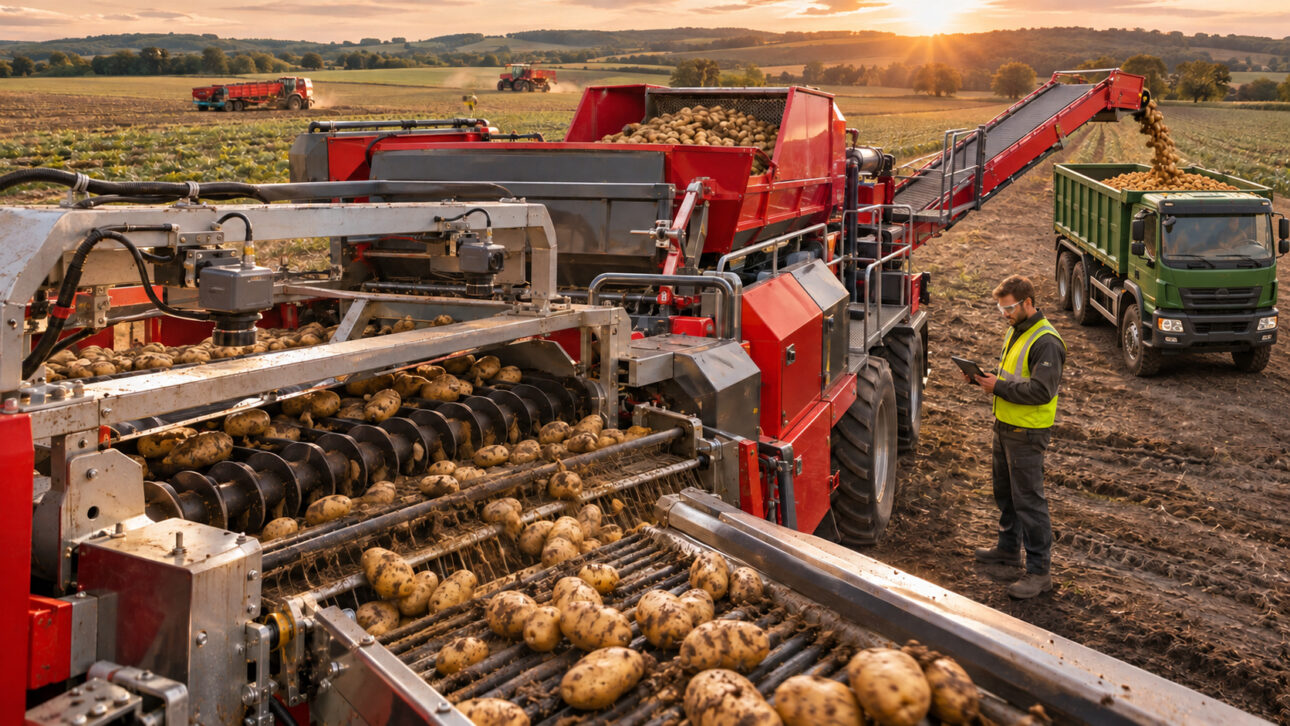
French AI-powered machine sorts up to 100 metric tons of potatoes an hour in the field, promising to cut costs

-
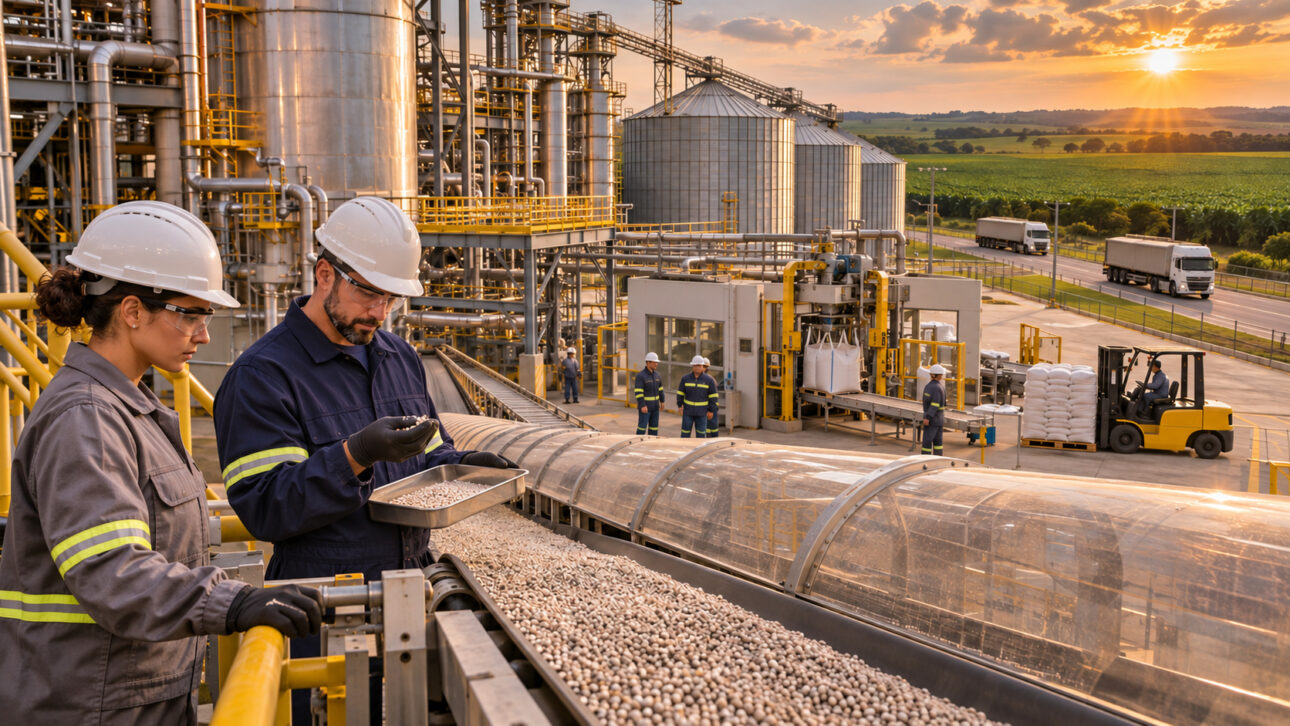
BNDES approves R$8.3 billion for fertilizer production in Brazil, setting a lending record to reduce reliance on imports
-
Onion prices surge to R$161.25 per sack and may stay high for months as yields fall and planting shrinks

-
Brazilian agribusiness to take technologies and business opportunities to China on international mission


Brazilian engineers create external station that replicates combine harvester cab controls
The solution grew out of a challenge encountered during final testing of agricultural machinery.
Traditionally, an operator had to remain in the cab to activate the combine harvester’s systems and check that its components were working.
Some inspections, however, required the worker to climb down from the machine to observe external mechanisms, particularly pulley alignment.
As a result, the procedure involved repeated movement around the machine and exposure to risks associated with its operation.
To change the process, AGCO’s Brazilian team developed an external station that replicates the cab controls, including the control panel and monitor.
This allows the operator to start the engine and activate the operating systems without being inside the combine harvester.
Cameras installed near the pulleys also transmit live images to a tablet.
This enables workers to monitor the components as they operate and identify potential adjustments.
AGCO manufacturing specialist Ederson Tizian said the solution allows checks to be carried out directly from an external station.
The system also makes it easier to monitor different components simultaneously during testing.
However, remote control operates within an industrial cell designed for this purpose.
The technology does not mean combine harvesters can be controlled freely over the internet or operate autonomously in fields.
The innovation changes how manufacturing tests are conducted, physically separating workers from operating machinery.
Scanners detect people in hazardous areas and automatically stop the machine
Safety is one of the main goals of the development.
During testing, scanners monitor areas around the equipment that are considered hazardous.
If they detect a person in one of those areas, the system automatically stops the combine harvester.
The test cell also remains closed while the equipment is running.
Access is controlled electronically, restricting entry during inspections.
To make mechanical adjustments or perform other work, employees must shut down the machine and follow safety procedures.
In this way, the technology combines industrial automation, electronic monitoring and physical safeguards.
Another benefit involves workers’ ergonomic conditions.
Before the system was installed, operators had to repeatedly climb on and off combine harvesters to perform certain checks.
Now, the images transmitted by the cameras allow some of these tasks to be performed from the external station.
This reduces the need to move around and makes it easier to monitor the mechanisms during testing.
However, AGCO has not disclosed quantitative metrics on accident reductions or productivity gains associated with the system.
The company also did not disclose how much it invested in developing the solution.
The benefits presented therefore refer to the operational improvements described by the company, with no publicly verified performance figures.
Technology developed in Rio Grande do Sul is already inspiring AGCO factories in Europe and the United States
The project took approximately a year and a half to develop.
During that time, employees from different departments took part in creating and implementing the solution.
The teams included specialists in manufacturing engineering, maintenance, production, toolmaking, process engineering, safety and ergonomics.
Bringing these areas of expertise together made it possible to develop a test station suited to the factory’s industrial needs.
Revista Cultivar reported that the technology went into operation at the Santa Rosa facility in early 2025.
The facility has more than five decades of experience manufacturing agricultural machinery.
Opened in 1975, the factory is one of AGCO’s combine harvester production centers in Latin America.
The facility also produces equipment for a range of agricultural applications, including models specialized in rice harvesting.
The expertise developed in Santa Rosa is already beginning to reach other manufacturing operations.
The company used the safety concept as a reference for testing planters at its Ibirubá factory, also located in Rio Grande do Sul.
It also shared its experience with the company’s manufacturing facilities in Italy and the United States.
However, this does not confirm that those international facilities are already using equipment identical to that developed in Brazil.
The manufacturer’s announcement points to the sharing of experience and the use of its safety concepts as a reference.
The initiative is also part of AGCO’s broader strategy to reduce industrial risks.
In November 2025, the company had already said that the Santa Rosa industrial cell was conducting remote tests using cameras and scanners.
At the same time, it presented other technological applications, including welding robots and ergonomic analysis tools.
Thus, the November 2026 report details a Brazilian technology that is already in use, whose development could guide new safety and automation solutions for agricultural machinery manufacturing.