Portuguese
 Spanish


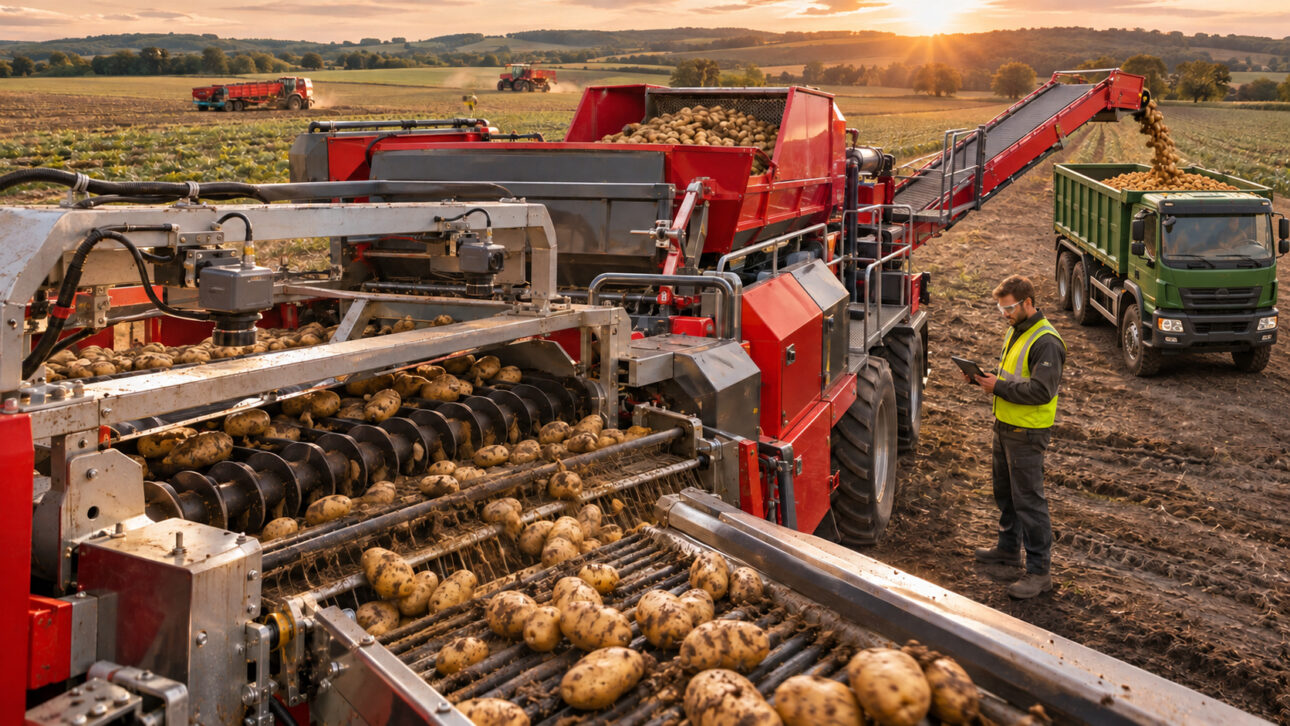

Downs introduces CropXpress, a mobile machine with five cameras, 16 helical rollers and a 360-degree inspection system. The technology removes soil, rocks and out-of-spec potatoes before trucks are loaded, with one person operating the equipment
French manufacturer Downs has announced a new agricultural machine that can clean and sort up to 100 metric tons of potatoes per hour directly in the field. Called CropXpress, the equipment uses artificial intelligence, cameras and mechanical systems to separate the tubers according to their characteristics. The technology is also intended to reduce the unnecessary transport of soil and rocks, lowering harvest logistics costs, according to a report published by Revista Cultivar on November 25, 2026.
The machine is scheduled for its official debut on November 29 at Interpom 2026, an international potato industry trade show in Kortrijk, Belgium.
The launch also offers an alternative to conventional systems that transport the entire harvest to fixed facilities for the initial cleaning and sorting stages.
-
BNDES approves R$8.3 billion for fertilizer production in Brazil, setting a lending record to reduce reliance on imports

-
Onion prices surge to R$161.25 per sack and may stay high for months as yields fall and planting shrinks

-
Brazilian agribusiness to take technologies and business opportunities to China on international mission
-
Company Invests Over R$100 Million in New Tocantins Depot That Could Handle 5,000 Metric Tons of Grain a Day


Machine uses five cameras and artificial intelligence to inspect potatoes from all sides during harvest
CropXpress is designed to operate at the edges of fields, up to 10 meters from the road.
The machine receives freshly harvested potatoes in a hopper and begins a sequence of cleaning, size separation and automated grading.
First, six polyurethane helical rollers, known as AutoClean, remove fine soil particles from the potatoes.
Next, another six rollers direct clods and undersized tubers to a separator.
After this stage, the potatoes move to Downs’ CropVision+ optical grading system, which the company developed and patented.
The system combines five industrial cameras and four rotating helical rollers, allowing it to analyze the entire surface of the tubers.
This enables a 360-degree inspection as the potatoes pass through the machine.
Artificial intelligence algorithms use visual recognition to guide automated grading.
According to the manufacturer’s documentation for CropVision technology, the optical systems can identify characteristics such as deformities, green discoloration, cuts and visible signs of deterioration.
However, the system’s ability to identify each category will depend on the settings and criteria used during operation.
After sorting, a conveyor transfers marketable potatoes directly to transport vehicles.
In all, the machine uses 16 helical rollers at different stages of processing, along with its computer vision capabilities.
The manufacturer lists a maximum capacity of 100 metric tons per hour, designed to keep pace with a four-row harvester.
That figure, however, is Downs’ announced specification. Actual throughput may vary depending on harvest conditions and the material entering the machine.
Field sorting could cut the transport of soil and rocks and reduce fuel use on farms
One of CropXpress’s main advantages is its potential to reorganize farm logistics.
During conventional harvesting, some soil, rocks and other debris travel with the potatoes to processing sheds.
As a result, trucks and trailers may carry materials that have no commercial value.
Besides taking up cargo space, moving these materials requires fuel and increases the workload at receiving facilities.
Downs’ proposal is to separate these materials in the field, allowing operators to transport loads with a higher proportion of usable product.
The company says the change could reduce transport time and the fuel consumed in moving waste.
Another expected benefit is less soil moved between agricultural areas.
That is because soil particles can carry certain plant disease-causing agents.
Keeping some of this waste in its area of origin could therefore help support agricultural biosecurity practices.
However, the manufacturer has not provided, in the information reviewed, independent figures for fuel savings, cost reductions or lower losses.
The benefits therefore remain expected outcomes of the technology, not proven gains for every farm.
The system could also benefit growers handling large volumes of potatoes who need to coordinate the flow from harvesting through transport and storage.
In this context, the machine serves as a mobile pre-sorting step without necessarily eliminating all subsequent processing.
Machine deploys in eight minutes and lets operators manage work by tablet with real-time productivity data
In addition to automated sorting, the CropXpress has a mobile structure designed to keep pace with harvesting.
Downs says the machine can automatically deploy its working structure in about eight minutes.
This feature allows the machine to be moved between production areas without dismantling its main components.
The machine can also be operated by just one person.
The operator can use a removable touchscreen tablet or a wireless remote control.
In addition, monitoring cameras provide visibility into different parts of the machine while it is operating.
The technology also includes geolocation and connectivity with the MyDowns app.
Through the platform, operators will be able to monitor productivity data and sorting results in real time.
The system also offers technical support and remote updates.
The manufacturer aims to make it easier to monitor the machine and reduce the need for technicians to travel for certain service interventions.
The mobile structure was designed to stay within the dimensions allowed for road transport in the markets targeted by the manufacturer.
However, the documentation reviewed does not specify the CropXpress’s price, energy consumption or maintenance costs.
There is also no confirmation that the new machine will be officially distributed in Brazil.
Its international unveiling is scheduled for November 29, during the opening of Interpom 2026 at the Kortrijk Xpo exhibition center.
The machine was selected for the event’s innovation tour, which runs through December 1.
The presentation will give growers and companies a chance to learn about the machine’s features and assess how it could be used in agricultural operations.