






 Portuguese
  Spanish


Underground missions in extreme environments reveal a routine of continuous risk under the destroyed reactor, with constant technical monitoring, controlled radiation exposure, and complex operational challenges in structures sealed since the nuclear disaster occurred in Ukraine in 1986.
Researcher Anatolii Doroshenko, 38, makes monthly descents into the underground corridors of Chernobyl’s Reactor 4 in Ukraine, which was destroyed by the nuclear explosion recorded on April 26, 1986, considered one of the biggest accidents in the history of civil nuclear energy.
Approximately 10 meters deep, he traverses highly contaminated rooms and passages to check equipment, install meters, collect samples, and monitor the state of radioactive materials that still remain active under the damaged structures of the former Soviet nuclear power plant.
The work, described by New Scientist magazine as possibly the most dangerous in the world, takes place in an area where the floor, walls, equipment, and even the air can carry invisible radioactive particles, requiring rigorous protocols and constant attention throughout the operation.
-
Crab Trapped in Plastic Bottle for 62 Days Near Okinawa Highlights Little-Known Impact of Marine Pollution on Small Animals

-
Esperanza’s Bamboo Barrier in Oaxaca Redirects River and Reduces Erosion by 85% in Five Years

-
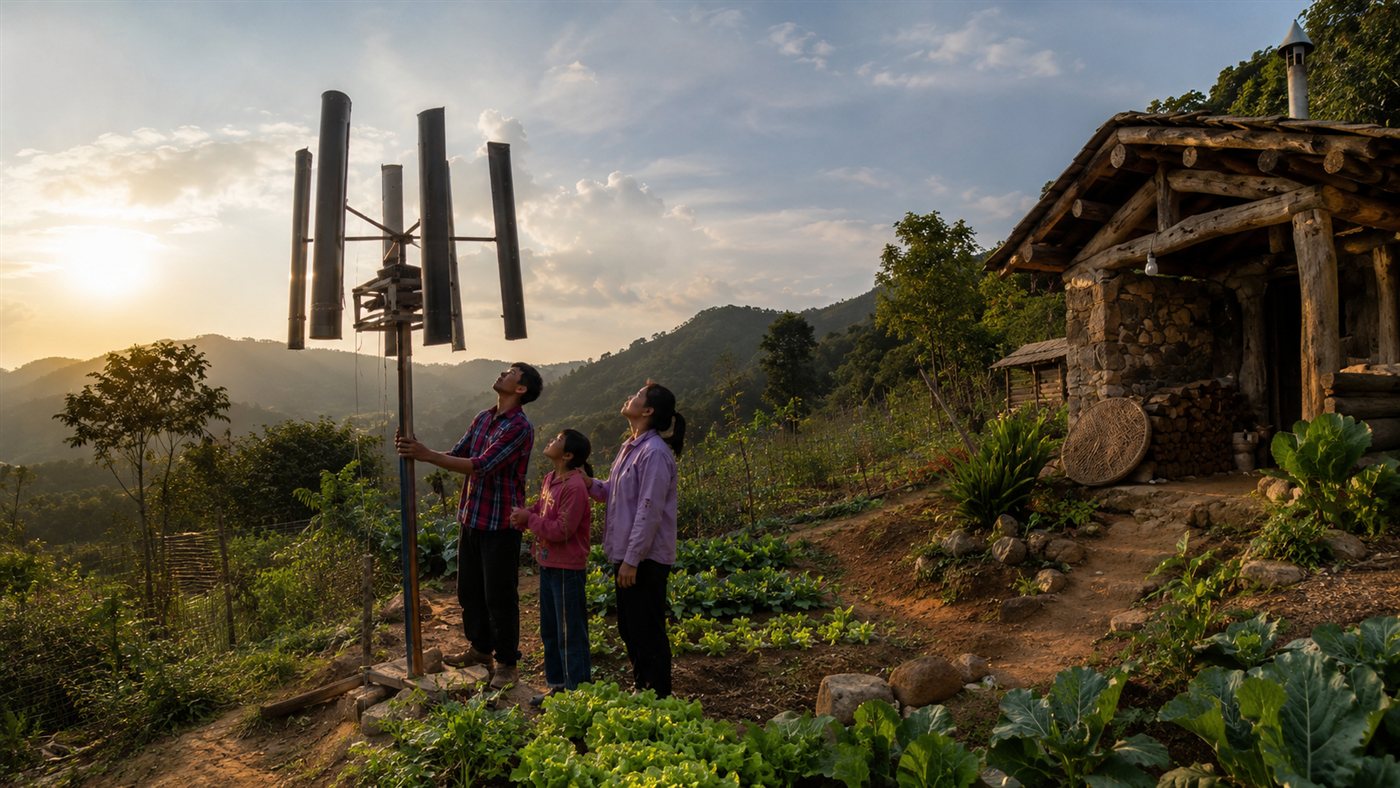
Family Builds Homemade Wind Turbine to Power Off-Grid Home, Video Reaches 555,000 Views on Ngô Thị Huyền’s Channel
-
Indian Brand Creates Sneakers from Recycled PET Bottles and Discarded Tires, Repurposing Over 1 Million Bottles and Raising $4 Million for Expansion




Underground labyrinth beneath the Chernobyl reactor
The underground network brings together control and monitoring structures that survived the nuclear disaster, forming a complex system of rooms and corridors that continue to be used for technical monitoring of the internal conditions of the destroyed reactor.
Doroshenko, a researcher at the Institute for Safety Problems of Nuclear Power Plants, describes the site as a large labyrinth under the reactor, where movement depends on both accumulated experience and the use of detailed contamination maps.
Some corridors have limited or no lighting, forcing scientists to use flashlights throughout the journey, especially in deeper areas where the original infrastructure was compromised after the explosion.
In narrow passages partially blocked by debris, professionals must advance crouched, maintaining heightened attention to avoid contact with potentially contaminated surfaces or moving into areas with dangerous radiation levels.
Although the rooms are signposted, circulation requires precision and prior knowledge of safe routes, as an error can lead to regions where human presence is limited to a few minutes or completely prohibited for radiological safety reasons.
At certain points, Doroshenko needs to complete tasks in less than four minutes due to the intensity of the radiation.
In other areas, he simply passes through quickly, without the possibility of interruption, following predefined protocols.
Radiation exposure and safety protocols
The scientist states that fear is part of the routine, but it needs to be managed rationally so as not to compromise the execution of activities or lead to a loss of concentration in an environment that demands constant discipline.
According to him, the greatest risk is not just the radiation itself, but the possibility of the professional getting used to the environment and starting to ignore danger signs that may arise during the execution of tasks.
“Fear helps maintain control and follow guidelines to ensure low radiation doses,” Doroshenko told the BBC.
He emphasizes that any seemingly common object, such as a glove or a metal part, can be contaminated, even when there are no visible signs, which reinforces the need for continuous attention at all stages.
Before entering critical areas, the researcher uses several layers of protection, including arm and shoe covers and an FFP2 respirator with a valve, designed to reduce the inhalation of radioactive particles suspended in the environment.
In narrower regions or those with debris, he adds a special polyethylene suit, which offers additional protection against direct contact with contaminated surfaces during movement.
Upon exiting the internal areas, the procedure follows strict steps that include passing through control points, removing clothing in a designated contaminated zone, and sending equipment for decontamination or disposal.
Afterward, the researcher takes a mandatory shower and passes through a dosimetry station, responsible for checking for the presence of radioactive particles on the body before full release from the controlled area.
Nuclear fuel still requires constant vigilance
Unit 4 still houses about 200 tons of nuclear fuel and associated materials, according to estimates by international organizations linked to nuclear safety, which maintains the need for continuous monitoring decades after the accident.
A significant portion of this material remains in inaccessible areas, making it difficult to obtain direct data and requiring the use of indirect measurements to assess the behavior and risks associated with the remaining fuel.
After the explosion, large volumes of concrete were used to contain the radiation, creating a physical barrier that helped reduce the release of particles, but also limited access to critical regions of the destroyed reactor.
Doroshenko states that collecting direct samples would allow for more precise analyses of nuclear risk, but acknowledges that this possibility is still unfeasible in most areas due to extreme conditions.
Among the most dangerous materials is corium, a substance formed when molten nuclear fuel mixed with structural components of the reactor under extremely high temperatures during the accident.
This material spread through the structures like lava, solidifying into highly radioactive formations that continue to be monitored by specialists due to the potential risk they still pose.
The most well-known formation is the so-called “elephant’s foot,” often cited as one of the symbols of the disaster, whose direct proximity remains limited due to high radiation levels.
New safe confinement and recent risks
The reactor was initially covered by a hastily built sarcophagus in 1986, which was later encased by the New Safe Confinement, a metallic structure designed to isolate the area for approximately 100 years.
With 108 meters in height, the dome was developed to reduce environmental exposure, protect the original sarcophagus, and allow for future dismantling operations and management of the radioactive materials still present.
The integrity of this structure became a concern again after the drone attack on February 14, 2025, which caused external damage and a localized fire.
The International Atomic Energy Agency reported that radiation levels remained stable after the incident, with no casualties or significant increase in immediate risk to the population.
Nevertheless, technical assessments indicated partial compromise of the containment functions, which reinforced the importance of maintaining constant monitoring of the reactor’s internal conditions.
In this context, the work of teams like Doroshenko’s continues to be considered essential to identify possible changes and prevent internal processes from advancing unchecked.
Extreme routine and scientists’ motivation
Despite the risks involved, Doroshenko states that he finds motivation in his work and describes the experience as challenging, comparable to extreme activities that require constant physical and mental preparation.
“This place is full of myths and is often demonized, but it’s not as scary as many try to portray it,” the researcher stated when commenting on public perception of Chernobyl.
He emphasizes that it is a structure created by human beings and, therefore, depends on continuous supervision to ensure that risks remain controlled over time.
The researcher undergoes mandatory medical examinations annually and, during periods of rest, seeks activities outside the work environment to reduce the impact of the intense routine.
As long as he maintains adequate physical conditions and there is a technical need, he states that he will continue to participate in the underground operations at the reactor.
Almost four decades after the accident, the focus remains on containing radioactive waste, maintaining monitoring systems, and planning solutions to deal with still inaccessible materials.
“If people like us stop going down there, an uncontrolled process will begin, which is dangerous,” Doroshenko said. “It’s hard work. Chernobyl must not be forgotten.”


