






 Portuguese
  Spanish


Chinese investment surge in the Northeast combines abundant renewable energy, significant industrial expansion, strategic infrastructure projects, and growing interest in technology, creating a new economic axis in Brazil and expanding direct connections with global production and export chains.
The Northeast has come to occupy a strategic position in the plans of Chinese companies in Brazil, driven by the combination of abundant renewable energy, favorable location for international exports, availability of areas for new projects, and more competitive operational costs than those observed in already consolidated industrial regions.
The Chinese presence is gaining strength in infrastructure, industry, technology, and logistics projects, with emphasis on the BYD factory in Camaçari, Bahia, and the Salvador-Itaparica Bridge, a 12.4-kilometer project that will connect the Bahian capital to Itaparica Island.
Renewable energy in the Northeast attracts foreign investments
The supply of solar and wind energy is one of the main factors explaining Chinese interest in the region, especially at a time when large global companies are seeking to reduce operational costs and expand the use of renewable sources in their production chains.
-
Women Who Faced Death Head-On Break Taboos and Uncover Forgotten Funeral Rituals

-
Elderly Man in His 70s Spends Nearly 30 Years Digging 3 km Canal to Transform Arid Land into Farmland in Rural India

-
Submerged Town Reemerges in São Paulo as Reservoir Levels Drop, Revealing Ruins and Memories of Displaced Families
-
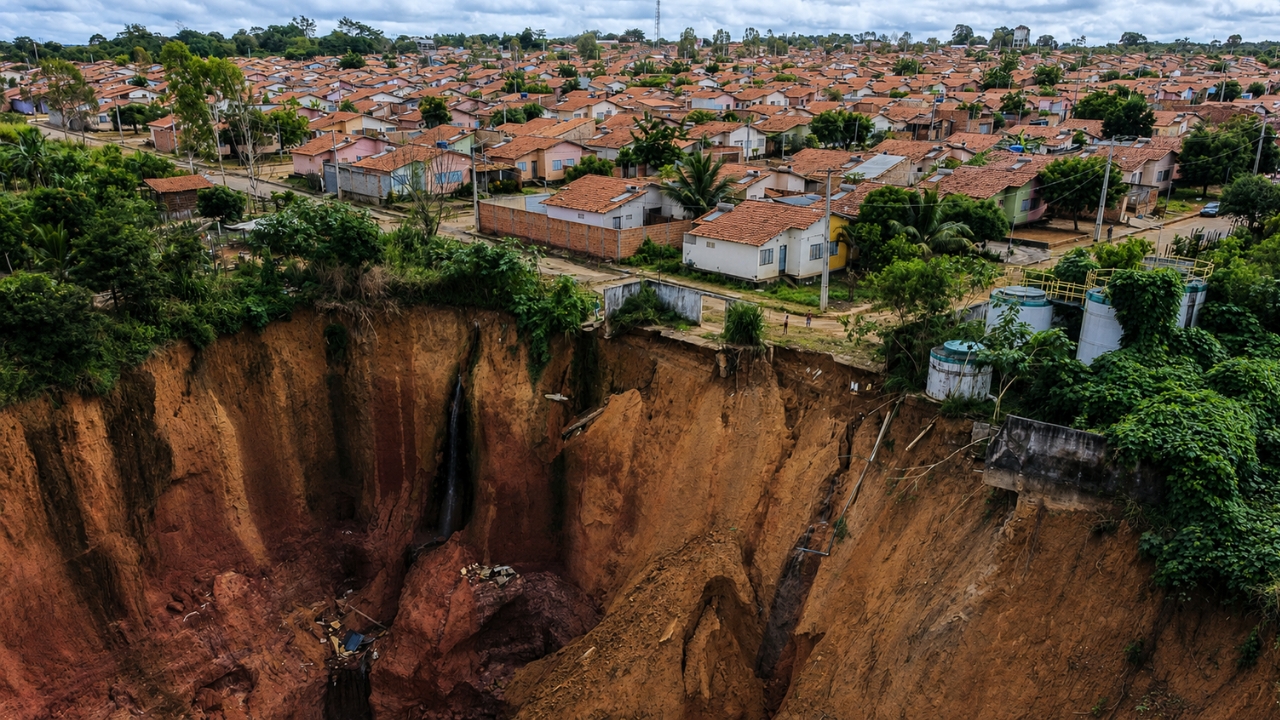
In Northeastern Brazil, 1,200 Residents Face a Silent Nightmare as Giant Sinkholes Threaten Entire Neighborhoods



Economist Diana Chaib, who holds a doctorate from Cedeplar/UFMG, states that the Northeast brings together conditions that make it more attractive given the saturation of traditional industrial hubs, especially when analyzing costs, available space, and expansion capacity for new ventures.
“The Brazilian Southeast, which historically concentrated these investments until now, already shows greater saturation, higher costs, and less space for large new projects,” she said.
According to her, the Northeastern region still has areas for new ventures, regional incentives, and lower costs, factors that increase the economic viability of large-scale projects in energy, logistics, and industry.
BYD factory in Camaçari boosts local industry
In Bahia, BYD transformed the former Ford area in Camaçari into one of the main symbols of the new phase of Chinese presence in the country, marking the industrial resumption of the automotive hub with a focus on electrified vehicles and more advanced technologies.
The operation began with the assembly of electrified vehicles and is gradually advancing to expand local production, with the expectation of consolidating the unit as a national reference in the electric and hybrid mobility segment.
The government of Bahia reported in January 2026 that the factory was already approaching 18,000 vehicles produced since its inauguration, including models such as Dolphin Mini, King, and Song Pro, which reinforces the project’s importance for the regional automotive chain.
The Chinese automaker had announced a billion-dollar investment in the complex, with the promise of generating direct and indirect jobs throughout the consolidation of the operation, in addition to stimulating suppliers and services associated with the automotive industry.
The initial projected capacity for the unit is up to 150,000 vehicles per year.
Salvador-Itaparica Bridge and impact on regional logistics
Another project closely followed by investors is the Salvador-Itaparica Bridge, a concession led by a consortium with Chinese participation, considered one of the main infrastructure bets to improve regional mobility and integration.
The structure will be 12.4 kilometers over the sea and is expected to connect Salvador to the municipality of Vera Cruz, on Itaparica Island, creating a direct link that could alter the economic and logistical dynamics of the metropolitan region and the Bahian interior.
The project is treated by the Bahian government as one of the largest infrastructure interventions in the country, with the potential to stimulate sectors such as tourism, commerce, and cargo transport along its direct area of influence.
The promise is to reduce travel time, improve integration with the interior, and enhance the logistical competitiveness of areas linked to tourism, commerce, and regional production.
Data centers and technology expand Chinese interest
In addition to the automotive industry and infrastructure projects, Chinese interest is also advancing into energy-intensive sectors, such as data centers, which require constant, reliable supply, preferably based on large-scale available renewable sources.
This type of enterprise requires a stable, competitive, and preferably renewable supply, a condition in which the Northeast appears to have an advantage over other Brazilian regions that face structural limitations or higher energy costs.
José Ricardo dos Santos, co-president of Lide China, states that Chinese companies are observing the region due to its capacity to absorb clean energy in new technological projects, especially those focused on data storage and processing.
“We are increasingly hearing about the interest and appetite for Chinese investments in the data center area,” he said.
He also assesses that there has been a change in the perception of part of the Brazilian business community regarding Chinese products and solutions, with an increased search for more advanced technology and more efficient industrial solutions.
According to Santos, the search is no longer just for low prices but has come to include more sophisticated technology, even if at a higher cost than competitors from other countries.
Chinese strategy involves exports and infrastructure
The Chinese strategy in the Northeast also connects to foreign trade, considering that investments in infrastructure and energy can facilitate the flow of production and reduce logistical costs in exports to Asian markets.
Infrastructure and transport projects can reduce logistical costs, improve the flow of goods, and bring Brazilian production chains closer to trade routes linked to Asia, strengthening economic integration between the countries.
Diana Chaib states that China tends to prioritize investments capable of facilitating exports, reducing logistical bottlenecks, and strengthening strategic partnerships within an increasingly competitive global scenario.
For her, energy, industry, and infrastructure expand the regional productive base and insert the Northeast more actively into global value chains.
The economist points out, however, that large-scale projects depend on legal certainty, clear regulation, and well-structured regional planning to ensure stability and predictability for foreign investors.
Without these elements, investments can advance unevenly and generate economic, social, and environmental risks.
Bioceanic railway still depends on technical studies
The possible railway connection between Ilhéus, in Bahia, and the Port of Chancay, in Peru, is another project mentioned in the debate about the Chinese presence in Latin America, with the potential to alter trade routes and reduce logistical distances.
The corridor is seen as an alternative to shorten trade routes to the Pacific and bring Brazil closer to Asian markets, creating a new strategic option for Brazilian exports.
Negotiations advanced in 2025, with talks between Brazil and China to study a railway connection of about 3,000 kilometers, involving different stages of technical analysis and economic viability.
Even so, the project remains in the discussion phase and depends on technical, environmental, financial, and political studies before any definitive execution.
The proposal also appears in a scenario of global economic dispute, marked by trade tensions and the repositioning of production chains among major economic powers.
With trade tensions between China and the United States, Beijing seeks to diversify partners and routes, while Brazil tries to preserve a foreign policy based on multiple commercial relations.
Santos assesses that the rapprochement with China does not eliminate Brazilian dialogue with other international partners, maintaining the diplomatic tradition of balance among different economic blocs.
The country maintains relations with the United States, the European Union, and other markets, while trying to attract investments without being tied to a single geopolitical axis.
In the Northeast, the combination of clean energy, expanding infrastructure, and industrial projects explains the region’s prominence in the decisions of Chinese companies, consolidating itself as a new strategic pole of economic development in Brazil.
The challenge, now, is to transform this interest into lasting development, with qualified jobs, efficient regulation, and concrete gains for the regional economy.






You can already see how much prices have moved in Salvador over the last few years.
What’s starting to happen now is that Itaparica Island is seeing that same shift in real estate activity, even before the bridge really gets going.
That’s usually how these markets move, first the city, then the surrounding areas once access changes.
The bridge isn’t just infrastructure, it’s a complete shift in the economy and how the region connects and grows.
The key for us at Emerging Land Holdings was identifying this area early.