






 Portuguese
  Spanish


2,500-year-old artifact identified in the Negev Desert, Israel, helps archaeologists investigate ancient beliefs related to child protection and fertility.
What seemed like just a small clay fragment lost among stones and sand in the Negev Desert turned out to be one of the most unusual archaeological discoveries in recent years in Israel. During a family outing, Zvi Ben-David, aged 11, found an object partially exposed in the ground and picked it up without imagining he was carrying an artifact produced about 2,500 years ago.
A resident of Be’er Sheva, in southern Israel, the boy located the piece near Nahal HaBesor, in the Negev. After analysis by experts, the object was identified as a rare ceramic amulet from the end of the Iron Age or the beginning of the Persian period, a historical transition situated between the 6th and 5th centuries BC.
Archaeological discovery in the Negev Desert revealed rare 2,500-year-old amulet found by child in Israel
The discovery happened during a family walk in an area of the Negev, when Zvi noticed that one of the pieces on the ground had a different shape from the surrounding stones.
-
Young Innovator from the Brazilian Amazon Develops Acai Seed Brick, Turning Fruit Waste into Building Material, Wins Over 25 Awards, Showcases Globally

-
From Street Vendor to Startup Success: At 25, Brazilian Entrepreneur Projects $90 Million Revenue by 2026 Solving Retail Giants’ Challenges
-
Brace for Cold: Rare Cyclone and Polar Air Mass to Plummet Temperatures in Brazil, Risk of Frost and Subzero Temperatures in Southern Highlands

-
Man in Brazil Collects Nearly 50 Million Liters of Rainwater on His Property, Sentenced to 30 Days in Jail and Fined $1,500



The visual rarity of the object caught attention even at the site, especially because it had well-defined human features, something uncommon on a desert surface.
The importance of the find was quickly recognized by the boy’s mother, identified in reports as a professional tour guide. She contacted experts from the Israel Antiquities Authority, which allowed the piece to be sent for evaluation, preservation, and research.
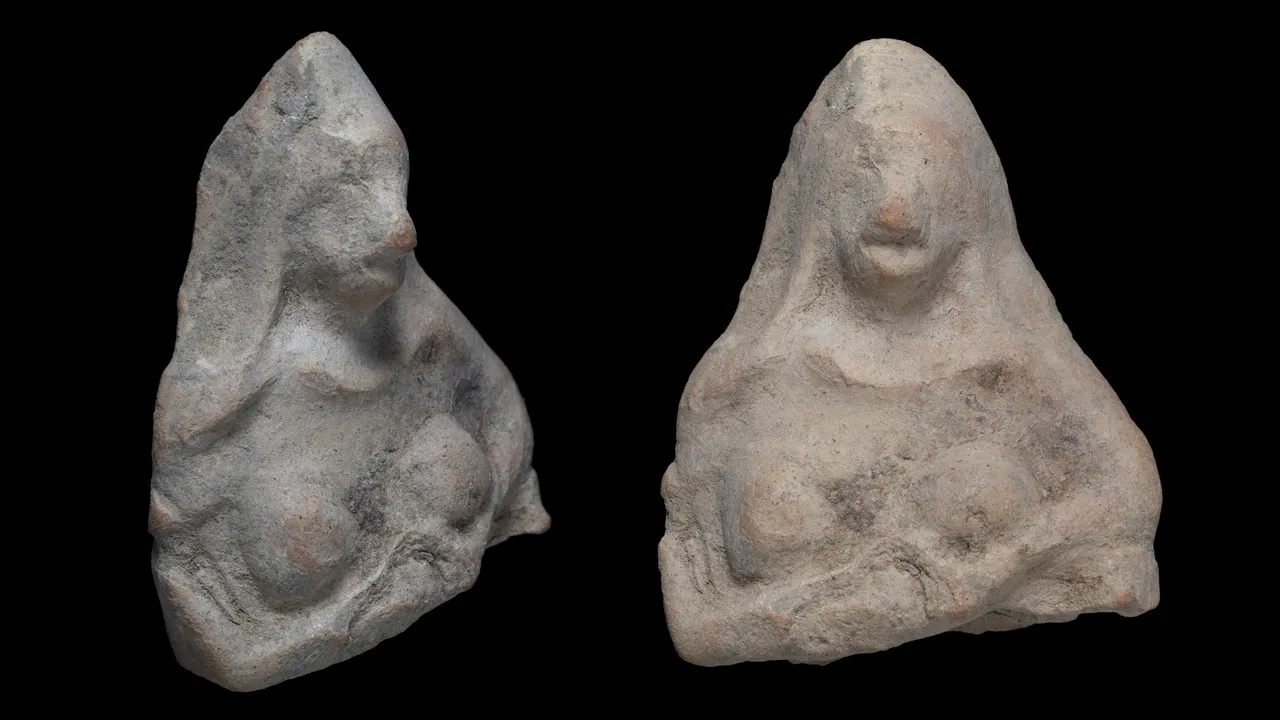
After analysis, archaeologists confirmed it was a small molded ceramic figurine, associated with the late biblical period. The object measures about 7 centimeters in height by 6 centimeters in width and was described as an exceptionally rare example within the known collection in Israel.
Ceramic Amulet of Fertility and Child Protection Helps Explain Domestic Beliefs of the Iron Age in Israel
According to archaeologists cited in the reports, the piece represents a woman with her head and neck covered by a veil, exposed breasts, and hands positioned below the chest. This type of iconography was linked, at the time, to ideas of fertility, prosperity, good luck, and child protection.
Experts explain that figures of this type were used in the domestic environment and functioned as everyday amulets, comparable to popular protective symbols in other traditions.
Therefore, the piece found by Zvi is not only relevant for its physical rarity, but also for its symbolic value. It helps reconstruct how ancient families dealt with birth, health, fear of child loss, and the search for spiritual protection in a phase marked by uncertainties and little medical assistance.
Rarity of the Amulet Found in Negev Expands Knowledge on Domestic Religion and Family Life in the Biblical Period
According to reports based on information from the Israel Antiquities Authority, the specimen is so unusual that only one other similar had been previously recorded in the country, also from the Negev region and currently part of the National Treasures collection. This fact immediately elevated the archaeological significance of the discovery.
The uniqueness of the object expands the understanding of domestic religious practices in the last centuries of the First Temple period and the early years of Persian presence in the region. Instead of showing only large structures, wars, or kings, the amulet offers a window into intimate and family concerns of everyday life.
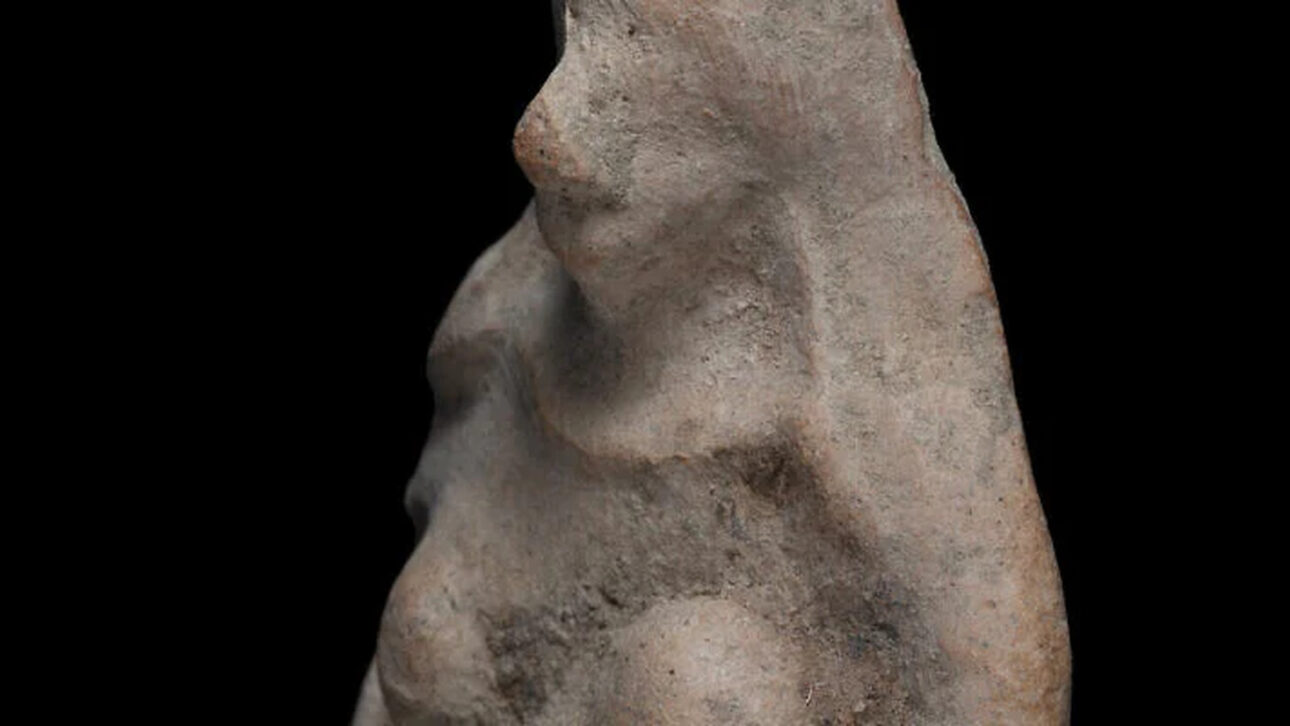
This type of find also helps archaeologists understand how human representations were incorporated into rituals and popular beliefs in ancient Israel. In historical terms, the piece connects religion, motherhood, childhood, and survival in a single material evidence preserved for about 25 centuries.
Recognition given to the boy reinforced the importance of reporting rare archaeological finds to authorities in Israel
After handing over the artifact for official analysis, Zvi Ben-David received a certificate of recognition for his action. Reports like those from smithsonianmag highlight that the family’s decision to immediately report the discovery was treated by archaeologists as an exemplary gesture of citizenship and heritage preservation.

For the experts, the family’s collaboration not only ensured the protection of an extremely rare object but also allowed for a deeper study of ancient cultural practices. In such cases, quick communication prevents the loss of historical context, physical damage to the piece, and the disappearance of important information for research.
The episode also reinforces an aspect that often fascinates the public in archaeological discoveries: not always do great revelations come from long excavations and complex operations. Sometimes, a keen eye during a family walk is enough to bring to light a rare trace of beliefs, fears, and hopes that have spanned millennia.
Clay piece found by chance in the Negev spanned millennia and became rare evidence about childhood, faith, and survival in the ancient world
The strength of this discovery lies precisely in the contrast between the simplicity of the moment and the historical depth of the object. A small item, picked up almost out of curiosity, ended up becoming concrete evidence of how ancient populations tried to protect children, seek fertility, and face the insecurity of everyday life.
In the case of Zvi Ben-David, the walk through the Negev desert ended as something much greater than a memory of a stroll.
The boy placed in the hands of archaeologists a rare testimony about the domestic dimension of religion in Antiquity and about the permanence of human concerns that, in many aspects, remain recognizable to this day.


