






 Portuguese
  Spanish
  7 min of reading
  0 comments


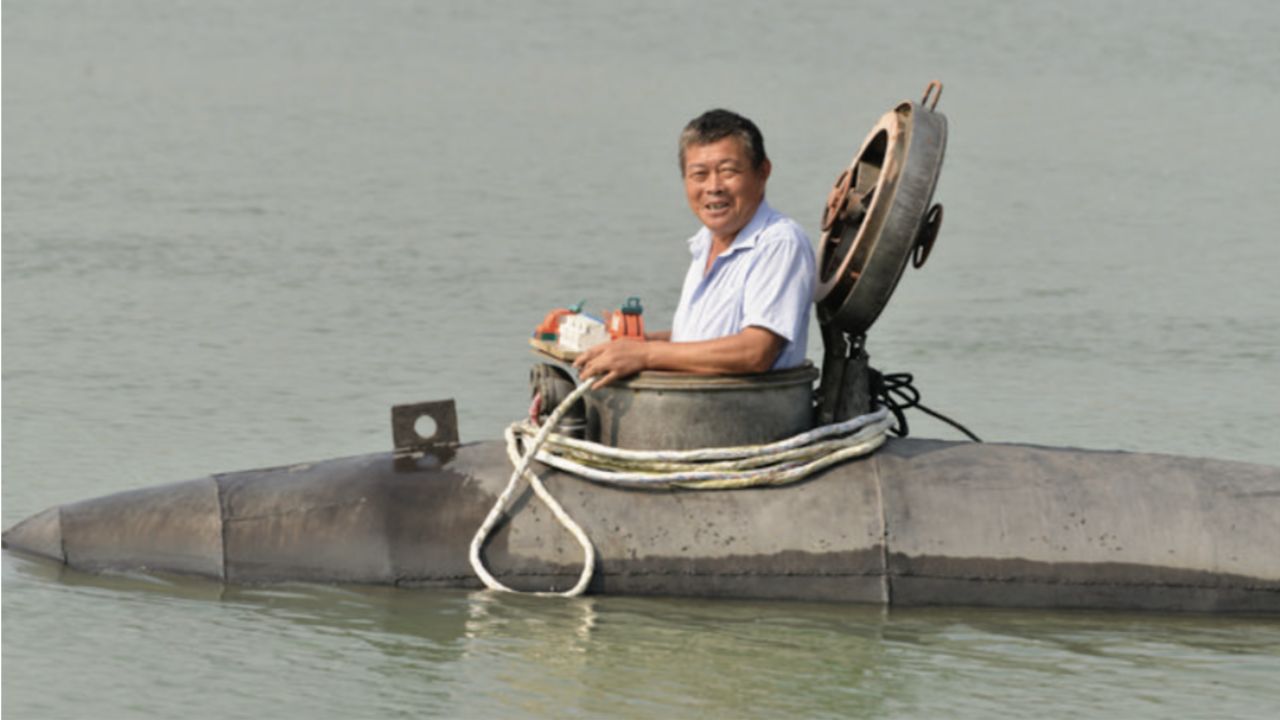
Chinese farmer builds the Big Black Fish submarine after 10 years of night work and conducts a public test with a 5-ton submersible.
Chinese farmer builds handmade submarine Big Black Fish, a 5-ton submersible capable of diving 8 meters with two passengers. The scene that caught attention in the province of Anhui, in July 2025, did not involve a laboratory, a naval company, or a military project. Inside the dark structure that slowly sank into a local river was Zhang Shengwu, a farmer in his 60s who decided to turn curiosity into a machine after spending a decade building almost everything with his own hands.
According to China Daily, Zhang worked for years in carpentry, welding, and navigation, accumulating practical experience until reaching the project that would make him known throughout China. The result was a homemade submarine named Big Black Fish, with a steel hull, ballast system, reinforced sealing, and the ability to remain submerged for about 30 minutes, a rare feat for an inventor without formal training in naval engineering.
Childhood among boats and rivers helped shape Zhang Shengwu’s obsession with machines that float and dive
Zhang Shengwu lives in a region in eastern China marked by rivers, river transport, and small-scale port activity. In Zhangdu, in the municipality of Maanshan, he spent much of his life surrounded by boats, observing the constant movement of cargo ships and working in activities related to the river and construction.
-
Brazilian Company Launches Retro Smartphone with 48 MP Camera, T9 Keyboard, and Privacy Features for Social Media-Free Use

-
Invisible Induction Technology Enables Wireless Power for Blenders, Coffee Makers, and Air Fryers, Reducing Countertop Cables

-
Smart Outdoor Lighting Transforms Gardens into Living Spaces with Weather Resistance and App-Controlled Scenes

-
Green dot on top of smartphone intrigues users, signals privacy alert in Android 12 that experts say shouldn’t be ignored.




According to China Daily, Zhang worked as a carpenter, welder, and in the navigation area before returning to his hometown and building a small dock to sell sand. This daily life helped form the practical basis of the project because he already knew materials, metal structures, and the behavior of surface vessels, even without academic mastery of engineering.
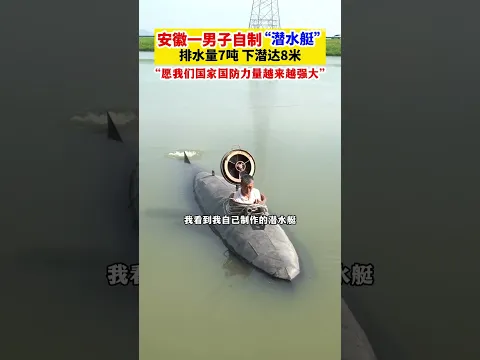

In an account reproduced by China Daily, Zhang said he saw iron and wooden vessels pass by the river, but felt that something was missing.
What was missing, for him, was precisely a boat that could disappear under the water, and this restlessness would eventually become the starting point for the handmade submarine that would take years to come to fruition.
Television program watched in 2014 became a trigger for the homemade submarine project
The turning point happened in 2014, when Zhang watched a television program showing the construction of a submarine. According to China Daily, the idea struck him immediately: if someone else had managed to build a submersible vessel, he could try too. From that moment on, the sandy ravine where he worked began to turn into an improvised workshop and testing ground.
In the following days, Zhang gathered about 5,000 yuan, approximately US$ 698 at the time, and bought basic materials such as steel plates, batteries, and a motor. The construction began discreetly, driven more by stubbornness and imagination than by any technical or family support.
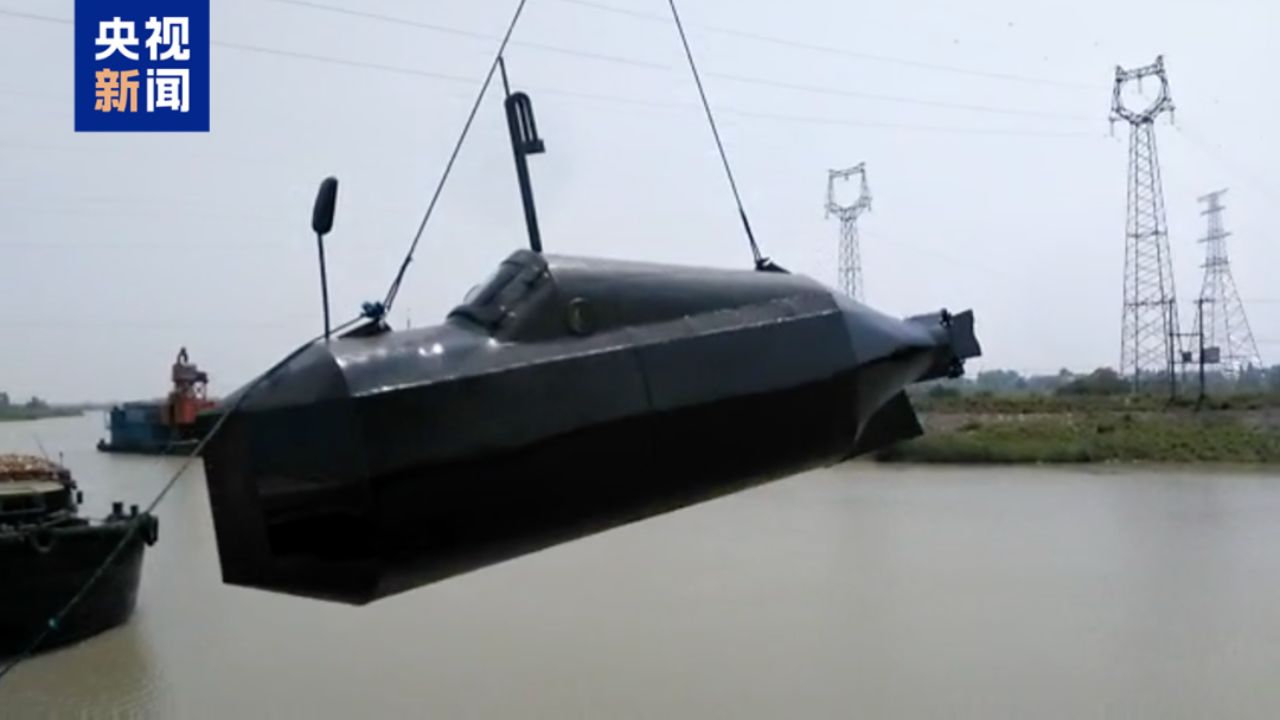
His own family viewed the initiative with skepticism. The CD reports that Zhang persisted despite opposition to the project, treated at home as an expensive, risky, and impractical idea. Nevertheless, he continued mentally designing solutions, testing parts, and welding each stage of the submarine based on the experience accumulated over his life.
First prototype was born cheap, leaked in water, and still became a patent in China
In about six months, Zhang completed the first submarine. According to China Daily, the prototype was 6 meters long, 1.2 meters high, and weighed about 2 tons. It was a rudimentary machine, smaller and less stable than the current model, but enough to prove that the idea could move from improvisation to becoming a real vehicle.
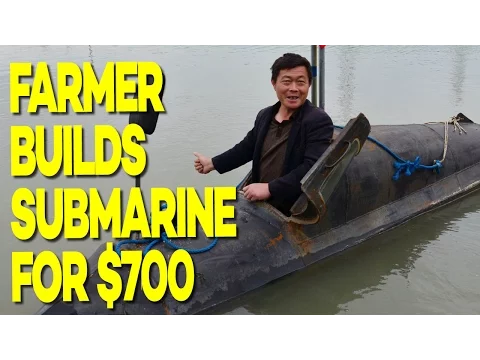
The initial test was marked by fear and fascination at the same time. Zhang recalled feeling sweaty hands as he took control and feared leaks, but wanted to go deeper. The fear made sense: the first submarine indeed had leaks, showing that the project was still far from a reliable level of performance.
Even with the flaws, that first step earned him formal recognition. China Daily reports that Zhang received a national utility model patent for the submarine design, and in 2016 obtained a second patent related to a surface boat. The message to him was clear: the invention was still imperfect, but it already had enough technical value to continue evolving.
Big Black Fish was born as a much more ambitious and much heavier second generation
After the first experiment, Zhang spent years accumulating experience, saving money, and observing the limits of the initial model. When he returned to the project more ambitiously, he already knew he would need a larger hull, better sealing, superior stability, and real transport capacity. It was in this context that the Big Black Fish, the second generation of the submarine, was born.
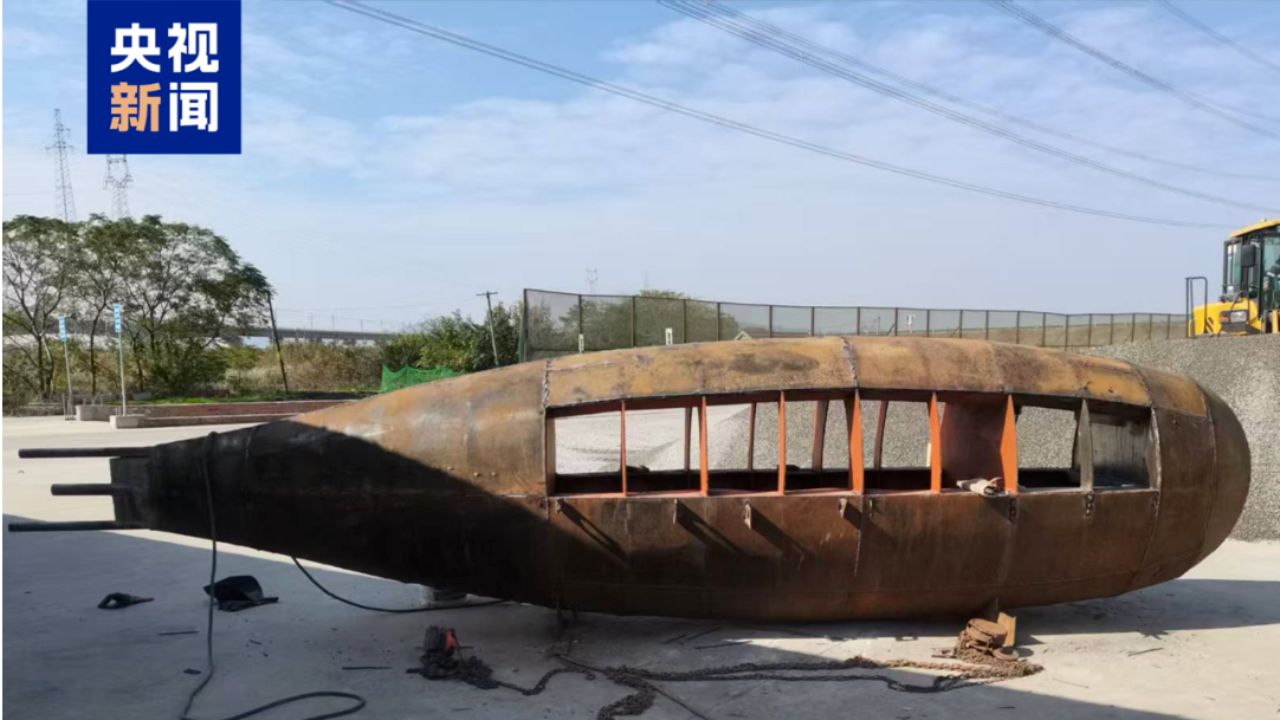
According to China Daily, the investment in the new vessel exceeded 40,000 yuan, equivalent to about US$ 5,570. The new model reached 7 meters in length, 1.8 meters in height, and a total weight of 5 tons, with space for two people side by side. The expansion transformed the project from an artisanal curiosity into something visually close to a real submersible.
To solve the stability problem, Zhang adopted a simple and heavy solution. China Daily reports that he poured approximately 2 tons of concrete inside the hull to function as a permanent counterweight. According to the inventor himself, this extra weight helps keep the submarine balanced during submersion and reduces the risk of unstable behavior underwater.
Ballast tanks, reinforced sealing, and an electric motor shaped a functional submarine
The diving system of the Big Black Fish follows a classic submarine principle: the use of ballast tanks. Zhang installed a tank at the front and another at the rear. When these compartments receive water, the vessel loses buoyancy and sinks; when the water is drained, the submarine regains buoyancy and returns to the surface.
To combat the main problem of the first prototype, Zhang reinforced the sealing at each stage of the hull. According to China Daily, he manually welded all the joints, used silicone to reinforce the seams, and applied additional adhesive over critical areas. The inventor also adopted circular hatches, a shape that better distributes stresses and is often preferred in structures subjected to water pressure.
The final performance is impressive precisely because it came from an improvised workshop. China Daily states that the submarine can reach 4 knots, which is about 7.4 km/h, dive up to 8 meters, carry two passengers, and remain submerged for about 30 minutes. Zhang also highlights a detail he considers decisive: the vehicle can also operate in reverse, which enhances maneuverability in narrower areas.
First public test turned the rural inventor into a national phenomenon on Chinese networks
The dive that projected Zhang to the public occurred on July 2, 2025, when he piloted the Big Black Fish in a river near his home in Hanshan County, in the province of Anhui. Images of the submarine entering the water and disappearing for moments quickly went viral and turned the farmer into a character in one of the most curious cases of popular Chinese innovation that year.
The image of the vessel helped boost the repercussion. The dark, compact, and heavy hull, contrasting with the rural landscape, made the test seem too unlikely to have come from the hands of an inventor without a degree. This tension between rusticity and ingenuity became the main driver of the viralization, because the submarine seemed both improvised and functional.
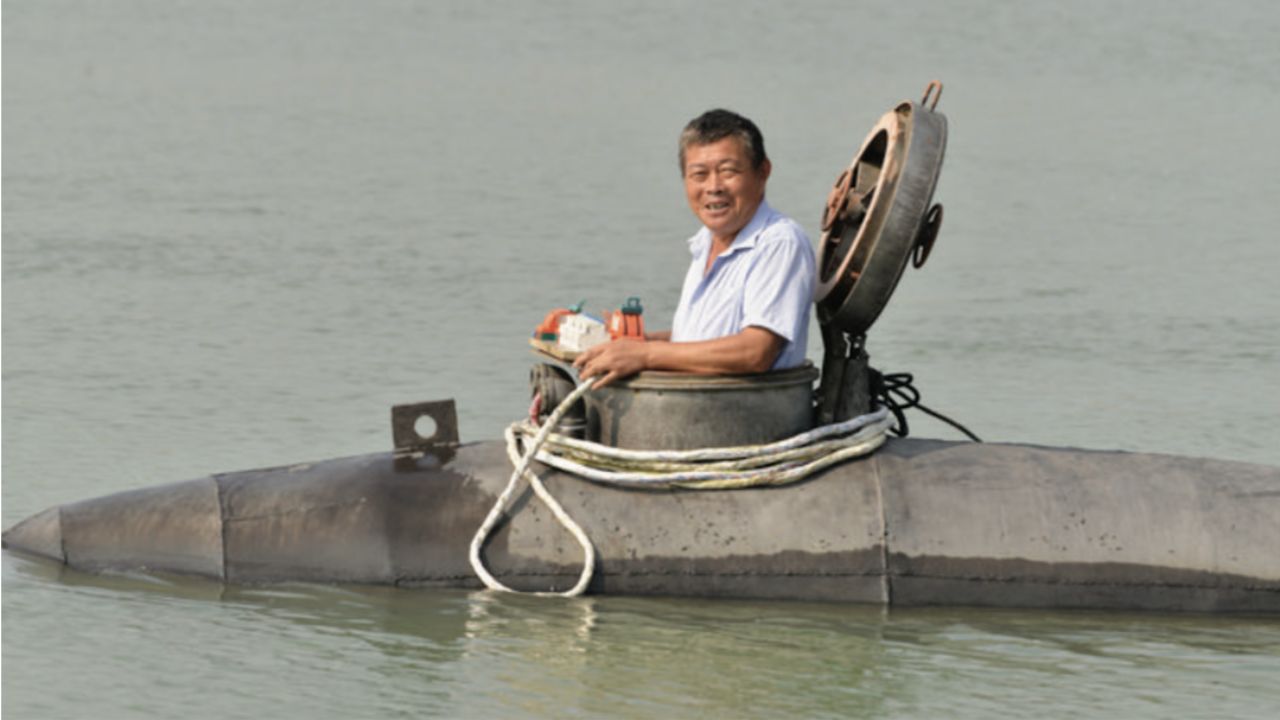
Instead of emerging from a sophisticated technological center, the Big Black Fish came from a village, common tools, and a man used to solving problems on his own. This contrast helped explain why the story spread so quickly: it fits perfectly into the narrative of individual determination that tends to mobilize the internet when an unlikely project actually works.
Big Black Fish exposes a lesser-known side of Chinese innovation outside major hubs
Zhang’s story also drew attention because it contrasts with the more frequent image of Chinese innovation, generally associated with artificial intelligence, high-speed trains, semiconductors, and large laboratories. Here, the protagonist is not an engineer from a technological metropolis, but a rural inventor who combined manual experience, persistence, and practical observation of the world around him.
China Daily notes that Zhang is not an entirely isolated case. The report mentions other Chinese inventors who ventured into building civilian submarines and places this phenomenon within a broader environment of encouraging entrepreneurship in the countryside.
This background also appears in official documents. In 2020, a text published on the Chinese government’s portal stated that the country aimed to train more than 1 million rural innovation and entrepreneurship leaders by 2025, with support measures, training, and incentives for economic activity in rural areas.
Although Zhang’s submarine is an extreme case, it symbolically fits into this environment of valuing inventors outside major urban centers.





Be the first to react!