






 Portuguese
  Spanish


At 17, American Justin Bernstein modified an ice bacterium to produce glass, or silica, making Arctic ice more reflective and slowing the melting. The idea against climate change earned the young man a $50,000 scholarship from the Davidson program in the USA.
One of the planet’s biggest problems received a response created by a teenager. At 17, American Justin Bernstein, from Greenwich, designed a bacterium capable of producing glass to make the Arctic ice more reflective and, thus, slow the melting. The idea earned him a $50,000 scholarship as a Davidson Fellow of 2025, one of the most prestigious awards for young scientists in the United States. The story is on the Davidson Institute.
It’s worth saying what it is and what it isn’t. For now, it’s an award-winning research project, with results supported by modeling, not a technology already spread across the Arctic. Even so, the concept is ingenious: using microscopic life itself to combat climate change, making the ice reflect more sunlight instead of absorbing heat.
The bacterium that makes glass
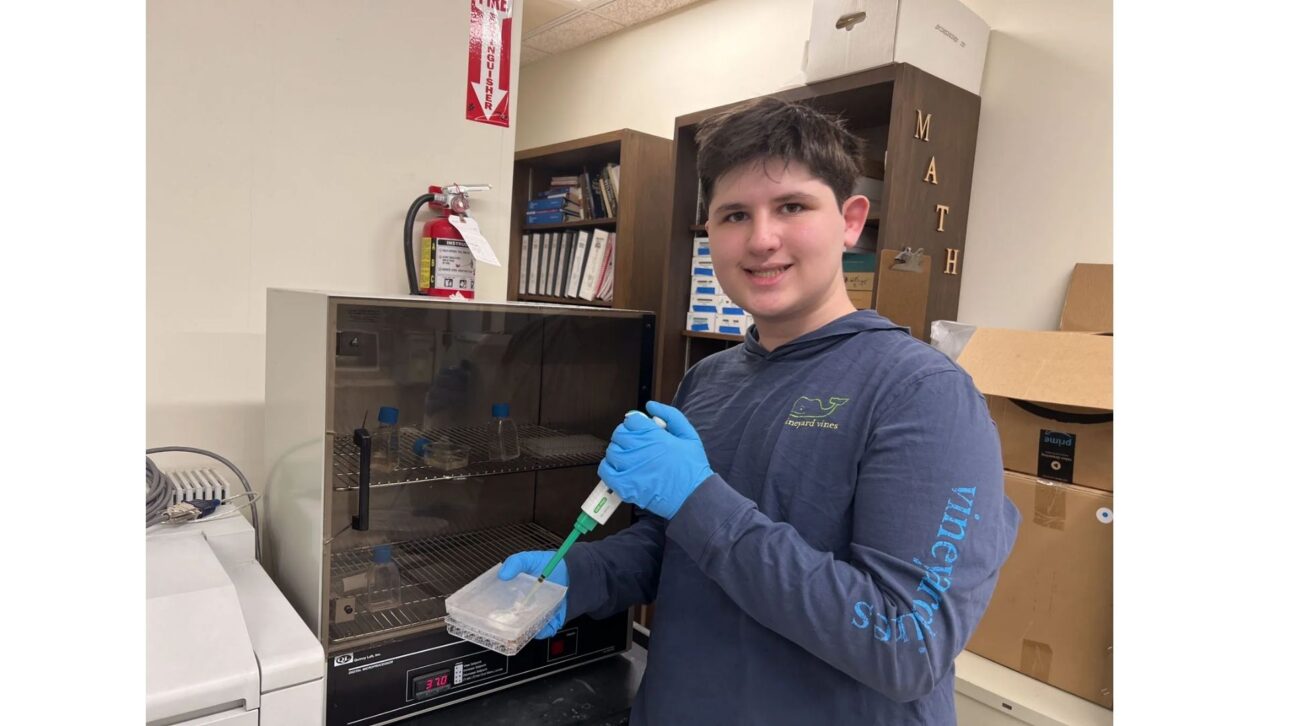
The trick is to copy nature. Bernstein started with Cryobacterium, a bacterium that naturally lives in glaciers, and inserted genes from diatoms, marine algae that produce glass, or silica, as part of their own body. The result is an ice bacterium capable of making glass on its own.
-
The 19-Meter Rocket-Helicopter: A Private Industry Prototype That Challenged Space Race Logic

-
Brazilian Students Convert Seized Illegal TV Boxes into Linux-Powered Mini Computers for Schools and Social Projects Across São Paulo

-
Brazilian Engineer Develops Affordable Custom 3D-Printed Prosthetics for Children and Teens, Operated by Elbow or Wrist Movement Without Batteries

-
China Left 51 Rocket Bodies in Low Earth Orbit Between 2021 and 2025, Doubling Previous Period, Report Warns of Space Debris Threatening Satellites for Decades



The process takes advantage of what already exists in the environment. According to the Davidson Institute, when placed on ice, the bacterium uses the silicon naturally dissolved in the water to produce silica, forming a reflective layer on the surface.
Instead of spreading material from outside, it transforms local raw material into glass.
It’s biotechnology at the service of the climate. Combining a cold-resistant bacteria with the ability of an algae to create glass is the type of solution that unites biology and engineering.
It was this creativity that caught the attention of the evaluators and put the young man’s work on the science map.
Why glass on ice helps slow down melting
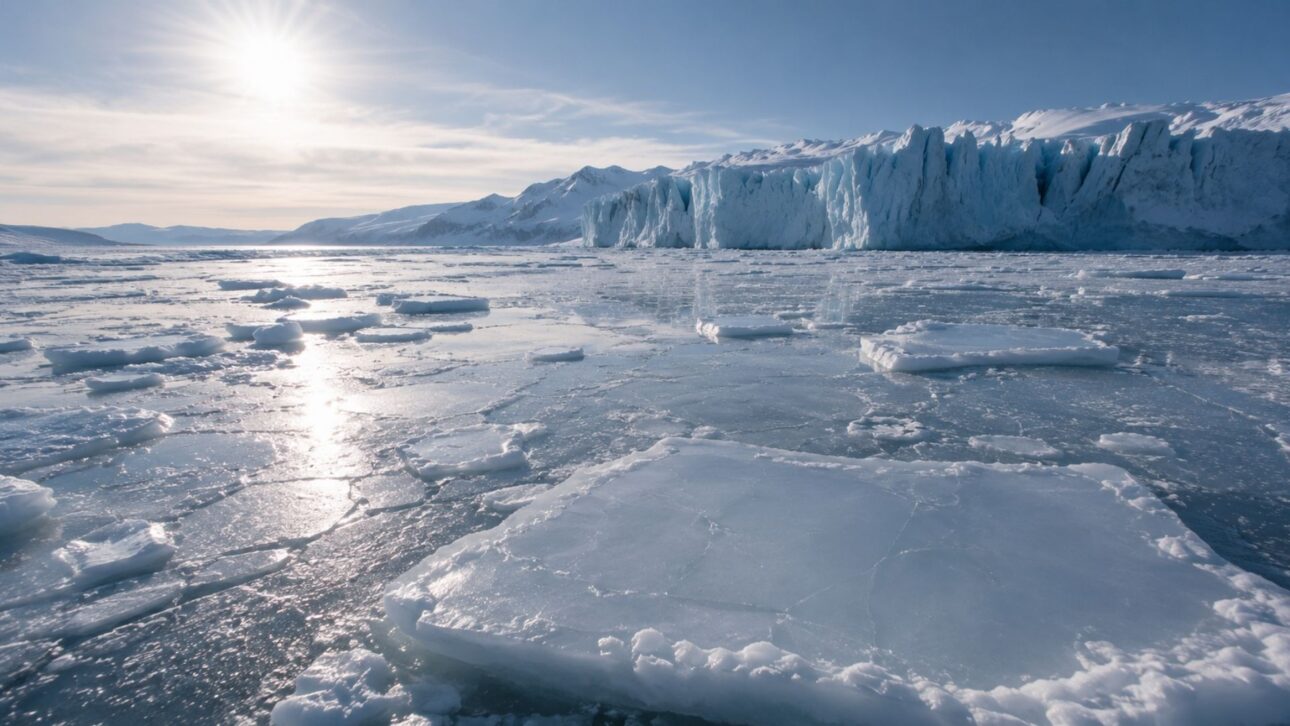
The logic lies in color and light. Bright white ice reflects a good portion of sunlight back into space, but when it melts, it exposes darker water and rock, which absorb heat and warm up even more. This accelerates melting in a vicious cycle that concerns Arctic scientists.
Glass comes in to break this cycle. By covering the surface with a thin layer of reflective silica, the bacteria increases the ice’s ability to reflect sunlight, in an effect known as albedo.
More reflection means less heat absorbed, and less heat means slower melting.
It’s a way to restore the ice’s natural defense.
Instead of fighting warming only by cutting emissions, the idea tries to directly protect Arctic ice, helping it stay white and reflective for longer.
In theory, this would buy precious time against climate change.
The advantage over old methods
The idea of making ice more reflective is not entirely new. There have been tests spreading glass microspheres over Arctic ice to increase reflection, but this method is expensive, short-lived, and can harm the environment, as it requires dumping large amounts of artificial material.
The bacteria solves several of these limitations at once. Being alive, it reproduces on its own and continues producing glass throughout melting and freezing cycles, without needing to be reapplied all the time. This makes it, in theory, a low-cost and self-sustaining solution.
This autonomy is the project’s great asset. Instead of a single, costly intervention, Bernstein’s proposal works like a seed that sustains itself: once installed, the bacteria would keep working for the ice. It’s this elegance that differentiates the idea from previous attempts.
What science shows and what is still missing
The initial signs are encouraging, but caution is needed. According to the award material, climate modeling suggests that the technique could not only slow down the melting but, in optimistic scenarios, help recover some of the lost ice.
These are promising projections, still in the research field.
The leap from the laboratory to the Arctic is enormous. Releasing a genetically modified bacterium into such a sensitive ecosystem raises serious questions about safety and side effects, and any large-scale intervention in the climate is a subject of intense scientific debate.
None of this is done without years of testing and strict rules.
Therefore, it is correct to treat the idea as a beginning, not as a ready solution. Bernstein’s work shows a creative path against climate change, but it depends on validation, impact studies, and a lot of control before getting close to the real ice. The merit lies in opening the door.
The Davidson award and the young man behind the idea

The recognition came from one of the most coveted awards in the country. Justin Bernstein, from Greenwich, Connecticut, was named a 2025 Davidson Fellow and received a $50,000 scholarship to continue his studies.
The Davidson program annually awards young Americans with outstanding projects in science, technology, and other areas.
The student’s journey accompanies the achievement. When he developed the research, Bernstein was still a 17-year-old teenager, and today he is in his first year at Yale University, one of the most respected in the United States. The award serves as a push for him to continue investing in his scientific career.
The case reinforces the value of investing in young scientists. Providing scholarships, visibility, and structure to a curious teenager can yield bold ideas like the bacterium that manufactures glass.
It’s not about isolated genius, but about creating opportunities for young talents to tackle big problems.
Why this matters to the world and to Brazil
The Arctic ice is everyone’s problem. When it melts, sea levels rise and threaten millions of people living in coastal regions around the planet, including in coastal cities in Brazil.
Halting the thaw, therefore, is not a distant issue, but rather part of the global fight against climate change.
Ideas like Bernstein’s expand the range of responses. In addition to reducing gas emissions, the world is seeking ways to directly protect what ice remains, and biotechnology emerges as a promising frontier. Even if experimental, the proposal shows that there is room for creative and inexpensive solutions.
For Brazil, it is also an inspiration. The country has talented young people in biology and sciences, and stories like this show that global problems can be targeted from school or university.
Investing in scientific education is planting the seed for the next major project against climate change to be born here.
And you, would you bet on this idea?
Justin Bernstein’s story proves that a good idea has no age: at 17, he created a bacterium that produces glass to make Arctic ice more reflective and halt the thaw, earning a $50,000 scholarship in the United States. For now, it’s research, but it’s research that points a way forward.
And you, do you believe that biotechnology solutions like this can help hold back the Arctic thaw and tackle climate change? Share in the comments if you would trust using modified bacteria to protect the ice or if you think the risk is still too great.


