





 Portuguese
  English
  Spanish
  5 min of reading
  0 comments


With Clean Energy and Low Taxes, Paraguay Transforms Electricity into an Innovation Engine and Attracts Industry Giants, Becoming the New Technological Hub of South America.
Paraguay, previously known only as a supplier of energy from Itaipu and a destination for assembly plants, is beginning to transform into something few expected: a new technological hub in South America. Silently, the neighboring country has been attracting investors, startups, and even multinationals, thanks to a powerful combination that Brazil still cannot match — clean, cheap, and abundant energy, paired with aggressive tax incentives and an industrial policy focused on innovation.
In 2025, this movement gained momentum. With one of the most sustainable energy matrices on the planet and costs up to 70% lower than those in Brazil, Paraguay has come to be seen as the “energy refuge” for technology companies and data centers looking to operate with reduced costs and minimal carbon footprint.
Clean Energy: The Paraguayan Gold
Paraguay’s trump card is its energy. The country is one of the few in the world whose electricity matrix is practically 100% renewable, almost entirely supplied by hydropower plants, with Itaipu Binacional being the biggest symbol of this strength.
-
In 2026, a container ship on the Oslo-Hamburg route will abandon diesel and use fertilizer as fuel: the Yara Eyde ushers in the era of green ammonia in maritime transport.

-
Powering ChatGPT and the world’s data centers in 2026 will require more than 1,000 TWh of electricity — equivalent to Japan’s entire consumption.
-
The UN stated this Thursday (30): war in Iran triggers a worldwide boom in clean energy despite resistance from some countries.

-
Toyota and Coca-Cola reveal long-haul hydrogen truck with zero emission and innovative technology that can transform global sustainable transport


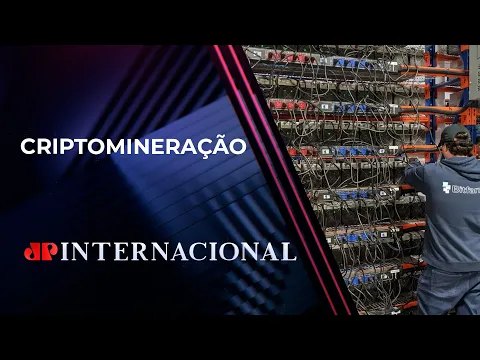

While Brazil struggles with high rates and dependence on expensive complementary sources, Paraguay generates enough surplus to export more than 60% of the electricity it produces.
This abundance makes the cost of industrial energy in the neighboring country one of the lowest on the planet, attracting energy-intensive companies such as data mining companies, semiconductor factories, computing centers, and green technology startups.
Paraguayan economist Javier Rivas, from the Institute for Economic Development, sums up the phenomenon: “Paraguay is converting clean energy into a strategic asset. It is the new oil of the digital age.”
A Planned Ecosystem for Innovation
But energy is only part of the equation. Paraguay is building a solid foundation to become a competitive digital hub, investing in policies that connect technology, education, and tax incentives.
Among the main initiatives is the Digital Park of Asunción, a project with an initial investment of US$ 20 million, which will house global technology companies, research laboratories, and a technological university in partnership with Taiwan.
In addition, the government expanded the use of the Maquila Law, which allows foreign companies to import equipment and supplies tax-free, produce locally, and export paying only 1% on revenue. This policy, originally aimed at the textile and manufacturing industries, is now beginning to be adapted for software startups, data centers, and hardware factories.
Another important initiative is the creation of technological training programs. Paraguayan technical schools and universities began to include courses on robotics, automation, data science, and programming, with an emphasis on promoting female inclusion in the technology sector.
Local Leaders Driving the Movement
The growth of the innovation ecosystem is also the result of new local leaders. One example is engineer Gabriela Cibils, a graduate of the University of California, Berkeley, who returned to Paraguay to lead the startup Cibersons, focused on creating software and digital infrastructure.
Entrepreneurs like her symbolize a generation that is repatriating knowledge and investment. According to the Paraguayan Ministry of Industry and Commerce, more than 30 international companies have already expressed interest in setting up offices or laboratories in the country, particularly solar energy, electric mobility, and artificial intelligence companies.
What Brazil Loses in This Race
While Paraguay advances with clean energy and low taxes, Brazil still faces structural challenges that limit technological competitiveness.
- High energy and infrastructure costs — even with a relatively clean matrix, Brazil has much higher rates due to charges and transmission losses.
- Tax complexity — the Brazilian tax system remains one of the most burdensome and bureaucratic in the world, discouraging foreign investment in innovation.
- Bureaucracy and legal uncertainty — the establishment and maintenance of companies, especially tech-based ones, still face lengthy procedures and regulatory uncertainties.
- Unequal infrastructure — while hubs like São Paulo and Florianópolis thrive, the interior of the country still lacks connectivity and logistics to support technological hubs.
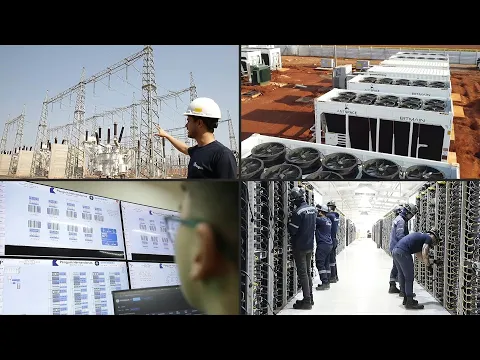
These factors have led companies and investors to look for nearby alternatives, and Paraguay emerges as the “geographical shortcut” to produce at a lower cost, with stable energy and direct access to the Brazilian market.
A New Technological Map in South America
This transformation has clear geopolitical implications. Paraguay is positioning itself as a strategic point of interconnection between the Southern Cone and the rest of Latin America. The goal is to create a digital corridor with international connectivity via fiber optics, energy guaranteed by Itaipu, and permanent tax benefits.
At the same time, the country seeks to establish partnerships with industry giants like Google, Huawei, and Foxconn to develop data centers and innovation laboratories. The aim is to transform Asunción and Ciudad del Este into integrated technological hubs, with a direct impact on e-commerce, digital agribusiness, and manufacturing 4.0.
Economists point out that this movement could shift the flow of investments in the region, diverting some capital that would normally go to Brazil, Chile, and Colombia.
Energy as a Factor of Power
The new Paraguayan industrial policy demonstrates how energy can be a tool of economic sovereignty. As the world seeks to reduce reliance on fossil fuels, countries capable of providing clean and stable electricity become leaders.
The Paraguayan government intends to use Itaipu’s electrical abundance as a “development anchor.” Part of the surplus exported to Brazil could, in the medium term, be redirected to new technology industrial parks, consolidating the country as the energy and digital platform of South America.
The Near Future and the Arrival of New Investments in Paraguay
If the investment pace is maintained, Paraguay could receive more than US$ 2 billion in foreign capital by 2030, according to estimates from regional consulting firms. This amount includes the establishment of data centers, electronics component factories, software companies, and fintechs looking for a predictable regulatory environment and reduced operating costs.
In parallel, there are plans to expand energy export capacity and install high-speed fiber optic cables connecting Asunción to Brazil and Argentina — essential infrastructure to consolidate the country as a hub for technology and communications.
While Brazil tries to balance public accounts and energy costs, Paraguay quietly advances, converting clean electricity into an engine of development and attracting the first unicorns in the region.
History shows that the neighboring country, once an industrial supporting player, can now take on the role of digital protagonist of South America — an achievement built with pragmatism, strategic incentives, and an asset that is worth gold: clean and cheap energy.








Be the first to react!