Portuguese
  Spanish


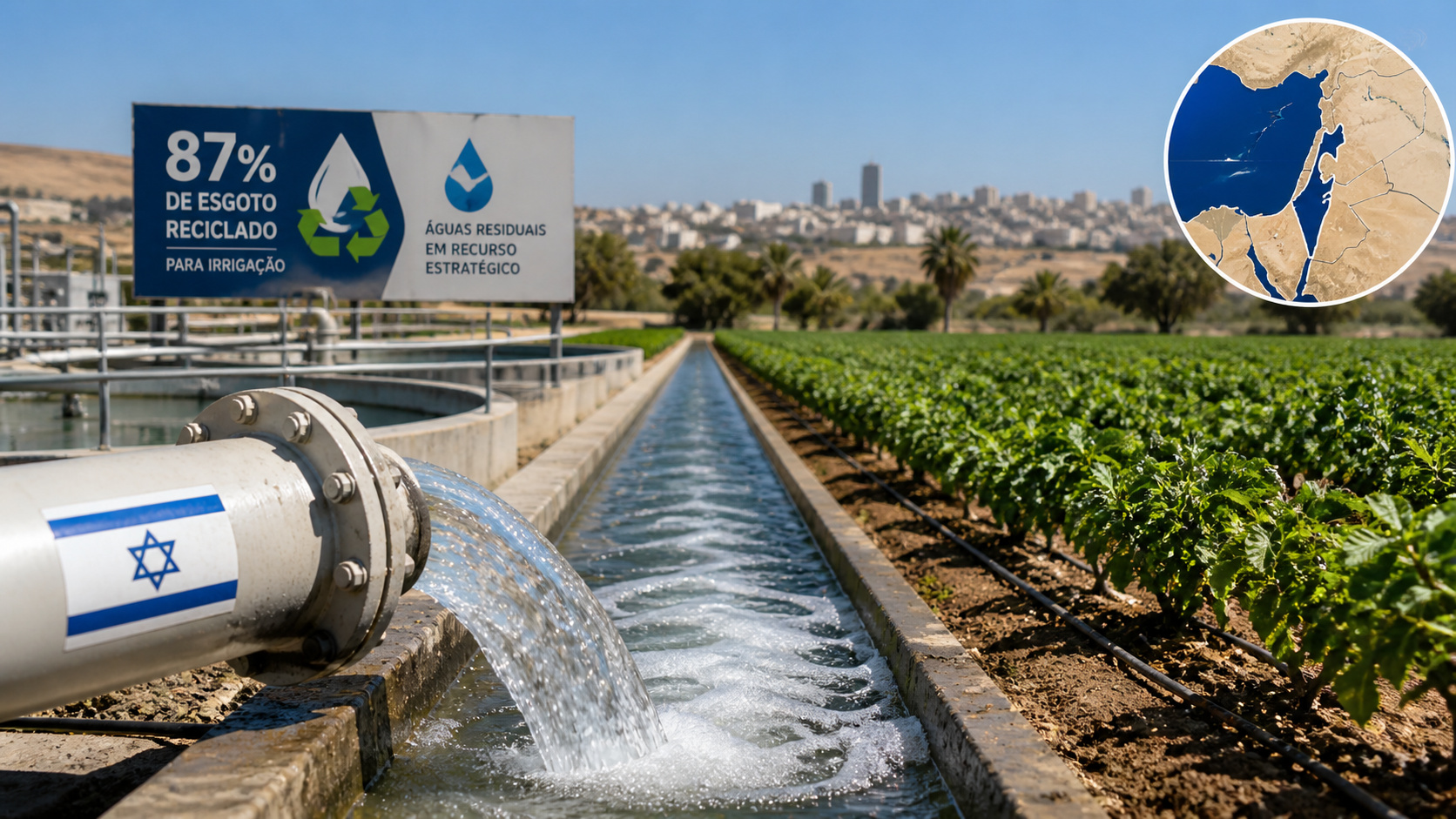

Israel recycles over 87% of its sewage for irrigation, leads agricultural reuse among OECD countries, and has transformed wastewater into a strategic resource in a territory where over 60% of the area is arid or semi-arid.
According to the OECD, Israel is the largest user of recycled effluent for agriculture among all member countries of the organization: over 87% of the sewage produced in the country is treated and reused for irrigation. Spain, ranked second globally, recycles about 20% of its wastewater. Australia, third, recycles approximately 8%. Europe as a whole, combined, recycles close to 1%.
Israel recycles four times more than any other country in the world in a territory where over 60% of the area is classified as arid or semi-arid. Average annual precipitation varies from less than 30 millimeters in the desert south to about 700 millimeters in the north, while the main natural source of regional freshwater, the Jordan River, has shrunk to less than 10% of its historical flow.
Meanwhile, Jordan, which depends on the same collapsing river, recycles less than 15% of its wastewater. Syria recycles less than 5%. Lebanon, in institutional collapse, recycles a negligible fraction. Israel did not solve its water problem by luck or by rain, but by political decision executed with precision engineering over seven decades.
-
Scientists Discover 10,000-Year-Old Stone Wall in the Baltic Sea, Used to Trap Reindeer Before Sea Levels Rose

-
Farmer’s DIY Cooling System Saves Harvests from Spoiling in 51 Countries by Tricking Standard Air Conditioners to Chill Rooms to 2°C

-
As Global Warming Melts Glaciers, Ancient Tools, Preserved Mummies, and Strategic Minerals Emerge in the Arctic and European Mountains

-
Brazil Constructs First Japanese SABO Barrier in Nova Friburgo to Prevent Landslides, a $3 Million Concrete Trap for Rocks, Logs, and Mud


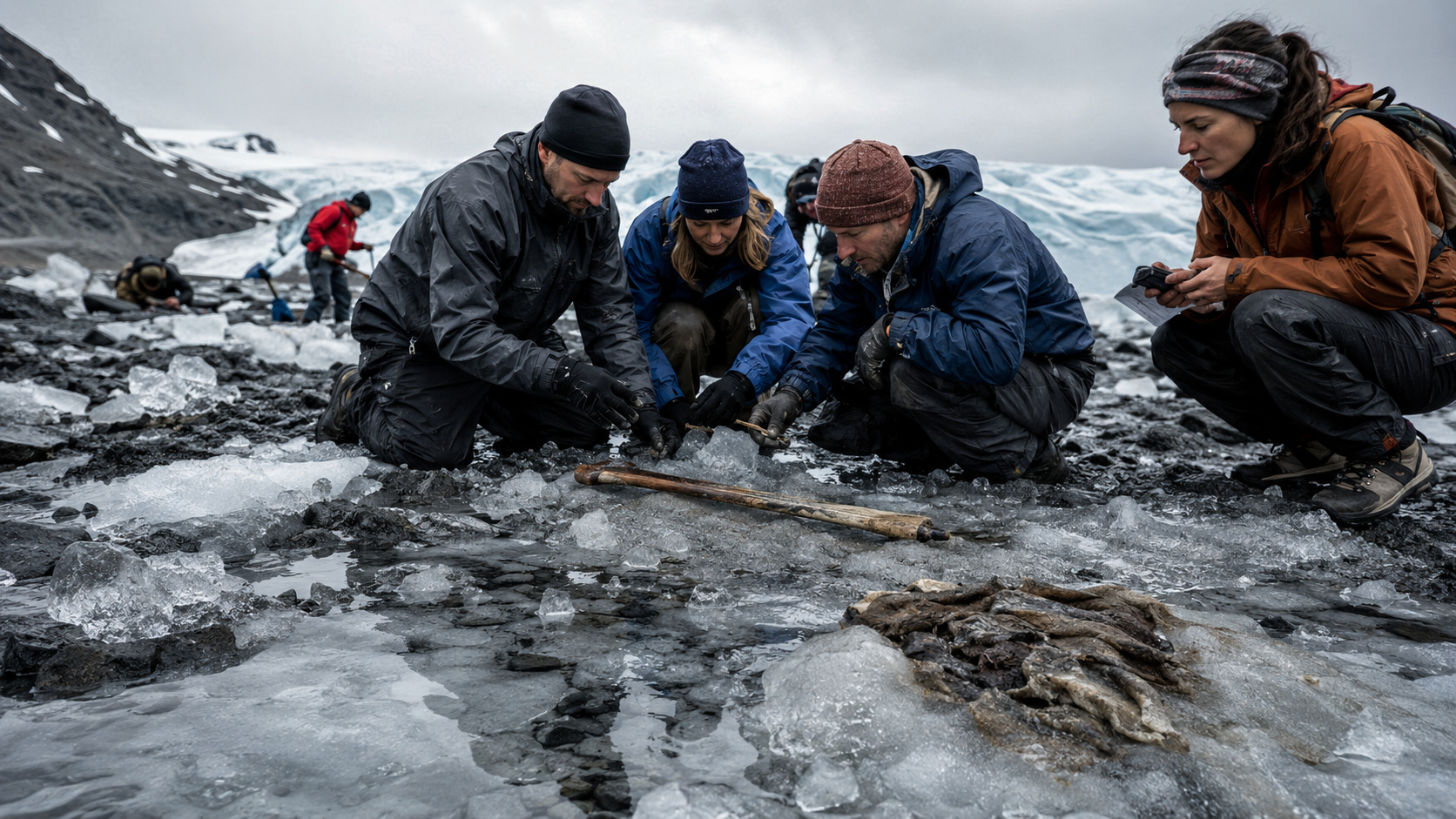

Jordan River lost almost all its historical flow and became a symbol of water collapse in the Levant
The Jordan River is 251 kilometers long and has fed agriculture and human supply in the Levant region for millennia. In its natural state, it discharged approximately 1.3 billion cubic meters of water per year into the Dead Sea.


Today, according to estimates by the NGO EcoPeace Middle East cited in the base text, the river discharges between 20 million and 30 million cubic meters per year, less than 2% of the original flow. The river that appears in the Old Testament, which was used by John the Baptist for baptisms and divided tribes and kingdoms for centuries, has largely become a trickle of partially treated sewage and brackish water.
What happened to the Jordan is the result of multiple countries abstracting from the same water source without sufficient coordination and without a sustainable limit. When Israel, Jordan, Syria, and Lebanon simultaneously reduced the flow of the river and its tributaries, the entire system lost its capacity for recovery.
Israel stopped depending on the Jordan by transforming treated sewage into a strategic water resource
Israel diverted much of the flow from Lake Tiberias, the region’s largest freshwater reserve, to its National Water Carrier as early as the 1960s. Jordan and Syria also built their abstraction systems on the tributaries, progressively eliminating the natural flow of the main river.
The Dead Sea, without sufficient inflow, has been shrinking by more than a meter per year in recent decades. Restoring the Jordan would require all countries that abstract from it to reduce their use, something politically difficult in a region marked by conflicts, insecurity, and permanent water disputes.
The Israeli response to this impasse was pragmatic: to stop depending on the Jordan. And, to do so, the country needed to find another water source. The chosen source was precisely what most countries still treat as waste: urban sewage.
Treated sewage became a national security policy in Israel since the early years of the State
The decision to transform wastewater into a strategic water resource did not arise spontaneously. It was the result of a survival logic that began in the early years of the State of Israel, when water scarcity was an existential threat to a nascent country in a predominantly arid territory.
In 1985, Israel began sending treated wastewater through the National Water Carrier to farms, reducing the gap between water demand and supply. In 1993, after a severe drought that brought Lake Tiberias to critical levels, the government accelerated investments in reuse infrastructure.
In the early 2000s, over US$ 750 million were invested in centralized water reclamation facilities, adding 37 billion gallons per year of capacity. Most of this volume began to receive tertiary treatment, the most advanced stage available to transform effluent into reusable water.
Shafdan Station treats Tel Aviv sewage and transports recycled water 90 kilometers to farms in the Negev
The center of the Israeli system is the Shafdan station, located south of Tel Aviv. Cited as a global model by the UN in 2012, the facility processes 97 million gallons per day of municipal sewage from the Tel Aviv metropolitan area, the country’s largest urban concentration.
The process occurs in two phases. In the first, secondary biological treatment removes most pathogens and organic solids. In the second, where the Israeli model differs from most countries, the water undergoes tertiary treatment through a soil aquifer.

This water is injected into percolation basins, where it slowly passes through layers of sand for approximately 400 days, until it reaches the underground aquifer, purified by natural filtration.
The result is water often cleaner than natural freshwater sources, then pumped through 90 kilometers of pipelines to farms in the Negev, the desert that occupies more than 60% of Israeli territory.
Israel operates 67 treatment plants and uses recycled water in more than half of agricultural irrigation
Israel currently operates 67 large wastewater treatment plants, with the 10 largest processing over 56% of all sewage collected in the country. The treated effluent is distributed through a network separate from drinking water, with blue taps identifying recycled water connections on farms and green taps indicating water suitable for human consumption.
About 90% of recycled water goes to agricultural irrigation. The other 10% has environmental uses, including maintaining minimum flow in rivers and fighting forest fires. Overall, recycled water accounts for approximately 25% of all water consumed in Israel and more than 50% of the water used in agriculture.
This figure changes the scale of the debate. More than half of Israeli agricultural irrigation comes from treated sewage, transforming the country’s water policy from a technical curiosity into a national infrastructure model for regions under permanent scarcity.
Reservoirs, urban biofiltration, and separate network complete Israeli water engineering
KKL-JNF, an Israeli environmental development organization, built 230 additional reservoirs to store treated wastewater. These structures add more than 260 million cubic meters per year to the national water economy.

In addition to centralized stations, urban biofiltration projects also function as green infrastructure. In these, plants and filtering substrates remove pollutants from storm runoff, reducing the contaminant load and complementing the reuse system.
The separate network between drinking water and recycled water is a crucial point. It allows treated effluents to be safely used in crops, environmental areas, and specific uses, without directly competing with desalinated water intended for human consumption.
Desalination completed the second water revolution and reduced pressure on aquifers and Lake Tiberias
Sewage recycling was the first Israeli water revolution. Desalination was the second. Together, the two explain why the country moved from chronic scarcity to a condition of water security far superior to that of its neighbors.
Israel operates five large desalination plants along the Mediterranean coast. The largest, Sorek, is cited as one of the world’s largest and most efficient seawater reverse osmosis plants. Together, these plants supply between 60% and 80% of the drinking water consumed in the country.
The combination functionally separated the two major uses of water: treated sewage for agriculture and desalinated water for human consumption. This division reduced competition between farms and cities for the same scarce resource, allowing for partial recovery of coastal aquifers and less pressure on Lake Tiberias.
Israel exports water technology while neighboring countries remain trapped in scarcity
With less abstraction pressure, overexploited aquifers began to recover in some areas, and Lake Tiberias stabilized at levels closer to the historical average. At the same time, Israel began exporting water technology to over 150 countries.
Water technology exports total over US$2 billion annually, according to the base text. This market includes desalination, drip irrigation, monitoring, reuse, sensors, treatment, and loss control.
The paradox is that this advancement occurs in a region where neighboring countries remain in a deep water crisis. The Israeli case shows that extreme physical scarcity can be mitigated by engineering, but it also exposes that technology without governance, investment, and institutional execution does not solve the problem.
Jordan, Syria, and Lebanon show how the same region can have radically different water destinies
Jordan is one of the countries with the lowest per capita water availability in the world, with less than 100 cubic meters per person per year, well below the 1,000 cubic meter threshold used by the UN to characterize water scarcity. It is one of the driest countries on the planet.
Its capital, Amman, faces supply restrictions that limit provision to a few hours per week in some neighborhoods. Even so, the country recycles less than 15% of its wastewater for agriculture.
Syria, before the civil war that began in 2011, was already facing accelerated water collapse, with overexploited aquifers, reduced rivers, and severe drought between 2006 and 2010. Lebanon, although it has relatively higher precipitation, wastes a large part of its water due to a lack of infrastructure for collection, storage, and treatment.
What Israel’s water reuse can teach the world entering a growing water crisis
Transferring the Israeli model to other contexts is not automatic. Israel has specific conditions: a centralized state, an institutional culture that treats water as national security, a qualified technical workforce, and access to capital to build plants, reservoirs, and pipelines.
None of these conditions are impossible to replicate, but none are trivial. The US$750 million investment in the 2000s to expand water reclamation capacity represented a difficult fiscal commitment for many developing countries without international funding.
What the Israeli model demonstrates undeniably is that physical limitation does not have to be an inevitable destiny. An arid country, with insufficient natural sources, managed to transform urban sewage into the basis of agriculture and desalination into the majority source of drinking water.