






 Portuguese
  Spanish
  6 min of reading
  0 comments


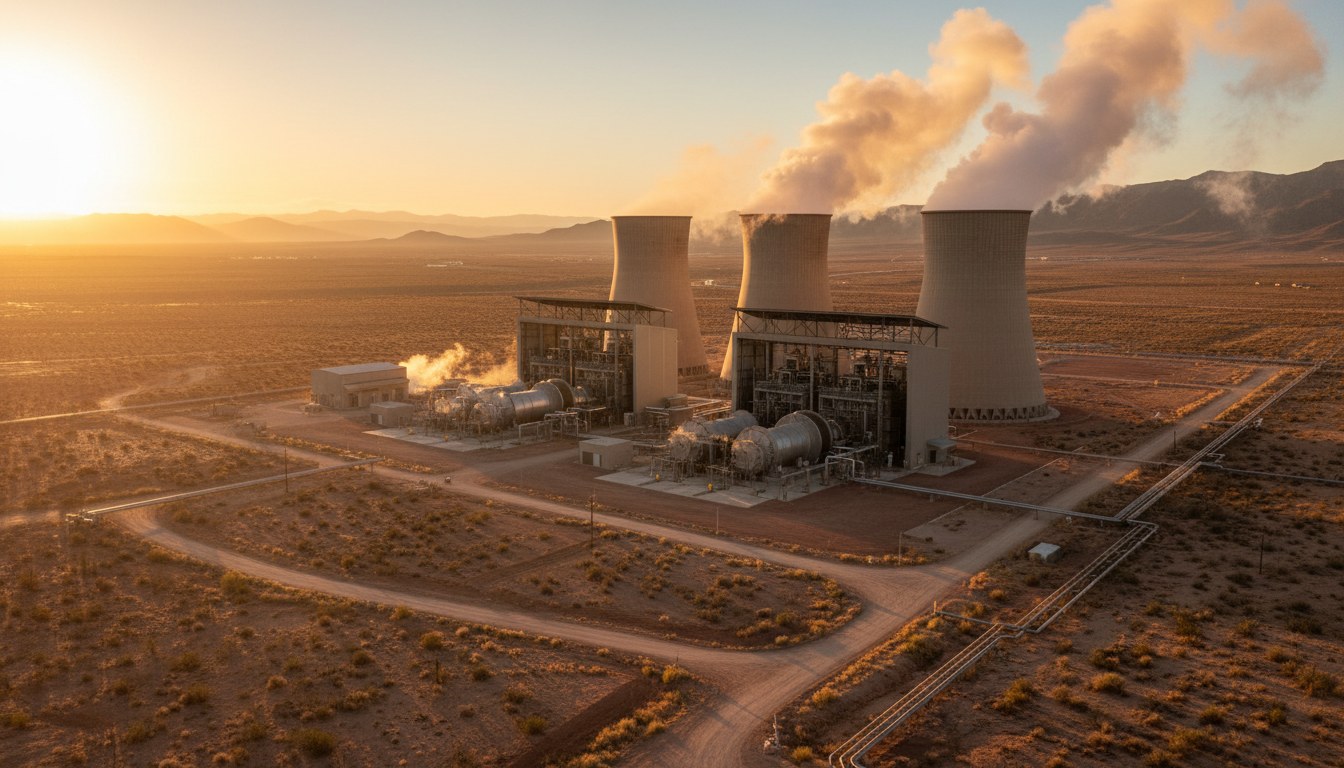
In Beaver County, Utah, a startup will deliver 500 MW of energy 24 hours a day — and the contracts already sold to AI data centers show why big techs and banks are betting billions on a technology forgotten for decades
Geothermal energy is having its turning point. On March 19, 2026, the American startup Fervo Energy secured financing of $421 million to build Cape Station in the rural county of Beaver, Utah — the first large-scale commercial project of advanced geothermal systems (EGS) in the United States.
The money comes from six major banks: Barclays, BBVA, HSBC, MUFG, RBC, and Société Générale, with additional participation from Bank of America, J.P. Morgan, and Sumitomo Mitsui Trust Bank. It is the first time that geothermal energy of this category receives long-term financing in the “non-recourse” format — the same used in utility-scale solar and offshore wind projects.
The contrast with the sector’s traditional strategy is dramatic. Solar and wind produce only when there is sun or wind. Meanwhile, geothermal energy delivers steady electricity, 24 hours a day, seven days a week — exactly what artificial intelligence data centers need.
-
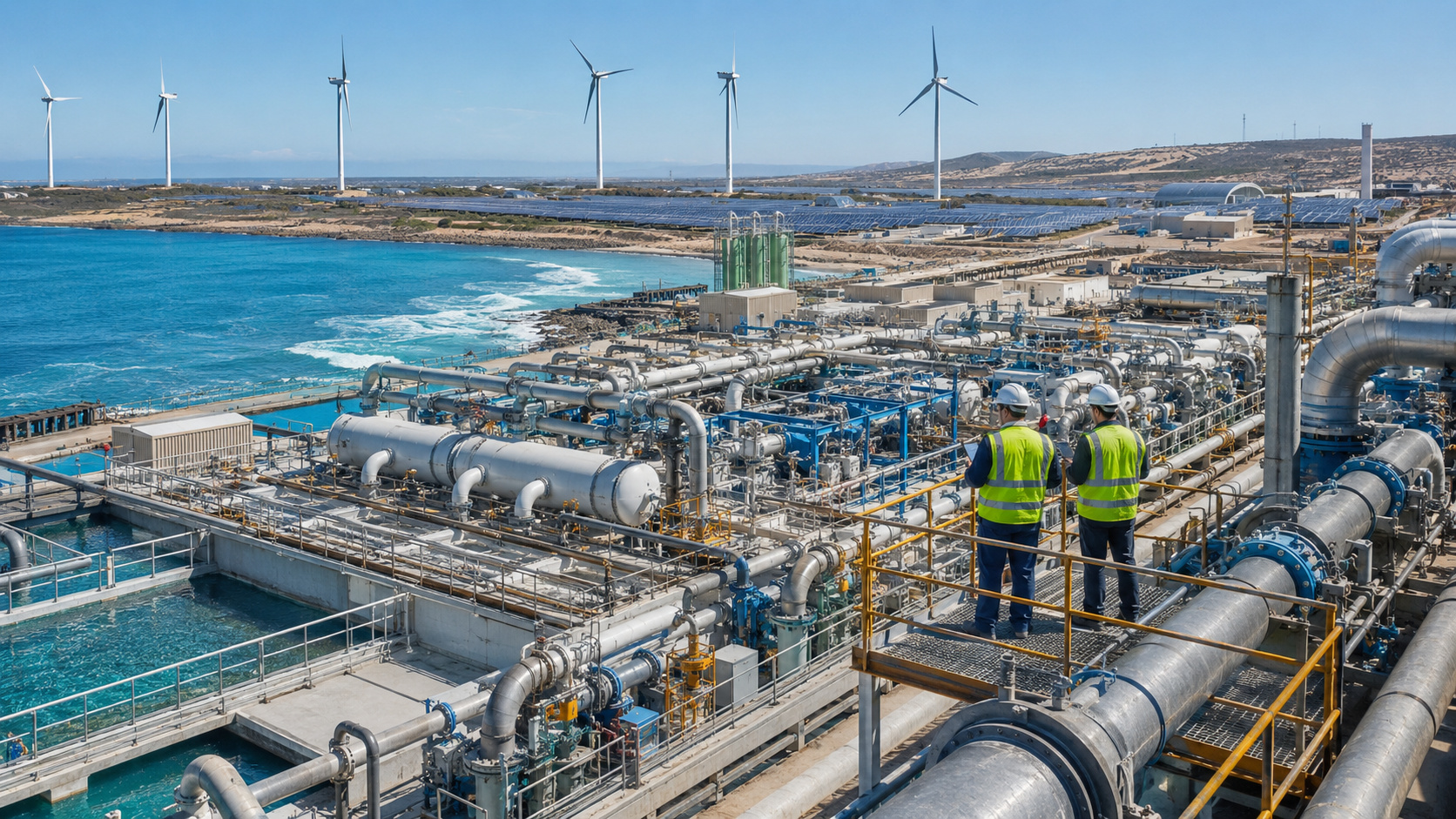
As historic droughts threaten crops and cities, Morocco accelerates a billion-dollar plan to transform ocean water into drinking water, build Africa’s largest desalination plant, and supply millions by 2030.

-
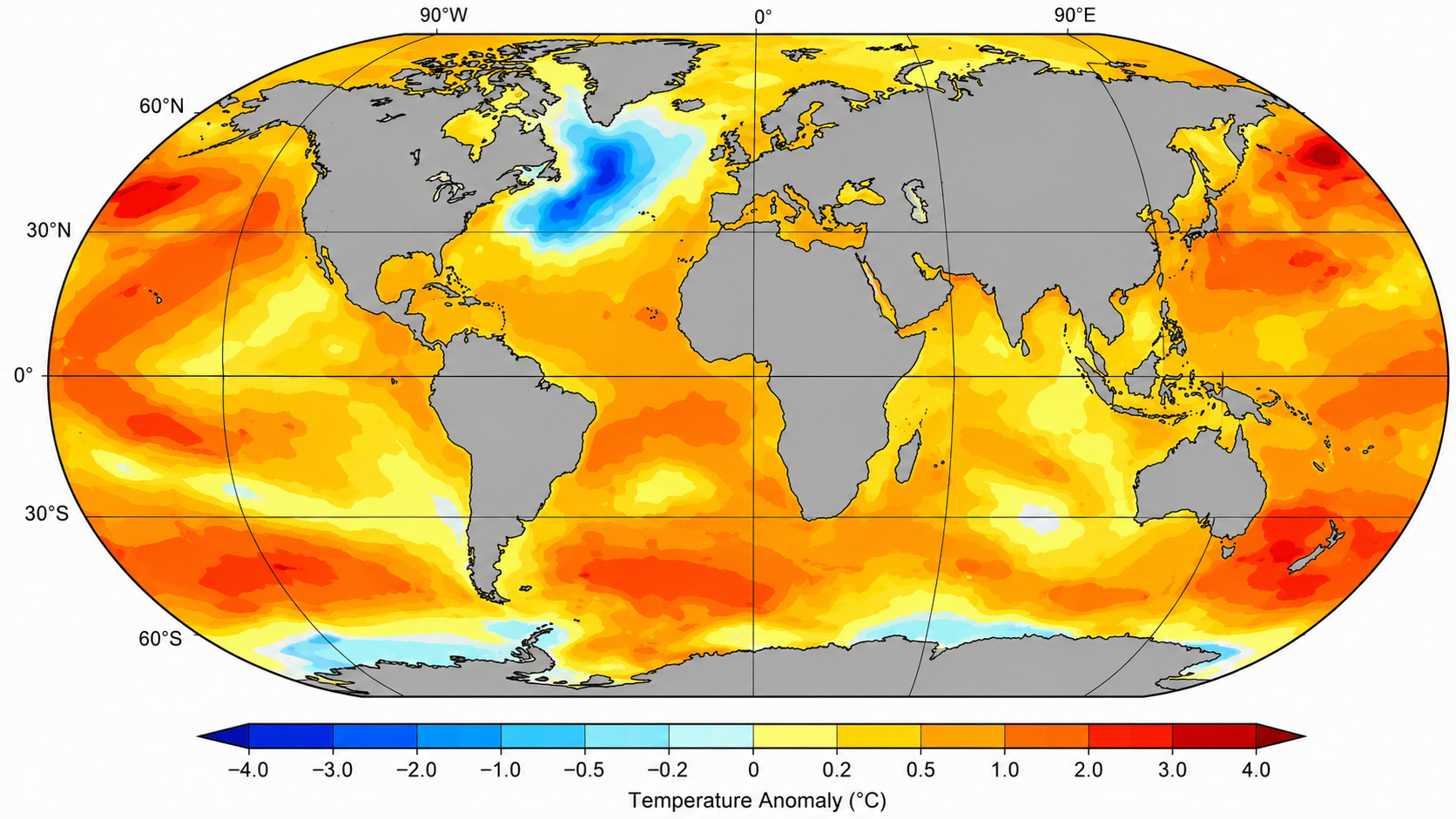
Rare phenomenon in the North Atlantic cools while the planet warms and reignites fear of abrupt climate changes in Europe
-
Brazilian scientists are simultaneously advancing two research projects on clean hydrogen and driving solutions that could transform the energy matrix, enhance industrial competitiveness, and accelerate large-scale emission reduction targets.
-
The most profitable tournament in history may have an invisible climate cost, and the 2026 World Cup is already surrounded by environmental doubts.




The Cape Station project: how 500 MW will be extracted from rock
Cape Station occupies a semi-arid land in Utah that, before Fervo, no one saw as an energy resource. Subsequently, the first turbines begin to deliver electricity still in 2026.
In comparison, phase 1 reaches 100 MW operational at the beginning of 2027, and the entire project will scale to 500 MW — with authorized potential to reach 2 GW.
According to the official project site Cape Station, the technology uses horizontal drilling and multi-stage stimulation — the same techniques that revolutionized shale oil in Texas 15 years ago.
As recently reported by Click Petróleo e Gás, Fervo drilled a lateral well in Utah that exceeded 4.8 kilometers of hard rock, finding temperatures close to 555 degrees Celsius — heat sufficient to generate commercial electricity.
As detailed in the technical report, the data matters because it shows that advanced geothermal energy no longer depends on volcanic areas like Iceland or the Philippines. In other words, the technology works anywhere there are hot dry rocks at sufficient depth — opening the game for entire regions previously considered unviable.

Why big techs prefer geothermal over solar and wind
The reason is practical. Artificial intelligence data centers consume energy at a constant rate — 24 hours a day, 365 days a year. Solar delivers zero kWh at night. Wind varies according to the wind.
Consequently, geothermal energy generates at the same rate during all hours of the year, eliminating the intermittency problem without relying on expensive batteries.
For large cloud providers like Google, Microsoft, and Amazon, long-term contracts with firm suppliers are worth more per MWh than simple solar or wind.
This is because they can be accounted for as firm clean energy — a category that satisfies corporate climate goals while maintaining server uptime at acceptable levels.
Already in 2021, Fervo Energy signed with NV Energy a purchase agreement for 115 MW specifically to power Google’s data centers in Nevada, under the so-called Clean Transition Tariff. In fact, this operation served as a commercial proof of concept for the entire sector.
The race for firm contracts in geothermal energy
In total, Fervo already has PPAs (power purchase agreements) closed with Southern California Edison, Shell Energy, and community aggregators in California, in addition to the previous contract with Google via NV Energy.
In parallel, the company closed an agreement in 2026 with the Italian Turboden to supply 1.75 GW in organic Rankine cycle turbines. To understand, it is the modernized version of technology established in Italy — and the volume is more than ten times larger than the original 150 MW contract signed in 2024.
In fact, the agreement with Turboden shows the scale of the bet. To give an idea, 1.75 GW is equivalent to approximately four small nuclear reactors in firm capacity. In comparison, when fully operational, this volume alone will meet the demand of about 1.3 million American homes.

The Texas “oil patch” that turned the key for geothermal energy
The secret to commercial viability lies in an unlikely technological transfer. The same techniques that unlocked American shale in the 2010s — horizontal drilling, controlled hydraulic fracturing, and distributed fiber optic sensors — now unlock geothermal energy in hot dry rocks.
Fervo’s CEO, Tim Latimer, is a former oil and gas engineer. The company’s headquarters is in Houston, Texas, the world capital of American oil. The company’s workforce itself migrated from declining oil fields to this new frontier.
As detailed by E&E News, “Cape Station is a key test for generating electricity 24 hours without producing planet-warming emissions.” In other words, the bet is that the project’s success will unlock billions in private capital for the entire sector.
Comparison with Iceland, Kenya, and the rest of the world
Iceland is currently the country with the highest relative penetration of geothermal energy in the world: about 30% of local electricity comes from Earth’s heat. Kenya follows as the second, generating 47% of its electrical matrix via natural geothermal from the Rift Valley.
The American case is different. Before Fervo, geothermal in the United States was synonymous with California (Geysers field) and Nevada — regions with natural surface heat. The new generation of EGS changes the game, allowing geothermal in Texas, Wyoming, Pennsylvania, and even in places like the United Kingdom and Brazil.
It is worth mentioning the parallel. The IEA projects that up to 15% of global electricity demand can be met by geothermal by 2050, in a scenario of accelerated energy transition. Today, the whole world generates only about 1% via this source.
The pressure from AI data centers changes the financial calculation
Before the boom of generative artificial intelligence in 2023, geothermal was considered too expensive to compete with natural gas or solar with batteries. Today, the calculation has changed. AI data centers pay a premium to ensure firm energy, 24/7, without variation — because each minute of downtime costs millions in lost revenue.
This means that geothermal energy, once seen as a geographic niche, has become a key piece of the corporate climate script. According to data from Canary Media, the sector could attract more than $10 billion in investments by 2030, considering only EGS in the United States.
In parallel, the Stargate megaproject by OpenAI/Oracle in Texas, with a planned investment of $500 billion, also signals huge demand for firm electricity in the coming years. As recently shown by Click Petróleo e Gás, the Stargate construction already mobilizes 6,400 workers and is considered the largest under construction on the planet.
- $421 million — financing closed in March 2026 for Cape Station
- 500 MW — total project capacity (potential up to 2 GW)
- 100 MW — operational target for early 2027
- 4.8 km — depth of lateral wells drilled in Utah
- 555 °C — temperature of rocks at the bottom of the wells
- 1.75 GW — recent turbine order with Turboden
Risks and caveats: not everything is as clean as it seems
Despite the optimism, there are important caveats. Hydraulic fracturing in hot rocks can induce small magnitude seismic tremors — a phenomenon already observed in pilot projects in Switzerland and South Korea. Fervo claims to use closed reservoirs, but the entire sector needs monitoring.
Additionally, water usage is significant. To fracture rock and circulate heat, EGS projects consume volumes similar to natural gas fracking. In arid regions like Utah or Texas, this can become a regulatory bottleneck.
On the other hand, the industry is in its early stages — the American shale learning curve took about 10 years to halve costs. Advanced geothermal energy is just beginning this path.
What this means for Brazil
Brazil has an estimated geothermal potential of 37 GW, according to a survey by the Ministry of Mines and Energy in partnership with the Brazilian Geological Service. Today, however, the country does not operate any commercial geothermal plants — the entire base is hydroelectric, wind, solar, and thermoelectric.
In parallel, with the predicted explosion of AI data centers also in Brazil, especially in São Paulo, the demand for clean firm energy will grow rapidly in the next five years. It might be the ideal time for the country to explore EGS commercially.
Finally, the lingering question is uncomfortable. If the world’s largest technology company has already decided that AI data centers need geothermal, and European banks are already injecting hundreds of millions into this bet, will Brazil watch the train pass once again? Or will it ride the cycle while there is still a window?







Be the first to react!