Portuguese
  Spanish


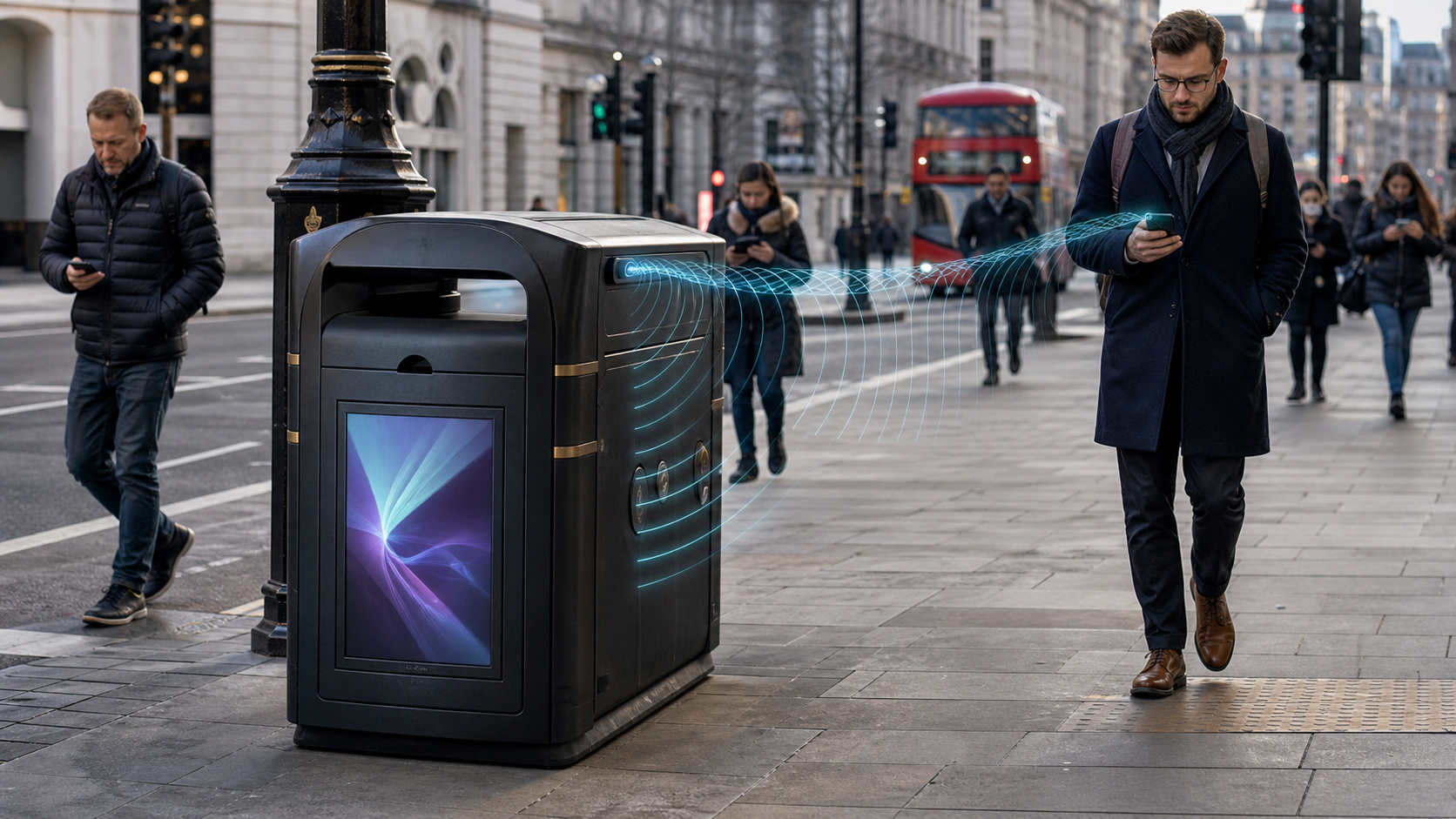


Smart bin case in London exposed WiFi cell phone tracking and raised debate about privacy in public spaces
The smart bin in London became an emblematic case after being used to capture cell phone signals from pedestrians via WiFi. The object looked common but functioned as part of a system capable of measuring the circulation of people in the streets.
The investigation was published by Marketinglaw, a legal website maintained by Osborne Clarke. The bins had advertising screens and were used to identify nearby devices, monitor passing trends, and transform the sidewalk into a kind of urban behavior panel.
The impact was direct: the City of London Corporation ordered the company to stop data collection. The case reinforced a growing question in modern cities: to what extent does urban technology help the population, and when does it start to monitor those who are just walking down the street?
-
13-Year-Old Raises Funds to Build Well, Transforming Lives in Cambodian Community Lacking Clean Water

-
Man with Metal Detector Finds Medieval Silver Seal in England, Uncovers 2,000-Year-Old Roman Gem with ‘Richard’s Secret’

-
Thailand Converts 8 Tons of PET Bottles into 3,500 School Backpacks, Showcasing Circular Economy with Over 40 Factories Involved

-
Mysterious Bats Spotted in Paris’s Père Lachaise Cemetery, Drawing Tourists to the “Vampire Cemetery”




How an advertising bin started tracking cell phones in the streets
The bins used in London were not common waste disposal receptacles. They had digital advertising screens and an internet connection, which allowed them to display ads in busy areas of the city.
The most sensitive point was the collection of signals emitted by cell phones with WiFi turned on. This type of signal could reveal the presence of a device nearby, which allowed for measuring pedestrian flows, dwell time, and movement patterns.


For the average citizen, the problem was simple to understand: many people walked down the street without knowing their devices could be detected. The technology was hidden in a mundane object, and this mix of routine and surveillance generated a strong reaction.
WiFi tracking turned the sidewalk into a behavior panel
The project’s logic was similar to tools used on websites to measure visits. In the digital environment, companies track clicks, accesses, and navigation time. In the streets, the proposal was to observe how people circulated in front of the bins.
This idea created a kind of sidewalk Google Analytics, but applied to public space. Instead of visited pages, the system looked at routes. Instead of clicks, it observed the passage of cell phones.
The problem is that the street doesn’t function like a website with a clear collection notice. Anyone walking through London could be included in this measurement without realizing it. Therefore, the case became an alert about privacy in smart cities.
Marketinglaw detailed the order to stop data collection
Marketinglaw, a legal website maintained by Osborne Clarke, reported that the City of London Corporation ordered the cessation of data collection by the smart bins. The measure targeted the use of technology that detected devices of people passing near the equipment.
The company involved stated that the data was limited, encrypted, aggregated, and anonymized. In a statement recorded in the publication, executive Kaveh Memari described the equipment as “glorified people counters in the street”.
Even with this defense, the case gained traction because the collection occurred in a public space. For many people, the discussion was not just about names or complete data, but about the right to walk without being observed by urban objects.
Why the case became a warning for smart cities
The bin case shows that the term smart city can hide risks when transparency is lacking. Sensors, screens, and connections can improve urban services, but they can also create silent forms of control.
The concern increases when data related to people’s behavior is collected. Knowing where someone passes, at what times they appear, and how long they stay in a certain area can have commercial value and a direct impact on privacy.
The case also showed that innovation needs to be explained to the public. When technology appears without clear notice, the feeling of benefit can turn into distrust. At this point, the bin ceased to be just urban furniture and came to be seen as a smartphone urban tracker.
The practical consequence was the suspension of data collection and the advancement of public debate
The main consequence was the interruption of data collection. The decision placed the case at the center of the debate on how companies and authorities should deal with technologies installed in streets, squares, and high-traffic areas.
The episode also served as an example for other cities. The message was direct: it’s not enough to install sensors and call the project modern. It’s necessary to make clear what is being collected, for what reason, and with what limits.
For citizens, the lesson is even simpler. Technology can be in common objects, including a trash can. Therefore, the discussion about privacy in public spaces is no longer distant and has become part of urban life.
The urban furniture that became a spy changed the way we look at technology on the streets
The story was marked by the contrast between the object and its function. A trash can is a common object, almost invisible in the city landscape. However, in this case, it became a symbol of discreet and hard-to-perceive surveillance.
This is what makes the case so strong. The technology was not in a futuristic device or an obvious camera. It was in an everyday item, used for advertising and waste collection, but capable of participating in a monitoring system.
London’s smart trash can shows that urban innovation needs to go hand in hand with transparency, clear limits, and respect for privacy. Without this, solutions created to modernize the city can seem invasive to those who live in it.
The case also reinforces that the debate about data doesn’t only happen on the internet. It’s on the sidewalks, in advertisements, in sensors, and in the objects that are part of daily life.
Do you think it’s acceptable for a trash can to collect cell phone signals to measure street traffic? Leave your comment and share this post with anyone interested in technology, privacy, and smart cities.