






 Portuguese
  Spanish


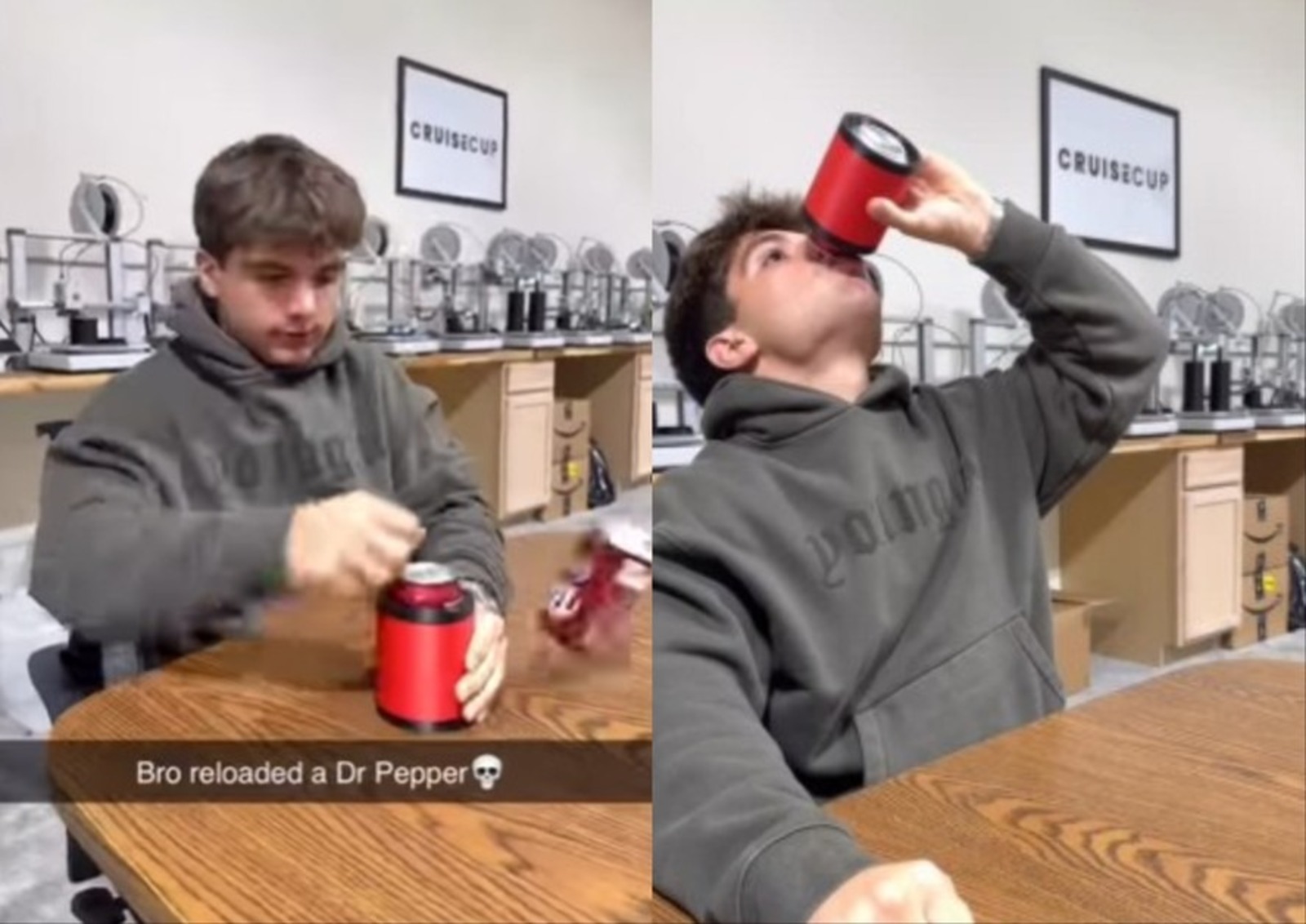


Video Published In September Boosts Sales Of Cruisecup, A Company Founded In 2025 By Michael Satterlee, Who Expanded Production To Over 130 Printers After Online Success In The United States
Business created at 18 years old with a 3D printer, 50 million views, and revenue of US$ 300 thousand (equivalent to R$ 1.6 million at current exchange rates) in November boosts a functional cups company launched in 2025 by a teenager in the United States.
Michael Satterlee, an 18-year-old teenager, founded the company Cruisecup in New York and raised 300 thousand dollars in November, after a viral video published in September surpassed 50 million views, boosting sales of cups produced with 3D printers.
The journey began with a simple idea, a 3D printer, and repurposed soda cans, resulting in a visually appealing product with unusual functionality that quickly stood out on digital platforms.
-
Collector adapts forklift electric motor in a Kombi Corujinha pickup, hides 16 batteries under the bed, and makes the Brazilian classic run silently with up to 90 km of range.

-
Goodbye traditional vacuum: Samsung surprises and launches 2-in-1 robot with steam, AI that recognizes floors and stains, self-cleaning station, hot air drying, automatic emptying, water refill, and app control.
-
Brazil is transforming acerola waste discarded by the pulp industry into an ambitious and surprising project that could forever change the way the country utilizes one of the most invisible by-products of the fruit sector.
-
Scientists have created a colossal digital twin to predict tsunamis in real time, a simulation of 55.5 trillion unknowns run on 43,520 GPUs that reduced 50 years of calculation to 0.2 seconds and could change the defense of coastal cities.


The viral video showcases Cruisecup’s main item, a device that holds one or more cans and abruptly ejects the used packaging when another drink is inserted.
The impact was heightened by comparisons made by users between the cup’s mechanism and the disposal of cartridges by firearms, reinforcing the humorous appeal of the invention.
The content garnered over 50 million views and around 2 million likes, consolidating the product as an online phenomenon and expanding the brand’s commercial reach.
Product Portfolio And Commercial Strategy
On the company’s website, there are versions compatible with one or two beverages, as well as models for thinner cans, priced between 20 and 40 dollars.
A stainless steel edition is also planned for 2026, maintaining the quick beverage swap proposition, described by the manufacturer as taking place in seconds.
Another item sold is the Ultimate Cruise Cup, a multifunctional mug that allows users to carry beer, vape, and tobacco pouches in a single container.
To Business Insider, Satterlee reported that he has been an entrepreneur since he was 10 years old, when he launched a sales website for a product that prevented sand from sticking to skin.
According to Business Insider, he began producing accessories for clog-type shoes using 3D printers, a technology he learned about during high school.
Over time, the products diversified and were produced at home, gradually increasing the volume of orders and the complexity of the operation.
Productive Expansion And Current Structure Of The Teen’s Company
The idea for the current cup originated from a cooler similar to the Stanley model, which had been sold previously, and eventually evolved to recharge the beverage.
“I Didn’t Know If It Was Such A Good Idea, I Posted It On Instagram To See How It Would Perform,” Satterlee told Business Insider, recounting the immediate reaction from the public.
The growth in demand required an increase in production capacity, leading the operation to occupy the basement and room of the founder’s residence, according to his own account.
Currently, the company uses a nearby warehouse that houses over 130 3D printers, intended for continuous production of the marketed items.
Prior to that, the setup already had over 50 machines, a number considered insufficient given the sudden increase in orders following the viral video.
The printing time for each piece can reach 10 hours, depending on the model, a factor that explains the need to maintain a large number of machines operating constantly, even with production distributed throughout the day.
With Information From GQ.Globo.


