






 Portuguese
  Spanish


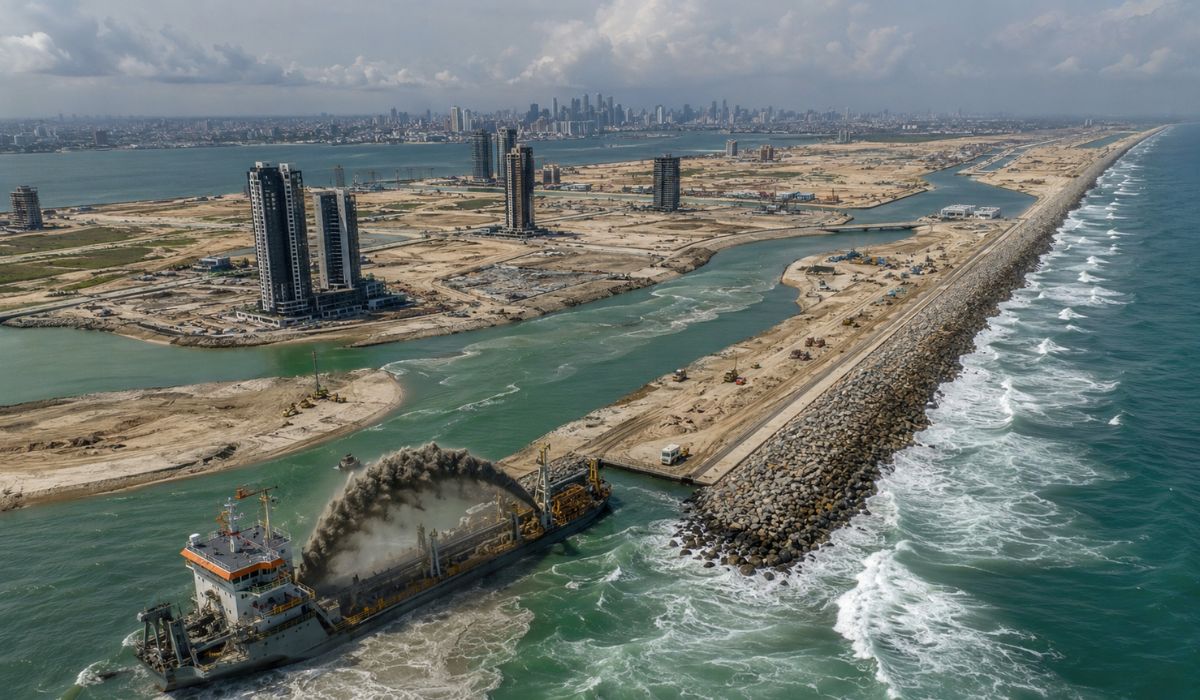

Project in Lagos transforms a stretch of the Atlantic into a new urban area, combining land reclamation, planned infrastructure, and coastal defense in one of the regions most pressured by erosion in Nigeria.
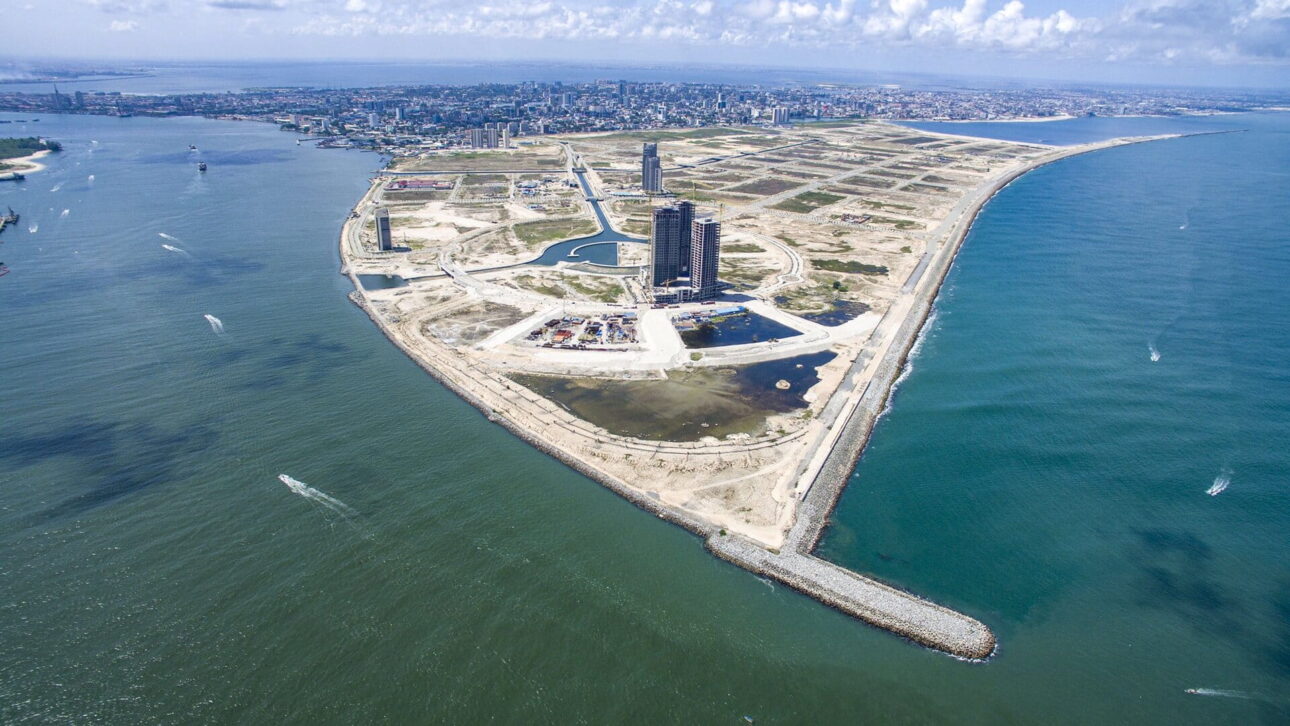
Lagos, the largest city in Nigeria and one of Africa’s main economic centers, has been advancing for years with the development of Eko Atlantic, a planned city on land reclaimed from the Atlantic Ocean, next to Victoria Island.
The project had already received more than 75 million m³ of sand by June 2023, according to the consultancy Haskoning, responsible for maritime studies and projects, and was created to combine urban expansion, infrastructure, and coastal protection in a region affected by erosion and population growth.
The initiative is not a newly announced work.
-
German Engineer Developed Diesel Engine Running on Vegetable Oil Decades Before Electric Cars Became Popular; Can This Forgotten Idea Work in 2026?

-
James Webb Telescope Uncovers Unexpected Clues on Mysterious Moon, Potentially Redefining Planetary Origins

-
$1.5 Billion Sleipnir Vessel Transforms Ocean into Floating Construction Site with 12 Hybrid Engines and Capacity to Lift 20,000 Tons

-
23 Years After Tragedy, Brazil’s Alcântara Space Center to Launch New Suborbital Rocket in 2026 with South Korean SEBIT Project Targeting Near-Space Tests


The project began to be structured in the 2000s and is still under development.
The official website of Eko Atlantic states that phases 1 and 2 already have active infrastructure, including completed bridges, operational water and sewage systems, and expansion to new stages.
Rugby School Nigeria also reported that it welcomed its first class in September 2025 on the campus located within the planned city.
Eko Atlantic creates solid ground where there was once sea
Eko Atlantic was planned as an extension of Victoria Island, one of the most important areas of Lagos for business, services, and real estate ventures.
The proposal involves dredging sand from the seabed, depositing it in a designated area, and creating a new portion of solid ground capable of accommodating streets, buildings, power networks, drainage, water, sewage, telecommunications, and areas for residential and commercial use.
When completed, the city is expected to occupy about 10 million m² of reclaimed land, a size compared by Haskoning to the skyscraper district of Manhattan, in New York.
The project is developed by South Energyx Nigeria Limited, in strategic partnership with the Lagos state government, and receives support from the federal government of Nigeria, according to the official website of the venture.
The scale of the project is directly linked to the complexity of the work.
The construction is not limited to the implementation of buildings near the coast but involves creating an urban base in an area previously occupied by the sea.
The technical plan foresees 95 million m³ of sand to form the foundation of the new city.
By June 2023, two-thirds of the area had been reclaimed, with more than 6.5 million m² already formed, according to Haskoning.
Lagos seeks urban space in the face of coastal erosion
Lagos faces a common challenge for large coastal cities: growing in a limited territorial strip while dealing with sea pressure.
The region facing directly the Atlantic is close to sea level and exposed to waves, tides, and erosion processes.
According to Haskoning, historical maps indicate that about a century ago, the city’s coastline extended almost 3 km beyond its current position, before parts of this strip were consumed by erosion.
This history helps explain the role of Eko Atlantic within Lagos’ urban planning.
The project seeks to create space for urban expansion while also acting as a coastal defense structure for Victoria Island and nearby areas.
Instead of reinforcing only the section where the sea had already advanced, the project leaders adopted a historical coastline as a reference.
Geert Hendriks, project director at Haskoning, stated that after discussions with South Energyx Nigeria Limited, the solution considered most suitable was to build the maritime defense structure on the original 1905 coastline, rather than at the point where the sea had advanced.


Great Wall of Lagos protects the new city
One of the central elements of the work is the so-called Great Wall of Lagos, a maritime barrier designed to reduce the impact of Atlantic waves on the reclaimed area.
The structure functions as a coastal coating: in simple terms, a heavy hydraulic engineering defense created to dissipate wave energy before they reach the city built on the landfill.
Haskoning reports that the wall will be 8.4 km long when completed and will be responsible for containing the 95 million m³ of sand used as the base of Eko Atlantic.
The official website of the project, on the other hand, uses the measure of 8.5 km to describe the total length of the structure.
The difference is small, but it was kept in the text as a divergence between consulted sources.
The official project states that the wall already fulfills the objective of protecting Victoria Island from coastal erosion and should also reinforce the protection of the initial phases of Lekki.
In June 2023, Haskoning recorded about 7 km of maritime defense structure already executed.
Engineering combines sand, drainage, and urban infrastructure
Building on reclaimed land requires more than just depositing sand in a designated area.
The material needs to be spread, leveled, stabilized, and protected against the constant movement of the ocean.
The city also relies on efficient drainage, as inadequate water runoff can affect streets, land, and buildings.
The Eko Atlantic plan includes underground infrastructure, drainage network, paved streets, water supply, sewage treatment, fiber optics, and independent power supply.
According to the official project website, the development features a natural gas power plant of 10 MVA, three distribution substations, and an underground network of 48 km of cables to serve the initial phases of the city.
The proposal foresees mixed-use of urban space.
In practice, this means the city was planned to bring together residential areas, commerce, services, marinas, corporate spaces, leisure facilities, and educational institutions.
According to Haskoning, the project was designed to accommodate 250,000 residents and about 150,000 daily commutes of people who will work or circulate in the region.

Eko Atlantic infrastructure advances in phases
The most relevant update on the current stage of the project is that Eko Atlantic has already ceased to be just an urban plan.
The official schedule states that phases 1 and 2 were completed in 2021, with bridges finished and water, sewage, and infrastructure systems operational.
In 2023, the development recorded occupied residential and commercial buildings, an established free zone, and the Great Wall of Lagos with more than 6 km executed.
The opening of Rugby School Nigeria in September 2025 indicates the entry of urban facilities related to education, in addition to the real estate, commercial, and financial sectors planned in the project.
The institution reported having received its first students from Year 7 and the Sixth Form at the campus located in Eko Atlantic.
Despite the recorded advances, the project remains under development.
Haskoning classifies the initiative as “2004 — ongoing,” while the official website mentions expansion to phase 3 and subsequent stages.
Therefore, the most accurate description is that of a planned city in gradual implementation, rather than a completed work.
Coastal city in Nigeria exposes megacity challenges
Eko Atlantic brings together three issues present in the planning of coastal metropolises: lack of space in dense urban areas, real estate pressure in central regions, and the need to adapt to erosion and the advance of the sea.
In Lagos, these factors appear concentrated in one of the most important regions for the Nigerian economy.
For the general public, the project draws attention due to the volume of sand used to transform an area of the ocean into urban land.
For engineers and urban planners, the initiative involves challenges related to wave control, tides, drainage, landfill stability, underground infrastructure, and long-term occupation.
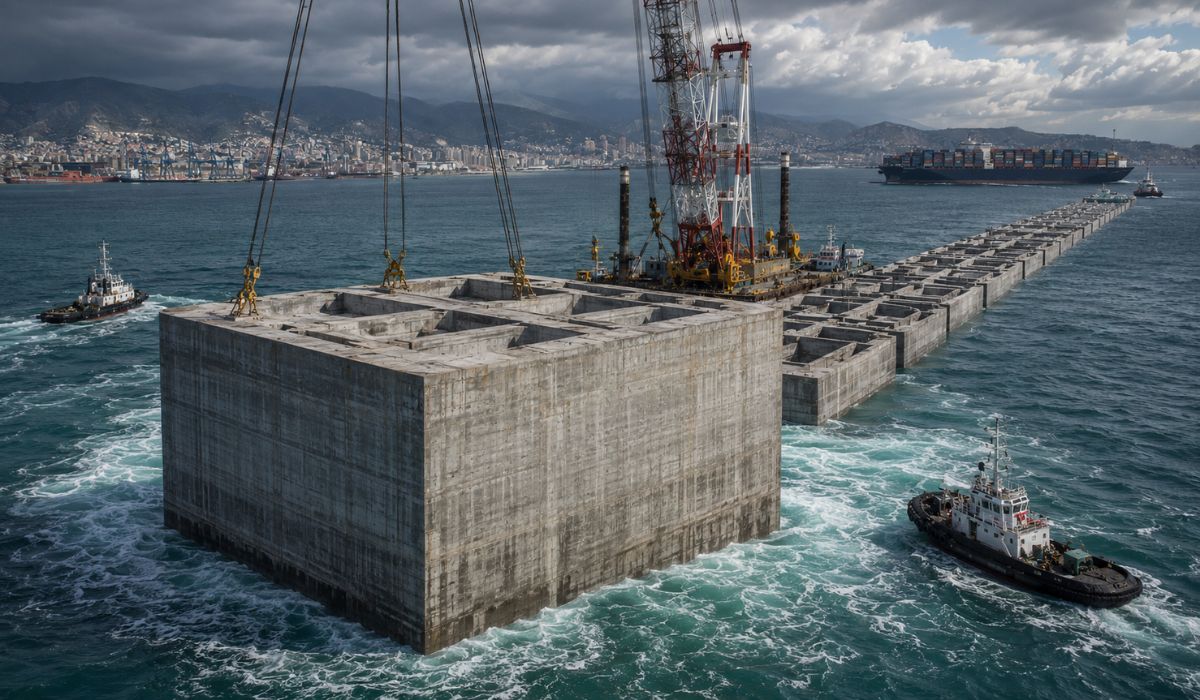
The project also helps illustrate a broader discussion about the future of coastal megacities.
When a metropolis grows faster than the available territory, building over the sea becomes an alternative for urban expansion; at the same time, this path requires continuous investment in engineering, maintenance, drainage, and protection against coastal risks.
In Lagos, this equation appears concretely in the advance of Eko Atlantic over the Atlantic.
The project seeks to create a new urban front while simultaneously reinforcing defense against erosion in an area historically vulnerable to the action of the sea.


