Portuguese
 Spanish



OceanPact Tech and the Brazilian Navy signed a memorandum to develop autonomous vehicles, integrate maritime environmental data and produce the SAASS system domestically, where it is already used for acoustic monitoring in the Santos Basin.
The Brazilian Navy and OceanPact Tech have formed a partnership to develop autonomous vehicles and expand the capacity to collect information below the sea surface. Planned projects include developing and producing domestically a system for capturing underwater acoustic signals, a technology that has already supported environmental research related to the oil and gas industry.
The memorandum was signed on November 11, 2026, during the Aratu Maritime Unmanned Systems Simulation (ARAMUSS) in Salvador, Bahia. The Navy Technology Center in Rio de Janeiro (CTMRJ) announced details of the cooperation on November 25.
The center’s director, Rear Adm. Ana Valéria Greco de Sousa, and OceanPact Tech’s technology director, Leonardo Martins Barreira, formalized the agreement. The initiative paves the way for joint projects with naval and environmental applications.
-
Foresea accumulates $1.7 billion in offshore drilling contracts, keeps five Petrobras-linked rigs operational until 2027, expands operations with PRIO

-
Brazil’s Federal Government receives 291,000 barrels of oil per day as output from pre-salt production-sharing contracts reaches 1.95 million barrels a day, with Mero leading the government’s oil take

-
Japan-based MODEC completes hull joining for Shell’s giant FPSO nearly a month ahead of schedule, with the vessel set to produce 120,000 barrels of oil a day in Brazil’s pre-salt region

-
Petrobras drillship to start drilling Mãe de Ouro well in December 2026, 52 km off Rio Grande do Norte in over 2,000 meters of water, after completing Morpho well



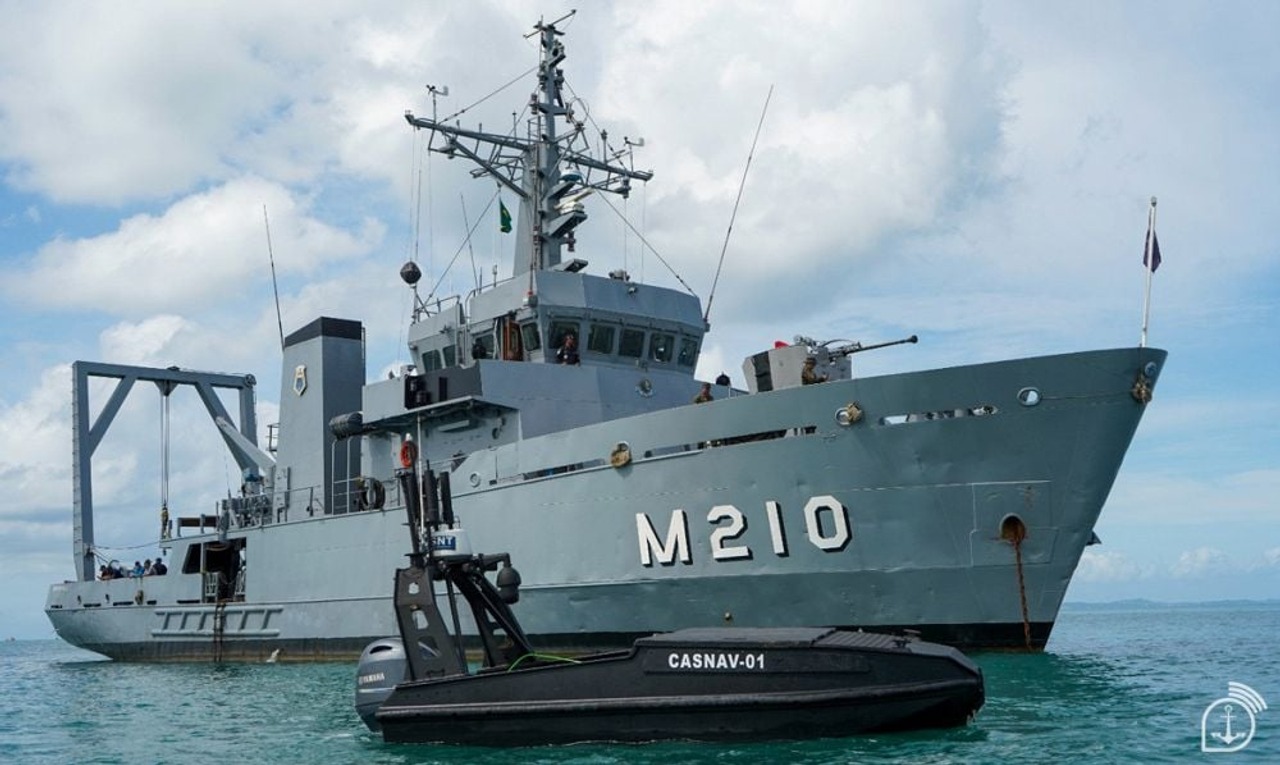
Domestic equipment could expand monitoring below the sea surface
One area of cooperation is the Autonomous Submarine Signal Acquisition System (SAASS), developed by the Navy Research Institute (IPqM). The equipment records sounds in the underwater environment, making it possible to study noise sources of different origins.
Acoustic measurements have applications beyond defense. In the offshore industry, researchers need to distinguish sounds produced by human activity from those emitted by marine animals or generated by natural phenomena.
The agreement also calls for integrating sensor data with meteorological and oceanographic information. The Navy plans to use these data together to better understand maritime environmental conditions and monitor situations of interest.
Three institutions under the CTMRJ are involved in this work: the Center for Naval Systems Analysis (CASNAV), the Admiral Paulo Moreira Institute of Marine Studies (IEAPM), and the Navy Research Institute.
Technology has already supported research involving more than 7,000 hours of recordings in the Santos Basin
A concrete application of SAASS was announced by the CTMRJ on November 5. In partnership with Petrobras, researchers from IPqM investigated underwater noise levels near the Mexilhão gas pipeline after fishermen raised concerns at a public hearing in Ilhabela, in São Paulo state.
Between May 2025 and February 2026, five monitoring campaigns collected more than 7,000 hours of recordings. Instruments were deployed across the study area, at locations varying in distance from the underwater structure.
Measurements showed similar noise levels near the pipeline and at locations farther away. The team also compared recordings taken under different operating conditions, finding no significant variations attributable to the structure’s operation.
The work was conducted as part of the Santos Basin Underwater Acoustic Soundscape Monitoring Project (PMPAS-BS), which fulfills environmental requirements related to oil and gas exploration, production and transportation in the region.
The Mexilhão development includes a platform located about 145 kilometers from Caraguatatuba, in São Paulo state. The facility was designed to process up to 15 million cubic meters of natural gas per day, which is transported to shore through an offshore pipeline.
OceanPact already uses robots capable of staying at sea for up to 60 days
OceanPact Tech operates a technology development center on Ilha do Fundão in Rio de Janeiro. Solutions presented by the company itself include autonomous underwater vehicles, inspection drones and environmental monitoring equipment.
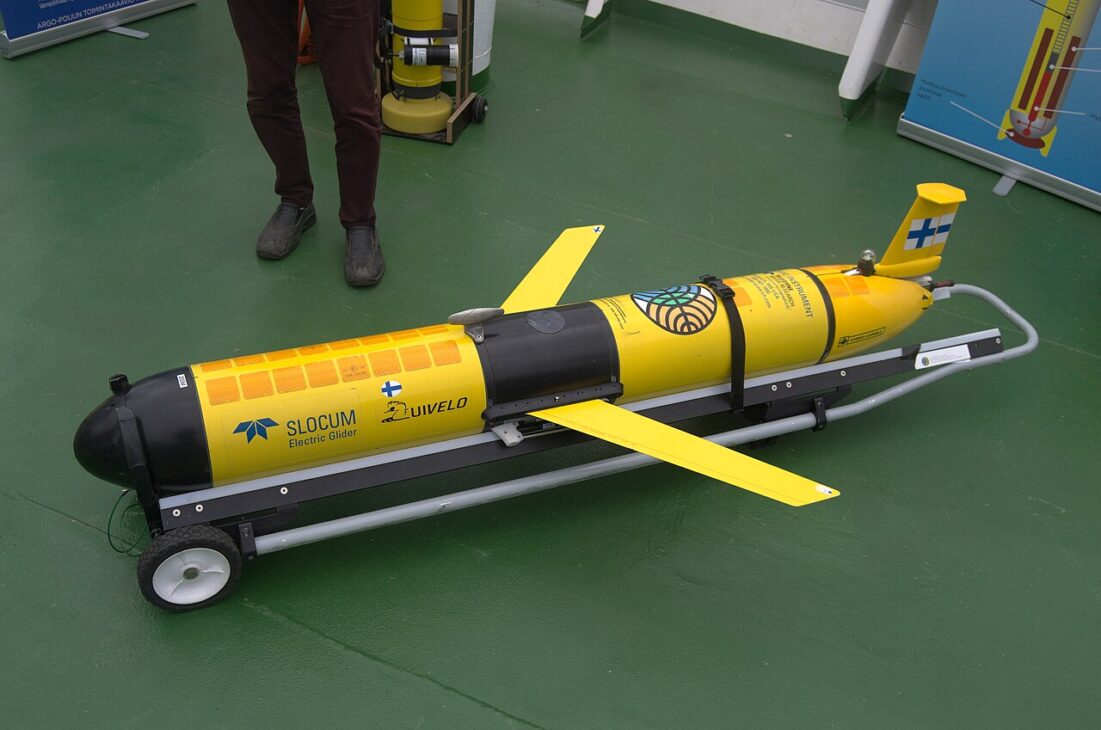
Underwater gliders, known as gliders, can remain in the ocean on missions lasting up to 60 days. Unlike vehicles that rely on conventional propulsion, these devices change their buoyancy to move through the water column.
The company has participated since 2018 in Petrobras’ acoustic monitoring project in the Santos Basin. For that work, it used the Seaglider and Slocum models to track the underwater soundscape and measure water characteristics such as temperature and salinity.
The operational track record includes team training and improvements to procedures for launching and retrieving the robots offshore. These steps depend on planning around ocean conditions and the availability of support vessels.
A 2024 scientific study of PMPAS-BS, published in the journal Frontiers in Marine Science, describes the combination of fixed sensors and mobile instruments. The equipment made it possible to monitor the acoustic environment across an extensive area of Brazil’s continental margin.
Navy demonstrated uncrewed vessels in the Bay of All Saints
The partnership was signed during the second edition of ARAMUSS, held November 9-13 at Aratu Naval Base. The event brought together companies, universities and government agencies focused on maritime, land, aerial and underwater technologies.
Among the demonstrations presented by the Navy was PRISMA, a system developed by CASNAV that allows conventional vessels to be adapted for remote or autonomous operation. During simulated activities, the vehicles transmitted data to operators and took part in search-and-rescue demonstrations.
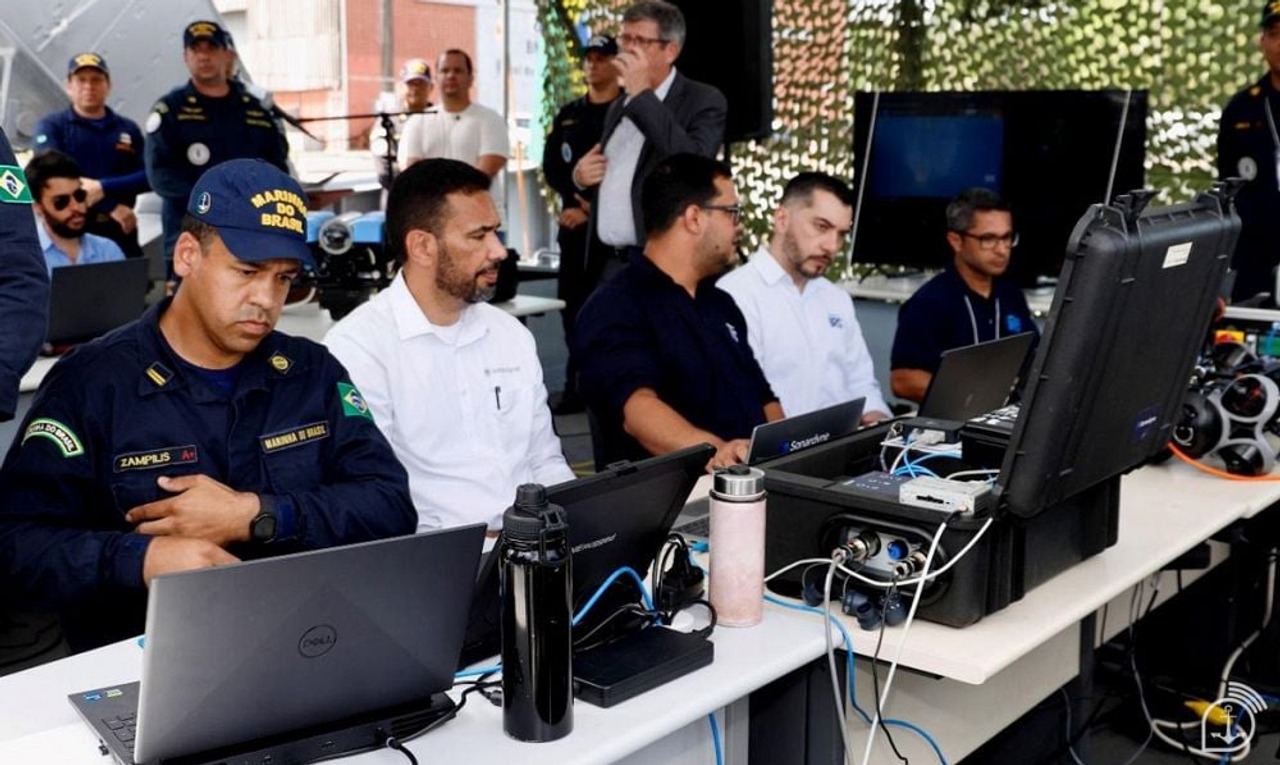
With the memorandum signed with OceanPact Tech, the Brazilian Navy aims to bring industrial experience in maritime operations closer to research conducted by its institutes. The cooperation covers future projects in naval automation, environmental monitoring, hydrography and underwater acoustics, as well as domestic manufacturing of the SAASS.