





 Portuguese
  English
  Spanish
  3 min of reading
  0 comments


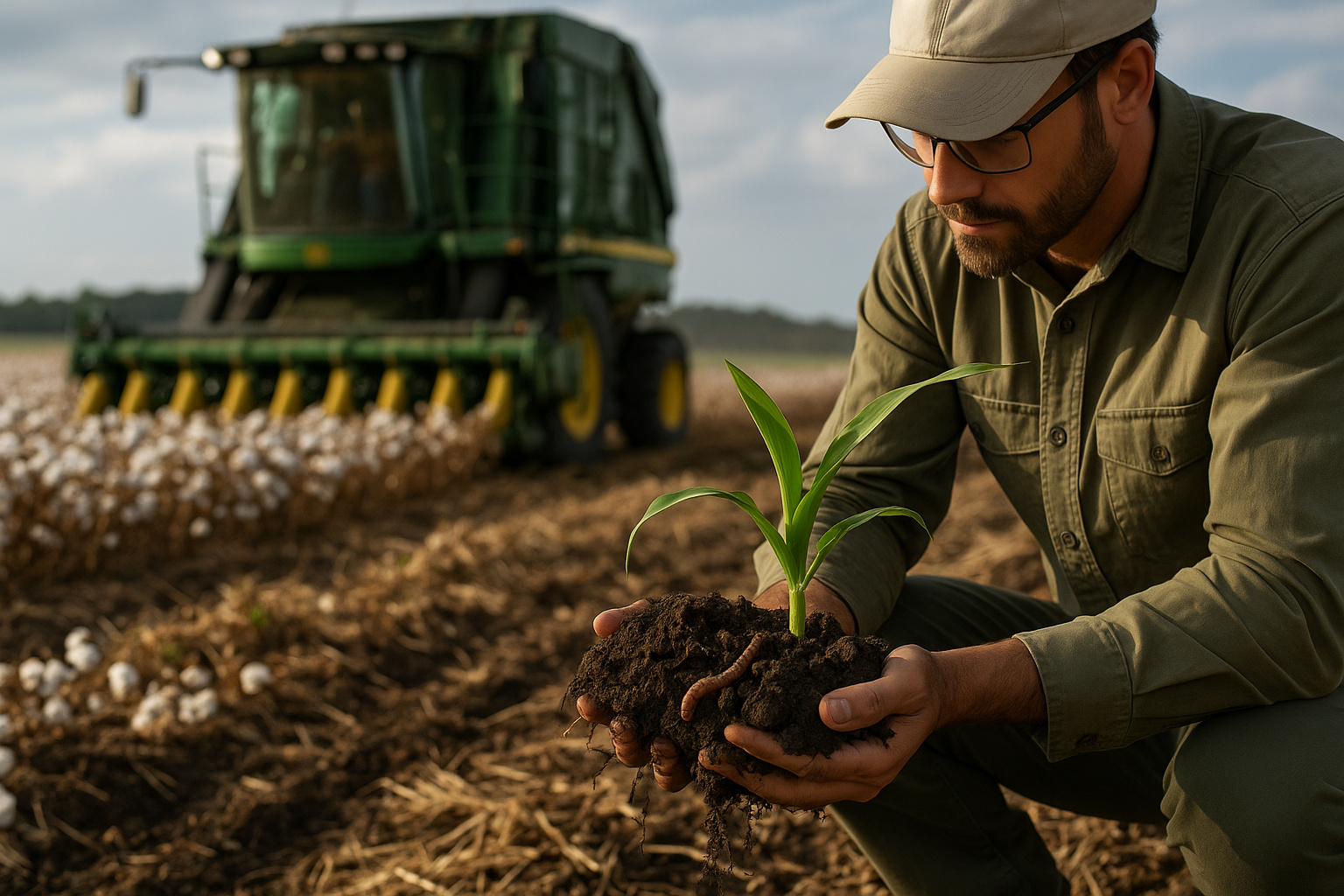
In Mato Grosso, Regenerative Practices Restore Soil, Cut Emissions, and Connect Agribusiness to More Demanding Global Markets
In Campo Verde (MT), the Fartura farm, part of the Bom Futuro Group, has become an open-air laboratory. After the worst drought in 25 years, the state intensified the use of sustainable practices. According to the Drought Monitor, 98% of Mato Grosso’s territory recorded drought.
As a result, the group began investing in technology, bioinputs, and traceability to balance productivity and conservation. “Our challenge is to demonstrate that it is possible to scale production while respecting the limits of the soil,” says Nahzir Okde, partnership manager at the Bom Futuro Group.
With each harvest, microorganisms cultivated in tanks are returned to the soil, regenerating degraded areas and reducing the use of chemicals. While machines advance with precision, technicians monitor the crops via satellite.
Thus, production becomes more efficient and sustainable, proving that the Cerrado can produce and preserve at the same time.
Regenerative Agriculture and Sustainable Management
The foundation of this model is regenerative agriculture.
It returns to the soil more than it takes, ensuring ecological balance and greater resilience. In the case of cotton, plantings alternate between grasses and legumes.
Thus, the vegetation cover remains constant, soil retains more moisture, and stores carbon. As a result, soil tillage decreases, and fertility naturally increases.
The result is a more productive and resilient soil. Furthermore, the reduced use of pesticides makes cultivation more sustainable and profitable.
Brazilian agriculture is pointed out as a climate solution at CNN Talks event in São Paulo
ARTICLE CONTINUES BELOWSee also
Rain gains strength in April, potentially exceeding 150 mm, placing the North, Northeast, and the coasts of the South and Southeast at the center of the heaviest forecast of the week.
A fish that survives out of water, crawls on land until it finds another river, and whose female lays 80,000 eggs at once is infesting rivers and lakes in Brazil, and no one can stop this invasion.
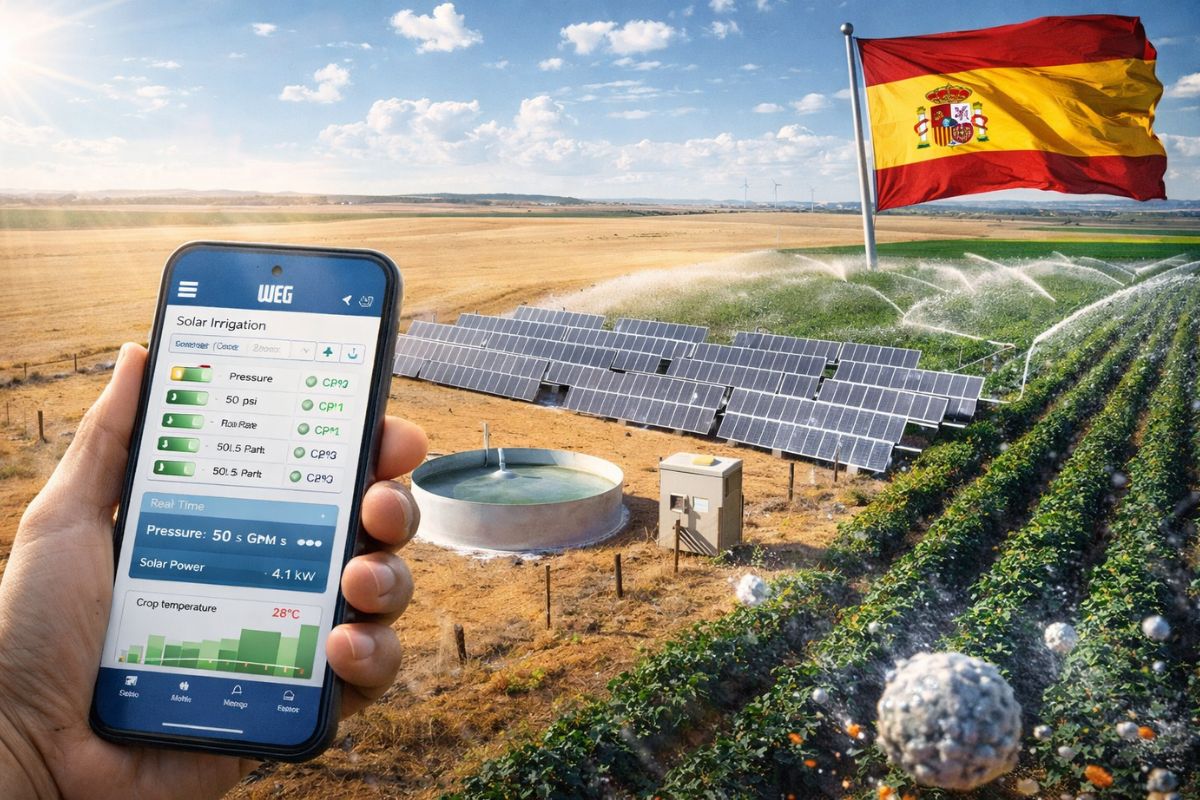
WEG took its technology to Spain to create a solar irrigation system that operates independently without needing an electrical grid, and now farmers control everything remotely via their mobile phones.
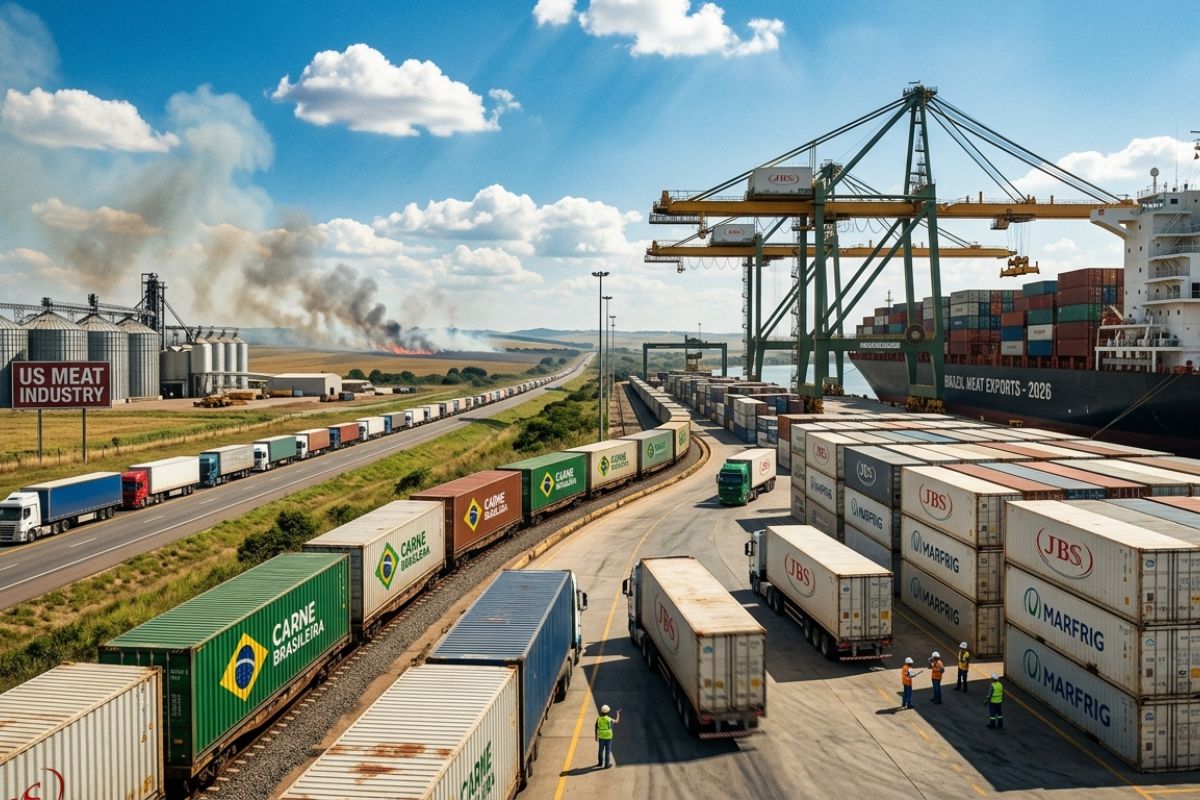
The US faces a meat crisis with fires, pests, and strikes, consumption rises and supply falls to the lowest level since 1952, creating a billion-dollar opportunity for Brazilian exports to grow in 2026.
Technology and Traceability in the Field
Two programs drive this transformation: PRO Carbono and PRO Carbono Commodities, both from Bayer.
Since 2023, the former provides technical support and digital tools to assess soil health, measure carbon sequestration, and calculate emissions.
The latter creates a traceability system that tracks grains from planting to the international market.
This ensures deforestation-free origin and controlled carbon footprint.
According to Marina Menin, director of the carbon business at Bayer for Latin America, soy grown under these practices showed a 70% lower carbon footprint than the national average.
“This shows that it is possible to combine productivity and sustainability in a measurable way,” Menin states in 2025.
Thus, the field adapts, while companies gain competitiveness and trust in external markets.

Results and Expansion in the Cerrado
Currently, ten large producers participate in the programs, totaling about 160,000 hectares. The strategy combines technology, science, and sustainable management. Therefore, each step is planned and monitored in real time.
- Crop rotation, which reduces pests and improves nutrient replenishment;
- Permanent vegetation cover, which protects the soil and conserves moisture;
- Intensive use of bioinputs, which restores microbial life and reduces environmental impacts;
- Digital monitoring, which ensures accuracy, transparency, and control;
- Total traceability, which connects the field to the most demanding global supply chains.
Consequently, producers gain space in international supply chains that value traceability, low impact, and socio-environmental compliance. This trend strengthened after the climatic events of 2024, when heat waves and fires hit Mato Grosso, according to the National Institute of Meteorology (INMET). Therefore, regenerative practices have become essential to ensure productivity and resilience.
Resilient Agribusiness Ready for the Future
For Antônio Trento Scheffer, director of the Bom Futuro Group, regenerative practices have ceased to be just an innovation and have become a necessity for survival. “We need to produce with live and resilient soil, even in the face of increasingly severe climate crises,” he declares. Thus, the Cerrado establishes itself as a global hub for sustainable agriculture. It also stands out as an example of technological adaptation and environmental responsibility. Therefore, Brazilian agribusiness shows that it is possible to combine productivity, traceability, and commitment to the climate.
Nominal sources and timeline: Bom Futuro Group (field data, 2024-2025); Bayer (PRO Carbono and PRO Carbono Commodities programs, implemented in 2023 and evaluated in 2025); Drought Monitor and INMET (drought and extreme heat reports in 2024); statements from Nahzir Okde, Antônio Trento Scheffer, and Marina Menin (2025).






Seja o primeiro a reagir!