Portuguese
 Spanish


Biomil construction advances in Tupaciguara, in the Triângulo Mineiro region, with operations expected to begin in 2028. The project, integrated with Bioenergética Aroeira, received approval for R$618 million in financing and will also produce ingredients for animal feed.
Minas Gerais is preparing to expand its biofuel production. In Tupaciguara, in the Triângulo Mineiro region, Bioenergética Aroeira is moving ahead with construction of Biomil, a plant designed to turn 500,000 tons of corn and sorghum into 225 million liters of ethanol a year.
The new facility will be built within the company’s industrial complex, which already processes sugarcane. The plan is to use part of that infrastructure to make renewable fuel from grains, expanding the company’s operations without relying solely on the sugarcane harvest.
Construction is underway, and Aroeira has said Biomil is expected to begin operating in the first half of 2028. In addition to ethanol, the project will have a production line for ingredients used in animal feed.
-
A R$258 million investment launches Pernambuco plant producing 108,000 cubic meters of biomethane a day from waste

-
D8 engine running on biofuel helps transform agribusiness by replacing fossil diesel without major modifications, preserving energy efficiency and reducing reliance on petroleum
-
Brazilian Ethanol-Powered Prototype Reaches 521 Kilometers per Liter in Efficiency Competition as UTFPR Team Tests Engineering Solutions
-
Brazil’s lower house advances bill proposing ethanol and other renewable fuels for federal vehicles; measure must clear four more committees
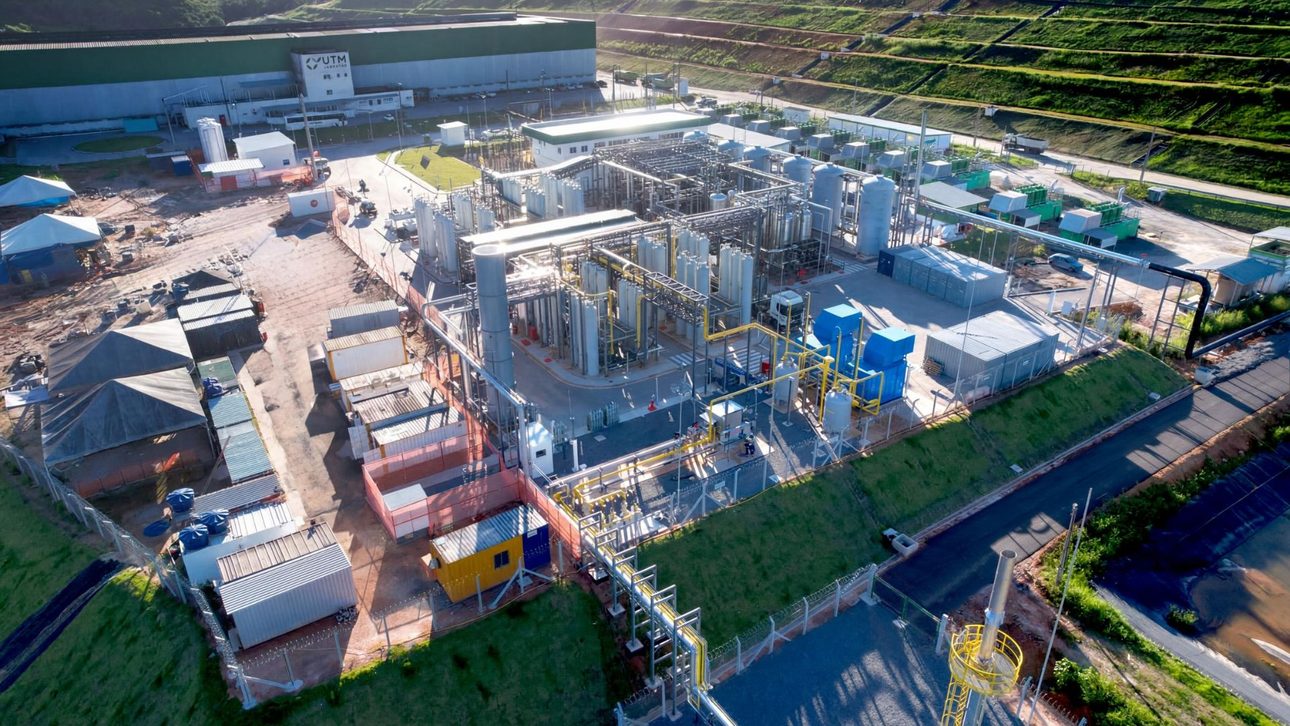


Biomil construction advances within Aroeira’s industrial complex
The new plant is being built in a region where agriculture and the sugar and bioenergy industry are already part of the local economy. Rather than set up a completely separate operation, the company decided to integrate grain processing into its existing industrial infrastructure.
The project will allow corn and sorghum to be used as new feedstocks for ethanol, a fuel Aroeira already produces from sugarcane.
In a statement released in November 2026, the company confirmed that construction is progressing in Tupaciguara. The plant is designed to process approximately 500,000 tons of grain each year.
Grain ethanol production also offers an important operational advantage: the ability to keep production running during the sugarcane off-season.
Gabriel Feres Junqueira, chief executive of Grupo Aroeira, highlighted this complementarity in a statement released by Brazil’s National Bank for Economic and Social Development (BNDES).
Grain production in the region is another factor the group has taken into account. By using corn and sorghum, Biomil aims to expand its ties with the Triângulo Mineiro’s agricultural supply chain and add value to these feedstocks.


Along with ethanol, corn and sorghum will yield ingredients for animal feed
The planned 225 million liters of ethanol a year account for only part of Biomil’s expected output.
According to Bioenergética Aroeira, grain processing is also expected to yield more than 140,000 metric tons of co-products a year, including DDGS and oil, for the animal feed supply chain.
DDGS is an ingredient produced after cereal grains are fermented and the alcohol is removed. Rich in nutrients concentrated during the industrial process, it can be used in animal feed formulations, especially for beef and dairy cattle.
This makes it possible to use components of corn and sorghum that are not converted into ethanol. The same feedstock can therefore supply two different industries: renewable fuels and animal feed.
Oil production is also part of the new plant’s plan. The company’s announcement, however, gives a combined estimate for DDGS and oil, without specifying how much of each will be produced individually.
For Aroeira, this diversification represents its entry into another market segment, complementing its existing sugar, ethanol and electricity businesses.
Sugarcane bagasse will supply steam and electricity to the new plant
One of Biomil’s most interesting features is how the new facility will be powered. Although it will use corn and sorghum as feedstocks, the plant is expected to make use of a byproduct of sugarcane.
Sugarcane bagasse will be used to generate the steam and electricity needed to run the plant, drawing on the cogeneration infrastructure already serving the industrial complex.
This model reduces the need to build an entirely independent power system for the grain plant and allows resources to be shared between the two operations.
Bioenergética Aroeira already operates a large facility in Tupaciguara. According to data released by the BNDES, Brazil’s development bank, in June 2026, the company has installed capacity to process 4.5 million metric tons of sugarcane per harvest.
The complex began producing hydrous ethanol in 2011 and later expanded into anhydrous ethanol, electricity exports and sugar production.
Integrating Biomil is expected to add a new line of business to this operation. Although the use of bagasse is cited as an efficiency advantage, the company has not yet released a specific estimate of emissions reductions attributable to the new plant.
BNDES approved R$618 million to finance the project
Biomil’s construction has also received financial support from the BNDES. On June 24, 2026, the bank announced approval of R$618 million in two financing transactions for construction of the plant and the purchase of industrial equipment.
Of that total, R$310 million comes from the Climate Fund, while R$105.5 million is from the BNDES Finem program, which supports long-term investments.
Another R$202.5 million was approved through the BNDES Machines and Services program to purchase the equipment and systems needed for production.
The financing announced in June was based on initial processing capacity of 330,000 metric tons of grain a year, with projected production of 146 million liters of ethanol and 92,000 metric tons of DDGS.
Aroeira’s announcement in November, by contrast, gave higher projected capacity: 500,000 metric tons of corn and sorghum, 225 million liters of ethanol, and more than 140,000 metric tons of DDGS and oil a year.
The figures refer to different project benchmarks. The BNDES described initial capacity, while the company later disclosed the plant’s projected capacity without specifying when it would reach the higher level.
With construction underway, Biomil remains on track to begin operations in the first half of 2028. Until then, the announced volumes remain industrial capacity targets, not production already achieved.