Portuguese
 Spanish


Brazilian Rare Earths identifies rare earth grades of up to 16.6% in inland Bahia after completing 268 drill holes across an area more than 2.5 kilometers long, with further analyses underway
Australian miner Brazilian Rare Earths announced a new rare earth discovery in Bahia, a state in northeastern Brazil, on Wednesday (18), with grades reaching 16.6% in some drill intervals. The results came from the Pelé South project, where the company identified a mineralized corridor more than 2.5 kilometers long.
Rare earth grades in Bahia are high near the surface
The strongest result came from a six-meter interval with an average grade of 13.2% total rare earth oxides (TREO). Within that interval, four meters graded 16.6%.
The announcement from Brazilian Rare Earths also reported intervals of 12 meters grading 10% and six meters grading 11.4%.
-
U.S. to ban Chinese rare earths in Pentagon products from Jan. 1, but lacks alternatives

-
African nation overtakes South Africa to become world’s third-largest iron ore exporter after shipping more than 5 million metric tons in one month
-
Canadian miner considers building a rare earth processing plant in Brazil, seeks government incentives, and earmarks $780 million for a project starting production in 2029
-
Kenya selects U.S. companies to explore rare-earth deposit valued at tens of billions of dollars and rich in niobium

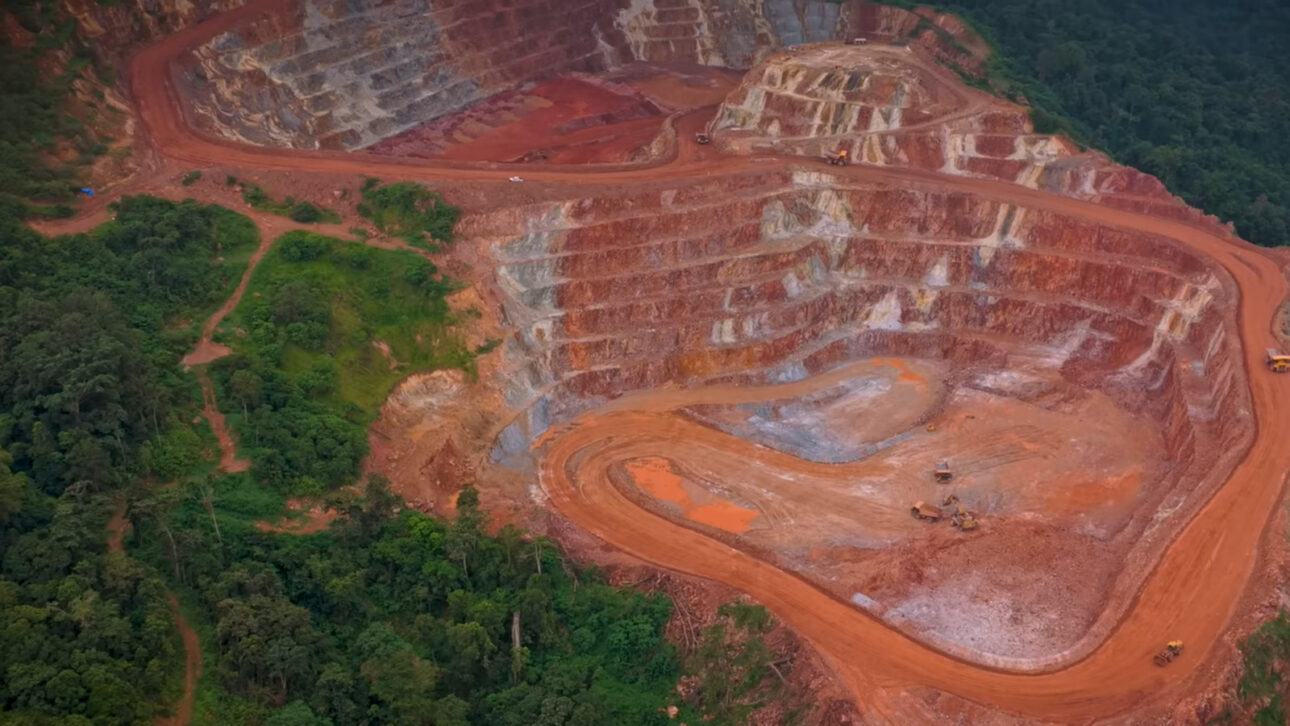


In the northern part of the area under investigation, another drill hole intersected 14.3 meters of mineralized material with an average grade of 11.2%.
The results stand out because of their proximity to the surface. Some of the grades were found at shallow depths, in rock layers naturally altered by weathering.
Miner completes 268 drill holes and awaits further results
Brazilian Rare Earths drilled 268 auger holes at the Pelé South project, for a total of 2,837 meters.
By the time of the announcement, the company had received laboratory results for 224 holes. Results from another 44 holes, totaling 379 meters, were still pending.
Across the intervals considered significant, the weighted average grade was 5% TREO, more than double the 2.3% recorded in comparable shallow drilling at Monte Alto.
The comparison includes only selected drill intervals. It does not mean the entire discovery area has an average grade of 5%.
Discovery includes minerals used in electric vehicles and industrial equipment
The analyses also identified elements such as neodymium, praseodymium, dysprosium and terbium, which are used to make permanent magnets for electric motors and industrial equipment.
The Pelé South project is in the Rocha da Rocha mineral province, about 50 kilometers south of Monte Alto, the company’s main deposit in the region.
At Monte Alto, the miner has an estimated 4.4 million metric tons of mineral resources, with an average grade of 9.9% TREO.
The company is assessing whether it can develop multiple deposits using shared processing and refining infrastructure.
Further drilling will investigate minerals in deeper rocks
Despite the grades identified, Pelé South remains at the exploration stage and does not yet have an official mineral resource estimate.
The company has begun diamond drilling to investigate whether mineralization extends into rock below the surface layers.
Upcoming work also includes mineralogical and metallurgical studies to assess the material’s characteristics and its processing potential.
The amount of mineral available and the economic viability of any potential commercial development will depend on the results of these further investigations.
This article is based on information in Brazilian Rare Earths’ official announcement, released on November 18, 2026.