Portuguese
 Spanish


New rules set out how airlines must demonstrate emissions cuts on domestic flights. Targets start at 1% in 2027, while enforcement provisions include fines and certification mechanisms for sustainable fuel.
Brazil has taken another step toward expanding the use of sustainable fuels in aviation. The National Civil Aviation Agency (ANAC), Brazil’s aviation regulator, has approved new rules to monitor and enforce airlines’ emissions reductions, with targets starting in 2027 and penalties for companies that fail to meet their obligations.
The measure is part of the National Sustainable Aviation Fuel Program (ProBioQAV) and sets a fine of R$750 for each metric ton of CO₂ equivalent emissions that is not cut toward the required target.
Resolution No. 820 was approved by the agency’s board in November 2026 and published in the Federal Register on the 17th, with a correction issued on the 18th. In addition to defining how Emissions will be counted, the resolution specifies which documents companies must submit to demonstrate their results.
-
Minas Gerais to get new plant capable of turning 500,000 tons of corn and sorghum into 225 million liters of ethanol a year

-
A R$258 million investment launches Pernambuco plant producing 108,000 cubic meters of biomethane a day from waste

-
D8 engine running on biofuel helps transform agribusiness by replacing fossil diesel without major modifications, preserving energy efficiency and reducing reliance on petroleum
-
Brazilian Ethanol-Powered Prototype Reaches 521 Kilometers per Liter in Efficiency Competition as UTFPR Team Tests Engineering Solutions




Airlines will face emissions-reduction targets starting in 2027
The change begins with a relatively modest target, but it is set to increase over the coming years. In 2027, air operators covered by the program must achieve a 1% reduction in greenhouse gas emissions from their domestic operations.
The percentage will remain at 1% in 2028, rise to 2% in 2029 and gradually reach 10% starting in 2037, following the trajectory established by the Future Fuels Law and the decree that implemented the program.
The requirements will not apply indiscriminately to every company that owns aircraft. The resolution covers operators subject to the certification rules set out by ANAC that exceed 10,000 metric tons of CO₂ emissions from domestic flights in a calendar year.
The monitoring requirement and target obligation begin in January of the year after a company exceeds that threshold, subject to the other conditions in the rule.
In practice, the regulation is intended to turn an environmental commitment into a measurable obligation. Each covered airline will need to track fuel consumption, calculate its emissions and show how much it has reduced them.
This does not mean every aircraft will have to use a blend containing exactly 1% sustainable aviation fuel. The target is based on emissions reductions calculated under the regulatory methodology, not simply on the proportion of SAF in the tanks.
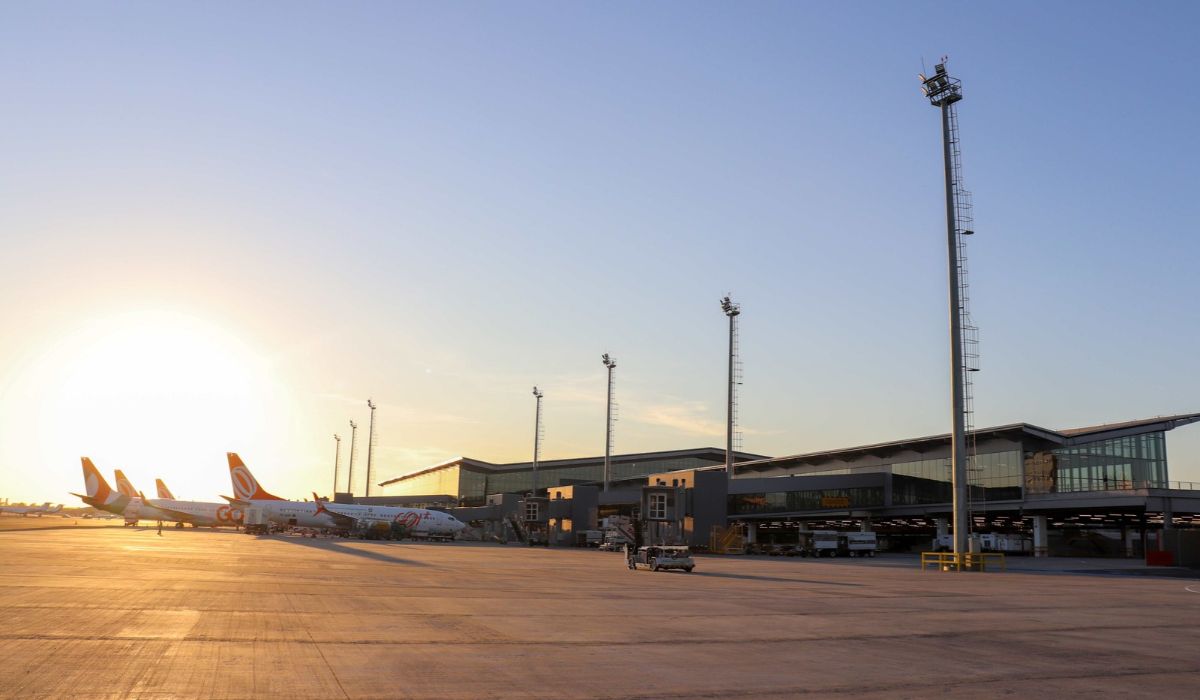
How sustainable aviation fuel fits into this transition
The main tool for meeting the targets is SAF, short for sustainable aviation fuel. It can be produced through different industrial pathways using feedstocks such as vegetable oils, agricultural waste, fats and other eligible carbon sources.
One advantage is that the fuel can be used in existing aircraft and refueling systems, provided technical specifications and authorized blending limits are observed.
The environmental difference becomes clear when the fuel’s entire life cycle is considered. While conventional jet fuel depends on petroleum, SAF can use renewable or lower-carbon-intensity feedstocks, reducing the climate impact associated with production and consumption.
Depending on the technology and the feedstock’s origin, SAF can reduce greenhouse gas emissions by up to 80% over its life cycle, according to an estimate released by Brazil’s Ministry of Ports and Airports based on information from the International Air Transport Association (IATA).
This potential does not mean an automatic 80% reduction on every flight. Results depend on the fuel’s composition, the amount used and the sustainability of its supply chain.
Brazil has already begun developing this supply. In December 2025, Petrobras announced the first deliveries of SAF produced entirely in the country and certified under international standards, from the Duque de Caxias Refinery in Rio de Janeiro.
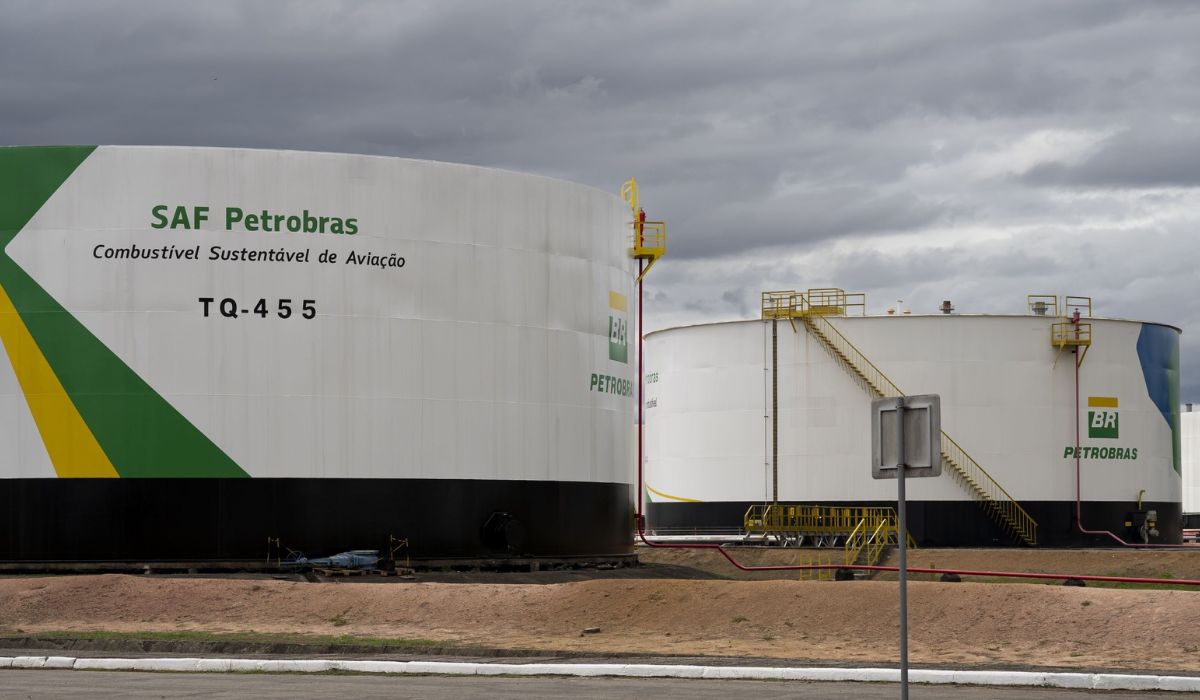
The fuel’s entry into the domestic market is becoming more important as targets draw closer, since airlines will need access to certified products and must demonstrate the environmental benefits associated with their use.

R$750 fine per metric ton of CO₂ equivalent not reduced, plus penalties for reporting failures
Failure to meet the targets will carry financial consequences. Under the regulations, a company that fails to achieve the required emissions reduction will face a fine of R$750 for each metric ton of CO₂ equivalent not reduced.
For example, if a company fails to achieve a reduction of 1,000 metric tons, applying the stated rate would result in a R$750,000 fine, before any applicable administrative procedures and criteria.
Paying the fine, however, does not end the environmental obligation. The amount of emissions that was not reduced must be offset the following year, in addition to that year’s new target.
Oversight also covers data submitted to ANAC, Brazil’s National Civil Aviation Agency. Companies will have to submit an Emissions Monitoring Plan, an Emissions Report and a Target Compliance Report, following procedures set by the agency.
Under the version of Resolution No. 820 published with the November 18 correction, failure to submit an Emissions Report can result in a base fine of R$84,000. Incomplete or inaccurate information in the report can also lead to a penalty, with a base amount of R$60,000.
The rule is already in force, but that does not mean fines for failing to meet the 2027 targets will be imposed immediately at the start of that year. Results must be assessed based on emissions and emissions reductions actually documented, following reporting and oversight deadlines.
Sustainability certificates and SAF supply will be decisive
To demonstrate compliance with the targets, companies may use SAF Sustainability Certificates, known as CS-SAF. These documents provide evidence of the fuel’s environmental attributes and link emissions reduction to the responsible operator.
The regulations also allow alternatives to meet a limited portion of the target, including decarbonization credits (CBIOs), international SAF certificates, low-carbon aviation fuels, and emissions reduction or removal certificates recognized under applicable rules.
These alternative means may cover up to 15% of the target in 2027 and 2028, with the limit decreasing in subsequent years. The aim is to allow some flexibility without displacing the central role of sustainable aviation fuel in the program.
ANAC has also established mechanisms to prevent the same emissions reduction from being counted more than once. Companies will have to prove ownership of the certificates they submit and show that they have been used.
Another challenge will be ensuring that SAF is available at airports. The resolution allows for the target to be adjusted if an operator documents that it did not have access to a sufficient quantity of the fuel, subject to conditions set by the agency.
Until the electronic certificate system is operational, companies must document the fuel used with purchase records and evidence of sustainability.
Responsibility is also clearly divided: Brazil’s National Agency of Petroleum, Natural Gas and Biofuels (ANP) will be responsible for rules governing certification and traceability of sustainable aviation fuel (SAF), while the National Civil Aviation Agency (ANAC) will oversee airlines’ compliance with the targets.
For companies covered by the 2027 requirements, the Emissions Report for that year must be submitted by March 31, 2028, and the Compliance Report by May 31, 2028. ANAC will use these data to verify the results achieved and identify any irregularities.