Portuguese
 Spanish


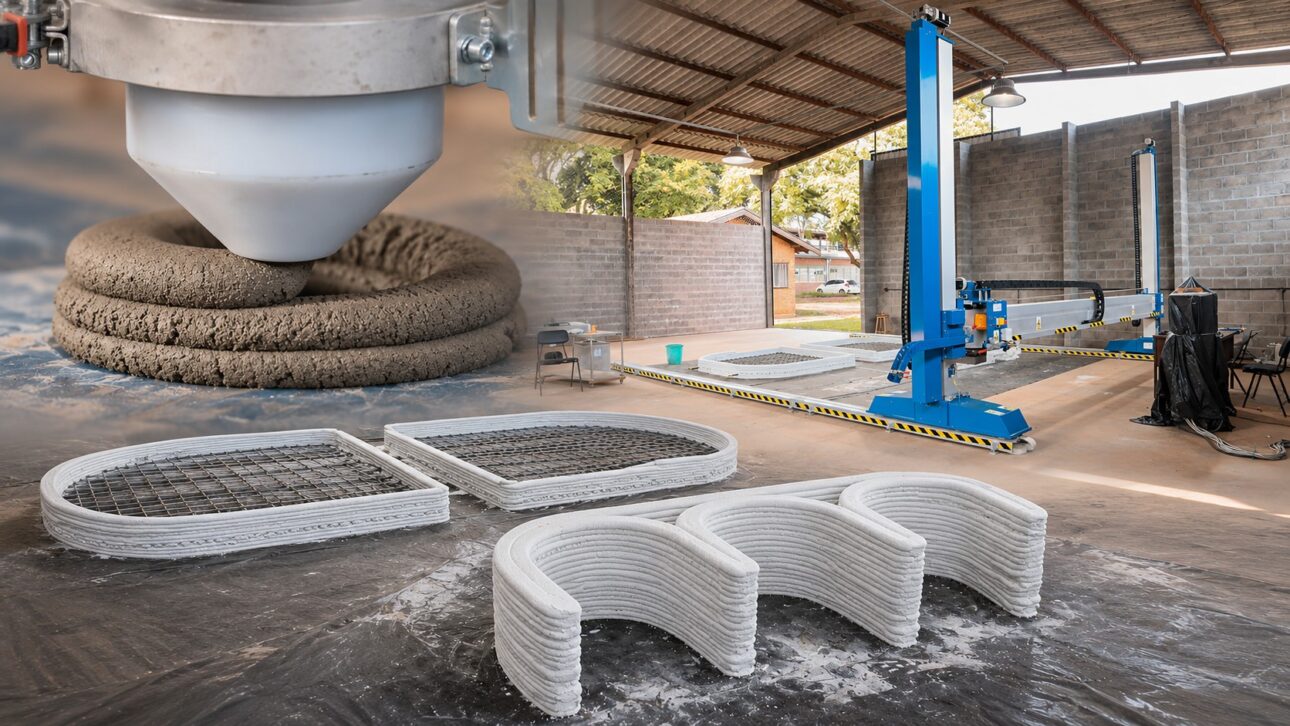

At the State University of Londrina in Paraná, two concrete 3D printers are advancing research into affordable housing, accessible bathrooms, and shelters for disaster victims as engineers test the safety of these structures.
In a warehouse at a public university in Londrina, in northern Paraná, a large blue machine moves along tracks, laying down cementitious material in layers.
The scene looks as if it came from a factory of the future. But this is not some distant experiment: the equipment is already operational and could produce building walls.
The development was announced on November 11, 2026, by the State University of Londrina (UEL), which began operating two 3D printers designed for construction.
-
Paleontologist Yingqi Zhang has crawled through about a thousand caves in southern China, and eight teeth from two of them show Homo erectus lived in rainforest there until about 184,000 years ago, up to 200,000 years longer than thought.

-
Scientist Daniel Mège says Europe’s ExoMars orbiter caught hydrogen chloride seeping from cracks on Alba Mons, a 600-km-wide volcano, at under 3 kg per second, a sign that Mars may still have magma below its surface
-
NASA Administrator Jared Isaacman unveiled the X-70 Fractal, a crewed experimental jet that can carry up to 2,000 pounds of test equipment, cruise at Mach 0.75 and fly about 1,726 miles, with a first NASA flight within two years
-
ITER lead mechanical engineer Adrien Deydier says a 330-tonne superconducting magnet, cooled to minus 269°C, carried 34,000 amperes, half its working current, before heading into the world’s largest tokamak



The university claims UEL has become the only university in Paraná with equipment of this size operational in a research and technology innovation setting.
The aim extends beyond simply creating concrete structures. The university intends to develop solutions for affordable housing and shelters in disaster-stricken areas.
However, there is a significant difference between printing walls and delivering a finished home. That is precisely the challenge researchers are now trying to overcome.
Giant 3D printer installed at UEL
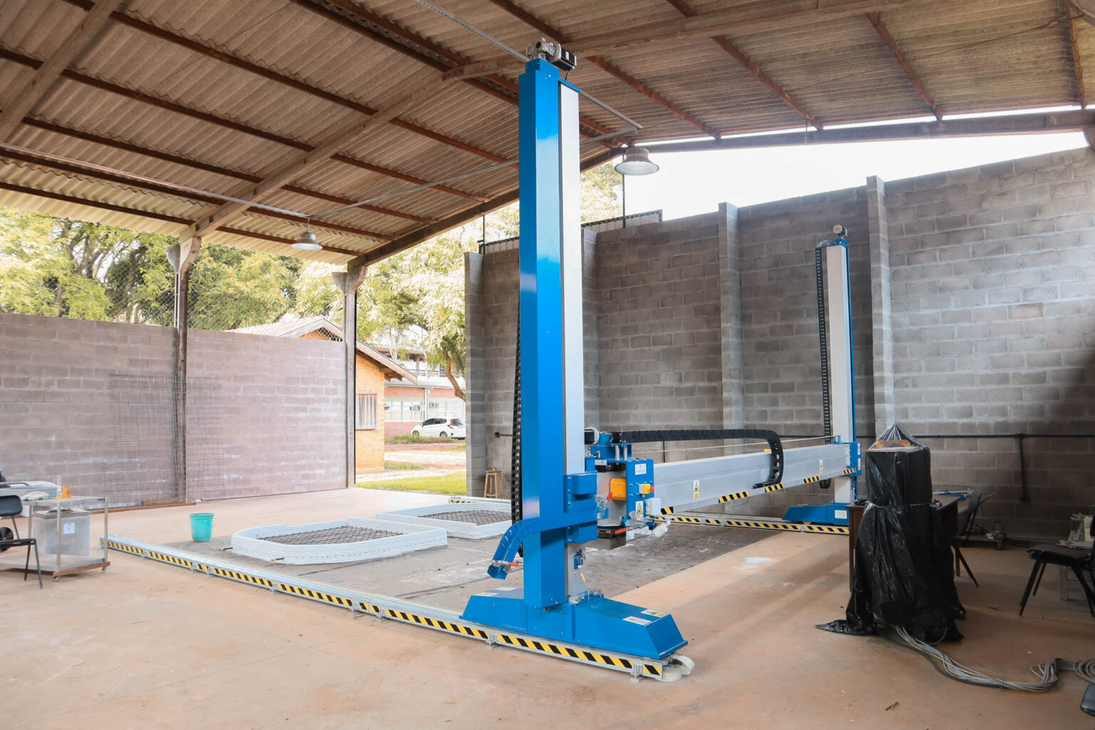
Machines measuring up to 5 by 9 meters put automated construction at the center of research
The equipment is housed at Ékonus, the Laboratory of Technology, Housing and Urban Equipment through 3D Printing, which is part of UEL’s Center for Technology and Urbanism.
The two printers were developed by Spanish manufacturer Be More 3D. They were assembled in September with support from the company’s own staff.
The smaller printer has a printing area of 1 by 1 meter. Researchers use it to develop cement mixtures and produce prototypes to assess how the materials behave.
The main machine stands out for its size. Its modular structure moves along tracks and can print across an area up to 5 by 9 meters.
That capacity would be enough to print the walls of a home measuring about 45 square meters, an area comparable to many affordable homes in Brazil.
However, because of the laboratory’s physical limitations, the printer currently operates in a 5-by-7-meter configuration.
Funding for the purchase came from the Paraná State Secretariat for Science, Technology and Higher Education, through the Paraná Fund. Construction company Pacaembu was involved in renovating and adapting the space.
In a report published by the university in June 2026, the State University of Londrina (UEL) stated it had invested R$1.2 million in state funds, with another R$290,000 donated by Pacaembu to upgrade the laboratory.
The investment also covers infrastructure and necessary conditions to conduct the research; it does not account for the cost of building a home.
The initiative aligns with advancements in 3D printers used to build homes in Brazil, a technology that is already producing housing projects in the country.
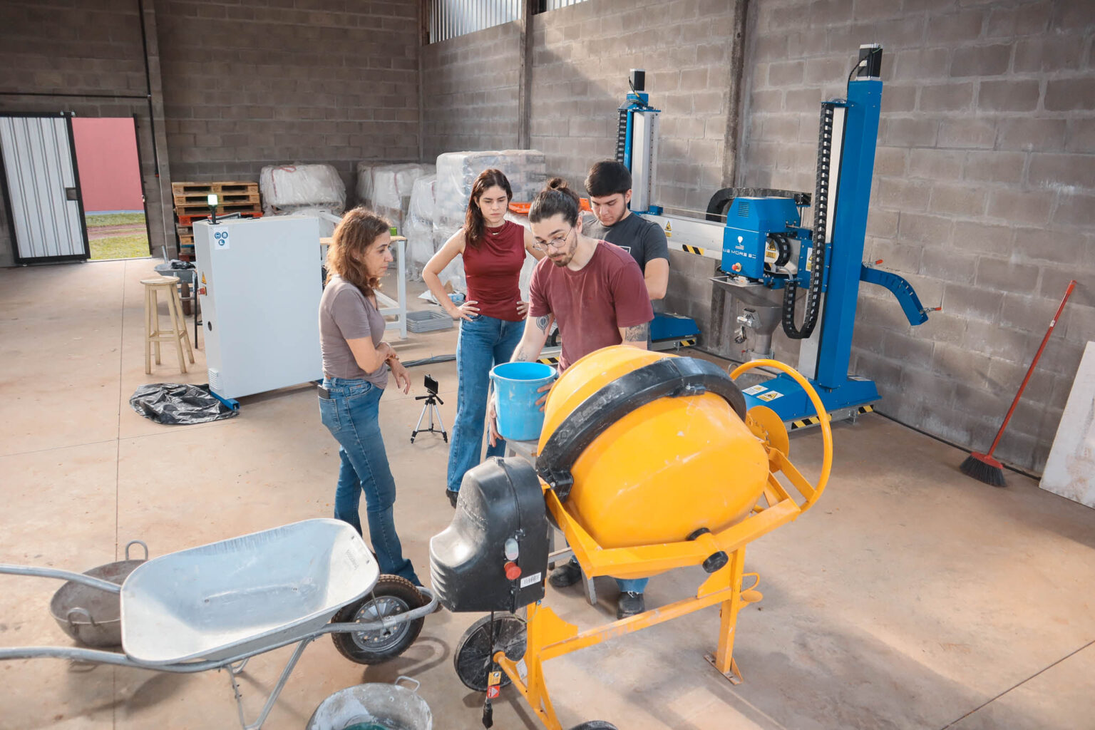
The biggest challenge is not the size of the printer, but developing concrete capable of building walls
At first glance, the process seems simple. Just feed cement into the machine and let it follow a digital design.
But the reality is much more complex.
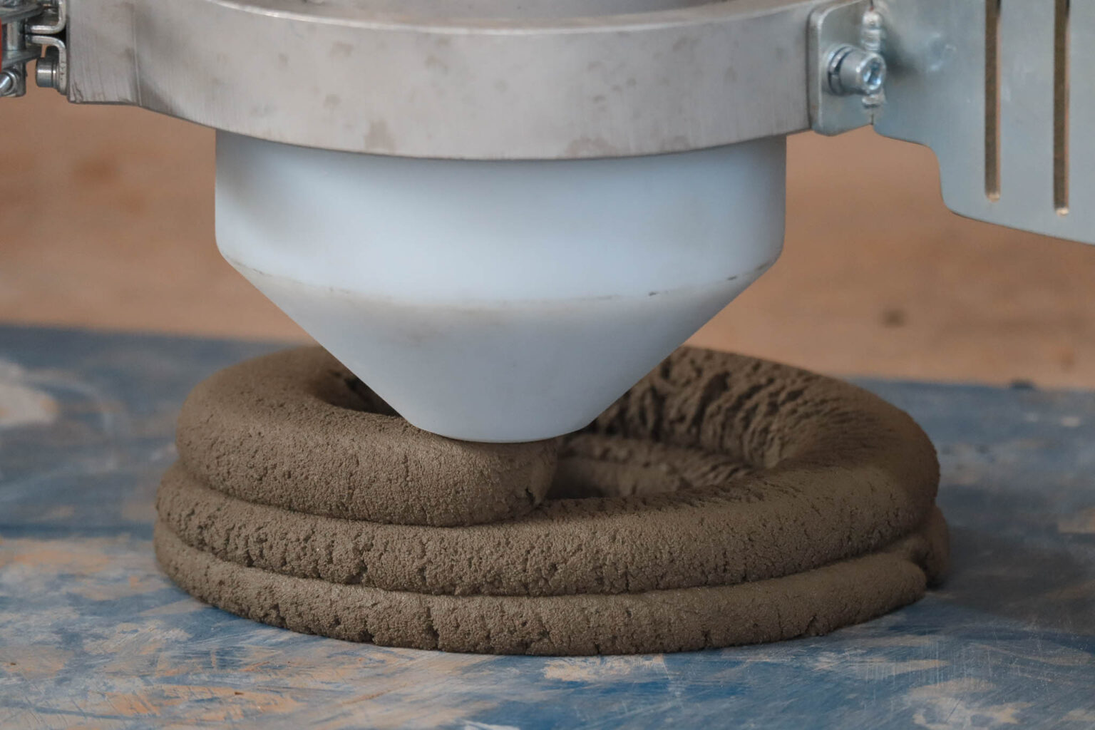
The material must have specific properties to travel through the pipes and exit the extrusion nozzle without compromising the structure’s stability.
In addition, each deposited layer must retain its shape and support the weight of the material placed directly above it before the overall structure gains sufficient strength.
A mix that is too liquid can deform. On the other hand, material that is too stiff is difficult to pump and can halt printing.
That is why the work led by Berenice Martins Toralles, a professor in the Department of Construction, is one of the project’s most crucial stages.
The researchers are developing their own formulations and studying the mechanical and flow properties of cementitious materials.
The team is already using the smaller printer to test mixtures developed at the university before progressing to larger structures, according to the project coordinator.
The challenge is to find a balance among flowability, strength, stability, and printability.
This research helps explain why 3D concrete printing in construction requires more than modern equipment: it also depends on suitable materials and construction techniques.
Before building homes, university to test two public restrooms adapted for people with disabilities
One of the first practical applications involves building two modules for public restrooms adapted for people with disabilities.
The choice may seem modest given the machines’ capabilities, but there is an important technical reason behind it.
Although smaller than a residence, the restrooms present challenges similar to those of a complete housing project.
They need to incorporate doors, openings, plumbing, electrical systems, and structurally stable walls.
The goal is to understand how all these elements can function in a building made with 3D printing without compromising safety or functionality.
The modules will be 2.30 meters tall. After printing and the time needed for the material to cure, they will be lifted and transported to their permanent locations.
Transporting the modules will also assess how the structures withstand movement and assembly, steps essential for future housing applications.
The project also includes a research group led by Professor Camila Atem, which is developing a proposal for a green roof.
The solution is expected to help investigate how other building elements can be integrated with components made by the printers.
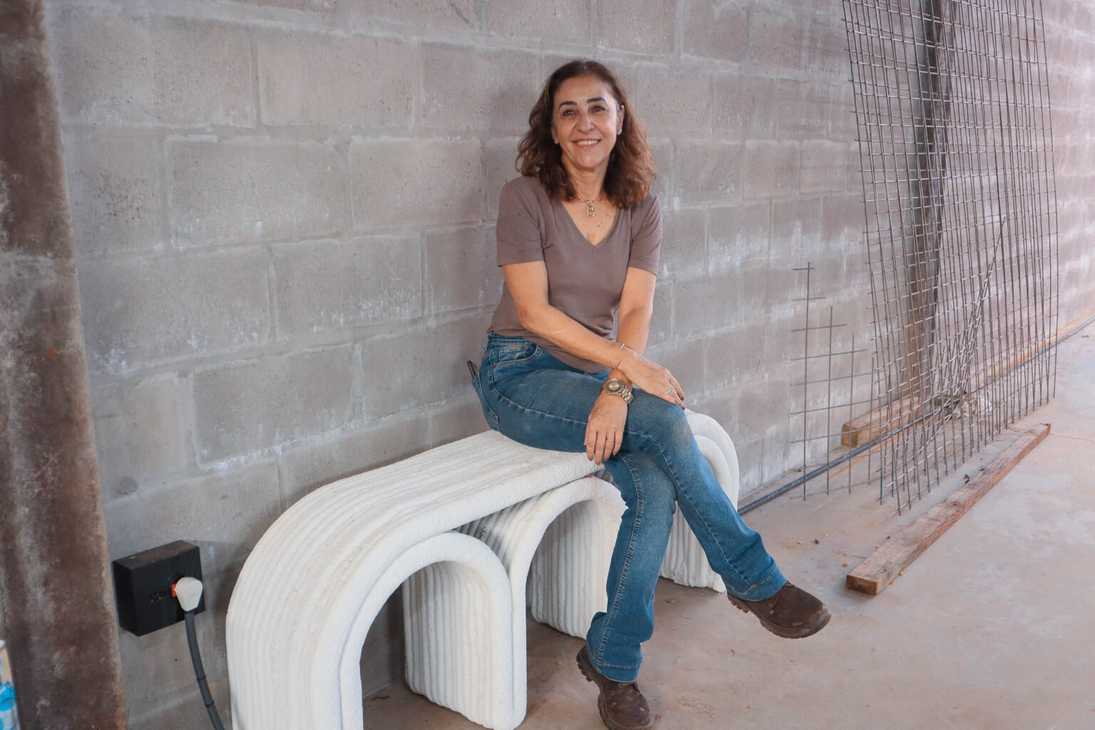
Benches, tables, and street furniture are among the technology’s first results
As research into housing progresses, the team is also developing less complex solutions for public spaces.
Early results include functional prototypes of arched urban benches, made with printed cementitious materials.
The researchers are also working on tables, planters, and trash cans that could be used on the university campus and in community gathering spaces.
These applications matter for reasons that go beyond the appearance of the objects.
By making smaller pieces, the team can evaluate strength, finish, stability, geometry, and the repeatability of the printing process.
The prototypes also help identify potential challenges before the same technology is used to produce larger housing structures.
In other words, each bench produced offers an opportunity to test knowledge that could be applied to more complex construction projects.
This transformation is not happening only in Paraná. In countries around the world, modular homes, industrial robots, and 3D printers are beginning to change traditional construction processes.
University studies modular housing for families affected by floods and natural disasters
One of the most important potential applications of the research is using 3D printing to produce temporary housing for vulnerable families.
The proposal is especially relevant in light of climate disasters affecting different parts of Brazil and leaving thousands of people unable to remain in their homes.
In these situations, providing safe shelter quickly becomes an urgent need.
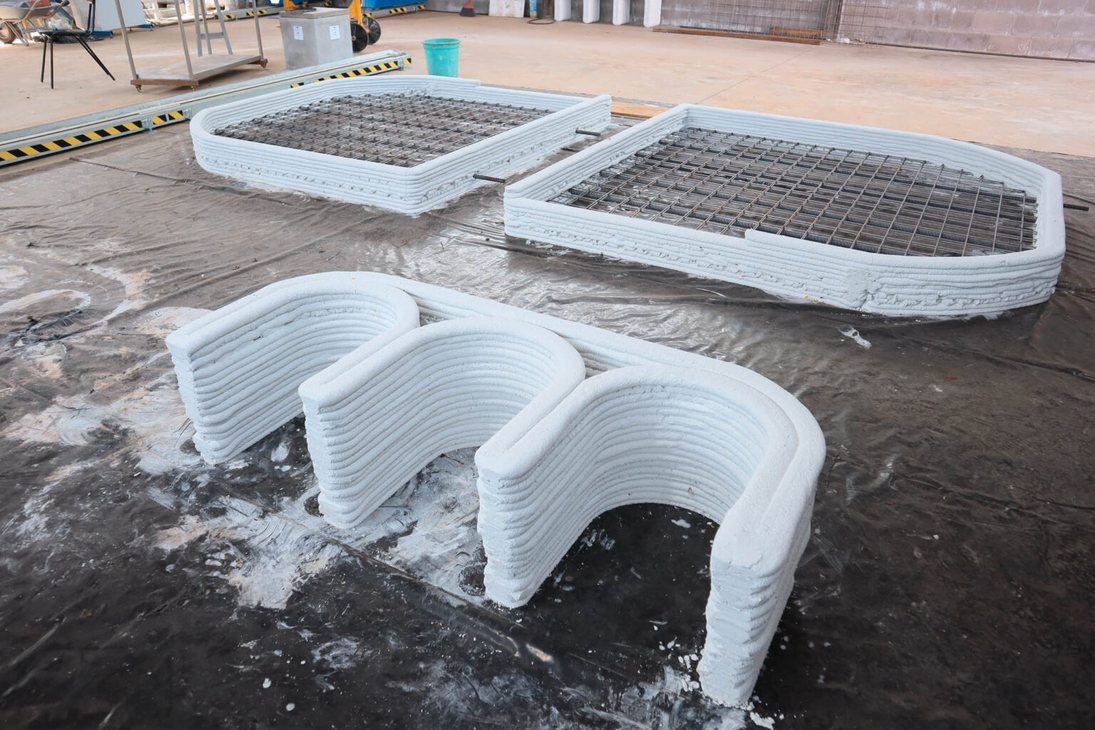
It is in this context that the university is studying a system of modular construction produced off-site.
The concept, known as off-site production, involves manufacturing components in a controlled environment and transporting them later to the installation site.
This means some manufacturing work could take place before the site is fully prepared, depending on the project conditions.
A doctoral research project is examining the use of these modules, with particular attention to component modeling, mechanical strength, and connections between structures.
The proposal covers the manufacture, organization, transportation, and assembly of the pieces in locations requiring emergency housing solutions.
However, significant challenges remain.
Researchers need to determine how the modules perform during lifting and transportation, as well as study the strength of the connections after assembly.
To do this, the team combines parametric modeling, computer simulations, mechanical testing, and full-scale experiments.
The goal is to develop parameters that make modular systems safer and more efficient while accounting for the specific requirements of 3D printing with cementitious materials.
If the technology achieves the expected results, it could help reduce manufacturing steps and expand the options available in emergency housing programs.