Portuguese
 Spanish


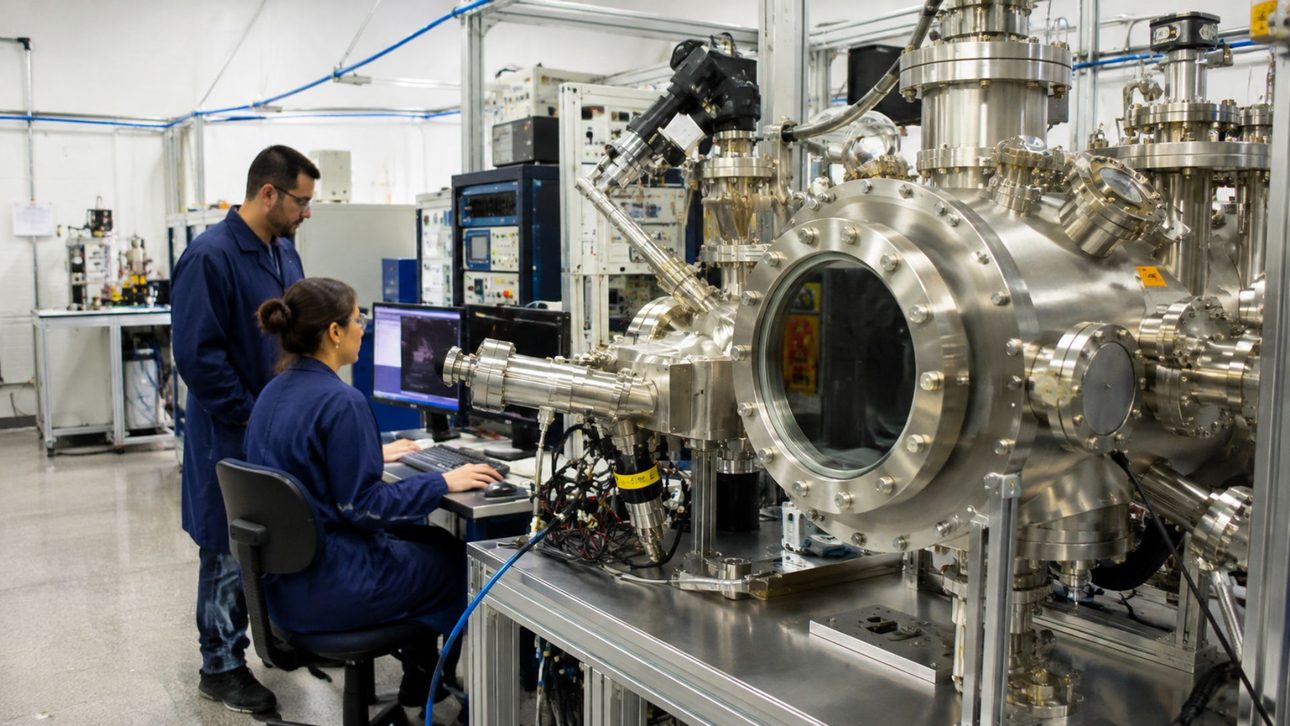

The scientific facility in Duque de Caxias brings together five of the institute’s areas of work, supports research related to health, energy and cybersecurity, and includes a space for collaboration between researchers and companies.
Brazil’s National Institute of Metrology, Quality and Technology (Inmetro) opened a complex of seven laboratories on Wednesday (25) at its Xerém campus in Rio de Janeiro state. The facility is intended to support scientific research and meet the technological needs of Brazilian industry.
The Inmetro says the facility expands Brazil’s capacity to develop measurement standards and provide technical support to industry, with work ranging from materials characterization to the evaluation of medical equipment.
-
Smartphone doubles as a two-way radio with a push-to-talk button, set for Brasília testing

-
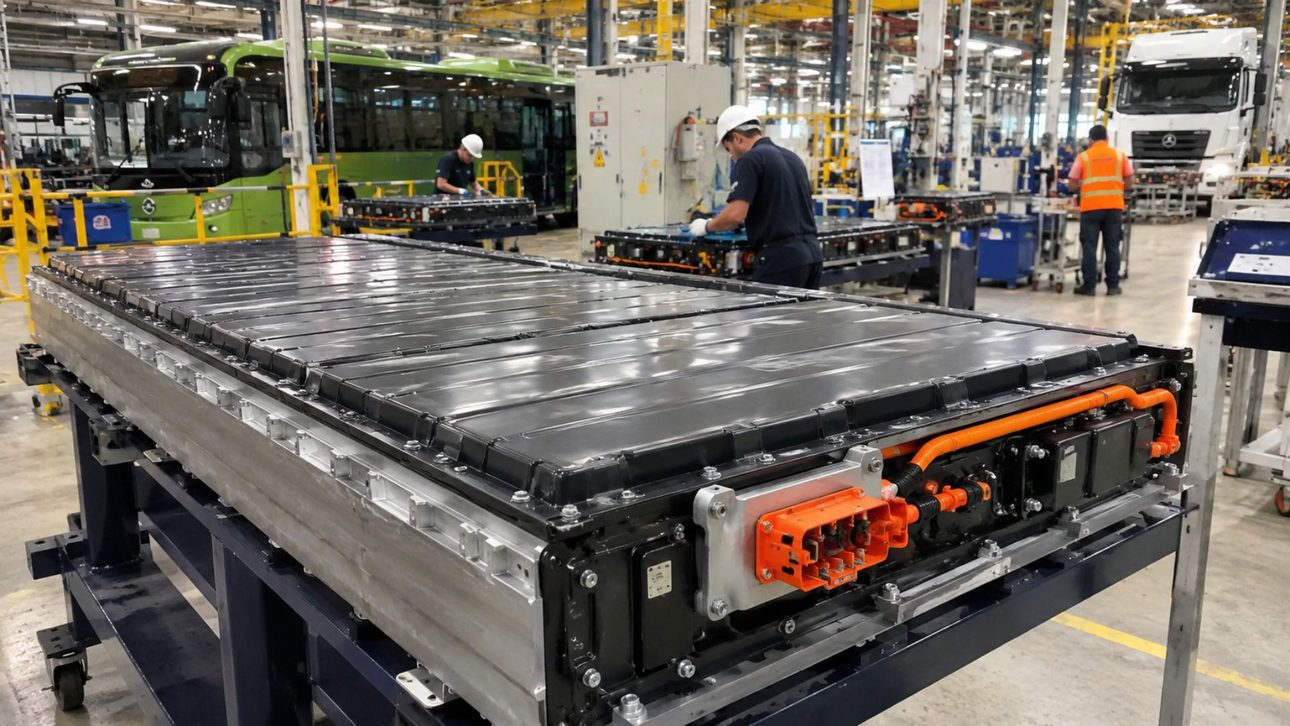
From 44-kWh modules to 440-kWh packs, BorgWarner plans battery assembly in Piracicaba with projected capacity of 5,000 units a year
-
Astronomer Julien Wolf and his team used Euclid to find a quasar seen just 630 million years after the Big Bang, powered by a black hole of about 360 million Suns that puts pressure on models of how the first giants grew

-
Planetary scientist Sabina Raducan says the crater NASA’s DART left on the 151-metre asteroid Dimorphos is almost as large as the rock itself, as ESA’s Hera finds it tumbling among hundreds of boulders



With 1,240 square meters of indoor space, the building houses facilities serving several areas of the Directorate of Scientific, Industrial and Technological Metrology (Dimci).
Metrology, the science of measurement, establishes reference standards that allow results from companies and scientific institutions to be compared, even when analyses are conducted at different locations.
In industry, these standards help identify variations in raw-material properties, assess equipment performance and check products against the technical specifications required for their intended use.
Research on graphene and advanced materials
The expansion includes characterizing graphene and other nanomaterials, with work focused on validating measurement methods and standardizing these materials.
Made of carbon atoms arranged in a two-dimensional structure, graphene has properties such as mechanical strength, low weight, and the ability to conduct electricity and heat. These characteristics are of interest for a range of technological applications.
Materials sold as graphene derivatives, however, can differ in their structure, affecting their performance. Identifying these characteristics makes it possible to assess whether a sample has the properties needed for a particular application.
Metrology work involves procedures that set the conditions for measurements and criteria for interpreting the results. This makes it possible to compare samples made by different manufacturers or produced using different processes.
For its graphene research, the institute partners with the National Service for Industrial Training in São Paulo (Senai-SP) through the Graphene Hub.
Analyzing gases used as fuels
The new facilities also support research and services related to the natural gas, biogas and biomethane value chains, including analyses used to verify fuel quality.
Biogas is produced by the decomposition of organic matter in oxygen-free environments, a process that produces a mixture composed mainly of methane and carbon dioxide.
When subjected to purification processes that increase its methane concentration and remove impurities, biogas can be converted into biomethane, a fuel that can replace natural gas in certain applications.
Assessing the quality of these fuels requires laboratory analyses that can identify the components in samples and determine their respective concentrations, which may vary depending on the feedstock and production process.
To assess the reliability of these analyses, laboratories use references to verify the performance of the instruments and methods used in measurements.
Fluid Dynamics, Acoustics and Ultrasound Laboratories
The facility inaugurated in Xerém also includes fluid dynamics activities, an area that studies the behavior of liquids and gases in motion and has applications in a range of industrial processes.
In acoustics and vibration, measurements make it possible to study phenomena related to sound propagation and the mechanical behavior of equipment and structures.
Microfluidics research involves manipulating small quantities of liquids, a technique used to develop devices for applications that include laboratory analyses.
In ultrasound, metrology support is related to the reliability of measurements made by equipment that uses high-frequency sound waves, including devices used in the healthcare sector.
Artificial Intelligence and Industrial Safety
The complex houses a facility operated by Inmetro’s Artificial Intelligence Center (CIAI), dedicated to research on the safety of industrial control systems, including those used in electric power infrastructure.
In this environment, researchers can simulate cyberattacks with the help of artificial intelligence and study protective measures against these threats.
The building has a modular design intended to make it easier to adapt laboratory spaces to the needs of research projects and the equipment used.
In addition to its scientific facilities, the building houses the MetroHub space, with capacity for up to 40 people.
Funded by the Carlos Chagas Filho Foundation for Research Support of the State of Rio de Janeiro (Faperj), the space was created to bring together researchers and companies interested in developing joint projects and transferring technology to the productive sector.