





 Portuguese
 Spanish



Atlas Renewable Energy project at Uberaba’s EPZ calls for more than R$10 billion in infrastructure and up to R$30 billion in equipment. Proposal requires federal approval and is prompting questions about water and energy.
A data center project with the potential to involve up to R$40 billion has put Uberaba, in the Triângulo Mineiro region of Minas Gerais state, on the radar for a massive digital infrastructure investment. Atlas Renewable Energy has formally expressed interest to the city government in developing a facility at the municipality’s Export Processing Zone (EPZ), but the proposal still requires federal review and authorization.
Preliminary figures released by the city point to more than R$10 billion for construction and infrastructure, plus up to R$30 billion for information technology equipment. The maximum figure does not represent money already spent or a signed construction contract. The projection depends on administrative steps, studies and business decisions that are still pending.
R$10 billion in infrastructure and up to R$30 billion in equipment
The two figures refer to separate parts of a potential project. The first would cover site preparation, support structures and construction needed to operate the data processing infrastructure. The second would include servers and other equipment used to store, process and transmit information.
-
Copel allocates R$21.1 billion to transform Paraná’s electric grid by 2030, prioritizes R$14.1 billion for distribution and enhances two hydroelectric plants to boost energy output

-
Bistek leases former Carrefour building in Novo Hamburgo and two former Nacional stores in Porto Alegre, all properties owned by Josapar

-
Brazil Cost reaches R$3.5 trillion a year, or 27.5% of GDP, with infrastructure, hiring and interest costs the biggest burdens
-
BTG Pactual downgrades Brazil to neutral in its Latin America portfolio, drops Itaú, XP and Assaí after stock market falls 29% in dollar terms over 30 days


Together, the figures explain how the project could reach R$40 billion. However, the amounts are estimates presented during the negotiation phase. The total investment could change if the technical design is revised, the project moves forward in stages or the company decides not to complete every phase initially under consideration.
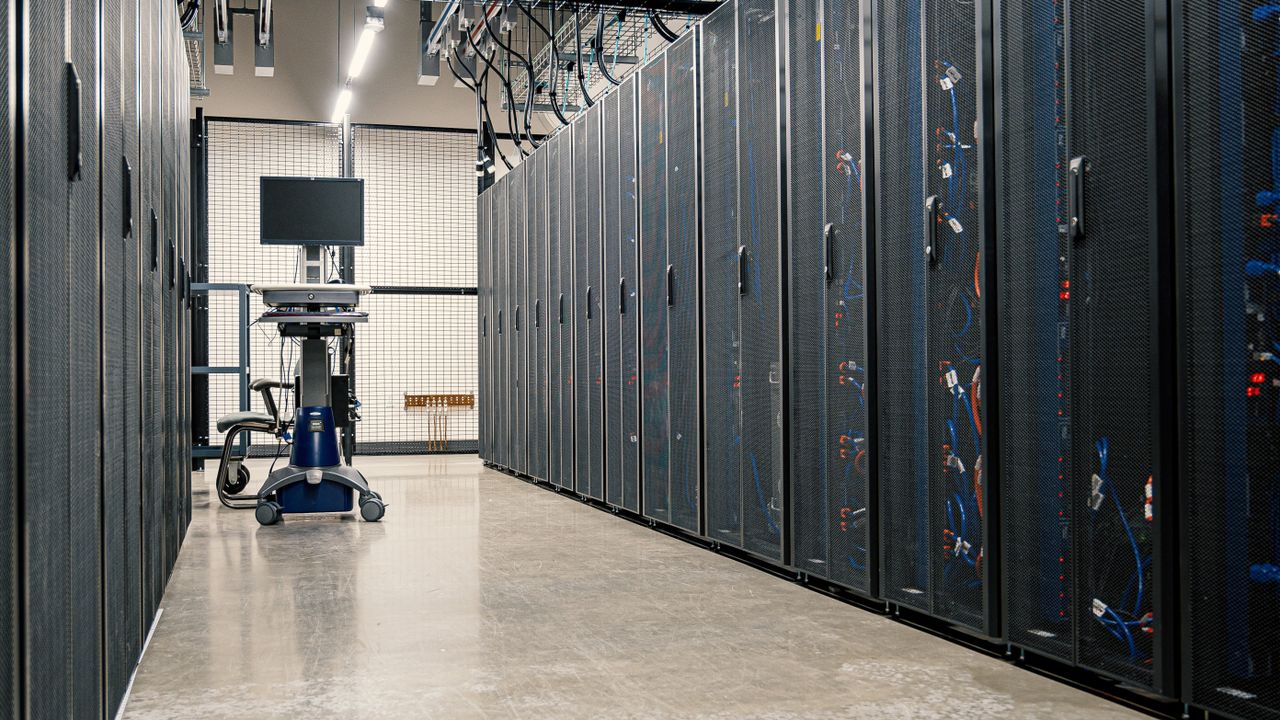
Data centers are facilities with large numbers of servers, communications networks, power systems and cooling equipment. Companies that operate digital services use this infrastructure to keep applications, data and platforms running continuously. Large-scale projects may require upgrades to power, telecommunications and specialized services.
Atlas and city government signed an agreement, but federal authorization is still needed
The negotiations reached a milestone in November 2026, when representatives of Atlas Renewable Energy and the municipal administration formalized a memorandum of intent in São Paulo. The document records interest in the project but does not amount to a license to install or operate the data processing center.
Uberaba Economic Development Secretary Celso Neto said talks with the company began in early 2026. The city government, the EPZ and the company aim to complete their documentary requirements this year and submit the project to the National Council of Export Processing Zones (CZPE).
The federal agency is expected to assess the proposal under the rules governing EPZs. The city government has not given a firm date for a decision. A municipal projection cited the possibility of operations beginning in 2028, but that timeline depends on approvals and a construction schedule that has not yet been confirmed.
Uberaba looks to export zone to attract technology investment
The selected site is in the Uberaba EPZ, an area offering a special regime for activities aimed at foreign markets. Brazil’s Federal Revenue Service authorized the zone for customs operations in 2024, making it one of a small number of export processing zones in Brazil with such authorization.
The city government says a combination of incentives established by law, logistical advantages, proximity to consumer markets and a skilled workforce works in the municipality’s favor. The administration also points to the local technology park, universities and vocational training institutions.
These conditions are arguments for attracting investment, but they do not replace approval of the specific project. The official register of EPZs maintained by Brazil’s Ministry of Development, Industry, Trade and Services makes it possible to track the status of the zones and authorized business projects.
Energy consumption becomes a central concern
A facility with thousands of servers needs reliable electricity, as well as backup systems and connection infrastructure. However, the scale of Uberaba’s potential demand has not been detailed publicly in the sources consulted. It is not yet possible to say how many megawatts will be needed or how much any required grid upgrades would cost.
The issue matters to residents and businesses in the region because connecting large consumers depends on technical planning and the ability of the system to meet their needs. Information on contracted capacity, the source of the electricity, the timeline and any connection work will be essential to assessing the proposal’s local effects.
City government promises water from its own source but has not disclosed volume
Water use has also come under scrutiny. In response to Jornal da Manhã, the city government said the facility would be supplied by independent sources, without using the public water system that serves residents, and that its cooling system is expected to operate in a closed loop, with water recirculation.
The city government also mentioned the possibility of reusing water from a sewage treatment plant for support activities such as cleaning and maintenance. These measures were presented as planned features of the project, not as facilities that have already been completed.
As of the release of the information, there were no details on the independent source that would supply the project, nor any public estimate of the volume of water required. Without those data, there is no basis for quantifying the specific water impact of the facility proposed by Atlas.

Petition gathers 727 signatures and calls for studies and public hearings
The lack of complete information spurred a campaign in the city. On November 17, an online petition opposing the project’s progress without public debate had gathered 727 signatures, according to Jornal da Manhã. The petitioners called for the full disclosure of the memorandum of intent and studies on water use, electricity consumption and jobs.
The campaign is also calling for public hearings with government officials, experts and residents before any municipal licenses or incentives are granted. Concerns include potential impacts on water resources and energy infrastructure, as well as the benefits the project would provide to the community.
The consumption estimates cited in the petition refer to data centers in general and cannot be presented as measurements of the Uberaba project. A concrete assessment will depend on technical documents detailing the facility’s size, equipment and cooling technology, if and when they are adopted.
Atlas also linked to data center study in Paracatu
The potential investment in Uberaba is not the only project in Minas Gerais linked to Atlas. A company affiliated with the group submitted requests for transmission grid connections related to a data processing complex in Paracatu, in northwestern Minas Gerais, according to information compiled by Diário do Comércio.
So far, it has not been publicly clarified whether the studies for Paracatu and Uberaba could move forward at the same time or represent alternative locations. The two projects therefore should not be added together as investments definitively confirmed in the state.
What remains before the billion-real project can move forward
The next announced step is to submit the proposal to Brazil’s National Council of Export Processing Zones (CZPE), along with the information required for its review. The project will also need to clarify, during the relevant stages, its power supply infrastructure, water and cooling solutions, environmental conditions and construction plans.
Publicly available information reviewed so far does not confirm the number of permanent jobs or a definitive hiring schedule. Building a facility of this scale could mobilize suppliers and service providers, but any concrete employment projections will depend on detailed engineering plans and investment decisions.
For Uberaba, the opportunity is to attract a new, high-value economic activity. For Atlas, the challenge is to turn a proposal of up to R$ 40 billion into an approved, financed and technically viable project. Until that happens, the initiative remains at the negotiation and document-preparation stage.


