Portuguese
  Spanish


Find Out If Planes Are Getting More Dangerous or If It’s Just Perception! Airplane Accidents in the U.S. Raise Concerns, but Data Says Otherwise.
In recent months, a series of incidents involving planes in the U.S. and other parts of the world has raised concerns among passengers and experts. With the increasing exposure of impactful images on social media, the feeling that airplane accidents are becoming more frequent has been widely discussed.
But the data shows a different reality.
Airplane Accidents in the U.S.: What Do the Numbers Say?
The U.S. Secretary of Transportation, Sean Duffy, recently stated to CBS News that the recent accidents are “very specific” events and do not represent a general trend.
-
Brazil Welcomes Spanish Wamos Air and Nigerian Air Peace, Potentially Transforming International Routes and Increasing Competition

-
Offshore air transport soars in Brazil, surpasses 2.5 million passengers, and reveals how oil has transformed Rio’s airports into key pieces of national logistics.

-
Latin America becomes the “global champion” of aviation taxes, tickets may become more expensive in Brazil, and IATA’s warning exposes risk for flights, tourism, and passengers.
-
Brazil has lost 85 air routes since 2019 and is still flying less than before the pandemic, leaving passengers with fewer destinations, fewer frequencies, and a more limited air network.


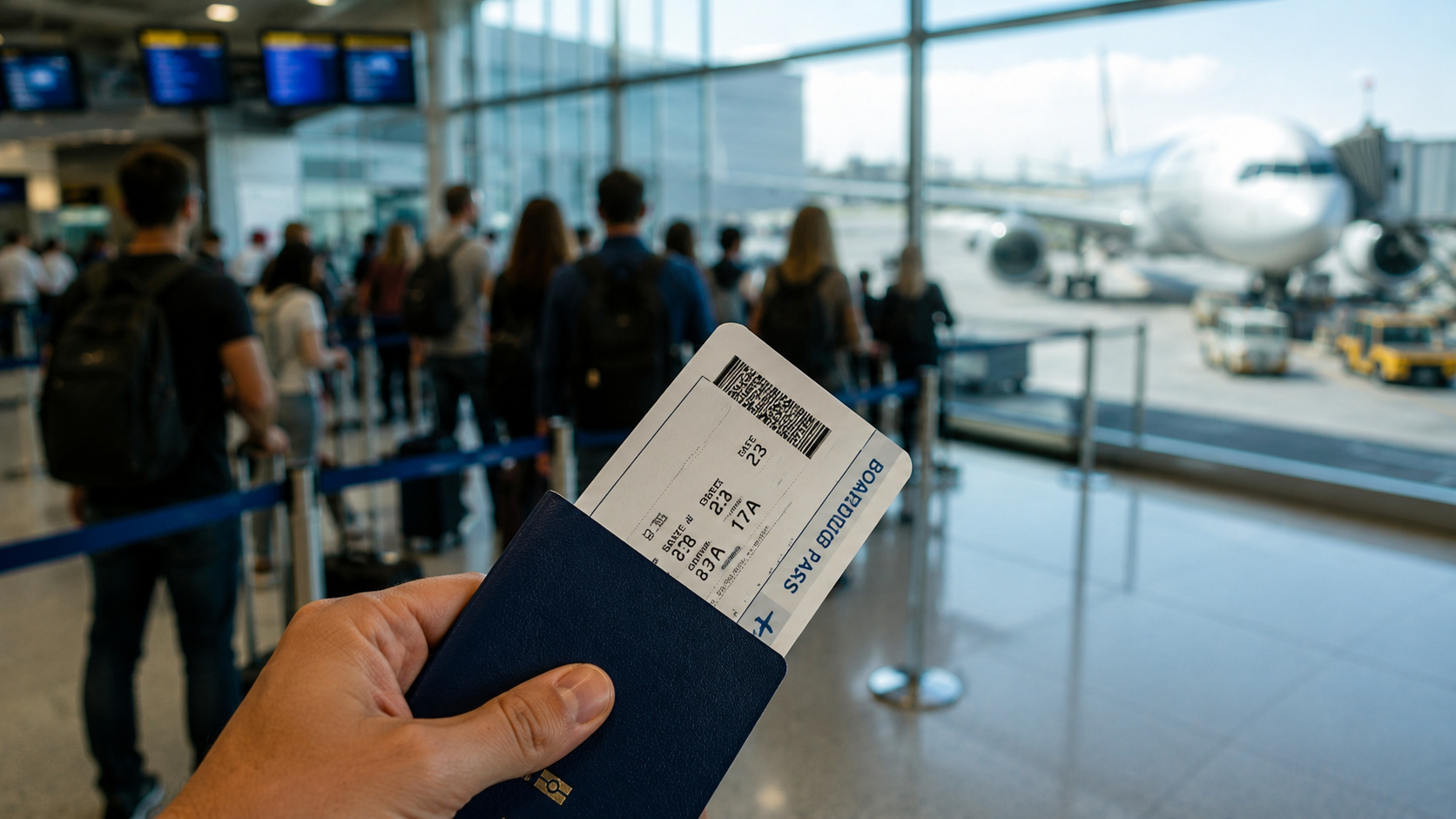
Data from the National Transportation Safety Board (NTSB) shows that the number of airplane accidents in the country has been decreasing over the years, even with the increase in the number of flights.
In January 2025, 52 airplane accidents in the U.S. were recorded, a number lower than that of January 2024 (58) and January 2023 (70).
This data reinforces that, despite popular perception, aviation safety has improved.
Recent Incidents and Public Perception
Some of the accidents that had the greatest impact on public opinion include the collision between a commercial airplane and a military helicopter in Washington, which left 67 dead at the end of January.
Additionally, an accident involving an Azerbaijan Airlines aircraft in Kazakhstan, hit by a Russian missile, also shocked the world.
In Brazil, increased coverage of accidents has also generated unease.
In December 2024, a small aircraft crashed in downtown Gramado (RS), killing 10 people.
In January, an accident in Ubatuba (SP) left one dead and four injured. The following month, another aircraft crashed in Barra Funda, São Paulo, claiming two lives.
These events gained significant attention on social media, with videos and reports that amplified the perception of insecurity.
The Associated Press conducted a survey revealing that many American consumers have come to trust aviation less due to impactful images of accidents shared online.
Aviation Safety: The Reality Behind the Data
The International Civil Aviation Organization (ICAO), which monitors airplane accidents globally, points out that between 2005 and 2023, there has been a clear downward trend in the number of accidents per million takeoffs.
According to David Spiegelhalter, emeritus professor of statistics at the University of Cambridge, “random events tend to cluster, giving the misleading impression of an increase in accident frequency.”
Former air disaster investigator from Finland, Ismo Aaltonen, also emphasizes that the recent sequence of accidents does not indicate a drop in aviation safety but rather an unfortunate coincidence of distinct events.
The Role of Social Media in Risk Perception
The rapid dissemination of information about airplane disasters has been one of the main factors contributing to the feeling of insecurity.
A viral video on TikTok, for example, joked about the idea that accidents increased after the departure of former U.S. Secretary of Transportation Pete Buttigieg.
Additionally, incidents involving the Boeing 737 Max, such as the explosion of a door mid-flight in 2024, also generated significant backlash and boycotts against the manufacturer.
However, experts contend that the increased visibility of these events does not mean that planes are becoming more unsafe.
On the contrary, safety continues to evolve, with thorough investigations and improved training for pilots in increasingly realistic simulators.
Is Traveling by Plane Still Safe?
Despite recent concerns, statistics demonstrate that aviation remains the safest form of transportation.
In 2022, in the United States, over 95% of transportation-related deaths occurred on roads, while less than 1% were linked to commercial flights.
In terms of deaths per distance traveled, there were only 0.001 passenger deaths per 100 million miles flown, compared to 0.54 in passenger vehicles.
In light of this, Aaltonen’s advice is simple: “Be careful on your journey to the airport. That’s the most dangerous part of the trip.”