Portuguese
 Spanish



German multinational opens a 1,300-square-meter facility in São Bernardo do Campo, raises cumulative investment to more than R$63 million, and bets on Brazil’s ability to develop materials for construction, transportation, refrigeration, and home appliances.
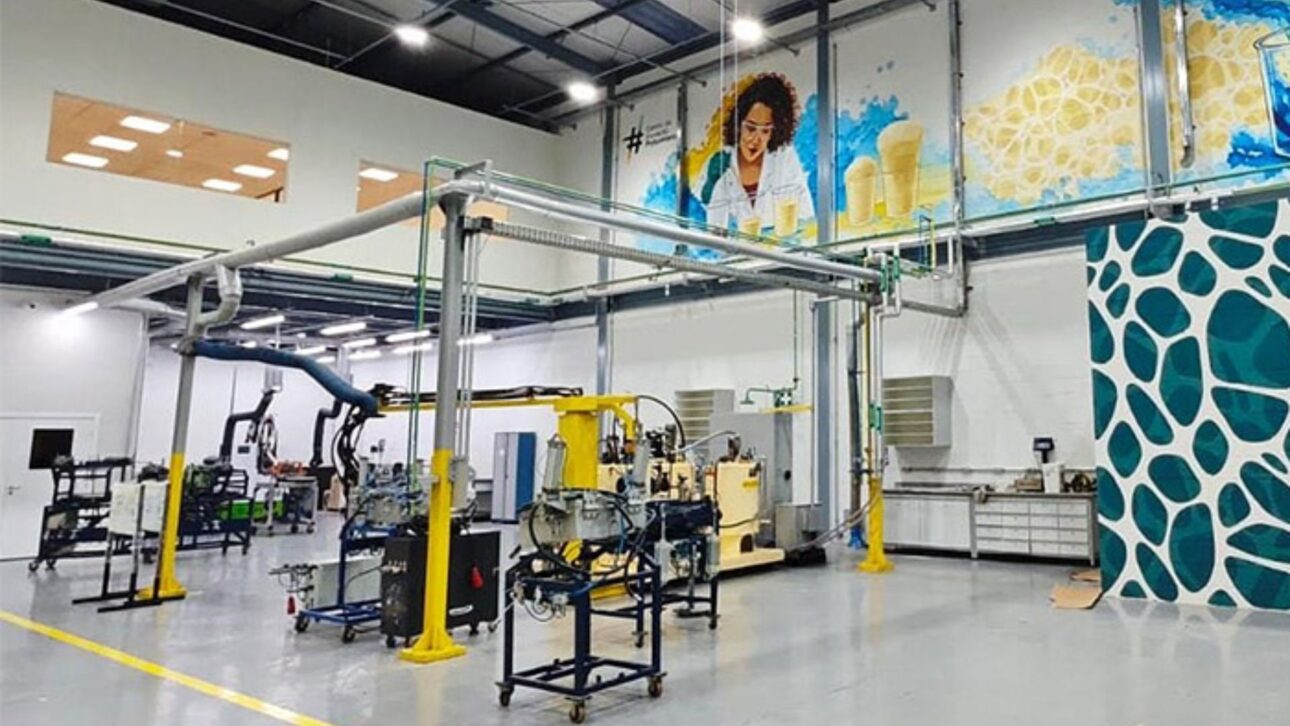
BASF opened an innovation center costing more than R$20 million in São Paulo, turning its industrial complex in São Bernardo do Campo into a strategic base for developing, testing, and adapting polyurethane technologies for the Brazilian market and other countries in South America.
The center opened on November 18, 2026, at the Batistini Industrial Complex. The German multinational invested €3.4 million in the new facility, equivalent to more than R$20 million. It spans approximately 1,300 square meters.
The investment comes as the market is expected to account for about 650,000 metric tons of polyurethane in Latin America in 2026, according to company estimates. Brazil accounts for approximately 70% of South America’s consumption of polyurethane systems, which are used in sectors including construction, refrigeration, automotive manufacturing, footwear, and home appliances.
-
DAF invests R$950 million in Paraná to double truck production capacity by 2029

-
Votorantim Cimentos invests R$330 million in Brazil’s Mato Grosso state, expanding cement output by 60%

-
Neodent Opens R$2 Billion Factory in Curitiba, Expanding Complex to 80,000 m² and Aiming for 15 Million Implants Per Year with Potential 2,000 Jobs by 2031

-
LG’s Paraná Factory Utilizes Robots to Produce a Refrigerator Every 14 Seconds at Maximum Speed


Rather than simply opening a laboratory, BASF is bringing technology development closer to industrial production and to customers that need to adapt materials to Brazilian conditions.
R$20 million center will allow new materials to be developed and tested inside the industrial complex
The new Polyurethane Innovation Center was built within the Batistini facility, where BASF operates industrial units serving a range of production chains.
The facility brings together chemical laboratories, technical application areas, sample preparation spaces, and equipment for physical and mechanical testing.
These resources make it possible to develop formulations, produce samples, evaluate components provided by customers, and assess material performance before large-scale industrial use.
Having the laboratory, industrial operations, and customers close together makes it easier to fine-tune materials based on available raw materials, factory equipment, climate conditions, and the technical requirements of each sector.
According to information released by BASF and republished by the Fator Brasil news portal on November 19, the facility also bolsters the multinational’s strategy of developing solutions close to consumer markets, drawing on the expertise of its global research network.
In practice, a Brazilian company will be able to work with local technical teams to test materials for a specific application, reducing the need to conduct every stage of development at facilities far from the consumer market.
Brazilian plant has received more than R$63 million in investment and is nearing 60 years of operation
The center is part of a broader modernization program at the Batistini Industrial Complex.
In recent years, BASF has directed more than €10 million, equivalent to more than R$63 million, to projects involving production, logistics, operational efficiency, and technology development at the site.
The changes include adding a new stage to the polyamide 6.6 production chain. The engineering material is used in industrial applications that require strength and technical performance.
The project increased the company’s polyamide 6.6 supply capacity for markets served in South America by approximately 15%.
The company has also built a warehouse to bring inventory in-house and reduce its reliance on external logistics facilities.
These investments serve different but complementary functions: production supplies materials, logistics helps ensure supply, and the innovation center develops applications that can increase the products’ technological value.
The Industrial Complex will turn 60 in 2027. The new facility marks another stage in the transformation of a traditional industrial site into an operation that combines manufacturing, research, and specialized technical support.
A 650,000-ton market explains why BASF chose Brazil to expand its technology capabilities
The polyurethane market offers opportunities across industrial sectors with widely differing needs.
In construction, these materials can be used in thermal and acoustic insulation solutions. In refrigeration, they help reduce heat transfer in equipment. The footwear industry uses different formulations in soles, while manufacturers of vehicles, furniture, and household appliances use polyurethane in components for comfort, insulation, and finishing.
BASF estimates that Latin American demand will reach approximately 650,000 tons in 2026, with structural volume growth of about 2% a year.
Brazil’s significance in this market helps explain why São Bernardo do Campo was chosen for the new facility.
The company says Brazil accounts for about 70% of South America’s consumption of polyurethane systems.
The indicators should be distinguished: the 650,000 tons represent estimated demand across Latin America, while Brazil’s 70% share refers specifically to South American consumption of polyurethane systems.
Developing materials close to industrial customers makes it possible to tailor formulations to specific performance, productivity, and efficiency requirements.
For BASF, this capability is especially important in a business where approximately 25% of revenue is tied to products introduced in the past five years, based on the company’s internal portfolio renewal metric.
New facility strengthens Brazil’s chemical industry and expands service to South American markets
With the opening, São Bernardo do Campo is taking on an additional role in BASF’s regional polyurethane development.
The new center was designed to serve demand from different countries in South America, drawing on industrial and technical capabilities based in Brazil.
The company is counting on closer integration among research, manufacturing, and customers to speed up the adaptation of materials to the specific needs of each market.
For Brazilian manufacturers, the main potential benefit is the opportunity to take a more direct part in developing, testing, and validating solutions used on their production lines.
The investment also strengthens the chemical sector’s role as a supplier of materials to other industries. Improvements in thermal insulation, durability, lightness, and component performance can have effects across different manufacturing chains.
The opening marks a new phase for the Batistini Industrial Complex. As the site approaches its 60th anniversary, it is gaining a facility dedicated to regional innovation, while BASF seeks to expand its share of a growing Latin American polyurethane market.