Portuguese
 Spanish


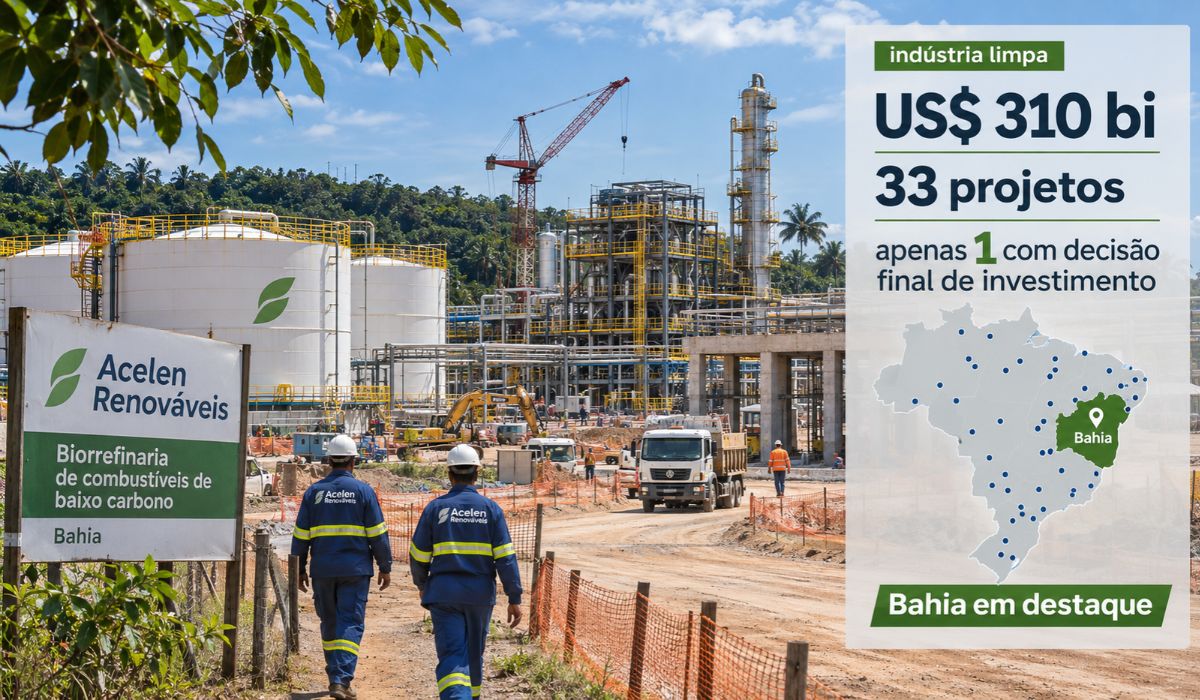

An international survey ranks Brazil fourth in investment potential but finds it difficult to turn projects into factories. Acelen’s biorefinery in Bahia is the Brazilian project that advanced during the period studied.
Brazil has abundant renewable energy, major industrial projects on the drawing board and investment potential that stands out even against the world’s largest economies. But there is a huge difference between planning a billion-dollar factory and securing the money needed to build it.
A survey by the Mission Possible Partnership (MPP), released in November 2026, identified 33 clean-industry projects in Brazil, with potential investments of $310.1 billion. That puts the country fourth worldwide, behind only China, India and Australia.
The contrast emerges when the study examines how many projects have actually advanced. During the 12 months covered by the study, just one Brazilian project in the dataset reached a so-called final investment decision, the stage that marks a commitment of funds to carry out the project.
-
Brazilian Army contracts 100% renewable energy from Cemig for 160 military units across nine states and the Federal District

-
China connects 600-MWh plant to grid, liquefying air at −194 °C to store solar and wind power and generate electricity for 10 hours
-
Neoenergia opens R$60 million funding call for solar power, batteries, and electrical modernization projects in Bahia
-
Brazil to Miss Out on Over 36 Billion kWh of Solar and Wind Energy by 2026 Despite Billions Invested in Renewables


The only new decision recorded during that period was by Acelen Renováveis, which is preparing to build a sustainable-fuels biorefinery in Bahia.
$310 billion in projects show the scale of Brazil’s opportunity
The survey is part of the Global Project Tracker, an international platform that tracks low-carbon industrial projects at different stages of development.
In Brazil, most of the projected investment is tied to renewable-energy infrastructure. That amounts to $221.4 billion, while another $88.6 billion is associated with the industrial assets themselves.
The breakdown is striking because it shows that industrial transformation depends on more than building factories. Many of these projects need large amounts of clean electricity to operate, as well as transmission systems and other supporting infrastructure.
Of the 33 projects identified, 24 are related to clean ammonia production, four to low-carbon methanol and two to sustainable aviation fuel, commonly known as SAF.
The list also includes three low-carbon aluminum facilities already in operation. This means the portfolio is not made up exclusively of future factories: it also includes existing facilities deemed to meet the survey’s criteria.
The prominence of ammonia is particularly significant. In addition to being used to make fertilizers, it can serve as a way to transport hydrogen produced with renewable electricity.
This process requires a complex industrial supply chain, beginning with access to clean energy and extending through equipment, chemical processing, storage and transportation.
Why did only one project reach a final investment decision?
Understanding Brazil’s results requires knowing about a decisive stage in the life of any large-scale industrial project.
A final investment decision, known internationally by the acronym FID, is made when those responsible approve a project’s execution and commit the financing needed to build it.
Before that point, a company may announce a factory, select a site, develop the engineering plans and seek permits. Even after all that progress, the project may still struggle to secure financing and break ground.
In the Brazilian segment of the MPP, 29 projects had been announced and were at various stages of development, three aluminum facilities were already operating, and only Acelen’s biorefinery recorded a new final investment decision during the 12 months analyzed.
That does not mean no other Brazilian companies approved clean energy investments during that period. The research tracks a specific set of industrial projects, using its own inclusion criteria.
The contrast is also evident internationally. According to the MPP, 36 clean industry projects worldwide reached a final investment decision during the same 12 months.
China accounted for 23 of those decisions, demonstrating a faster pace in turning projects into committed investments.
The organization says expansion depends on conditions that allow companies to secure buyers for new products and generate enough revenue to justify long-term investments.
Acelen’s biorefinery in Bahia was the only Brazilian project to advance in the survey
The project is located in São Francisco do Conde, in the Recôncavo Baiano region, near the Mataripe Refinery.
In May 2026, Acelen Renováveis, a company affiliated with Mubadala Capital, announced a financing structure of US$1.5 billion to begin construction of the biorefinery.
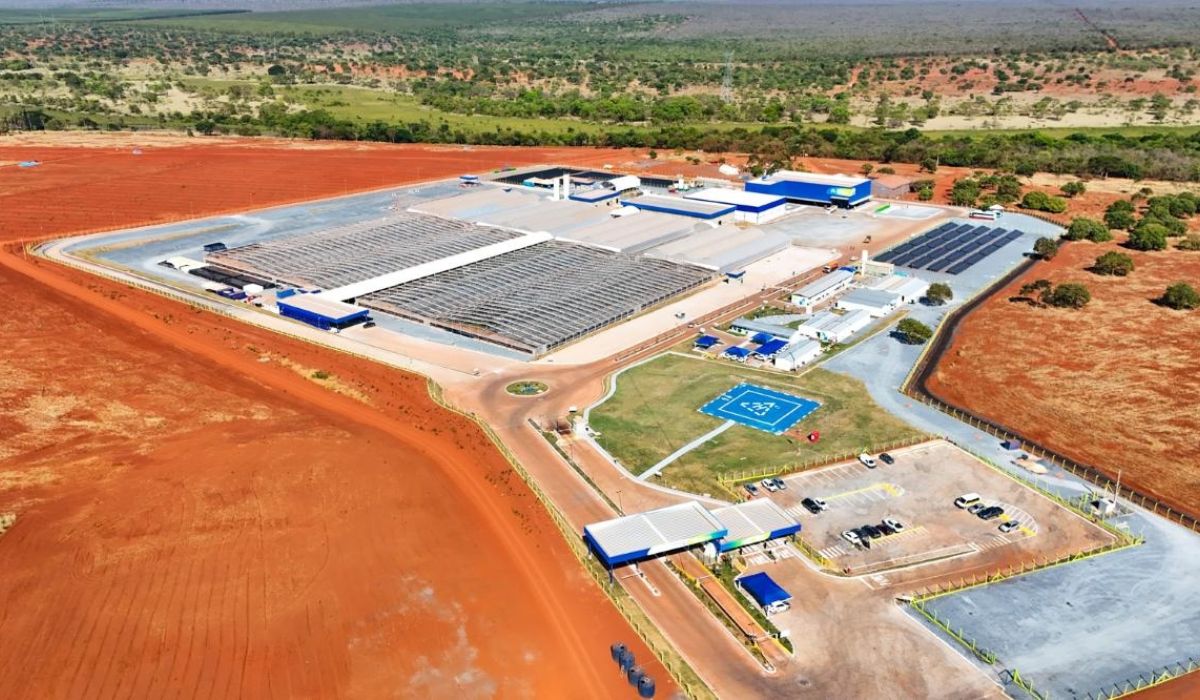
The industrial project has a total estimated investment of R$7 billion, according to BNDES, which approved R$503.04 million in financing for the facility. The plant is part of a broader agroindustrial initiative with more than US$3 billion in planned investments.
The planned plant is designed to produce up to 1 billion liters a year of sustainable aviation fuel (SAF) and renewable diesel (HVO), combined. It is scheduled to begin operations in 2029.
The project uses oil- and fat-processing technology to produce renewable fuels. Initially, operations could use feedstocks such as soybean oil and used cooking oil.
Macauba, a palm native to Brazil, is also part of the feedstock strategy. To develop this supply chain, Acelen opened Agripark in 2025, an agroindustrial innovation center in Montes Claros, Minas Gerais.
Another important factor in securing financing was the advance sale of future production. By May 2026, about 90% of expected biofuel sales had already been arranged and contracted.
This combination of financing, established technology and commercial agreements helps explain why the project reached a stage that remains out of reach for other projects in the survey.
Abundant renewable energy does not guarantee factories will be built
Brazil’s advantage lies in its natural resources and its ability to generate electricity from renewable sources. This could benefit industries that need large amounts of energy to produce fuels, fertilizers and industrial feedstocks.
However, a low-carbon ammonia or methanol plant needs more than available energy. It also needs secure supply contracts, access to infrastructure, technology, financing and buyers willing to purchase its output.
In many cases, lower-emission products still cost more than conventional alternatives. Without certainty about prices and demand, investors may delay decisions even after conducting studies and announcing multibillion-dollar projects.
Policies that support markets for clean products, long-term purchase agreements and financing mechanisms are essential to accelerating this transformation.
Sustainable aviation fuel (SAF) illustrates this trend. About one-third of final investment decisions recorded worldwide over the past 12 months were related to SAF.
In Brazil, Acelen moved forward with financial and commercial commitments already in place. The other Brazilian projects tracked in the survey still need to clear development and financing hurdles before their announced capacities can become new industrial facilities.