Portuguese
 Spanish


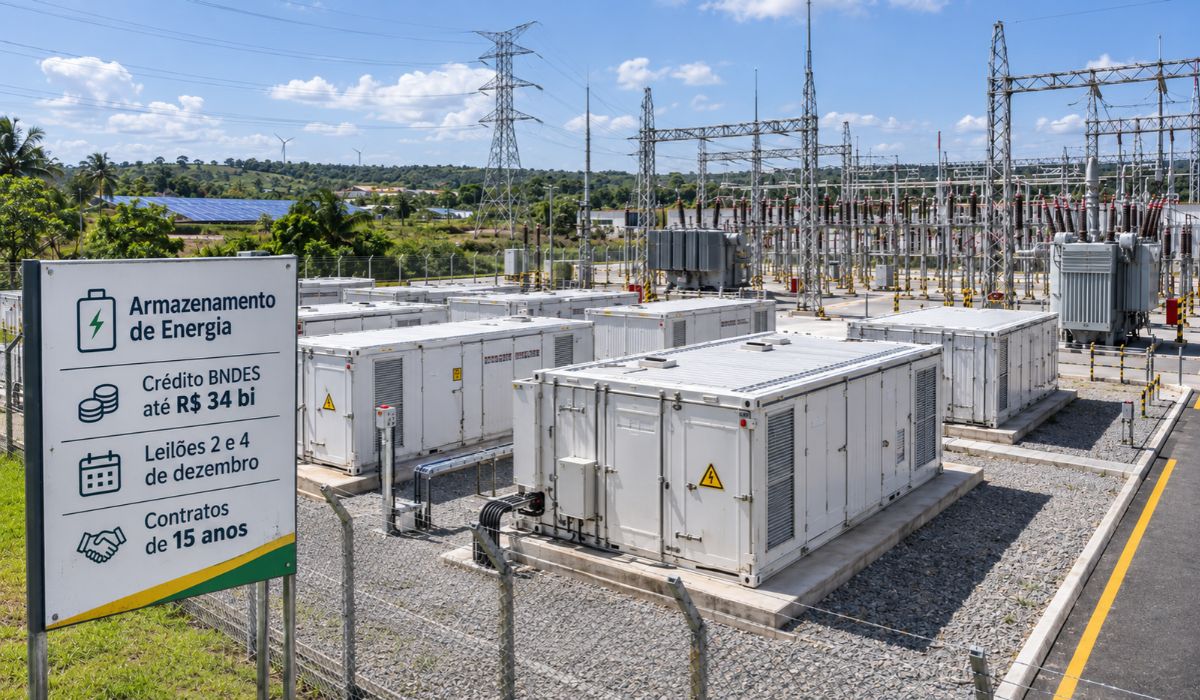

The bank is considering Climate Fund and More Innovation financing to fund storage projects. Auctions on December 2 and 4 will have different rules for domestic equipment and 15-year contracts.
Imagine large batteries that can store electricity during the day and feed it back into the grid when millions of Brazilians arrive home and demand rises. The technology, already gaining ground in other countries, is about to enter a new phase in Brazil.
Brazil’s National Bank for Economic and Social Development (BNDES) estimates that up to R$34 billion in subsidized credit could be mobilized to finance battery energy storage projects. The move comes just ahead of Brazil’s first auctions dedicated to contracting these systems, scheduled for December 2 and 4, 2026.
The effort goes beyond installing equipment. The government also aims to foster a domestic industrial supply chain capable of manufacturing and integrating storage systems, as companies compete for a foothold in a market that could change how the country uses its renewable energy sources.
-
USP and York model silicon structure with reduced surface area and similar optical properties to black silicon used in solar research

-
Solar window tested by Brazil’s Federal University of Paraíba generated over 90 watts under high irradiance, combining power generation with heat control on a building facade
-
Mexican Miner Secures 20-Year Solar Power Deal for 269-MWp Project with Battery Storage, Supply Starting in 2029
-
Wind energy association challenges in Brazil’s Supreme Court over battery cost rule ahead of December auctions

But the funding has not yet been secured, and a dispute over who should pay for the battery contracts has created uncertainty ahead of the auctions.
How large-scale batteries could transform the use of solar and wind power
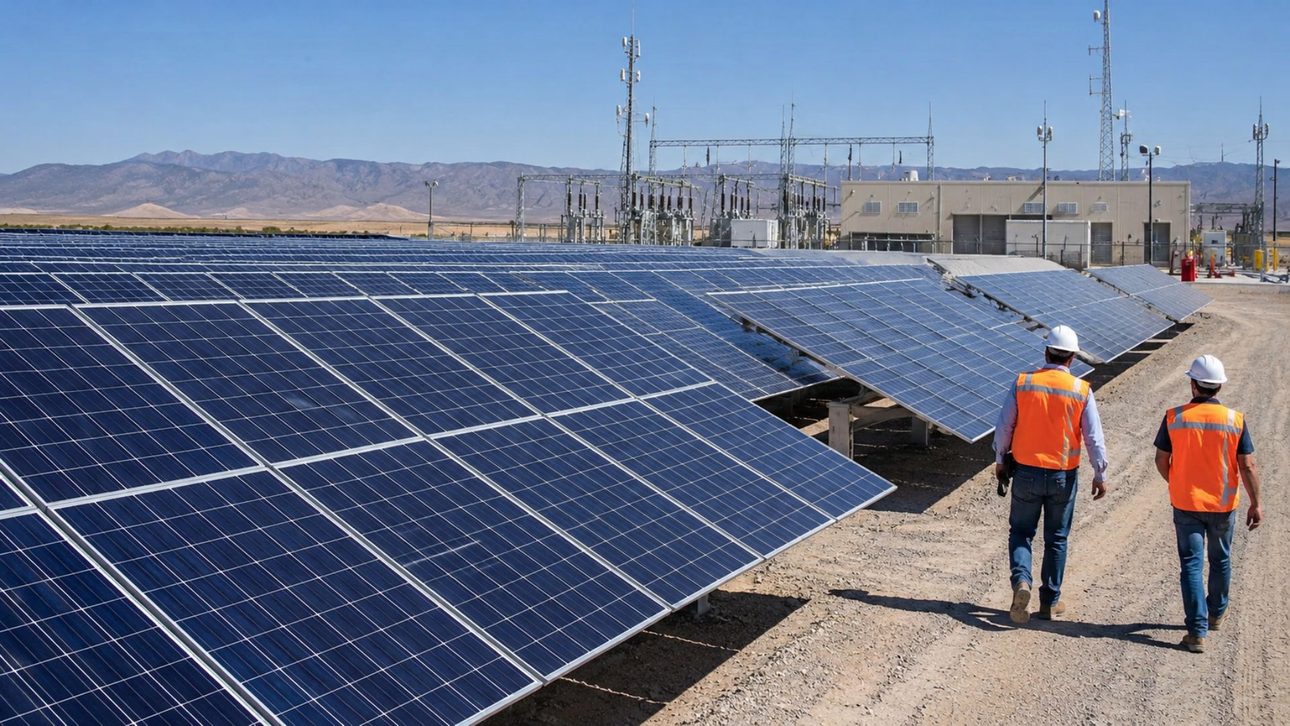
Brazil faces an unusual situation: at certain times, solar and wind plants must reduce output even when natural conditions are favorable for generating electricity.
That is because the power system must continuously balance supply and demand. When there is excess available electricity or constraints on the grid, Brazil’s National Electric System Operator (ONS) can order generation curtailments.
Large-scale batteries are one option for addressing this challenge. Known by the acronym BESS, for Battery Energy Storage System, these systems store electricity and can feed it back into the grid when it is most needed.
Unlike a home battery, these installations use groups of modules, generally arranged in large containers connected to the power grid.
The goal is to make better use of available energy and provide power when the system needs it most. That does not mean batteries will eliminate all generation curtailments, since the outcome depends on their location, capacity and operating conditions.
The technology is not entirely new in Brazil. In Registro, in the state of São Paulo, ISA Energia Brasil already operates a system with 30 megawatts (MW) of power capacity and the ability to store 60 megawatt-hours (MWh) of electricity.
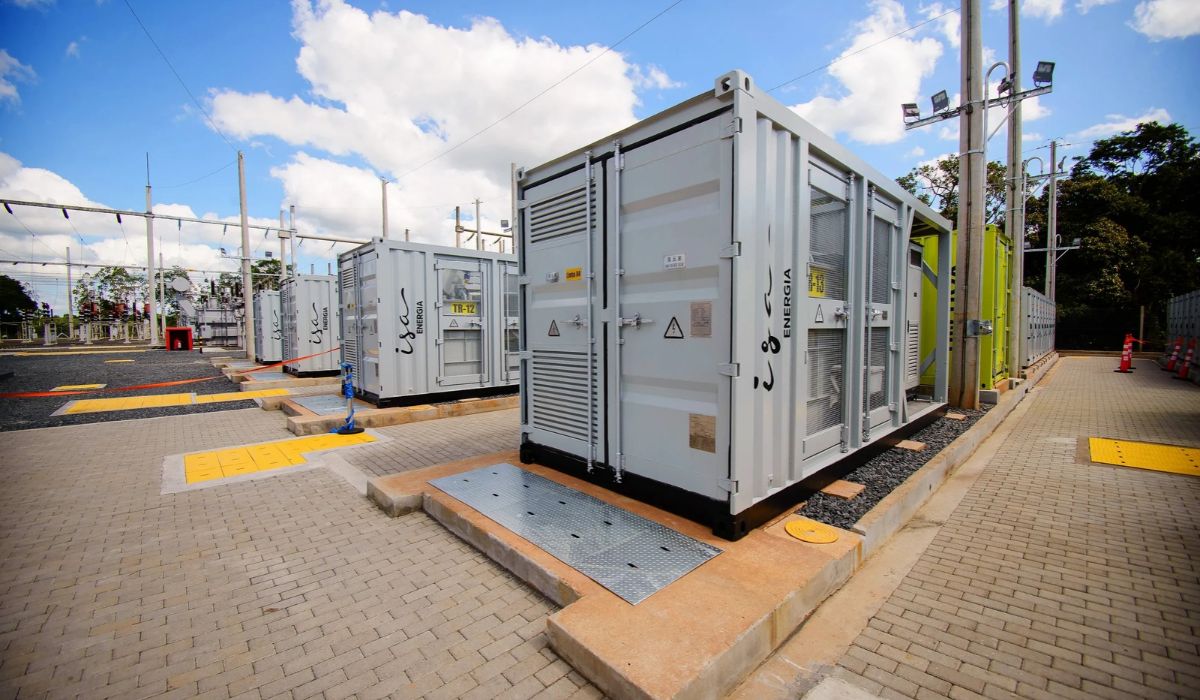
Opened in 2023, the project helps strengthen electricity supply to the southern coast of São Paulo state, providing power for two hours during peak demand.
Where will the R$34 billion projected by BNDES come from?
The multibillion-real figure was presented in September 2026 by Alexandre Siciliano Esposito, head of the energy transition and climate department at BNDES, Brazil’s development bank, during an industry event in São Paulo.
The executive said the bank is working with a preliminary estimate of up to R$34 billion in subsidized financing to support storage projects. The main sources under consideration are the Climate Fund and the BNDES Mais Inovação program.
These financing programs offer specific terms, including funding at costs below those typically found in conventional market transactions.
There is, however, an important difference between estimating the credit required and having all that money available. The amount depends on discussions over the 2027 budget, the capacity of the programs and the assessment of projects seeking financing.
The bank itself acknowledges that subsidized financing will need to be combined with other sources of capital, including loans at market rates.
In practice, the R$34 billion does not represent funding already approved for battery construction. It is a projection of credit that could be mobilized, subject to adjustment based on demand and financial conditions.
For investors, financing is one of the decisive factors. Large storage systems require substantial outlays before they begin operating, and credit terms directly affect project viability.
Two December auctions will have different rules and 15-year contracts
Brazil’s electricity regulator, the National Electric Energy Agency (ANEEL), approved the rules for Brazil’s first two capacity reserve auctions dedicated exclusively to new battery storage systems on October 27.
The first, scheduled for December 2, 2026, will be open to projects that meet specific domestic-content requirements for equipment. The auction aims to encourage Brazilian industry to participate in manufacturing and integrating these systems.
The second auction, scheduled for December 4, will not have the same domestic manufacturing requirement, allowing projects with equipment from different countries to participate.
Winners will have to make power capacity available to the electricity system starting August 1, 2028, under contracts lasting 15 years.
One notable feature is that these projects will not be paid simply for the amount of electricity stored. The model provides fixed revenue for the availability of contracted power capacity, subject to adjustments based on operating performance.
The systems must be able to deliver their maximum contracted power capacity for four hours per cycle and meet technical requirements for recharging and operation.
The ability to respond quickly to grid needs is what makes batteries attractive for a country where solar and wind generation continues to grow.
Brazilian industry steps up investment as legal dispute puts pressure on auctions
The prospect of contracts is already spurring activity among domestic manufacturers. One example is WEG, which is expanding its battery storage systems factory project in Itajaí, Santa Catarina.
In February 2026, the BNDES , Brazil’s development bank, approved R$280 million in financing for the industrial facility. Later, in September, WEG announced an expansion of the project, raising the planned total investment to R$330 million.
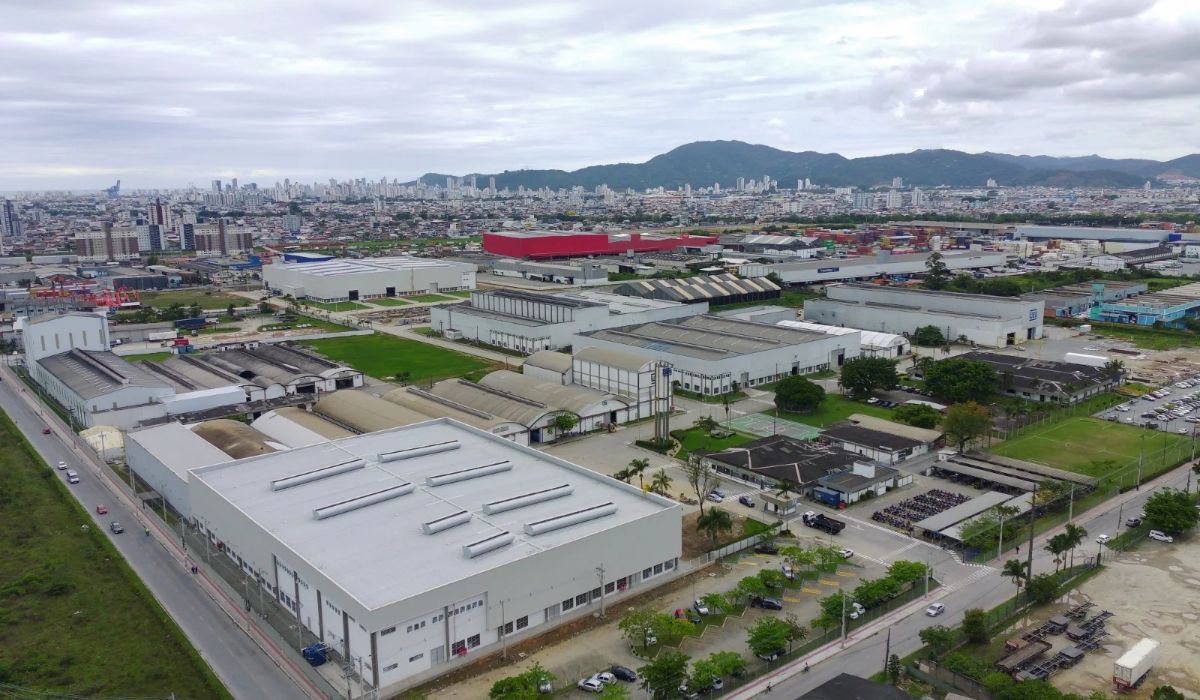
With the update, the facility is expected to reach annual production capacity of up to 4 gigawatt-hours (GWh), with operations scheduled to begin in the second half of 2027.
The move shows how the expansion of energy storage could also create opportunities for Brazil’s electrical equipment, automation and systems integration industries.
However, the auctions still face a roadblock. The Brazilian Wind Energy and New Technologies Association (Abeeólica) has filed a lawsuit challenging the rule that assigns the cost of contracting batteries to power generators.
The association disputes the cost-sharing model and is seeking to suspend the auctions until the issue is resolved. The Brazilian Energy Storage Solutions Association (Absae) also supports changes to the rule, but opposes postponing the auctions.
As of the latest official update available, the auctions are still scheduled for December 2 and 4, 2026.
The bidding rounds are expected to determine which projects can provide storage capacity to Brazil’s power system, while financing for each project will depend on its financial structure, BNDES terms and the other investors involved.