Portuguese
 Spanish


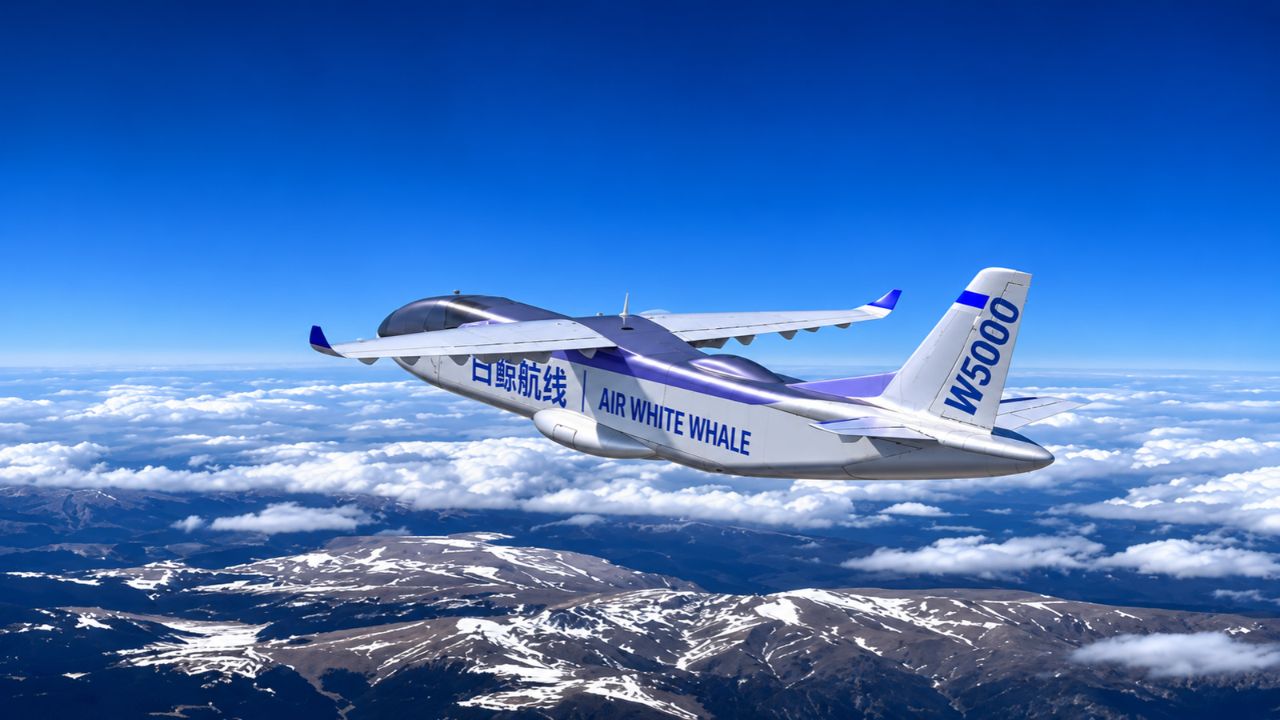

W5000 cargo plane completes test flight in China without pilots on board. What to know about its payload capacity, autonomous systems and plans for 2027.
A cargo plane designed to fly without pilots on board underwent a test flight in northern China on November 14, 2026. The W5000, built by Air White Whale, took off in the Inner Mongolia Autonomous Region and remained airborne for about 30 minutes. The goal was to check whether propulsion, flight controls and communications systems work well together. The company describes it as the world’s largest uncrewed cargo plane, with a payload capacity of up to five metric tons and a stated range of up to 2,600 kilometers.
Lightweight materials and ground control shape the Chinese cargo plane’s design
For its planned logistics routes, the W5000 combines cargo space with operation without an onboard crew. Its cargo compartment has more than 65 cubic meters of usable volume, and about 65% of the airframe is made of carbon-fiber composites, which reduce weight without sacrificing strength. A lighter aircraft leaves more of its takeoff weight available for cargo.
The information released says the aircraft’s 220,000 components come from Chinese manufacturers, including its avionics, flight controls and propulsion systems. Its engine is a turboprop developed in China.
-
MIT scientists build flying microrobot capable of precise landing on sunflowers, potentially aiding future crop pollination

-
German engineers create a concrete-free wood-and-granite bridge lasting up to five times longer than traditional wooden bridges
-
Columbia astronomer Viraj Karambelkar and his team watched a star 350 times wider than the Sun swallow its smaller partner in the Andromeda galaxy, and NASA’s Webb caught the aftermath just 47 days after the blast peaked.

-
Brazilian University Installs Giant 3D Printers Up to 9 Meters Long for Construction of Walls in 45 m² Homes





Instead of carrying pilots, the cargo plane flies using its own systems while ground teams monitor and control it. Its proposed uses include delivering supplies during emergencies, transporting refrigerated cargo, moving freight between regions and distributing goods along regional routes.
The manufacturer also projects lower operating costs, though that remains an estimate. Air White Whale says logistics costs per tonne-kilometer could be more than 60% lower than those of comparable crewed cargo planes. The estimate factors in the absence of a crew and cockpit equipment, as well as the possibility of lower fuel consumption thanks to the lightweight airframe.
30-minute flight tested integration of W5000 systems
One challenge for an aircraft of this size is getting equipment from different manufacturers to work together. The flight in Inner Mongolia was therefore intended to assess how the main systems performed as a whole, not just how each component worked on its own.
On November 14, the W5000 traveled about 600 meters along the runway before taking off, climbed to an altitude of 2,000 meters, remained in the air for roughly half an hour and returned for a safe landing. During the flight, the team tested autonomous flight functions, data-link communications, and the interaction among the avionics, flight controls, propulsion, and ground-based measurement and control systems.
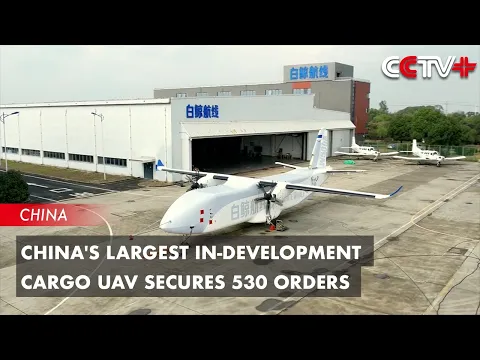

Ground monitoring is part of the operating concept, but the test had a narrower objective: to see how the main capabilities work together during an actual flight. The test ended with a safe landing, but that alone does not prove the projected cost savings for future operations.
On the commercial side, Air White Whale is said to have received 835 letters of intent for the W5000, including from Chinese logistics companies. They indicate interest in the project, but are not firm orders. The company expects to begin commercial operations by the end of 2027, and the aircraft remains in development.