





 Portuguese
 Spanish


Brazilian pig iron producers have gone more than a month without closing any new sales to the United States, Steel Market Update reported Friday, November 20, 2026. The latest shipments, for December delivery, were negotiated in mid-October at about US$454 per metric ton FOB.
Brazilian pig iron producers have gone more than a month without closing any new sales to the United States. The situation was described Friday, November 20, 2026.
The report came from U.S. publication Steel Market Update (SMU), in an analysis by Stephen Miller. He has worked in the scrap trade since 1978 and founded Ferrosource, a U.S. pig iron distributor.
The report said the product’s import market was virtually inactive over the past month. Contacts in Brazil also reported no new deals with U.S. buyers during that period.
-
Ford to halt Ranger production in Argentina from Dec. 4 to Feb. 1 due to weak demand in Brazil and Argentina, with Brazil among the top buyers

-
CMPC completes $670 million upgrade at Guaíba pulp mill in Rio Grande do Sul, boosting Line 2 by 350,000 metric tons annually and reducing Line 1 costs by 21%
-
Vallourec scales back Pau Branco mine expansion in Minas Gerais after finding lower-grade ore than expected, as the group’s iron ore sales fall 28% in the quarter
-
OECD shows Brazil and five other Latin American countries increased steel imports by 47% since 2019, reaching 55.4 million tons, with China accounting for 39% and regional mills operating at only 60% capacity


Latest sale was made in mid-October at US$454 per metric ton
SMU contacted one of Brazil’s largest pig iron sales channels. The response was that no new sales to the United States had been made since mid-October.
At the time, U.S. buyers booked shipments for December. The price was about US$454 per metric ton FOB, with the goods loaded onto the vessel and freight excluded.
SMU had already published that price Thursday, October 29, 2026. The analysis covered changes in the U.S. pig iron import market.
Repeated inquiries to Brazilian contacts about new deals yielded no record of any sales.
This is the second time in just over a month that the publication has described trade between the two countries as stalled.
Why the lack of U.S. buying weighs on Brazil
The United States’ importance explains the impact on Brazil. In April 2026, U.S. buyers purchased 97% of all the pig iron exported by the country.
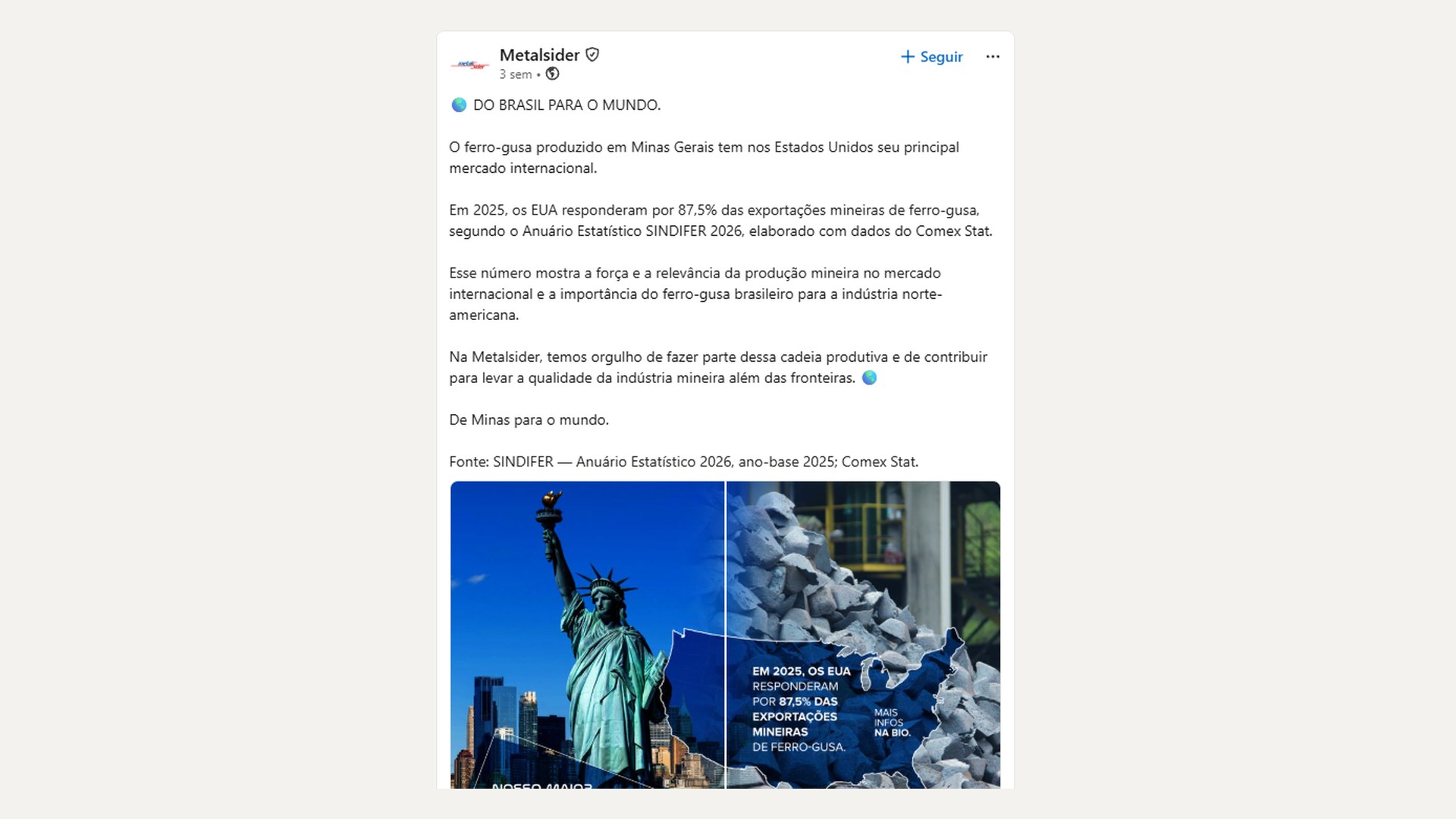
The figure comes from price reporting agency Argus, in a report by Pedro Consoli published Friday, May 8, 2026. There were no shipments to Europe that month.
Brazil exported about 267,155 metric tons of pig iron in April, down 27% from about 367,165 metric tons in April 2025. The figures are from the same Argus report.
The Turkish site SteelOrbis detailed the destinations using data from Brazil’s Foreign Trade Secretariat (Secex). In April, 259,100 metric tons went to the United States at $428 per metric ton FOB.
Asia received 5,100 metric tons at $510 per metric ton. Argentina bought 3,000 metric tons at $393 per metric ton. The report was written by Luiz Compagnoni and published Tuesday, May 12, 2026.
Minas Gerais and Espírito Santo account for most shipments
Secex data show where Brazilian pig iron ships from. In April, producers in Minas Gerais and Espírito Santo shipped 221,100 metric tons.
Producers in Mato Grosso do Sul shipped 46,100 metric tons in the same month. These are the states that depend on U.S. buyers to sell the product abroad.
The Minas Gerais industry’s concerns about U.S. tariffs were the subject of this Times Brasil video in June 2026:


The reference price for the shipments is also quoted at Brazilian ports. SMU cites FOB prices for Rio and Vitória, meaning the pig iron is loaded onto a vessel at the ports of Rio and Vitória.
Volumes were higher in the previous months. Secex figures show that Brazil exported 407,700 metric tons in January, 377,800 metric tons in February and 287,000 metric tons in March 2026.
How the United States uses Brazilian pig iron
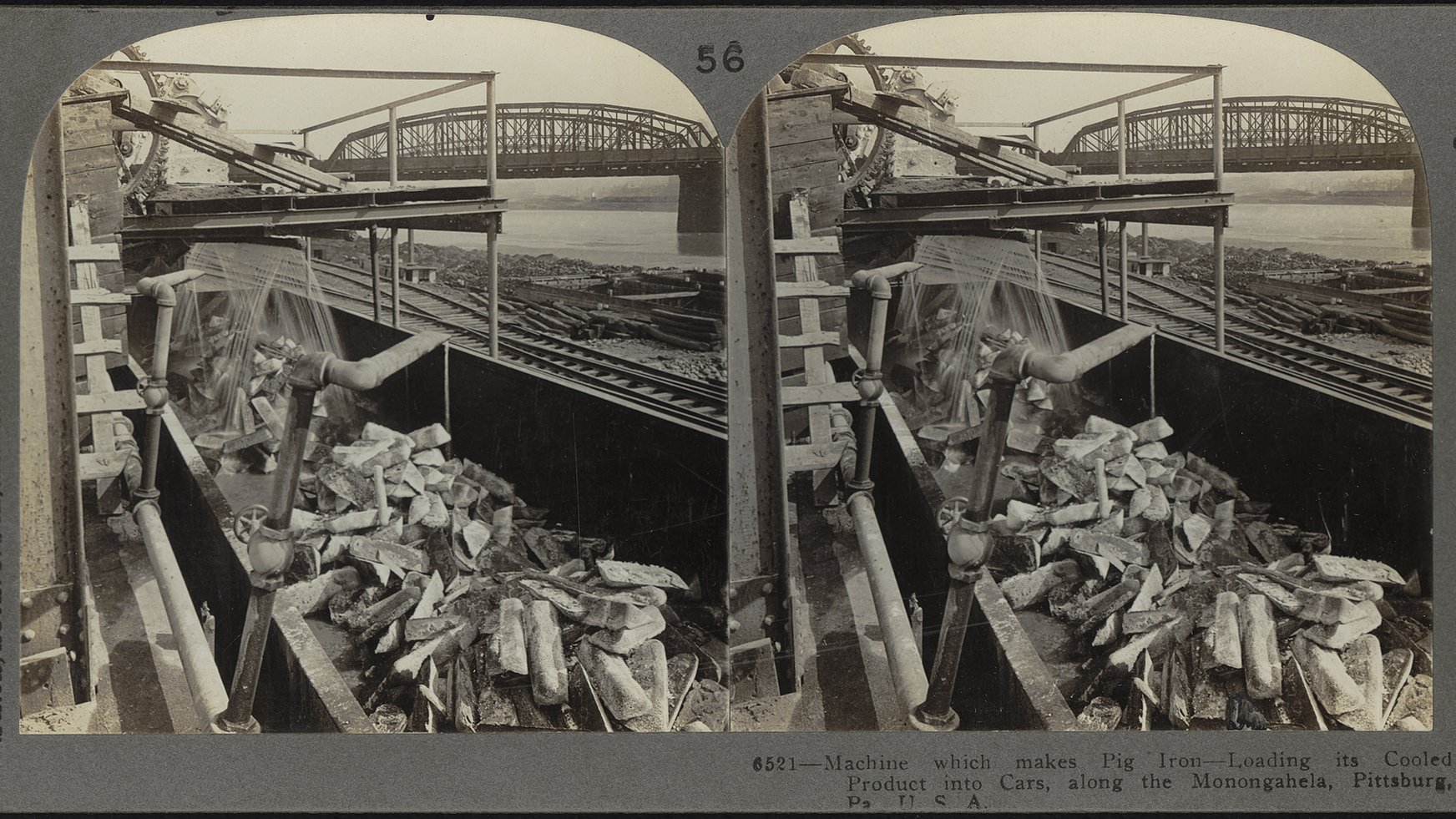
Pig iron is a raw material for electric arc furnace steel mills and foundries. In the United States, more than 95% of the pig iron produced in the country is consumed by domestic integrated steelmakers.
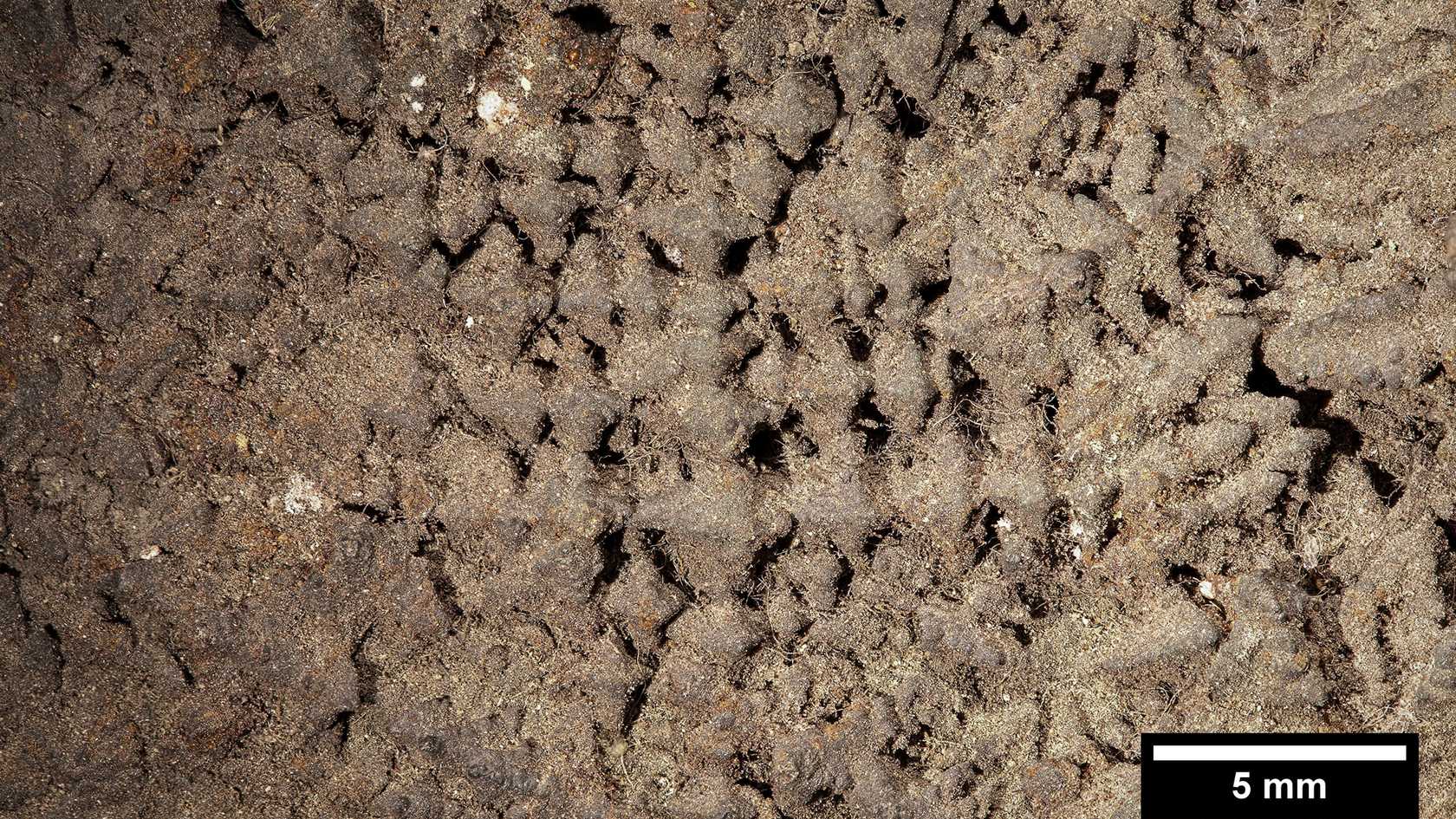
The information comes from the Office of the U.S. Trade Representative (USTR), cited by SteelOrbis on July 16, 2026. As a result, foundries and electric steel mills rely on imported pig iron.
Alternative supplies are limited. China consumes nearly all of its output, while the war has reduced exports from Russia and Ukraine, the same report said.
Brazil accounted for 63.5% of U.S. imports of basic pig iron from January 2025 through March 2026, supplying 4.14 million metric tons.
The figure comes from another Argus report, published June 4, 2026.
Sales take about two months to become shipments
Argus explains a detail of the trade: pig iron is typically shipped about two months after it is sold. So cargoes exported in April were generally sold in February.
In February, three factors slowed business: weaker demand in the United States, Carnival and uncertainty over tariffs. Some U.S. buyers left the market during the first two weeks of the month.
They had stocked up on purchases made in December and January. Brazilian sellers then slowed their pace during Carnival, with about five consecutive days off.
In late February, U.S. President Donald Trump said he was considering raising the 10% general tariff by 5 percentage points. Sellers hesitated to close deals until the rules became clearer.
Estadão had reported in July 2025 that U.S. importers had suspended shipments of pig iron:
Tariff on Brazilian pig iron was cut in July
In June, Argus flagged the risk of a tariff of up to 37.5% on basic pig iron from Brazil. The total included 25% from one trade investigation and 12.5% from another, related to forced labor.
Pig iron was not included on the exemption lists published by the Office of the U.S. Trade Representative (USTR) on June 1 and 2.
S&P Global discussed the risk of tariffs on Brazilian pig iron in this post on July 1, 2026:
At the time, pig iron delivered to New Orleans was priced at $510 to $520 per ton, according to Argus’s assessment.
The final decision came in July. The USTR imposed an additional 25% tariff on Brazilian products starting Wednesday, July 22, 2026.
In the same decision, the agency expanded the list of exemptions. Pig iron and scrap were excluded from the new tariff.
98 News discussed pig iron’s exclusion from the new tariff in this video:

SMU reported that tariffs on pig iron were removed in late July 2026.
Pig iron prices fell after exemption
The exemption did not lead to higher prices. In late July, Brazilian pig iron was valued at $500 per ton FOB Rio and Vitória, or $530 delivered to New Orleans.
In August, the price fell to US$460 per metric ton FOB.
The price fell again in September, according to SMU, in an analysis dated Friday, September 25, 2026. Sources in Brazil said the market may have hit bottom.
In early September, a cargo for the United States scheduled for October shipment was agreed at US$445 per metric ton FOB Rio and Vitória.
An earlier cargo was sold to the European Union at US$450 per metric ton FOB.
December cargoes followed in mid-October, at about US$454 per metric ton FOB. Since then, no further sale to the United States has been recorded.
India competes for the American buyer
Indian pig iron entered the competition. On August 16, 2026, SMU reported that Indian product was arriving in the United States at prices well below Brazilian levels.
The arrival of these cargoes brought uncertainty to the U.S. pig iron market.
Sources consulted by the publication disagreed about the size of the price gap. Indian imports continued in September.
By October 16, 2026, SMU was describing trade between Brazil and the United States as weak.
Many in the industry expected more deals after the International Iron Metallics Association (IIMA) meeting in Chicago in early October.
That did not happen. One explanation cited was that U.S. buyers and sellers took longer than usual to negotiate the price of October scrap purchases.
What Brazilian producers are watching now
The outlook for Brazilian pig iron comes down to three factors. The main buyer has been out of the market for more than a month, Indian competition remains, and prices are below July levels.
The December cargoes already negotiated are proceeding according to the shipping schedule. As of Friday, November 20, SMU still had no record of any new sale from Brazil to the United States.


