Portuguese


Ford will halt production of the Ranger at its plant in General Pacheco, Argentina, from Dec. 4, 2026, to Feb. 1, 2027. About 70% of the pickups are exported, and Brazil is one of the main buyers. Weak demand in both countries has filled inventories.
Ford will halt production at its General Pacheco plant in Buenos Aires province from Dec. 4, 2026, to Feb. 1, 2027. The Argentine facility produces only the Ranger pickup truck.
The shutdown was communicated to suppliers and reported by Horacio Alonso of the Argentine website iProfesional. The report is dated Saturday, Nov. 21, 2026.
The Somos Jujuy news outlet published its report on Friday, Nov. 20, with export figures for Brazil.
-
CMPC completes $670 million upgrade at Guaíba pulp mill in Rio Grande do Sul, boosting Line 2 by 350,000 metric tons annually and reducing Line 1 costs by 21%

-
Vallourec scales back Pau Branco mine expansion in Minas Gerais after finding lower-grade ore than expected, as the group’s iron ore sales fall 28% in the quarter
-
OECD shows Brazil and five other Latin American countries increased steel imports by 47% since 2019, reaching 55.4 million tons, with China accounting for 39% and regional mills operating at only 60% capacity
-
Brazilian Meat Industry Opens R$40 Million Plant in Santa Catarina, Processing 120 Metric Tons Daily into Animal Feed and Biofuel Ingredients


The period includes a companywide vacation shutdown and is also intended to reduce inventories. Ford had already slowed the line in October, from about 380 to 315 units per day.
Brazil is central to the decision. About 70% of the Rangers built in Pacheco are exported, and the Brazilian market is one of the main buyers.
Lower-than-expected demand in Brazil and Argentina is cited as the reason for the shutdown. The company is also facing difficulty sustaining the pace of exports.
Eight weeks without production in Pacheco
The shutdown will last about eight weeks. Under the schedule communicated to suppliers, part of the period will be workers’ vacation, while the rest will involve reduced activity to bring inventories into balance.
Somos Jujuy reports that the move does not mean the plant is closing permanently. The shutdown is scheduled to end on Feb. 1, 2027.
The main reason is excess inventory. iProfesional attributes the buildup to a weaker Argentine market and less momentum in exports.
Production line had already slowed in October
The December shutdown follows an earlier adjustment. Since October, the plant has been producing about 315 pickups a day, down from roughly 380. Somos Jujuy puts the decline at about 17%.
The reduction was announced in July. On July 30, 2026, the Argentine website Elonce reported that Ford would slow Ranger production starting in October.
The reason cited was the same as now: falling demand in Argentina and Brazil, which increased inventories in both markets.
At the time, the automaker said it wanted to adjust daily production to match demand levels in the region. Industry sources interviewed by Elonce estimated the cut at about 17%.
The move contrasts with 2025, when the Pacheco plant ramped up its production line twice, by 15% each time. The plan called for annual capacity of about 80,000 units in 2026.
Cadena 3 Argentina showed the growth of the Pacheco plant with the new Ranger in this video:


The growth had been accompanied by hiring at the plant. In July, Ford did not say whether it would suspend operations or lay off workers if demand failed to recover.
Argentina’s auto market as a whole also contracted. National vehicle production fell 18.3% in the first half of 2026, and several models were discontinued during the period, according to Brazilian website A Crítica.
Why Brazil matters so much to the Argentine plant
Ford closed its factories in Brazil and concentrated its industrial production in South America in Argentina, iProfesional notes. Pacheco once built the Focus. Today, it makes only the Ranger.
Argentina’s Telefe TV station told the story of the Pacheco plant’s 65 years in this video:

Much of the pickup truck’s output goes to Brazil, according to Elonce. As a result, the performance of the Brazilian market directly affects the plant’s production pace.
Brazil is also the top export destination for several automakers with factories in Argentina, Somos Jujuy reports. iProfesional cites Ford, Toyota and Volkswagen.
A decline in sales to Brazil, iProfesional sums up, has a direct impact on Argentine factories.
Since the launch of the new generation, the pickup truck’s share of the South American market has nearly doubled, the automaker says. In 2025, the model marked 30 years on the South American market.
What the Ranger shutdown means for Brazil
For the Brazilian market, the decision means eight weeks without Ranger assembly at a factory whose key destinations include Brazil. Demand in Brazil, like demand in Argentina, fell short of expectations.
The exchange rate is a factor. The real’s depreciation makes vehicles built in Argentina more expensive and less competitive in Brazil, the two Argentine reports say.
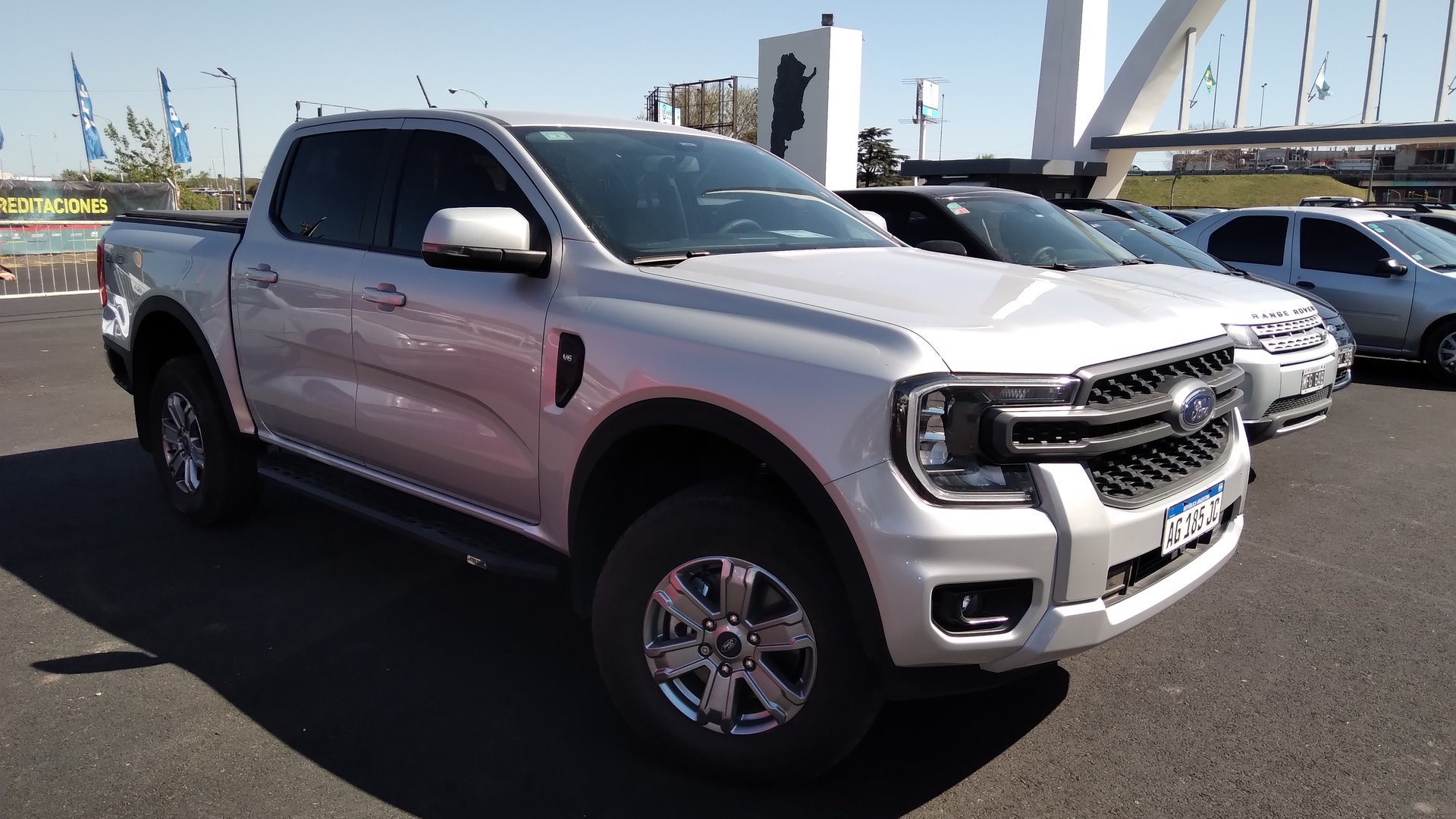
In Brazil, the Ranger competes in the mid-size pickup truck segment. In June 2026, it ranked third in the segment, with 2,949 units, according to A Crítica.
In the same month, the Toyota Hilux led the segment with 3,888 units, while the Chevrolet S10 sold 2,964.
Year to date through then, Ranger sales in Brazil totaled 16,970 units, according to the July 31 report.
Ranger sells well in Argentina but faces rivals undergoing redesigns
In Argentina, the Ranger was the country’s second-best-selling vehicle in May 2026, with 1,672 units. Among mid-size pickup trucks, the Hilux led with 2,309 registrations, according to A Crítica.
Competition is heating up. Toyota is preparing an update to the Hilux, the segment’s longtime leader. Volkswagen will launch a new generation of the Amarok, bringing what iProfesional describes as a major technological leap.
Imported vehicles are also putting pressure on prices and margins. Elonce also cited the arrival of new Chinese brands in the pickup truck segment, intensifying competition.
$870 million investment in the Pacheco plant
The plant has received substantial investment in recent years. The current-generation Ranger alone required $580 million, iProfesional reported.
On November 17, 2025, Ford announced that it would begin producing the Ranger Plug-In Hybrid in Pacheco in 2027.
The additional investment totals $170 million. Ford global CEO Jim Farley made the announcement during a visit to the region.
Argentina’s C5N news channel reported on X in October 2025 that the electrified Ranger would be built in Pacheco:
With the $700 million invested from 2021 to 2025, total investment reaches $870 million, Ford said. The period included a new engine plant and single-cab versions.
La Crítica breaks down the spending: $580 million for the current generation and $80 million for the engine plant.
The single-cab version received $40 million, while the hybrid and the Ranger Tremor EcoBoost received $170 million.
In the same announcement, Ford projected record production of 76,000 pickup trucks in 2025 and a rate of more than 80,000 units a year in 2026. The hybrid will be the region’s first electrified Ranger.
Ford Authority highlighted the investment at the Pacheco plant on X in July 2025:
Ranger redesign faces payback hurdle
The next Ranger update faces an economic, not a technical, obstacle, according to industry sources interviewed by iProfesional.
The money spent on a redesign would need to be recouped within four or five years. At current margins, that return is not guaranteed, the same sources said.
Ford weighs replacing Argentine parts with Chinese ones
To cut costs, Ford plans to increase its use of imported auto parts from Asia, especially China. A part previously sourced from the United States is already being replaced with a Chinese alternative.
Ford Argentina President Martín Galdeano has said publicly that, in some cases, buying a part made just a few blocks from the factory costs more than importing it from China.
iProfesional offers one example. A part made in Argentina cost more than $35 per unit, while the Chinese equivalent was available for about $17.
The automaker is also considering buying from suppliers in Thailand, another country where the Ranger is manufactured. Those suppliers are affiliated with Chinese groups.
The move follows Volkswagen’s path. For the new Amarok, developed with China’s SAIC under the so-called Project Patagonia, the number of local suppliers fell from 43 to 16.
Investments remain in place, production to resume in February
In July, when it confirmed the production slowdown, Ford said it was keeping its planned investments in Pacheco, according to A Crítica. The plug-in hybrid version remains scheduled for 2027 on the same production line.
Ranger production is scheduled to resume on February 1, 2027. Until then, Ford also plans to continue increasing purchases of Chinese auto parts to reduce costs in Pacheco.