






 Portuguese
  Spanish


At Cornell, in the United States, undergraduate student Andrew James led a team that, in just four months, assembled a robot that kills weeds with electric shock, without any poison: the project beat 95 teams, won US$ 50,000, and became the startup Rootline.
In the field, killing weeds almost always means poison or heavy machinery. A student from Cornell, in the United States, decided to prove that it can be done differently: with electric shock. Andrew James, still an undergraduate, led a team that in just four months built a robot capable of eliminating weeds by giving small shocks to the plants, without any herbicide. The result was a weed-killing robot with shock, which won a worldwide competition and earned the team US$ 50,000.
The story was reported by the Cornell Chronicle, the university’s official newspaper. The group, named Rootline Robotics, won the grand prize of one of the largest agricultural robotics competitions in the world and used the money to start their own startup. From college project to company, the leap happened in record time.
Electric shock instead of poison
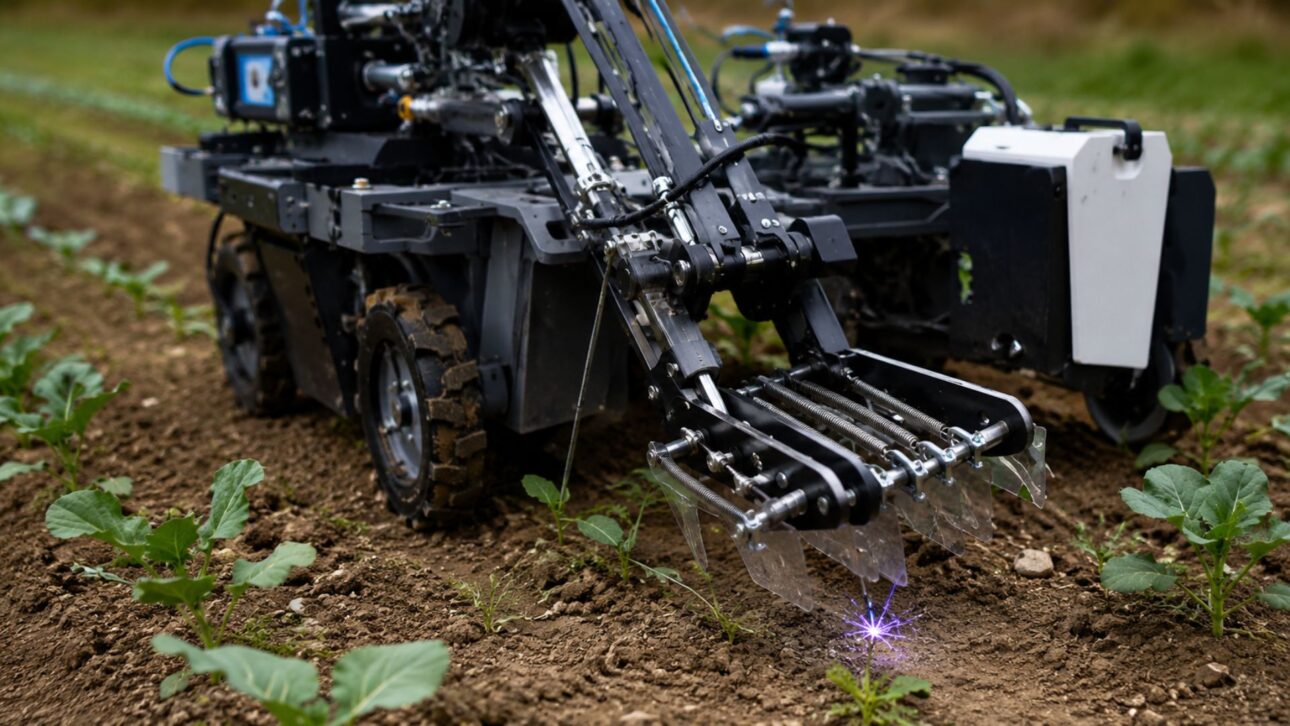
Instead of spraying herbicide, the weed-killing robot with shock applies small electric discharges directly to the invasive plant, frying the weed from the inside without any chemicals.
-
The first clear photograph of a total solar eclipse was taken 175 years ago by a man almost forgotten by history: captured during an 84-second exposure, the image revealed the Sun’s faint corona and paved the way for studies that today help understand solar storms and damage to satellites.

-
Three teenagers mixed gelatin, glycerin, and water to create fishing lures that work like plastic ones. They managed to catch fish in tests and made the material disappear in about two weeks when left in the sea, winning two local awards and a national science competition in Australia.
-
Three teenagers mixed gelatin, glycerin, and water to create fishing lures that work like plastic ones. They managed to catch fish during tests and made the material disappear in about two weeks when left in the sea, winning two local awards and a national science competition in Australia.
-
Without lithium or rare earths, new hybrid battery uses 3D-printed electrode, stores seven times more charge, and retains 82% capacity after 1,500 cycles.



This is what the creators call an electrobiological approach: each plant receives about 30 joules, enough energy to kill it without disturbing the soil. The method solves an old problem for producers, which is to remove weeds near the tree trunks without using poison or harming the good plant.
No herbicide, no heavy weeding: just a precise shock. For orchards and vineyards, where weeds grow close to the plants, this is gold.
It’s not laser: the difference of the shock
It’s worth distinguishing this robot from its laser cousins. There are already machines that burn weeds with laser beams, but Cornell’s invention follows a different path, that of low-energy electric shock.
While commercial electric robots consume dozens of kilowatt-hours in continuous discharges, Rootline’s system keeps consumption below 0.1 kWh even when treating 10,000 plants. The difference lies in precision: instead of brute power, micro-pulsed shocks in the right measure.
It’s less energy, less cost, and more sustainability than force solutions. This focus on efficiency is what separates the project from laser robots and heavy electric weeders.
Four months to go from zero to prototype
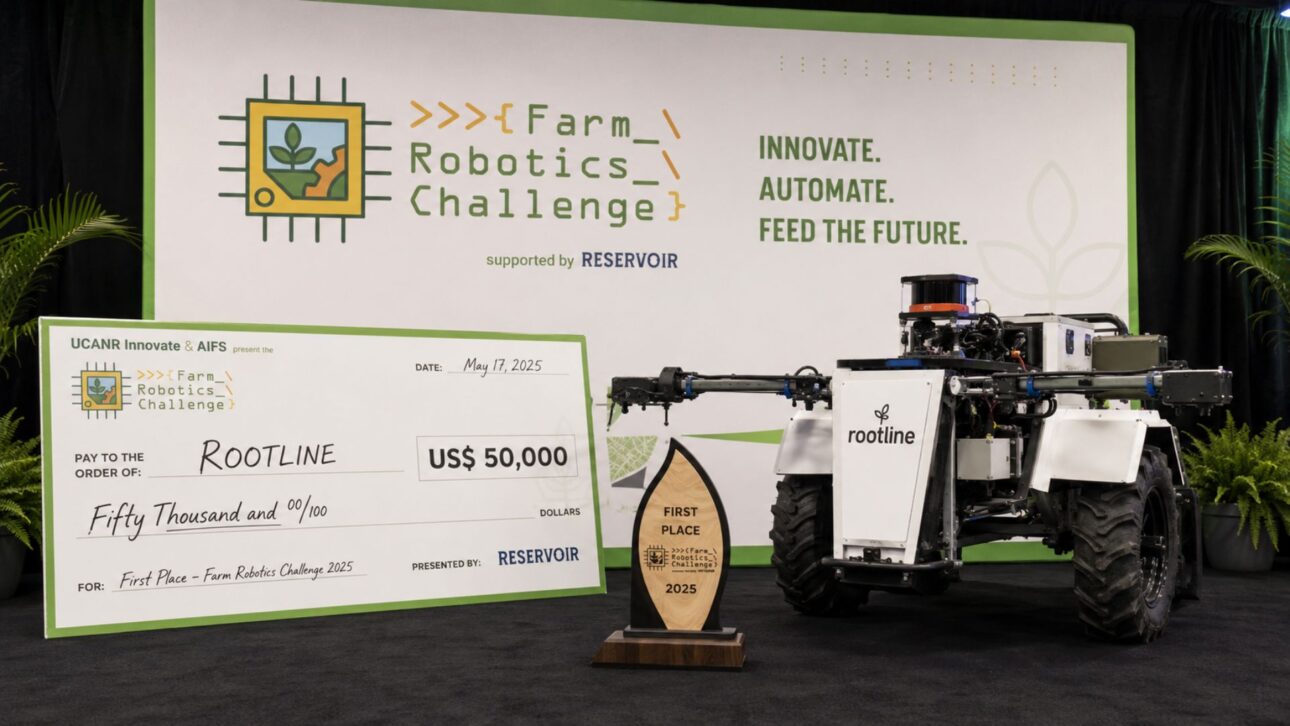
The team led by Andrew James, an undergraduate student at Cornell, studied existing electrical technology, created their own low-energy system, and assembled a functional prototype in just four months.
It was four intense months, from paper to running robot, at a pace that many companies would take years to achieve. The team brought together specialists in agriculture and engineering, all still at university.
It wasn’t a multinational with an infinite budget, but students with a good idea and a lot of determination. That’s how Andrew James and the group turned theory into a machine.
How the robot sees and attacks the weed
Behind the shock, there is a lot of intelligence. The robot uses computer vision, machine learning, and depth sensors to identify the weed and calculate where to apply the discharge.
A two-axis mechanical arm, with a kind of electrode comb, delivers the shock to the right plant, with precision. The system was assembled as an accessory attached to an already existing autonomous agricultural platform, leveraging a robotic base to focus on what matters: electric weeding.
It’s cutting-edge technology at the service of an ancient task. The robot sees, decides, and delivers the shock, all on its own.
The victory and the US$ 50,000
The recognition came in a heavyweight competition. The robot that kills weeds with shock won the grand prize at the 2026 Farm Robotics Challenge, one of the largest agricultural robotics contests on the planet, surpassing 95 teams, according to Agri-Pulse.
By coming in first place, the Cornell team took home $50,000, the event’s largest prize. It was not a category prize, but the overall top of the competition, which adds even more value to the achievement of Andrew James and the team.
Beating dozens of university teams from around the world, still in undergraduate studies, is a rare feat. And the money came with a clear destination.
From the prize to the startup Rootline
Instead of splitting the check, the team bet on the future. The team used the $50,000 to found the startup Rootline Robotics and continue developing the robot.
Turning a college project into a startup is the kind of step that defines careers and sometimes entire markets. Rootline targets orchards and vineyards, where weed control without chemicals near plants is an expensive and poorly solved problem.
The plan is to take the robot from prototype to real field application. From student competition to agricultural technology company, Rootline started on the right foot.
What Andrew James’s case shows
The biggest lesson is about the power of a well-executed good idea. Andrew James proved that an undergraduate student can, in four months, create a weed-killing robot with shock capable of beating professionals and becoming a business.
Of course, it’s important to stay grounded. The robot is still a prize-winning prototype, and turning Rootline into a company that actually sells in the field will require more development, testing, and investment.
Even so, going from a Cornell classroom to a startup with its own technology, without herbicides, is the kind of story that shows where agriculture is heading. From electric shock instead of poison to a $50,000 prize, Rootline points to a cleaner future for farming and proves that the next big innovation in the field may be in the mind of a university student.
And you, would you swap farm chemicals for an electric shock robot? Tell us in the comments what you think of this type of chemical-free technology in the field.




Your work has made such 💯 a meaningful difference in my personal growth journey