Portuguese
  Spanish


The attempt to reduce fuel expenses was interrupted by new external pressure on oil, leading the government to preserve an estimated subsidy of R$ 1.2 billion per month while calculating the risks for inflation, supply, and prices paid by drivers.
The war changed the plans.
The government was preparing to start dismantling the measures created to contain the rise in fuel prices when oil prices rose again in the international market. With the barrel again close to US$ 80, the withdrawal of the benefit granted to gasoline was postponed.
The maintained value is R$ 0.44 per liter of gasoline A, pure fuel sold to distributors before mixing with ethanol. Compared to the R$ 2.61 charged by Petrobras, the benefit is equivalent to almost 17% of the price at refineries.
-
Drivers are falling for these scams without realizing: operation reveals closed gas stations, adulterated fuel, and hidden losses when refueling.

-
New Fiat EV, priced at R$ 77,000, will bring a reinterpretation of the 147 and a consumption equivalent to 70 km/l.

-
Petrobras surprises the market by cutting diesel by R$ 0.35 per liter, and the decision may ease the tax impact for drivers and transport companies.
-
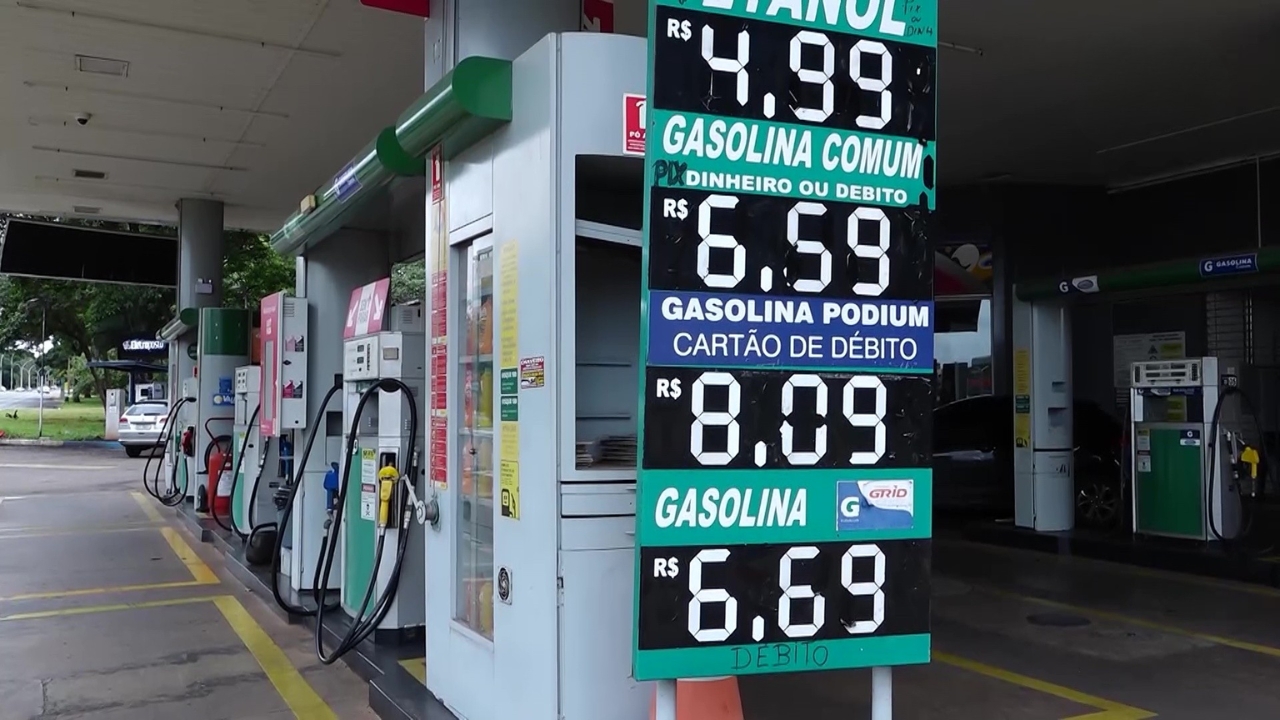
Gasoline at R$ 4.99 makes drivers wait more than an hour at Havan gas stations in Santa Catarina, during a “zero tax” promotion with a limit of 15 liters per car and 25,000 liters available across five units of the network.





At the same time, the government decided to maintain the 12% Export Tax on crude oil for another 60 days. The measure affects companies that sell part of the Brazilian production to other countries and has already provoked a reaction among large oil companies.
Oil prices rose again when withdrawal was being prepared
The economic team had been evaluating the gradual reduction of incentives after Brent oil fell to approximately US$ 72 per barrel. The drop opened space to reduce the cost of measures without causing immediate pressure on gasoline and diesel.
The scenario, however, changed rapidly.
With new attacks involving the United States and Iran and threats related to the Strait of Hormuz, Brent returned to the range of US$ 78 to US$ 80. The region is strategic for global oil transport, and any risk of interruption increases prices, freight, and insurance.
According to Poder360, the Minister of Finance, Dario Durigan, stated that the market is now being monitored daily. The government may withdraw, reduce, or maintain the benefit, depending on the evolution of the crisis and international pricing.
Benefit of R$ 0.44 contained refinery adjustment
The gasoline subsidy was regulated in May 2026 and aimed at producers and importers. To receive the payment, companies need to demonstrate that the amount was deducted from the price charged in the commercialization of the fuel.
The mechanism became evident in the adjustment announced by Petrobras at the end of May.
The state-owned company calculated a gross increase of about R$ 0.48 per liter in gasoline A. After applying the R$ 0.44 benefit, the net adjustment was limited to R$ 0.04 per liter at the refineries.
At the pumps, however, the consumer does not automatically receive a R$ 0.44 discount. The gasoline sold at stations contains anhydrous ethanol, and the final price also includes ICMS, transportation, stocks, and margins of distributors and resellers.
Band highlighted that the effect perceived by drivers was less than the nominal value of the subsidy. Even so, the removal of the benefit at a time of more expensive oil could create new pressure on prices.
12% tax will continue to affect exported oil
While preserving support for gasoline, the government decided to maintain the 12% Export Tax on crude oil for another 60 days, starting from July 10, 2026.
The charge helps offset part of the cost of subsidies and reduces the advantage of directing production to the external market during a period of instability. When the barrel is exported for US$ 80, for example, the rate represents US$ 9.60 in tax.
The private sector contests this strategy. Oil companies claim that the charge reduces the profitability of projects, increases legal uncertainty, and may deter new investments in the country.
Shell, TotalEnergies, PRIO, and Repsol are among the companies that opposed the measure. Petrobras, which also exports oil and will be affected by the tax, adopted a favorable position.
Government tries to contain prices without widening fiscal deficit
The estimated cost of the gasoline benefit is R$ 1.2 billion per month. In the initial two-month period, the forecast reached R$ 2.4 billion.
Maintaining this expense for a longer time temporarily protects the consumer but increases pressure on public accounts. Therefore, the charge on exported oil has become a central piece of the economic strategy.
The government is trying to navigate a difficult combination: rising oil prices, inflation risk, fuels sensitive to exchange rates, and companies pressing against new taxes.
The decision reveals that a war fought thousands of kilometers away can quickly alter the price calculated at Brazilian refineries, federal revenue, and the budget of millions of drivers. The benefit may be temporary, but the dispute over who should pay for international instability is far from over.