






 Portuguese
 Spanish


ADF Group lands record C$602 million contract to fabricate steel structures for a U.S. technology megacomplex. Production is expected to reach 4,000 metric tons per month at its peak, lifting the backlog above C$1 billion.
A Canadian steel fabricator announced on November 19, 2026, the largest contract in its 70-year history: C$602 million to produce the steel structure for a technology megafactory in the United States. The deal lifted ADF Group‘s backlog above C$1 billion, a level the company had never reached.
Production will be concentrated at the company’s industrial complex in Terrebonne, Quebec, where it has robotic production lines, large overhead cranes and ten production areas. The project is expected to require up to 4,000 metric tons of fabricated steel per month at peak activity, with deliveries spread over just more than 18 months.
C$602 million contract surpasses all previous deals and puts projected backlog near C$1.4 billion
The contract covers three areas: engineering the connections between steel components, fabricating the beams and other structural pieces, and applying industrial coatings. The order is for a large-scale manufacturing building in the northeastern United States for a multinational information technology company.
-
Nestlé announces closure of historic Colombian plant after earthquake damages 70% of capacity; about 300 workers affected, with market possibly supplied by products from Brazil

-
Brazilian Brand Opens R$70 Million Uberaba Factory for Porcelain and Perfume, Welcomes Visitors Into Studios and Turns 40,000-Square-Meter Site Into Industrial and Cultural Complex

-
Brazilian company plans humanoid robot factory in Manaus, projects a US$2.5 million investment and aims to deliver the first 50 units to schools in July 2027

-
Explosion at Klabin sends 11 workers to hospital and shuts down Santa Catarina mill after damaging its only recovery boiler at a plant with 330,000 metric tons of annual capacity


The order book topped C$1 billion. Adding the July backlog, the October contracts and the new order puts the projected backlog at nearly C$1.4 billion, before subtracting work completed since July.
All figures are in Canadian dollars, the currency specified by the manufacturer. The contract does not represent the total budget for the planned technology factory: it covers the engineering, fabrication and protection of the steel structures assigned to ADF. The amount paid to the supplier and the total cost of the project are two different figures.
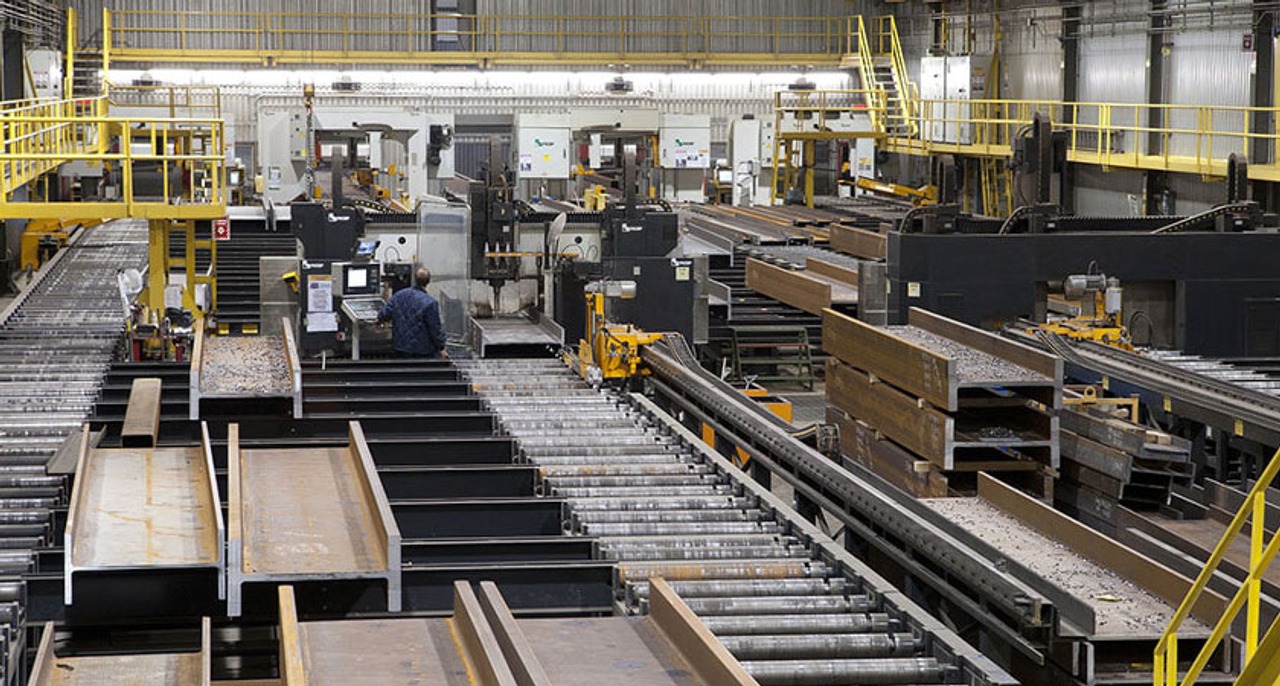
Terrebonne facility will need to produce up to 4,000 metric tons a month with ten production areas and robots
The Canadian facility has approximately 630,000 square feet of indoor space, equivalent to about 58,500 square meters. It includes ten large fabrication areas, one of them automated, with equipment for cutting, machining, connection preparation and heavy material handling. Its lifting equipment has a combined capacity of 140 metric tons.
ADF expects production under this single contract to peak at 4,000 metric tons per month. Components must be made to tight tolerances, protected with suitable coatings and shipped to the construction site in the order needed for assembly. The company’s stated challenge lies mainly in the accelerated schedule for a very large structure.
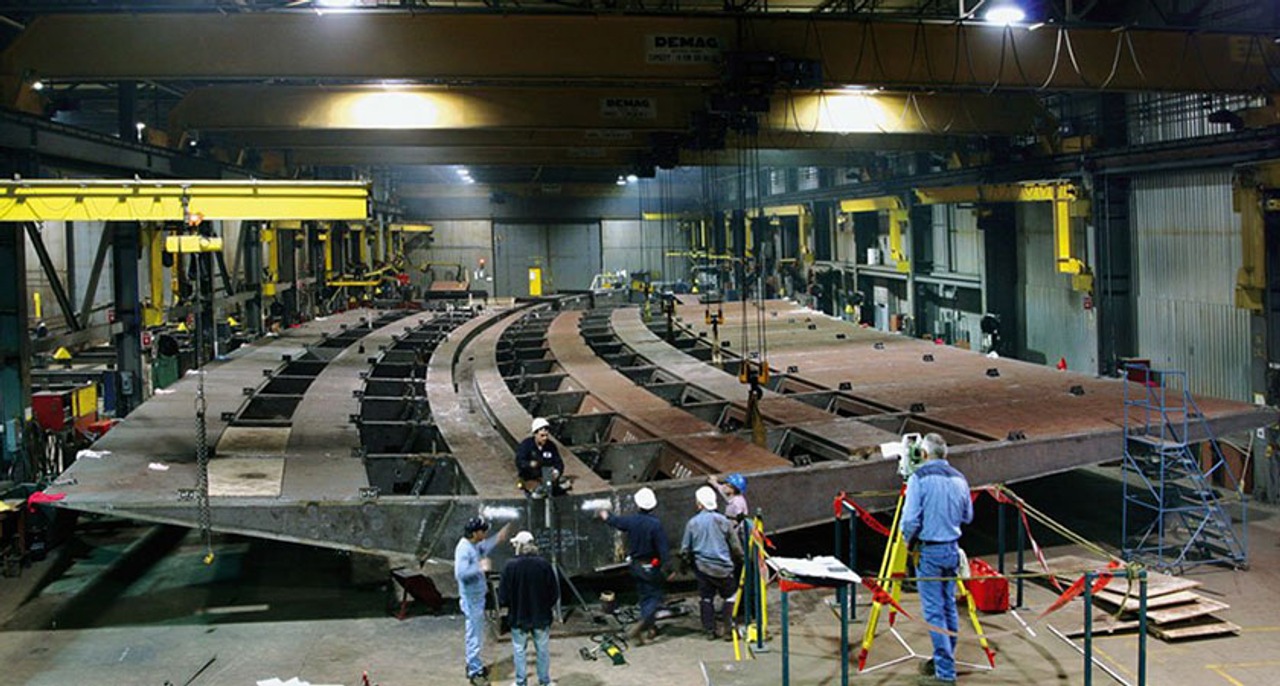
The chief financial officer said a significant share of the components will be processed using robotic systems already installed in Terrebonne. The company built this capacity over several years by investing in automation, steel feed lines and equipment capable of handling oversized components. The contract was awarded following a competitive process, according to company management.
Manufacturer to invest another C$10 million to expand industrial coating and convert storage space to production
To serve the new customer, ADF announced additional investments of approximately C$10 million at its Terrebonne facility. The funds will be used primarily to expand industrial coating capacity, install new equipment and convert part of a storage area into space dedicated to fabrication.
On the investor call, Boursier said the investments are expected to be made by April 2027. The expansion is intended to prevent the coating stage from becoming a bottleneck as components arrive from the production lines. Engineering, procurement and service preparation are expected to move forward in the weeks after the announcement, with execution scheduled through mid-2028.
The C$10 million investment for the new contract is separate from modernization initiatives the company announced previously. In July, the Canadian government announced support for a program to upgrade ADF’s facilities in Terrebonne and Métabetchouan. The manufacturer had already been preparing equipment and infrastructure for new large-scale orders.
Newspaper identifies Micron megafactory in New York; ADF keeps customer’s name confidential
ADF’s announcement does not identify the multinational customer. In a report published November 19, the Canadian newspaper Le Journal de Montréal, republished by TVA Nouvelles, said it had identified the project as Micron’s semiconductor complex in Clay, New York. ADF did not confirm the customer’s name when contacted by the outlet.
Micron is indeed building a group of memory-chip factories in Clay. The company announced the groundbreaking in January 2026 and confirmed the first concrete pour in July. Bechtel was selected to lead engineering, procurement and construction for the first phase. These official details confirm that the New York project is underway, but do not by themselves prove ADF’s involvement.
Micron’s plans call for as many as four semiconductor factories in the future, as part of an investment program of approximately US$100 billion in New York state. The project is far larger than the steel order announced by ADF and involves tightly controlled facilities, utility networks and support buildings. The specific connection between the C$602 million contract and the Clay complex remains based on the Canadian newspaper’s reporting.
After U.S. tariffs squeezed results, ADF says new customer will cover additional costs
The contract follows a difficult period for Canada’s metalworking industry. ADF reported lower revenue for the fiscal year ended in January 2026 and attributed a significant share of the pressure to U.S. trade tariffs. Uncertainty had led the company to use a work-sharing program in Terrebonne during the previous year.
At the November conference, the chief financial officer said the customer will cover the tariff costs applicable to the new contract, with the possibility of adjusting prices if rates change. The arrangement, disclosed by management, is intended to prevent shifts in trade policy from eating into the manufacturer’s margins during execution.
The company has other facilities in North America, including a plant in Great Falls, Montana, and the Quebec operation it acquired from Groupe LAR. For this specific order, ADF said fabrication of the steel structure will be concentrated in Terrebonne; the other plants will remain available for other projects in its backlog.
Record deal marks 70 years for manufacturer that began as a wrought-iron shop
ADF was founded in 1956 by Giacomo Jacques Paschini, who opened a small wrought-iron shop called Au Dragon Forgé. Seven decades later, the family business manufactures structures for industrial and commercial construction and major infrastructure projects across North America. Its corporate website says annual capacity exceeds 125,000 metric tons of steel structures across its operations.
In October, the company also announced another series of contracts totaling C$82 million, mainly involving hydroelectric projects in Canada and work in the United States. The new agreement comes as the manufacturer seeks to increase utilization of its automated lines and meet a particularly tight delivery schedule.
The next test will be turning the billion-dollar contract, denominated in Canadian dollars, into beams and components delivered for a high-tech project. The company must complete the painting expansion, organize the flow of parts and sustain its planned peak pace through mid-2028. Could industrial automation prove decisive in building the next generation of semiconductor megafactories? Readers can weigh in in the comments and share the story.


