





 Portuguese
  English
  Spanish
  4 min of reading
  0 comments


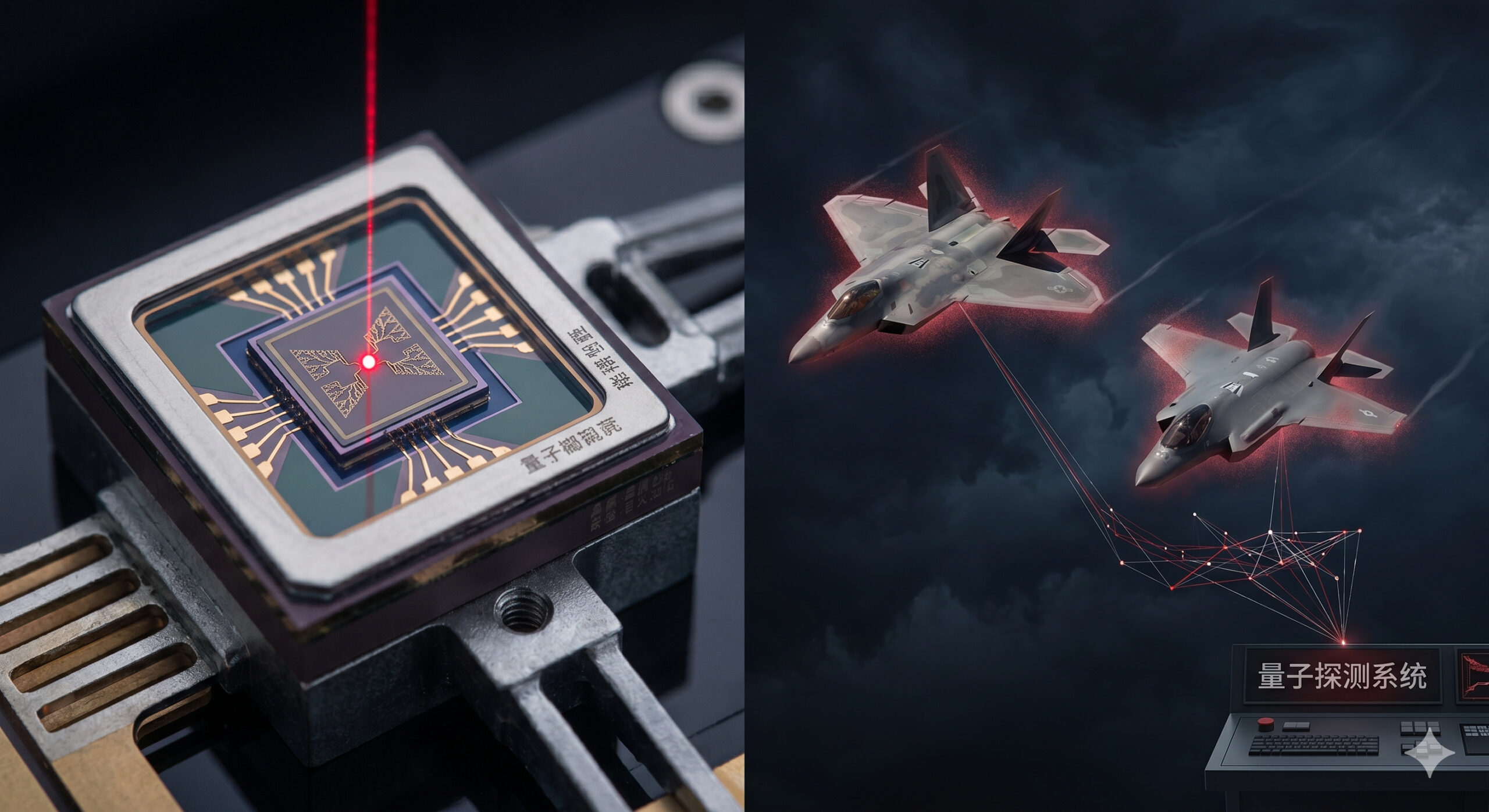
China produces quantum detector capable of detecting a single photon and advances in radar that could reduce stealth fighter advantage in the future.
In October 2025, the Quantum Information Engineering Technology Research Center, in the Chinese province of Anhui, announced the start of large-scale production of a four-channel, ultra-low noise single-photon semiconductor detector, an advancement that quickly resonated in international outlets such as the South China Morning Post and The Quantum Insider. The quantum detector was described as capable of detecting the presence of a single photon, the smallest measurable unit of light, and of consolidating into a single unit detection tasks that previously required multiple devices; in subsequent analysis, the CSIS noted that the equipment is about one-ninth the size of equivalent international single-channel products.
This advancement did not arise in isolation. It fits into a broader effort by China to transform quantum technologies into infrastructure and concrete applications, especially in quantum communications and advanced sensing. In August 2025, a paper published in npj Quantum Information described the operation of a Chinese quantum communication network spanning over 10,000 kilometers, covering 17 provinces and 80 cities, which helps contextualize why Beijing has been investing so heavily in strategic components like single-photon detectors.
Single-photon detector is central piece for quantum radar development
The main military interest in this type of technology lies in its potential application in systems known as quantum radars.
-
More than 500 Marines, robots, drones, and armored vehicles are deployed in Rio de Janeiro for the UN to certify Brazil at the highest level of readiness for peacekeeping missions. It is the first force in the country to achieve this status in all of history.

-
With 24-meter wings, two turbodiesel engines, 49 hours of autonomy, and the ability to launch sonobuoys to hunt submarines, the Turkish drone Aksungur can monitor an area the size of Brazil for two consecutive days without landing.

-
Pentagon wants to transform drones into mass ammunition, produce 340,000 units in two years, and lead the US Army to a fleet of 1 million disposable aircraft for modern warfare.

-
The Brazilian Army observes armored vehicles of up to 45 tons, 120 mm cannons, and network warfare technologies presented at military fairs in Europe, while Romania prepares a billion-euro investment of €8.33 billion in new combat vehicles.

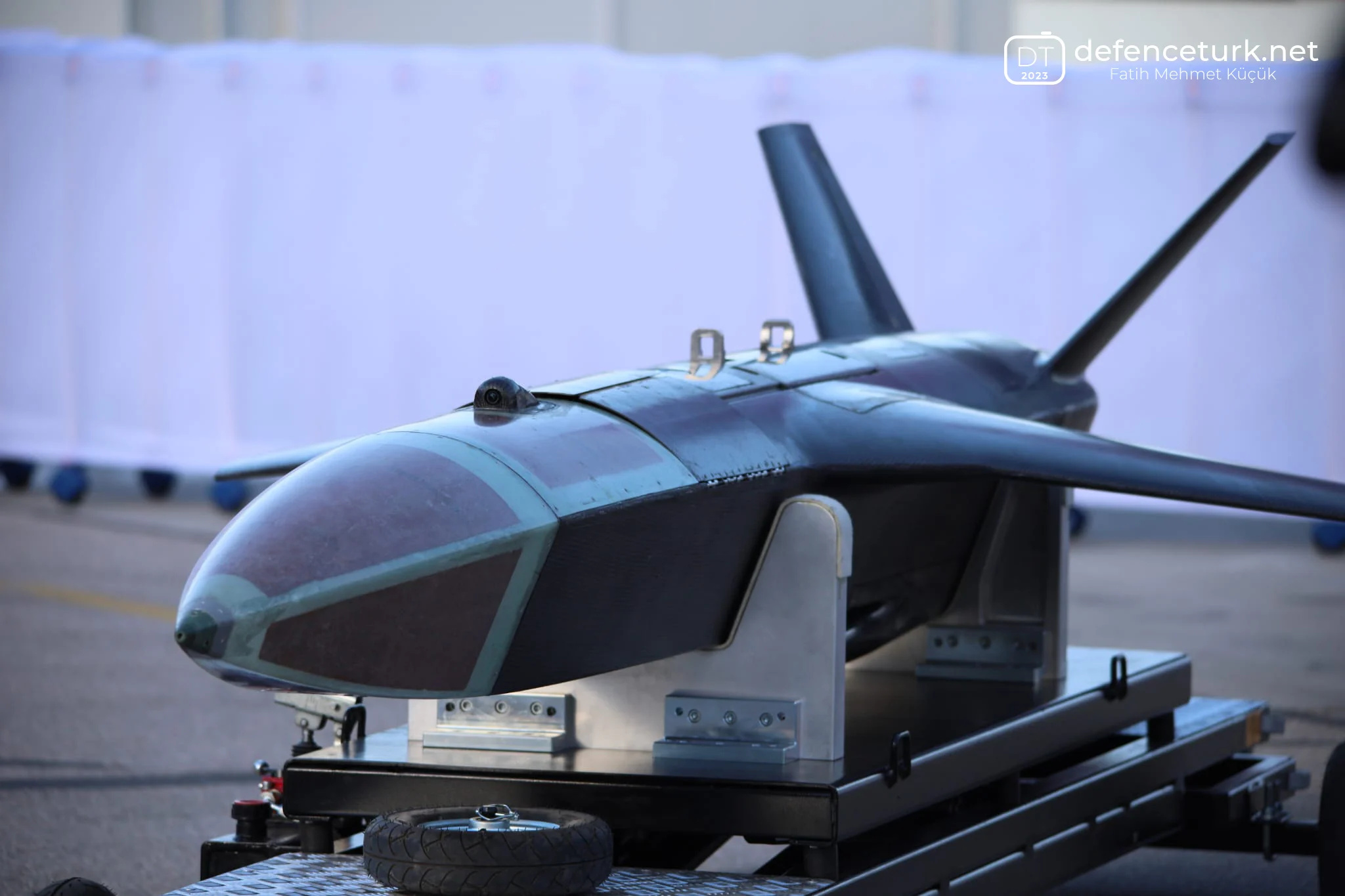


Unlike conventional radars, which emit radio waves and analyze the echo reflected by objects, quantum radar works with fundamental properties of physics, such as:
- quantum states of light
- correlation between particles
- behavior of individual photons
The central idea is that by emitting photons with specific properties, any interaction with an object — such as an aircraft — would alter these properties in a detectable way.
For this type of system to function, it is essential to have sensors capable of registering extremely weak signals, which makes the single-photon detector a critical component.
Extreme sensitivity is compared to detecting a grain of sand amid intense noise
The ability to detect a single photon is often described by experts using analogies to illustrate the level of precision involved.

One of the comparisons used in scientific outreach materials is that of detection of something minuscule amid an extremely noisy environment, similar to identifying a grain of sand in a storm.
This analogy does not represent a direct physical equivalence, but helps to understand the scale of the technological challenge: capturing practically invisible signals amid natural and artificial interference.
Possible impact on stealth technology is still a topic of debate among experts
The main reason this advancement attracts attention in the military sector is its possible application against stealth aircraft, such as the F-22 Raptor and the F-35 Lightning II.
These fighters are designed to reduce their signature on conventional radars through:
- specific geometry
- wave-absorbing materials
- thermal emission control
In the case of quantum radar, the proposal is different: instead of relying solely on the reflected echo, it would analyze changes in the quantum state of photons after interaction with the target. Theoretically, this could allow the detection of objects with low radar signatures.
Technology still faces significant challenges for combat use
Despite the potential, experts warn that quantum radar is still far from being an operational solution ready for use. Among the main challenges are:
- limited range in real conditions
- environmental interference
- need for highly controlled environments
- complexity of integration with existing military systems
Furthermore, there is no public evidence that such systems have been successfully tested in real combat scenarios.
Production on a scale indicates advancement beyond the experimental phase
The fact that the detector is being produced on an industrial scale represents an important advancement. This indicates that the technology:
- has already surpassed the initial research phase
- can be manufactured in larger volumes
- is being prepared for practical applications
However, mass production does not automatically mean military readiness, especially in complex technologies like quantum ones. The Chinese advancement occurs in a context of increasing international competition in the field of quantum technology.
Countries like the United States and members of the European Union are also heavily investing in:
- quantum sensors
- secure communications
- quantum computing
In the defense sector, these technologies are seen as potential elements of strategic advantage in the coming decades.
Technology may redefine detection limits in the long term
If current challenges are overcome, systems based on quantum detection could represent a significant change in how objects are identified in airspace.
This could directly impact:
- air defense strategies
- development of stealth aircraft
- military doctrine
However, this scenario still depends on technical advancements that have not been fully demonstrated.
With the evolution of increasingly sensitive sensors and the introduction of technologies based on quantum principles, a central question arises for the future of air warfare: will the invisibility provided by stealth technologies continue to be effective, or will new detection systems reduce this advantage over time?
The answer will depend on the pace of development of these technologies and the ability to transform them into viable operational systems in real scenarios.








Be the first to react!